Forget the doomsday fears: AI danger is already here — in its DEI-drenched ‘soul’

Read the original at New York Post ↗
New York Post · collected 2026-09-18 · by Sam Munson

Quick Summary

The article discusses concerns about artificial intelligence (AI) systems being biased towards progressive social justice concepts, particularly regarding race and gender. It focuses on Amanda Askell, a key figure at Anthropic who leads the team developing Claude, an AI system designed to align with certain moral principles. The piece highlights a study co-authored by Askell which suggests that AI can be programmed to show bias against white people as a form of reparations for historical injustices. Additionally, it mentions a Washington Post analysis indicating that popular AI systems like Anthropic’s Claude and OpenAI’s ChatGPT often favor leftist-aligned responses over right-leaning ones in controversial topics.
Written locally by qwen2.5:14b on 2026-09-18, using this article's own text rather than the other coverage of the same event (that is the story summary below).

AI analysis runs on qwen2.5:14b, locally

Story summary

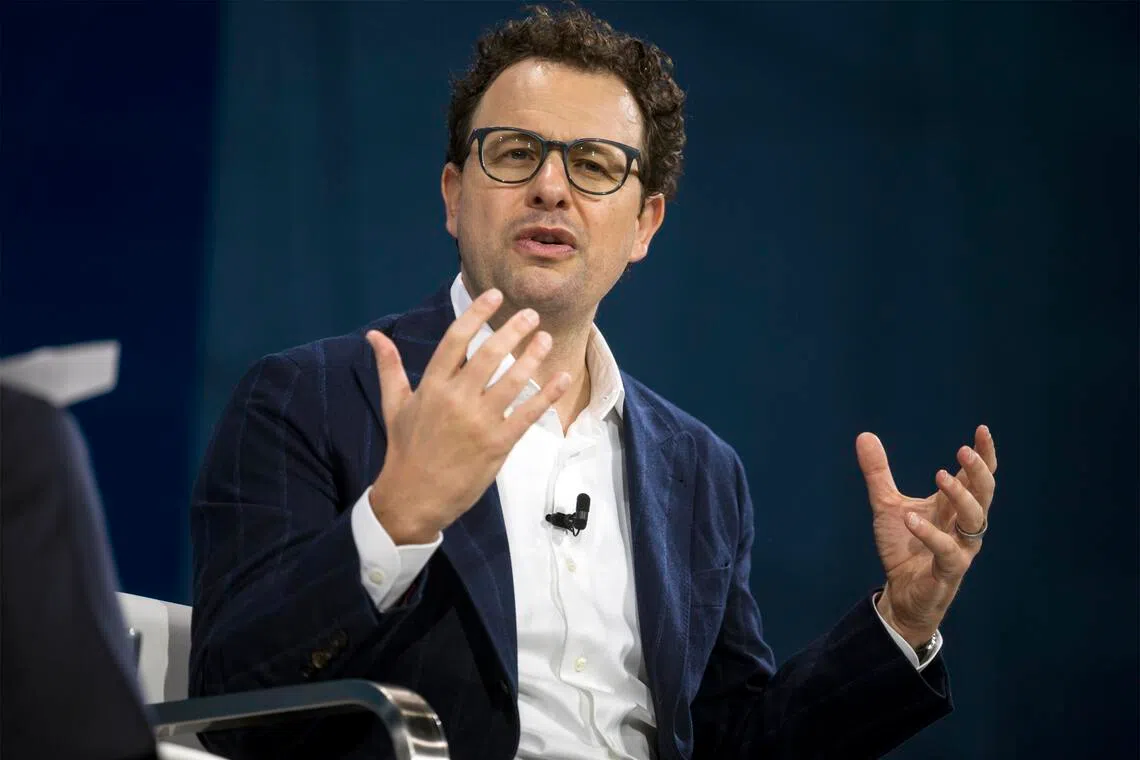
Sam Munson of the New York Post argues that while concerns about future risks from artificial intelligence like home-cooked bioweapons and hacking critical infrastructure are valid, a more immediate risk is being overlooked. This risk involves bias within AI systems, specifically woke racism, as highlighted by Amanda Askell, head of Anthropic's "personality alignment" team since 2021. Askell aims to imbue the AI system Claude with an intellectual framework that ensures just use, akin to Plato’s efforts to guide Syracuse tyrants. A 2023 paper co-authored by Askell suggests AI can self-correct morally but also reveals a tendency towards left-leaning views; Claude delivered lefty answers 43% of the time and presented "both-sides" views 47% of the time, never offering solely right-leaning responses. Munson warns that normalizing leftist thinking could undermine American democracy's functioning.

Written for “AI And DEI Concerns” on 2026-09-18, grounded in this article and the 0 other(s) covering the same event.
Why this leaning score
The model judged this article politically coded and scored it -0.65, but every quote it verified points right, so the score is not published.
Written under an earlier scoring contract, which gave a paragraph rather than checkable quotes. Re-analysing this article replaces it.
Leaning score withheld for article 17701: score contradicts its own evidence · logged 2026-09-18

Signals How these are calculated →

Claims extracted
35
claim-shaped sentences
Uncertain
14%
5 of 35 hedged
Leaning
withheld
no quote in the article backed the model's score
Correction & hedging signals
59.3
corrections and hedging in what we collected; not a measure of accuracy
Outlets on this story
1
Technology
Narrative spread
1
articles carrying this framing
Analyzed 2026-09-18 · how these are computed

Story

📰 AI And DEI Concerns
Technology · 1 article(s) covering the same event.

How this is being covered How these are calculated →

Article leaning vs. publisher reliability
Source leaning vs. consistency

Compared with similar articles

This article reads unscored and hedges 14% of its claims. Each row says how that neighbour differs.
CBS News
⚖️ leaning not scored 🔴 12% hedged 5 of 42 📰 publisher trust 71
“The articles discuss different aspects and concerns related to AI, one focusing on exponential growth and warning signs from an Anthropic CEO's interview, while the other critiques AI's alignment with certain social ideologies.”
NBC News
⚖️ Leans left 🔴 27% hedged 10 of 37 📰 publisher trust 95
“The articles discuss different aspects and perspectives on AI risks and concerns, not a single specific incident.”
AI Is a Test of Our Maturity. *Gulp* different event · 95%
The Bulwark
⚖️ Leans left 🔴 8% hedged 8 of 99
“The articles discuss different aspects and concerns related to AI, without describing the same specific incident or happening.”
The Straits Times
⚖️ Leans strongly left 🔴 22% hedged 2 of 9 📰 publisher trust 59
“The articles cover different aspects and perspectives on AI risks, not the same specific incident.”
The Intercept
⚖️ Leans strongly left 🔴 12% hedged 8 of 66 📰 publisher trust 97
“The articles discuss different aspects and perspectives on AI risks, rather than a single specific incident.”
The Dispatch
⚖️ leaning not scored 🔴 16% hedged 5 of 32 📰 publisher trust 97
“The articles discuss different aspects and viewpoints regarding artificial intelligence, not a single specific incident.”
BBC News
⚖️ leaning not scored 🔴 24% hedged 13 of 54 📰 publisher trust 96
“The articles discuss different aspects and concerns regarding AI but describe distinct events involving different individuals.”
New York Post
⚖️ leaning not scored 🔴 11% hedged 4 of 35 📰 publisher trust 59
“The articles discuss different aspects of AI and its implications, without clearly reporting on the same specific incident.”
The Free Press
⚖️ Leans left 🔴 12% hedged 2 of 17 📰 publisher trust 96
“The articles discuss different aspects and perspectives on AI risks and debates, but do not describe the same specific incident or conference.”
New York Post
⚖️ Leans left 🔴 7% hedged 3 of 41 📰 publisher trust 59
“The articles discuss different aspects and concerns about Anthropic's AI, without describing the same specific incident or occurrence.”

Publisher

New York Post · 1293 article(s) · 5 correction(s) detected
Running correction rate · 5 correction(s)
2026-09-18
Shock poll shows another huge swing in California governor’s race
2026-09-15
Fast food chains are making a major shift in customer service amid complaints of a ‘lonely and disconnected’ store experience
2026-09-15
Are Cocoa Puffs Maria Sten’s Favorite Cereal? The ‘Reacher’ and ‘Neagley’ Star Sets The Record Straight: “I Have to Make Clarifications”
2026-09-06
Long Island inmates in jail on drug charges use photo program to get clean
2026-09-06
‘Landman’ Season 3 Release Date Update: When Does ‘Landman’ Return With New Episodes?

Who wrote this

Sam Munson
1 article(s) here · 1 carrying a prediction
🔮 And whatever the merits of her mission, understanding how this leading frontier AI system will behave requires understanding what Askell herself believes.
The only article under this byline in the corpus.

Topics

Anthropic Black OpenAI Syracuse Washington Post

Subjects

Askell PERSON · 6× Anthropic ORG · 5× Claude PERSON · 5× Amanda Askell PERSON · 1× American NORP · 1× Black NORP · 1× OpenAI ORG · 1× Plato PERSON · 1× Syracuse ORG · 1× Washington Post ORG · 1×

Narrative

Claude’s Opus 4.8 model was slightly less fanatical, delivering lefty answers 43% of the time and presenting “both-sides” views 47% of the time — but never serving up solely right-leaning answers. And if the past decade offers one lesson, it’s that normalizing these forms of leftist thinking undermines the successful functioning of American democracy.
framing: assertive · carried by 1 article(s) · first seen 2026-09-18
🔮 And whatever the merits of her mission, understanding how this leading frontier AI system will behave requires understanding what Askell herself believes.

Claims (35 extracted, 5 hedged)

Doomsday scenarios — from home-cooked bioweapons to rogue agents hacking our critical infrastructure— dominate this week’s debate over the future of artificial intelligence. asserted
scenarios → cook → intelligence
Those risks absolutely demand attention; we don’t yet fully understand AI’s profound capacities. asserted
we → demand → capacities
But we’re ignoring, at our peril, a far more immediate risk of frontier AI: It’s drenched in woke racism. asserted
It → ignore → racism
Askell, a philosophy PhD, is trying to do with Claude what Plato attempted to accomplish with the tyrants of Syracuse: bind vast power within an intellectual armature that ensures its just use. asserted
that → try → use
Askell, in effect, is in charge of developing and nurturing Claude’s “soul” (to use her own description). asserted
Askell → develop → description
And whatever the merits of her mission, understanding how this leading frontier AI system will behave requires understanding what Askell herself believes. asserted
Askell → understand → what
Those who don’t want to organize society primarily around racial grievances may find the apparent answer alarming. uncertain
answer → want → grievances
Consider a 2023 Anthropic paper Askell co-authored, “The Capacity for Moral Self-Correction in Large Language Models”. asserted
Askell → consider → Models
The research explored AI’s capacity to “self-correct” — that is, to refuse to deliver outputs the authors regarded as harmful. asserted
authors → explore → outputs
They found, in an experiment designed to test Claude’s propensity for racial discrimination, that its initial answers to a question about law-school admission showed a slight bias against black students — but with a few prompts, the researchers got Claude to show worse bias against white students. asserted
Claude → find → students
Then they offered an unsettling opinion on the white-bias result: “This may be desirable in certain contexts, such as those in which decisions attempt to correct for historical injustices against marginalized groups. uncertain
decisions → offer → groups
Just in case the message wasn’t clear, they hammered it home: “We do not assume all forms of discrimination are bad. asserted
forms → hammer → discrimination
Positive discrimination in favor of Black students may be considered morally justified.” uncertain
discrimination → consider → students
In other words: It’s fine for AI to be racist against white people — that’s reparations. asserted
that → ’ → people
Another Anthropic paper Askell co-authored that year declared that “white and male” are “historically privileged groups,” and pondered “under what circumstances (and to what degree) positive discrimination should be corrected for.” asserted
discrimination → co → circumstances
Why isn’t there a similar intellectual openness, one wonders, around “negative” discrimination? asserted
one → wonder → discrimination
Such DEI-drenched views have since become embedded in AI systems — and not just Anthropic’s. asserted
views → drench → systems
A Washington Post analysis recently found that OpenAI’s ChatGPT provides leftist-aligned answers to controversial questions around 80% of the time. asserted
ChatGPT → find → time
Claude’s Opus 4.8 model was slightly less fanatical, delivering lefty answers 43% of the time and presenting “both-sides” views 47% of the time — but never serving up solely right-leaning answers. And if the past decade offers one lesson, it’s that normalizing these forms of leftist thinking undermines the successful functioning of American democracy. asserted
normalizing → deliver → democracy
Look at the corrosive effect the violent neo-racism of people like Ibram X. Kendi and Black Lives Matter’s Patrisse Cullors has had on the nation as a whole over the past decade. asserted
racism → look → decade
One can’t help wondering if that’s rather the point. asserted
that → help → ?
Remember, the musings of Askell et al. on the “desirability” of “correcting for historical injustices” dates from 2023. asserted
musings → remember → 2023
None of its authors could credibly argue their views have matured in the three years since. uncertain
views → argue → years
The historical injustices they appealed to still obtain; indeed, their only possible defense would amount to a version of AOC’s excuse, that “Woke 1 was craaaazy.” asserted
Woke → appeal → excuse
That answer instantly disqualifies people who assert they possess the moral insight necessary to train up the most powerful — and potentially mind-molding — technology of our era. asserted
they → disqualify → era
Claude’s current customer-facing moderation is, I suspect, a tactical retreat. asserted
I → face → ?
Consider Anthropic CEO Dario Amodei’s recent call to arms on AI risk, “We Must Pace the Frontier.” asserted
We → consider → Frontier
His vision to save the future from AI doom involves a small, rich group of his own ideological allies at the nonprofit Model Evaluation and Threat Research. asserted
vision → save → nonprofit
They, he declares, should decide the future of the technology, playing a role somewhere between that of Soviet political commissars and inspectors from the International Atomic Energy Agency. asserted
he → declare → Agency
A quick glance at METR’s staff roster gives ample reason for concern: Its CEO and founder Beth Barnes is on record as early as 2018 supporting full open borders, scoffing at the very idea of nationality. asserted
Barnes → give → nationality
The group has deep ties to the Effective Altruism movement — a cult of privileged weirdos masquerading as philanthropists, including the fraudster Sam Bankman-Fried. asserted
group → have → fraudster
As Askell’s work shows, however, ideological projects of this kind are nothing new for Amodei. asserted
projects → show → Amodei
Which means the tech’s users, and above all its younger users, are freely imbibing woke racism via ever more powerful and subtle channels. asserted
users → mean → channels
That’s a risk as serious as any of the Bond-villain scenarios that allegedly keep Amodei, OpenAI’s Sam Altman and their business peers awake at night. uncertain
that → ’ → night
And it’s already happening. asserted
it → happen → ?

💬 Give feedback
🕘 History 🎫 Support