Claims extracted
20
sentences that state something as happening or true
Uncertain
5%
1 of 20 hedged
("reportedly", "may", "according to")
Leaning
not political
takes no side on a contested political question
Publisher signals
59/100
The Independent's corrections and
hedging, across everything collected from it. Not a measure of accuracy.
Outlets on this story
1
World
Same framing elsewhere
1
articles that frame the event the way this one does
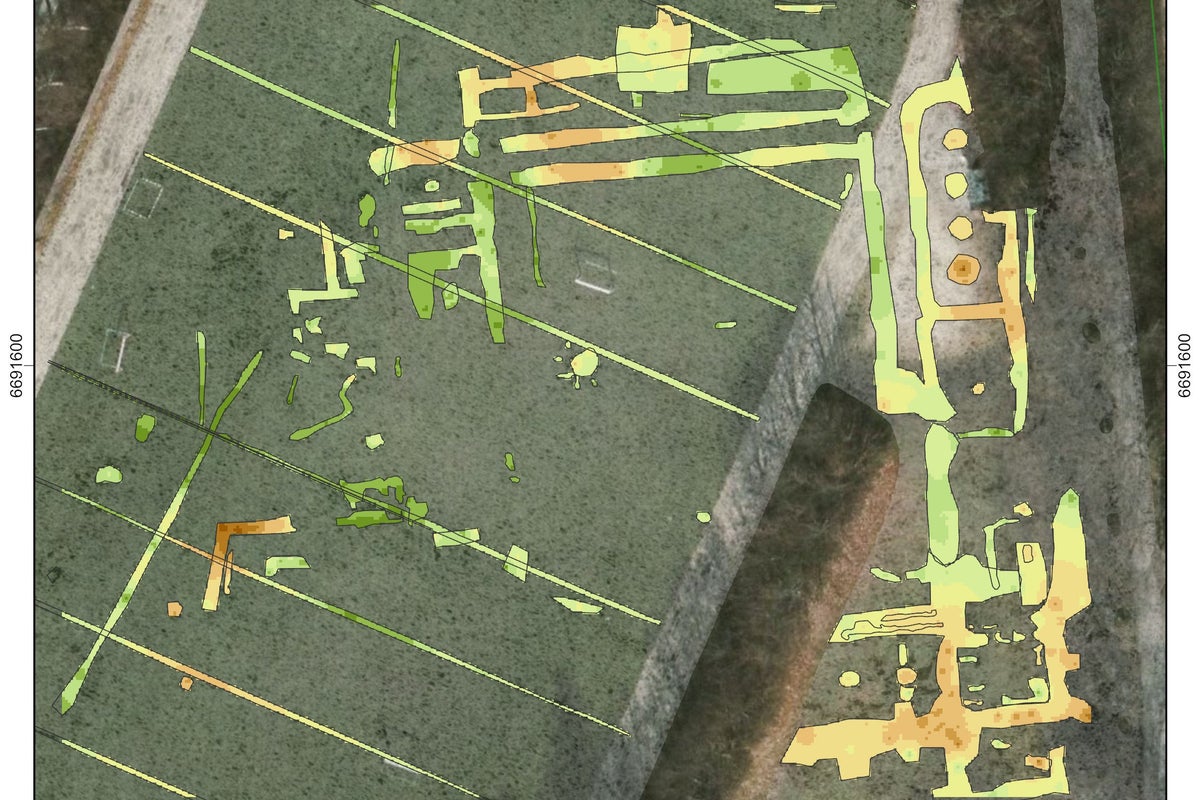
The remarkably well-preserved remains of a 13th-century convent have been uncovered beneath a Danish sports field.
asserted
remains → preserve → field
Archaeologists were left astonished to locate the site of St Clare’s Monastery in Roskilde.
asserted
Archaeologists → leave → Roskilde
First established in 1256, the convent was later demolished and long presumed to have been lost to history.
However, advanced ground-penetrating radar has now exposed an extensive complex lying roughly one metre (3.3 feet) below the surface.
asserted
radar → establish → surface
The scans reveal individual rooms, cloisters and columns, alongside a church positioned in the monastery's southern wing.
asserted
scans → reveal → wing
Experts say that the images are among the clearest ever produced by radar at any monastic site across Scandinavia.
asserted
images → say → Scandinavia
The discovery occurred during initial investigations by Roskilde Municipality ahead of plans to construct an underground car park beneath the sports field at Byparken.
asserted
discovery → occur → Byparken
Aware that a medieval nunnery had once stood in the area, museum organisation ROMU scanned the ground prior to any construction work taking place.
asserted
work → stand → place
“We knew that St. Clara Monastery was there, but not how much of the monastery from 1256 had been preserved,” archaeologist Jesper Langkilde, of ROMU, said.
asserted
Langkilde → know → ROMU
“But the ground scans showed very clearly that the monastery is still there – and that it lies right under our feet.”
asserted
it → show → feet
Roskilde was an important centre of royal and religious power during the Middle Ages, and St Clare’s was the last of five monasteries known to have existed in the city.
asserted
Clare → know → city
The other four are protected ancient monuments, but St Clare’s was not because it was assumed to have been lost.
asserted
it → protect → ?
The survey, carried out with the National Museum of Denmark and Norwegian experts, used electromagnetic waves to detect buried structures without digging.
asserted
survey → carry → structures
The eastern wing is particularly well preserved, with clearly defined rooms and pillars which would once have supported vaulted ceilings.
asserted
which → preserve → ceilings
Geophysics expert Arne Abel Stamnes said: “It has turned out extremely well, to say the least.
asserted
It → say → least
We could already see it while we were driving.
uncertain
we → see → it
“This is the first time I have tried to demonstrate such a well-preserved monastery, and in my opinion it is one of the clearest results of a monastery site that has been demonstrated with ground-penetrating radar in Scandinavia.”
asserted
that → try → Scandinavia
Archaeologists now hope to carry out trial excavations to establish exactly what survives beneath the site.
asserted
what → hope → site
Langkilde said: “Excavations at monasteries – especially nunneries like Saint Clara – are rare, both in Roskilde and nationwide.
asserted
Excavations → say → Roskilde
“It will certainly provide lots of exciting new knowledge that will emphasise the special importance Roskilde had in the Middle Ages.”
asserted
Roskilde → provide → Ages
ROMU is now discussing how the best-preserved parts of the monastery can be protected if the underground car park goes ahead.
asserted
park → discuss → monastery
 The Aporia