That is 0 articles you have read today.
The Aporia is free and carries no advertising, so readers are the only
thing paying for it. If you are getting this much out of it, a small
donation is what keeps it independent.
Daily limit reached
You have read 0 articles today.
That is more than the 15 a day The Aporia gives away,
and well past what it can carry on nothing. Your allowance resets at
midnight.
There is no advertising here and nothing about you is sold, so readers
are the only thing paying for it. If the site is worth this much of
your day, it is worth a few dollars.
Everything else stays open: the
maps, the
directory and
search do
not count against this, and neither does re-opening something you have
already read today.
The Archbishop of Canterbury’s office in London withdrew an interfaith award given to Hafiz Muhammad Tahir Mehmood Ashrafi, a Muslim cleric from Pakistan, after it was revealed that Ashrafi had praised Osama bin Laden in 2007. The award, presented on September 11, was initially given for Ashrafi’s work supporting religious minorities in Pakistan, particularly Christians. However, the decision to rescind the award came following public backlash over Ashrafi's past comments praising bin Laden, who was responsible for the 9/11 attacks.
Written locally by qwen2.5:14b on 2026-09-18,
using this article's own text rather than the other coverage of the
same event (that is the story summary below).
Story summary
The articles you've shared highlight a significant controversy involving the Archbishop of Canterbury's office and a Muslim cleric named Hafiz Muhammad Tahir Mehmood Ashrafi. Here are key points to summarize:
- Context: The incident occurred during the 25th anniversary ceremony of the September 11, 2001 terrorist attacks in the United States.
- Initial Award: On this date, the Archbishop's office bestowed upon Ashrafi an award called the Hubert Walter Award for Reconciliation and Interfaith Cooperation at Lambeth Palace.
- Past Controversial Statements:
- In June 2007, Ashrafi praised Osama Bin Laden, calling him a "Muslim warrior" who was fighting against the Russians, Americans, and British.
- He stated they were awarding Bin Laden their highest title for a Muslim warrior as a reaction to Salman Rushdie being knighted by Britain.
- Withdrawal of Award: The Archbishop's office withdrew this award after these statements came to light.
- Public Reaction: This decision sparked significant backlash and criticism, especially due to the timing (9/11 anniversary).
- Official Statement: Lambeth Palace acknowledged that they were reconsidering the award following the revelation of Ashrafi's past comments. They stated it is crucial for interfaith dialogue but must be done while respecting deeply-held differences.
- Other Concerns: Some articles mention other controversial statements made by Ashrafi, such as supporting Pakistan’s blasphemy laws and referring to those killed in NATO operations as "freedom fighters."
- International Response: This incident received coverage from major news outlets around the world, reflecting its significance beyond just religious circles.
In essence, this controversy highlights challenges in interfaith dialogue when past statements or actions of a religious leader come into conflict with widely accepted norms and values regarding terrorism and human rights.
Written for “Archbishop Withdraws Controversial Award” on 2026-09-18,
grounded in this article and the 7 other(s) covering the same event.
Why this leaning score
The model judged this article politically coded and scored it +0.15, but all 1 of its quote(s) are attributed speech - words the article quotes from someone, not the article's own narration, so the score is not published.
Written under an earlier scoring contract, which gave a paragraph
rather than checkable quotes. Re-analysing this article replaces it.
Leaning score withheld for article 17555: attributed speech only · logged 2026-09-18
The office of the Archbishop of Canterbury on Thursday withdrew an interfaith award given this September 11 to a Muslim cleric who praised Osama bin Laden, after the decision sparked backlash.
asserted
decision → withdraw → backlash
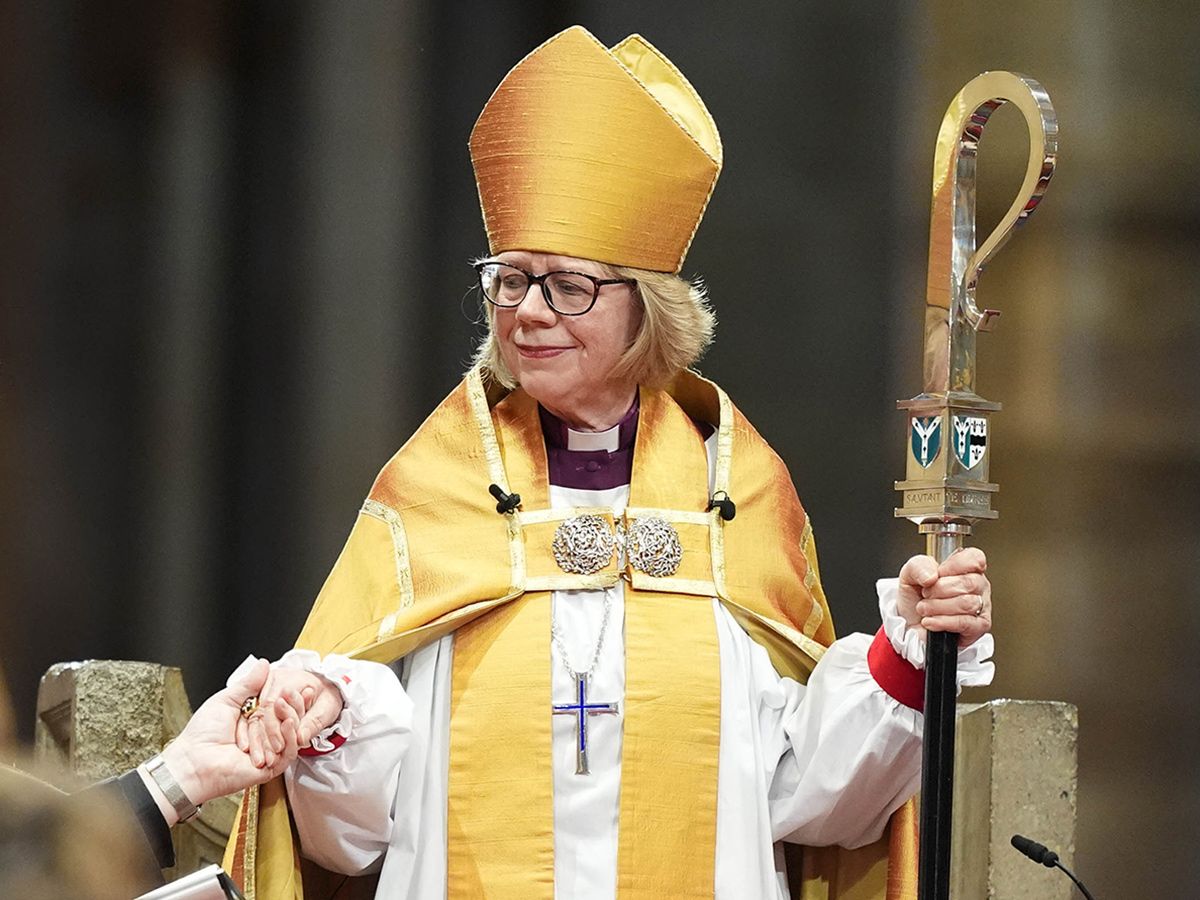
Sarah Mullally, the head of the Church of England, last week handed awards to faith leaders including Hafiz Muhammad Tahir Mehmood Ashrafi, for “reconciliation and interfaith cooperation.”
asserted
Mullally → hand → reconciliation
In 2007, he told AFP it was giving then-Al-Qaeda chief bin Laden its “highest title for a Muslim warrior” in protest at Britain awarding writer Salman Rushdie a knighthood.
asserted
Britain → tell → knighthood
“We are pleased to award the title of Saifullah (Sword of Allah) to Osama bin Laden,” Ashrafi told AFP at the time, calling this “the highest title for a Muslim warrior.”
asserted
Ashrafi → please → warrior
Bin Laden orchestrated the 9/11 attacks on the United States and was killed by U.S. forces in 2011.
asserted
Laden → orchestrate → 2011
“Previous comments made by Imam Ashrafi have come to light that have led Lambeth Palace to reconsider this award and we can now confirm today that the award has been withdrawn,” the office of the archbishop said in a statement.
asserted
office → make → statement
The statement added that the award had initially been given to Ashrafi for his “longstanding support for religious minorities in Pakistan, particularly the Christian community.”
asserted
award → add → Pakistan
A spokesperson for Ashrafi earlier said his comment had not been “an endorsement of bin Laden” but “made in the context of explaining the hurt felt by many Muslims over the British honour” for Rushdie.
asserted
comment → say → Rushdie
Rushdie was the subject of fatwas calling for his execution and assassination attempts for fictionalizing the Prophet Muhammad in his bestselling book “The Satanic Verses.”
asserted
Rushdie → call → book
Lambeth Palace, the archbishop’s seat, posted a photo on September 11 of Mullally presenting the award to Ashrafi for “outstanding work as an ambassador of interfaith harmony in Pakistan.”
asserted
Mullally → post → Pakistan
Posting on X, Conservative Party opposition politician Nick Timothy wrote: “The naivety of our public institutions for engaging with people like this is staggering.
asserted
naivety → post → this
Statement by the office of the Archbishop of Canterbury:
“Last week the Hubert Walter Award for Reconciliation and Interfaith Cooperation was presented to Maulana Hafiz Muhammad Tahir Mehmood Ashrafi in a ceremony at Lambeth Palace.
asserted
Award → present → Palace
The award was given for Imam Ashrafi’s longstanding support for religious minorities in Pakistan, particularly the Christian community – support that is valued by many Christians in Pakistan including its Anglican Church.
asserted
that → give → Church
It is a longstanding principle of interfaith dialogue and co-operation that we must engage with one another across deeply-held differences, and that remains the case.
asserted
that → engage → differences
However, previous comments made by Imam Ashrafi have come to light that have led Lambeth Palace to reconsider this award and we can now confirm today that the award has been withdrawn.
asserted
award → make → award
We have contacted Imam Ashrafi to make him aware of this decision.
asserted
him → contact → decision
We continue to pray for the Christian community in Pakistan, and for all those working for interfaith dialogue and harmony in Pakistan and around the world.”
asserted
We → continue → world
 The Aporia