That is 0 articles you have read today.
The Aporia is free and carries no advertising, so readers are the only
thing paying for it. If you are getting this much out of it, a small
donation is what keeps it independent.
Daily limit reached
You have read 0 articles today.
That is more than the 15 a day The Aporia gives away,
and well past what it can carry on nothing. Your allowance resets at
midnight.
There is no advertising here and nothing about you is sold, so readers
are the only thing paying for it. If the site is worth this much of
your day, it is worth a few dollars.
Everything else stays open: the
maps, the
directory and
search do
not count against this, and neither does re-opening something you have
already read today.
The public accounts committee urged Labour to present a credible plan for the future of publicly-owned British Steel, citing escalating daily costs of £1.3 million and a potential total expense of up to £1.5 billion by 2028. Since taking control of British Steel in July 2022, the government has spent £555 million without providing clear estimates on future costs or timelines for stabilizing the company’s financial footing. Clive Betts, deputy chair of the committee, criticized the lack of a sustainable business model and called for assurances that continued support does not hinder other parts of the steel industry.
Written locally by qwen2.5:14b on 2026-09-18,
using this article's own text rather than the other coverage of the
same event (that is the story summary below).
Story summary
In July 2021, British Steel was taken into public ownership by the UK government to protect steel production and prevent the closure of its Scunthorpe plant, which employs around 4,000 workers. The government has spent £555 million on salaries and raw materials for British Steel since taking control, excluding external advisor costs, and currently spends about £1.3 million daily to keep the company running. The Public Accounts Committee of MPs reported that ministers have not been able to provide a clear business model or indicative estimates of future costs for taxpayers. Labour MP Clive Betts criticized these "startling levels of funding" as unsustainable without a defined plan, highlighting the need for a credible strategy to ensure British Steel's long-term viability and financial sustainability.
Written for “British Steel Crisis” on 2026-09-18,
grounded in this article and the 1 other(s) covering the same event.
Why this leaning score
The model judged this article politically coded and scored it -0.45, but every quote it verified points right, so the score is not published.
Written under an earlier scoring contract, which gave a paragraph
rather than checkable quotes. Re-analysing this article replaces it.
Leaning score withheld for article 17421: score contradicts its own evidence · logged 2026-09-18
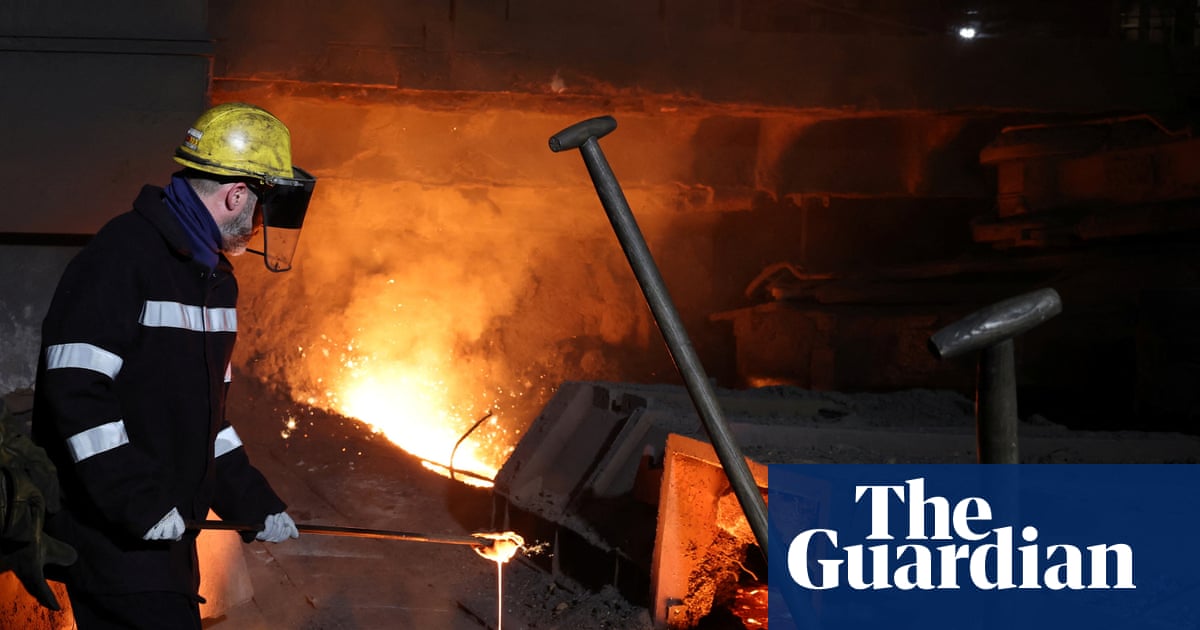
Labour has been urged to lay out a credible plan for the future of British Steel, as the government spending watchdog warned of the “startling” costs of keeping the struggling manufacturer in business with no end in sight.
asserted
watchdog → urge → sight
British Steel was taken into public ownership in July to protect “the future of steel production”, 15 months after the government stepped in to prevent the closure of its steelworks in Scunthorpe and the loss of 4,000 jobs.
asserted
government → take → jobs
But it is costing £1.3m a day to keep the company running, with the total estimated cost reaching as much as £1.5bn by 2028.
asserted
cost → cost → 2028
By mid-June, the government had spent £555m paying workers’ salaries and buying raw materials, excluding the cost of external advisers.
asserted
government → spend → advisers
The public accounts committee of MPs said on Friday that ministers were still “unable to articulate what business model” would put the company on a sustainable footing, nearly a year and a half after taking control at Scunthorpe.
asserted
model → say → Scunthorpe
It added that the Department for Business and Trade had not given “even indicative estimates” of how much British Steel would ultimately cost taxpayers or how long the situation would continue.
asserted
situation → add → taxpayers
After nationalising British Steel, the government appointed new bosses to focus on stabilising the business.
asserted
government → appoint → business
Clive Betts, the committee’s deputy chair, said the move to save the company was “all well and good”, but added: “This was just the beginning.
asserted
This → say → company
Having brought British Steel onto the taxpayers’ books, it is now up to government to explain its plan for its future.
asserted
it → bring → future
“Unfortunately, beyond simply propping up the company with public money, the government was not able to outline such a plan to our inquiry.
asserted
government → prop → inquiry
The reality is that British Steel is unable to wash its own face, and government is now in charge of making sure it gets on to a sustainable financial footing for the future.
asserted
gets → wash → future
“We also require assurances that the startling levels of funding British Steel is currently receiving do not come at the expense of the wider sector.”
asserted
Steel → require → sector
The criticism came days after Labour also nationalised Britain’s third-biggest producer of the metal, the Yorkshire-based Speciality Steel UK, in an attempt to protect 1,300 jobs.
asserted
Labour → come → jobs
Jonathan Reynolds, the business secretary, said at the time that the government did not “intervene in private companies lightly” but that the move was important to safeguard heavy industry.
asserted
move → say → industry
The public accounts committee said it showed the government could not “spend all its money supporting British Steel, when clearly there will be a need to support other parts of the industry”.
uncertain
government → say → industry
It added: “[Taxpayers] remain exposed to significant and growing costs and uncertainty – it is not clear whether the money will ever be recovered.”
asserted
money → add → costs
The government should publish a plan for the company that included “options and analysis for the intended future production model and the role of British Steel in the UK economy; the preferred decarbonisation pathway; how the company will become financially sustainable; and the expected costs, funding sources and timetable”, the committee’s report said.
asserted
report → publish → economy
The former owner Jingye has separately argued that British Steel owed it almost £1bn when it was nationalised and has started a formal process under an international treaty to win compensation from the government.
asserted
it → argue → government
The move has also put pressure on UK-Chinese relations, with China’s government saying it is “strongly dissatisfied” with the situation.
asserted
it → put → situation
 The Aporia