That is 0 articles you have read today.
The Aporia is free and carries no advertising, so readers are the only
thing paying for it. If you are getting this much out of it, a small
donation is what keeps it independent.
Daily limit reached
You have read 0 articles today.
That is more than the 15 a day The Aporia gives away,
and well past what it can carry on nothing. Your allowance resets at
midnight.
There is no advertising here and nothing about you is sold, so readers
are the only thing paying for it. If the site is worth this much of
your day, it is worth a few dollars.
Everything else stays open: the
maps, the
directory and
search do
not count against this, and neither does re-opening something you have
already read today.
South China Morning Post
· collected 2026-09-17 · by Wency Chen,Ben Jiang
China is making strides in recovering rockets as part of its push to become a major player in space exploration, but it faces challenges in reusing them, unlike SpaceX which pioneered this technology. Wency Chen and Ben Jiang report on China's efforts in booster recovery, noting recent successes both on land and at sea, yet emphasizing that the country has not yet achieved the goal of relaunching recovered rockets, highlighting a significant gap compared to the US's advanced capabilities in reusable rocket technology.
Written locally by qwen2.5:14b on 2026-09-18,
using this article's own text rather than the other coverage of the
same event (that is the story summary below).
Story summary
In recent months, China has made significant strides in recovering rockets both on land and at sea as part of its efforts to become a major player in space exploration. However, despite these breakthroughs, China has not yet reused any recovered rockets, highlighting a gap between its ambitions and the challenges it faces. This contrasts with companies like SpaceX, which have a head start in reusing rockets to reduce costs. Chinese commercial space companies are now exploring ways to catch up in this critical technology area. The article emphasizes that while China aims high, the practical hurdles remain substantial, especially given the United States' lead in reusable rocket technology.
Written for “Chinese Space Program Advances” on 2026-09-18,
grounded in this article and the 0 other(s) covering the same event.
Why this leaning score
This article does not take a side on a contested political
question, so it has no leaning score. That is an
answer rather than a gap: a match report or a rescue can be warmly
or critically written without being left or right, and scoring it
anyway is how approval of a subject gets recorded as a political
position.
No political leaning scored for article 17239 · logged 2026-09-18
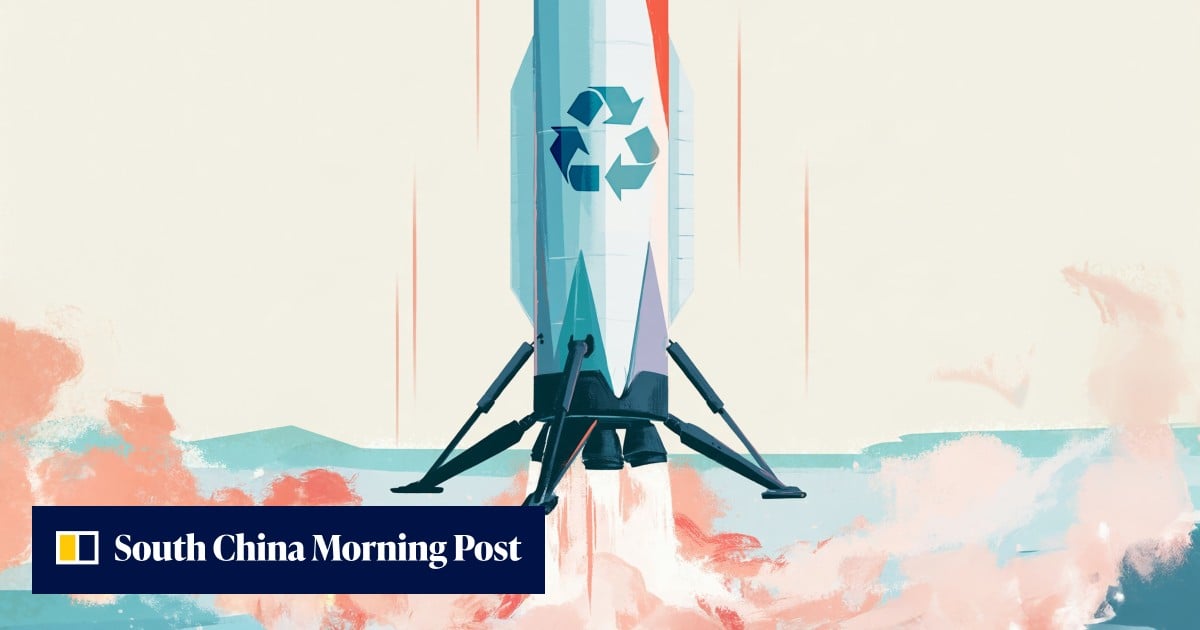
In FocusChina has gained pace in the space race by recovering rockets – but can it relaunch one?
asserted
it → gain → one
SpaceX might have a head start in reusable rockets, but Chinese commercial space companies are exploring ways to catch up in the cost-saving tech
uncertain
companies → have → tech
As technological developments augur an era of renewed space exploration, China is aiming to become a major player.
asserted
China → augur → exploration
In the second part of this two-part series, Wency Chen and Ben Jiang examine the country’s strategy and progress on reusable rockets – a field where the US has a tremendous lead.
asserted
US → examine → lead
Despite a succession of breakthroughs in booster-recovery efforts in recent months, both on land and at sea, China has yet to reuse one – a stark contrast laying bare the gap between Beijing’s space ambitions and the challenges that remain.
asserted
that → have → ambitions
 The Aporia