That is 0 articles you have read today.
The Aporia is free and carries no advertising, so readers are the only
thing paying for it. If you are getting this much out of it, a small
donation is what keeps it independent.
Daily limit reached
You have read 0 articles today.
That is more than the 15 a day The Aporia gives away,
and well past what it can carry on nothing. Your allowance resets at
midnight.
There is no advertising here and nothing about you is sold, so readers
are the only thing paying for it. If the site is worth this much of
your day, it is worth a few dollars.
Everything else stays open: the
maps, the
directory and
search do
not count against this, and neither does re-opening something you have
already read today.
A Presbyterian church member used an artificial intelligence tool to write an offertory prayer for the congregation of 200 people. The author, who was surprised by the phrasing and structure of the prayer during service, later discovered that his friend had employed AI to assist with public speaking anxiety. This incident has led the author to wonder about the authenticity of other prayers in similar contexts.
Written locally by qwen2.5:14b on 2026-09-18,
using this article's own text rather than the other coverage of the
same event (that is the story summary below).
Story summary
In a Presbyterian church service attended by about 200 people, a congregant used an artificial intelligence tool to write and deliver the offertory prayer during the service. The author, Josh Code, noticed unusual phrasing in his friend’s prayer that indicated AI assistance, such as repetitive phrases like “It’s not X—it’s Y” and a tendency toward three-point lists. After the service, the friend confessed to using an app called Chat to write the prayer because he was nervous about public speaking. This incident has made Code wonder if other prayers might also be crafted with AI help, raising questions within the congregation about authenticity and traditional practices in religious services.
Written for “Claude Shannon Legacy” on 2026-09-18,
grounded in this article and the 0 other(s) covering the same event.
Why this leaning score
This article does not take a side on a contested political
question, so it has no leaning score. That is an
answer rather than a gap: a match report or a rescue can be warmly
or critically written without being left or right, and scoring it
anyway is how approval of a subject gets recorded as a political
position.
No political leaning scored for article 17157 · logged 2026-09-18
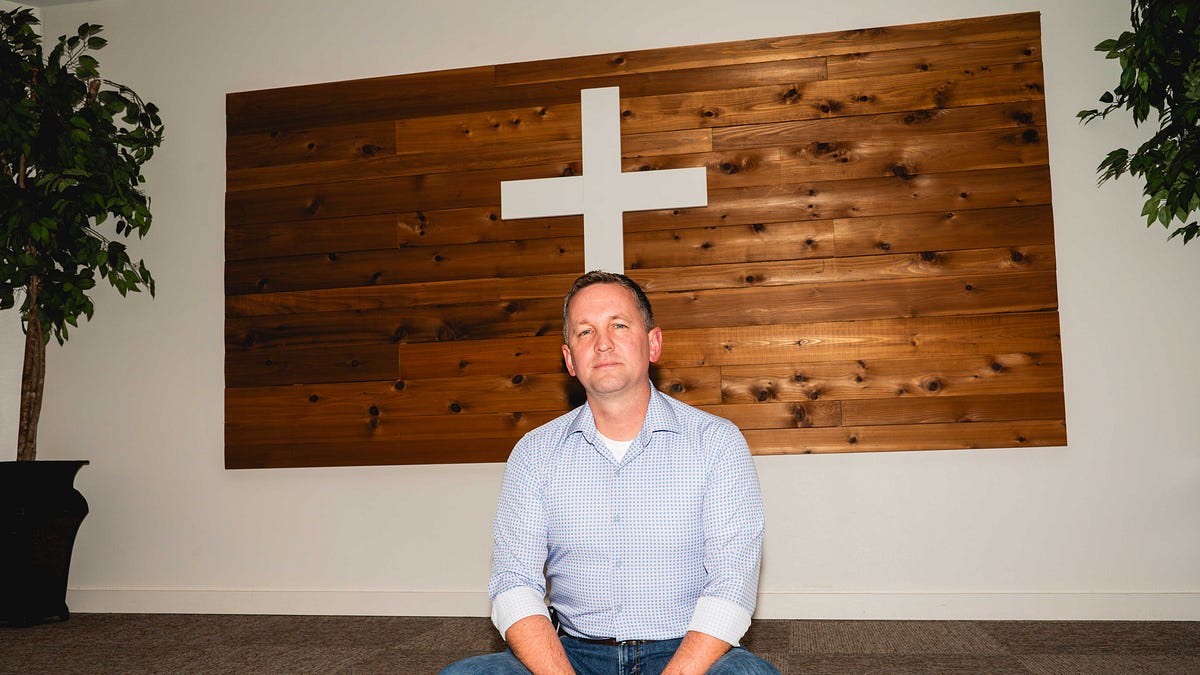
My head was bowed in prayer when I heard something strange coming from the pulpit.
asserted
something → bow → pulpit
A friend of mine was standing in front of our church’s congregation of 200 people, praying over the day’s offerings.
asserted
friend → stand → offerings
His words bore the marks of AI writing that made me wince: “It’s not X—it’s Y” and a conspicuous preference for lists of three.
asserted
it → bear → three
After the service, I confronted my friend.
asserted
I → confront → friend
Immediately, he admitted the prayer had been written by AI.
asserted
prayer → admit → AI
“I just asked Chat to write me a short offertory prayer,” he told me sheepishly.
asserted
he → ask → me
In my Presbyterian church, it’s customary for congregants like my friend to stand at the pulpit and give the call to worship or the offertory prayer.
asserted
congregants → ’ → worship
He was a nervous public speaker, he said, and AI writes well enough.
asserted
AI → say → ?
Since then, I’ve started to question whether other prayers I’ve heard have been written with the help of, well, a higher power.
asserted
I → start → power
 The Aporia