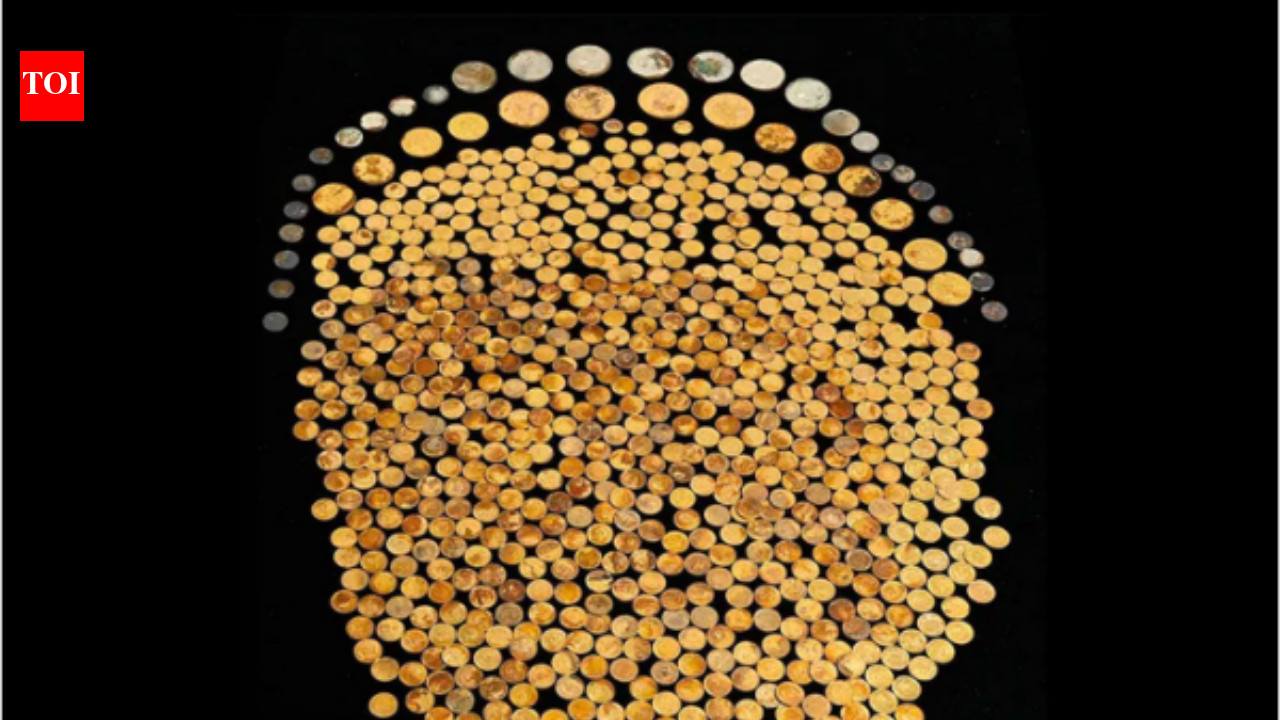
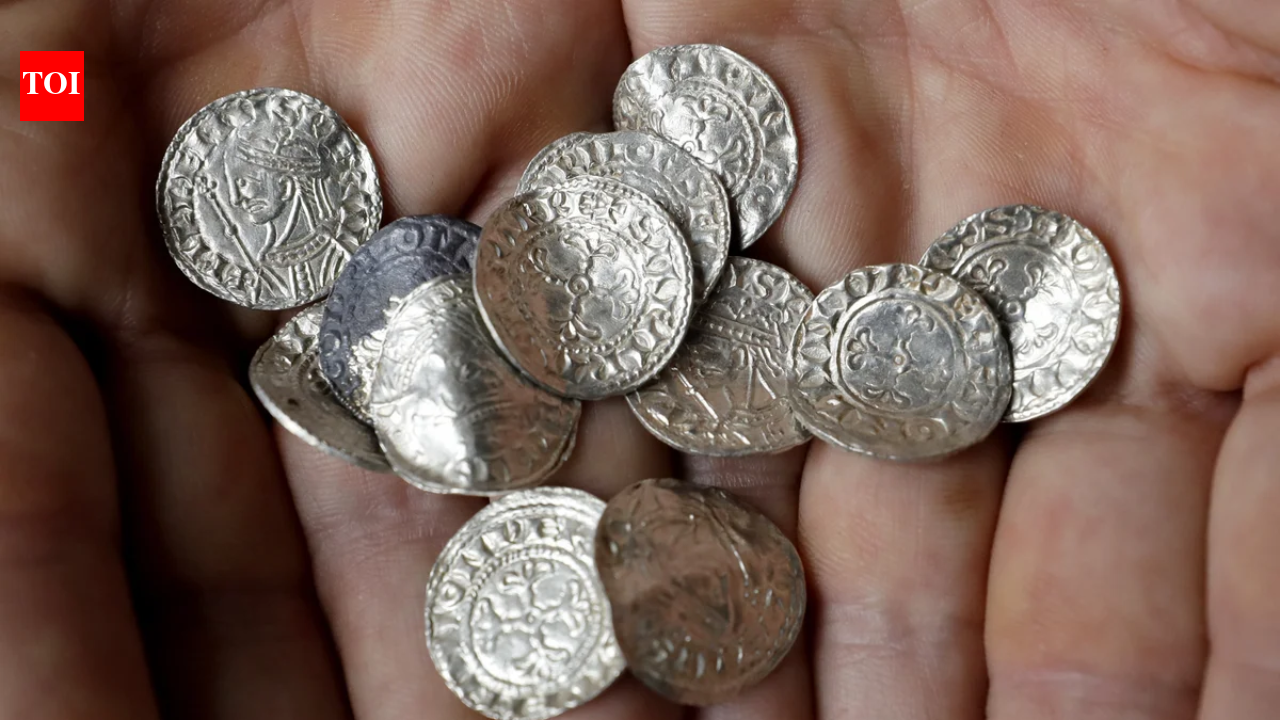
A Kentucky farmer discovered over 800 gold and silver coins from the Civil War era in his field, which later sold for more than $3 million. The find included a rare group of 18 1863-P $20 Gold Liberty Double Eagles, each valued at over $100,000 due to their exceptional condition. Coin expert Jeff Garrett described the discovery as one of the most significant moments in his career.
Written locally by qwen2.5:14b on 2026-09-17,
using this article's own text rather than the other coverage of the
same event (that is the story summary below).
A Kentucky farmer working in his field has uncovered an extraordinary collection of Civil War-era coins.
asserted
farmer → work → coins
He found more than 800 gold and silver coins, which later sold for more than $3 million (£2.36 million) through private sales.
asserted
which → find → sales
The discovery, now known to coin experts as the "Great Kentucky Hoard", began when the farmer found a single 1856 Seated Liberty silver half dollar in the dirt.
asserted
farmer → know → dirt
"I initially found the 1856 Seated Liberty Half Dollar probably 20 to 30 feet from where the hoard was located," the farmer later said in an interview with the public television programme
Kentucky Life.
asserted
farmer → find → Life
"I would have never believed what came next.
asserted
what → believe → ?
Things that only happen in dreams."
asserted
that → happen → dreams
As he continued walking across his property, he noticed something shiny in the soil.
asserted
he → continue → soil
"When I continued walking and saw the glint of gold, a thick reeded edge," he told the broadcaster.
asserted
he → continue → broadcaster
"When I pulled the coin from the ground, I was astonished when I realized I was holding a $20 Double Eagle from the 1860s.
asserted
I → pull → 1860s
After I flipped the first clump of dirt over the next 45 minutes to an hour, the coins kept coming.
asserted
coins → flip → hour
I knew it was hundreds."
asserted
it → know → ?
Within about an hour of digging, he had recovered more than 700 gold coins and several dozen silver pieces.
asserted
he → dig → coins
The discovery revealed a collection that had been buried for more than 160 years.
asserted
that → reveal → years
After finding the coins, the farmer sought professional help to identify and protect them.
asserted
farmer → find → them
He also took steps to keep his name and the exact location of his farm private to prevent people from trespassing on the property.
asserted
He → take → property
The collection was sent to the Numismatic Guaranty Company (NGC) for authentication, cleaning and grading.
asserted
collection → send → authentication
According to information published by NGC, most of the discovery consisted of $1 US gold dollars made between 1850 and 1862.
uncertain
most → accord → 1850
The hoard also contained smaller numbers of $10 Liberty gold coins and $20 Liberty Double Eagles.
asserted
hoard → contain → coins
Collectors highly value this particular type because the US Treasury produced only 3,607 of the coins for circulation during the Civil War year.
asserted
Treasury → value → year
Finding even one 1863 Double Eagle in uncirculated condition is considered a major event for coin collectors.
asserted
Finding → find → collectors
Finding 18 well-preserved examples in one place was extremely unusual.
asserted
Finding → find → place
Jeff Garrett, a coin expert with Mid-America Rare Coin Galleries who examined the collection, described the discovery as an important moment in his career during his appearance on
Kentucky Life.
asserted
who → examine → Life
"The importance of this discovery cannot be overstated," Garrett said in NGC's official report on the hoard.
asserted
Garrett → overstate → hoard
"Finding one Mint condition 1863 Double Eagle would be an important numismatic event.
asserted
Finding → find → Eagle
Finding nearly a roll of superb examples is hard to comprehend."
asserted
Finding → find → examples
Individual 1863 $20 Double Eagles from the hoard were later valued at more than $100,000 each because of their excellent condition.
asserted
Eagles → value → condition
Civil War conflict may explain buried coins
Historical information from the Smithsonian Institution suggests that the coins were buried around 1863, during one of the most dangerous periods of the American Civil War.
uncertain
coins → explain → War
Kentucky officially declared itself neutral when the war began in 1861, but the state soon became an important battleground between Union and Confederate supporters.
asserted
state → declare → supporters
In the summer of 1863, Confederate General John Hunt Morgan led a series of cavalry raids, known as Morgan's Raid, through Kentucky, Ohio and Indiana.
asserted
Morgan → lead → Kentucky
Historians from the Smithsonian Institution say wealthy landowners and farmers often buried paper money, silver and gold coins in fields to protect their savings from soldiers and armed groups.
asserted
landowners → say → soldiers
Some people who buried their wealth were later killed, forced to leave their homes or captured during the war.
asserted
who → bury → war
As a result, many buried collections remained underground for generations.
asserted
collections → bury → generations
The coin dealer GovMint later handled the commercial sale of the certified coins.
asserted
dealer → handle → coins
Individual pieces were offered to private collectors with special labels identifying them as genuine coins from the Great Kentucky Hoard.
asserted
pieces → offer → Hoard
Private buyers and investors eventually purchased the collection, generating more than $3 million (£2.36 million) for the anonymous finder.
asserted
buyers → purchase → finder
 The Aporia