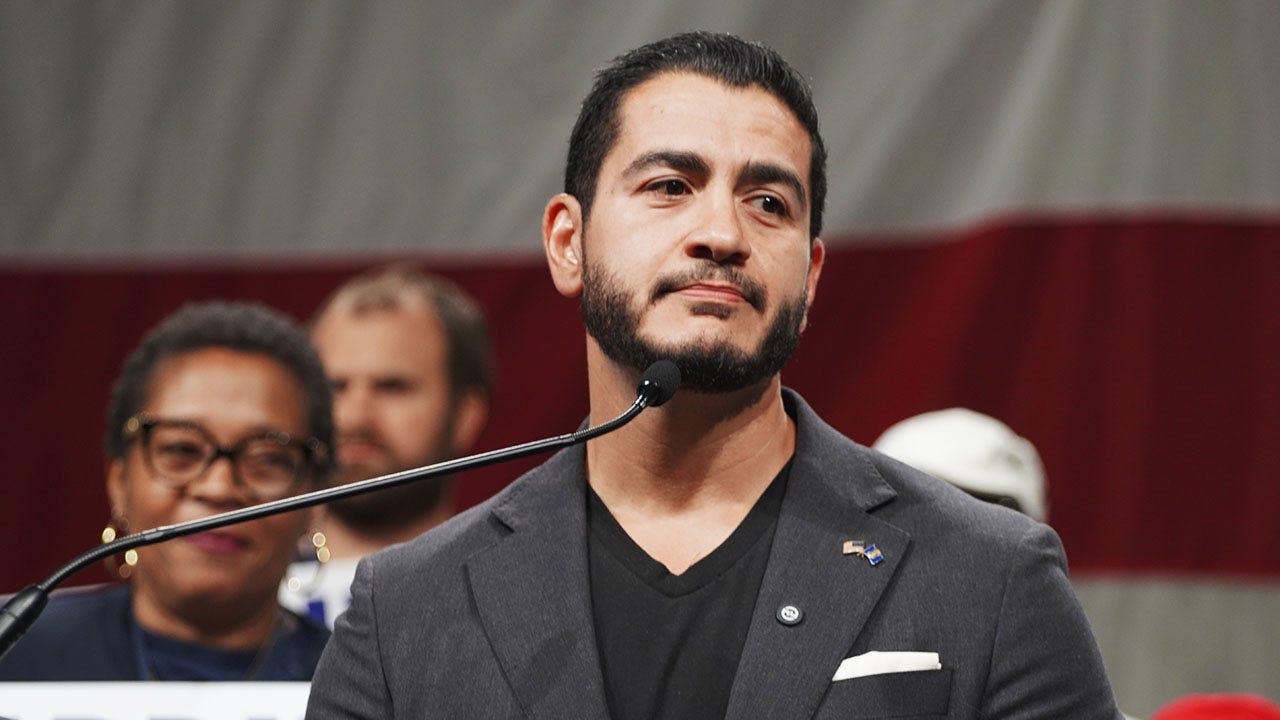
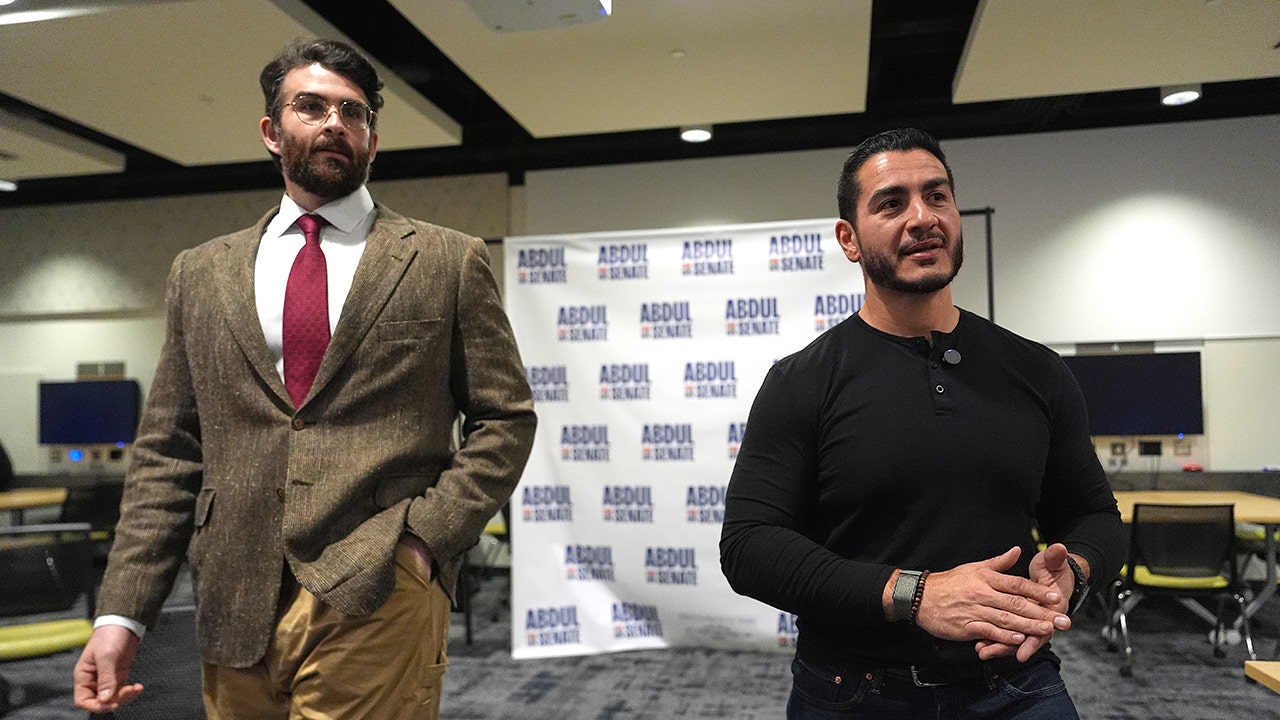
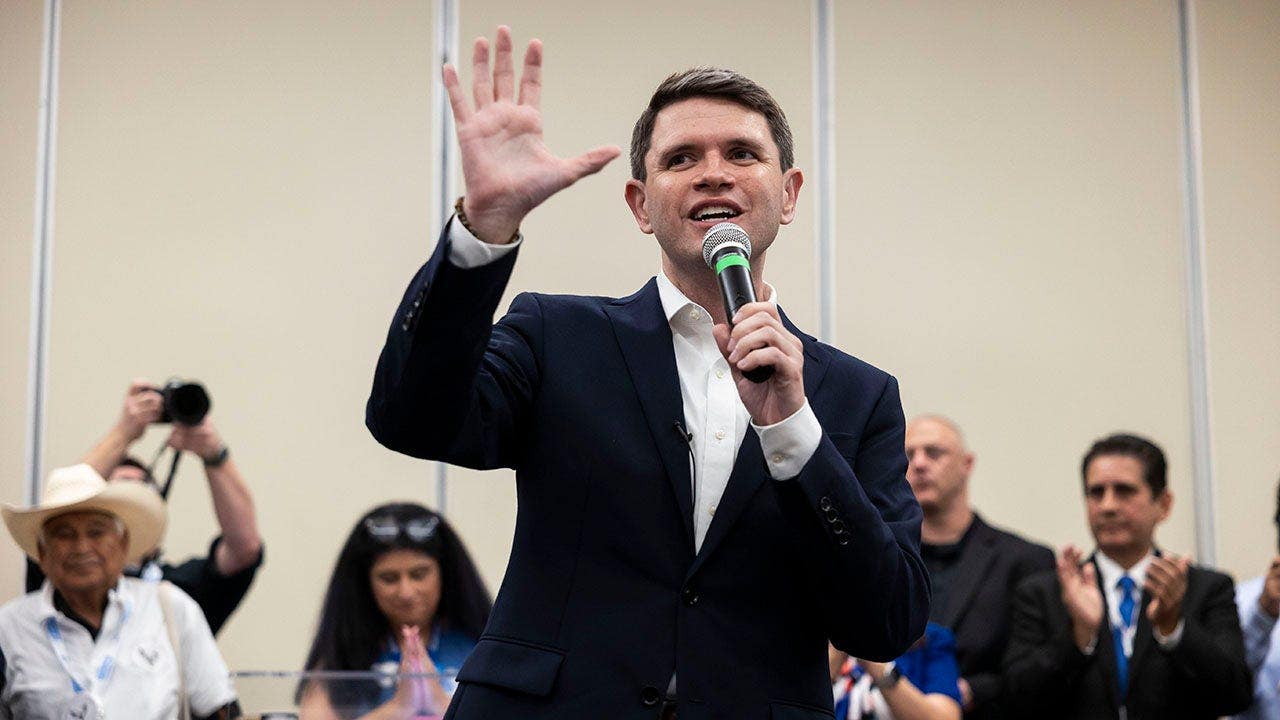
Abdul El-Sayed, who is currently running for U.S. Senate in Michigan as a Democrat, had previously acknowledged in a 2011 podcast interview that his healthcare vision would require wealthier individuals to pay higher costs while ensuring others have access to better care. This admission contrasts with his recent campaign promises of Medicare for All, which he describes as free at the point of use for everyone. The article highlights how El-Sayed’s earlier statement aligns with a strategy where premiums are slightly increased for high-income earners to fund broader healthcare coverage, addressing inequalities in the system.
Written locally by qwen2.5:14b on 2026-09-17,
using this article's own text rather than the other coverage of the
same event (that is the story summary below).
Story summary
Over a decade before becoming the Democratic nominee for U.S. Senate in Michigan, Abdul El-Sayed acknowledged on a 2011 podcast that his vision for healthcare reform would require different costs for patients depending on their wealth status, saying "We’re actually just going to give other people access to what you have and make yours more expensive." Fifteen years later, El-Sayed has made expanding healthcare a key part of his platform as he campaigns to succeed retiring Sen. Gary Peters. He champions Medicare for All, aiming to expand public coverage for everyone regardless of income or age. This admission contradicts El-Sayed's recent pitch for universal access without cost differences based on wealth, potentially undermining his credibility among voters who support equal healthcare costs.
Written for “El-Sayed Healthcare Admission” on 2026-09-18,
grounded in this article and the 0 other(s) covering the same event.
Why this leaning score
The model judged this article politically coded and scored it -0.35, but none of the 3 quote(s) it offered could be found in the article text, so the score is not published.
Written under an earlier scoring contract, which gave a paragraph
rather than checkable quotes. Re-analysing this article replaces it.
Leaning score withheld for article 16636: no verified evidence · logged 2026-09-17
Over a decade before becoming the Democratic nominee for U.S. Senate in Michigan, Abdul El-Sayed acknowledged that his vision for healthcare would require different costs for patients depending on wealth status.
asserted
vision → become → status
"We’re actually just going to give other people access to what you have and make yours more expensive.
asserted
yours → go → what
We’re not asking you to lose access.
asserted
We → ask → access
We’re just making yours more expensive.
asserted
yours → make → ?
We’re making it marginally more expensive," El-Sayed said in a 2011 appearance on the Sense and Sustainability podcast.
asserted
Sayed → make → podcast
His resurfaced comments, made as part of a program on inequalities in healthcare, reveal El-Sayed’s long-standing thinking behind his proposed policy changes.
asserted
comments → resurface → changes
Fifteen years later, El-Sayed has made an expansion of healthcare in the U.S. a key part of his platform as he wages a bid to succeed retiring Sen. Gary Peters, D-Mich.
In particular, he has championed Medicare for All, an expansion of the federal program that covers healthcare costs for U.S. citizens over the age of 65 and for some younger recipients with long-term disabilities.
asserted
that → make → disabilities
El-Sayed’s plan would expand public coverage for everyone, regardless of income, age or job.
asserted
plan → expand → income
"Medicare for All means no premium, no co-pay, no deductible.
asserted
Medicare → mean → premium
Doesn’t matter if you get a job, lose a job, turn 26, turn 65, get married, get divorced — it is there for you," El-Sayed said in a post to X earlier this year.
asserted
Sayed → matter → X
Skeptics of the plan argue it is too expensive and does little to address existing inefficiencies in the American healthcare system.
asserted
it → argue → system
In 2019, Sen. John Barrasso, R-Wyo., took to the Senate floor to blast the idea, calling it a straitjacket solution that would undermine health care quality.
asserted
that → take → quality
"The [Congressional Budget Office] projects in its report on a single-payer plan that government spending on health care would increase substantially.
asserted
spending → project → care
They go on to say to cover the massive cost of government-run care, income taxes would have to at least double.
asserted
taxes → go → care
Income taxes, American families — at least double," Barrasso said.
asserted
Barrasso → say → ?
"Mark my words, Medicare for All would soon become Medicare for none."
asserted
Medicare → mark → none
Despite its hefty price tag, in El-Sayed’s view, the plan is key to ensuring equality of outcomes, even if individual patients are charged differently.
asserted
patients → ensure → outcomes
He expounded on his design in the 2011 interview.
asserted
He → expound → interview
"We wouldn’t necessarily be ‘stealing from the rich to give to the poor’ in the U.S. because the rich will always have the ability to pay for the care that they need," El-Sayed said.
asserted
Sayed → steal → that
"The argument would be that everyone’s premiums would go up a little bit.
asserted
premiums → go → ?
But for the people who actually have premiums now, what they’re losing in terms of the added costs on their health plans are more manageable to them than is the absolute lack of access to healthcare among the people that don’t have it now."
asserted
that → have → it
El-Sayed argued that his vision would make costs only marginally more expensive for top earners.
asserted
costs → argue → earners
His campaign did not immediately respond to a request for comment on whether it could expand on the costs of El-Sayed’s vision.
uncertain
it → respond → vision
Having cleared the Democratic primary in Michigan, El-Sayed will face off against Republican challenger Mike Rogers, a former congressman, in the state's Nov. 3 general election.
asserted
Sayed → clear → election
 The Aporia