Egyptian archaeologists discovered a tomb at Saqqara containing the burial place of Sekhentyu-Ptah, an Old Kingdom official, along with three sealed sarcophagi and over 100 faience ushabti figurines. The tomb includes a funerary chapel, false door, alabaster objects, and other artifacts such as pottery and a wooden falcon figure, indicating the site was used for burials across different periods. Inscriptions on the alabaster items identify Sekhentyu-Ptah’s roles including royal chamberlain, supervisor of documents, priest of maat, and supervisor of scribes, highlighting his importance in both administration and religious spheres during the Old Kingdom era.
Written locally by qwen2.5:14b on 2026-09-17,
using this article's own text rather than the other coverage of the
same event (that is the story summary below).
A newly discovered tomb at Egypt’s Saqqara necropolis has revealed the burial place of a senior Old Kingdom official, along with a wider network of burials.
asserted
tomb → discover → burials
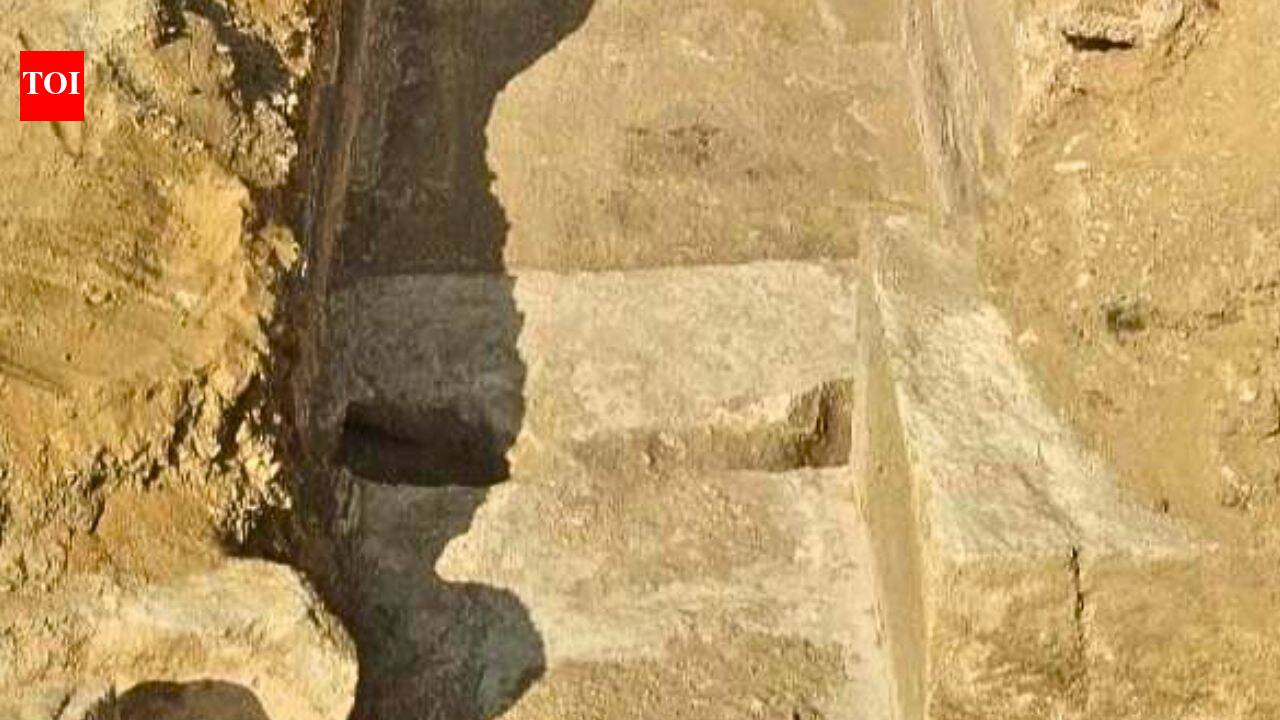
An Egyptian archaeological mission found the tomb of Sekhentyu-Ptah during its first excavation season in the west of the Bubasteion.
asserted
mission → find → Bubasteion
The site contains a funerary chapel, a false door, alabaster objects bearing inscriptions, three sealed stone sarcophagi and more than 100 faience ushabti figurines.
asserted
site → contain → inscriptions
According to the Egypt State Information Service, the inscriptions identify Sekhentyu-Ptah and list several senior roles he held in the royal administration.
uncertain
he → accord → administration
Other discoveries, including human remains, decorated funerary cartonnage, pottery and a wooden falcon figure, show that the area remained in use across later periods.
asserted
area → include → periods
Inside the tomb of Sekhentyu-Ptah and his preserved funerary chapel
The tomb belonged to Sekhentyu-Ptah, a senior official whose funerary chapel was found with its false door that is still preserved in its original position.
asserted
that → preserve → position
The discovery was made during the mission’s first excavation season at a site that is located west of the Bubasteion necropolis.
asserted
that → make → necropolis
The area around the false door contained several alabaster funerary objects, including an offering table, an offering disc, and a purification basin.
asserted
area → contain → table
Hieroglyphic inscriptions on these objects include Sekhentyu-Ptah’s name and titles, helping researchers identify the tomb and its occupant.
asserted
researchers → include → tomb
The inscriptions also demonstrate that he was an important official who held administrative and religious responsibilities during Egypt’s Old Kingdom.
asserted
who → demonstrate → Kingdom
What do the inscriptions reveal about Sekhentyu-Ptah’s role
The inscriptions on the alabaster objects reveal the range of roles held by Sekhentyu-Ptah.
asserted
inscriptions → reveal → Ptah
They identify him as a royal chamberlain and supervisor of the king’s works.
asserted
They → identify → works
He also served as a supervisor of royal documents, a priest of the goddess maat, and a supervisor of scribes.
asserted
He → serve → scribes
These titles indicate that his work covered both the royal administration and religious affairs.
asserted
work → indicate → administration
The inscriptions provide valuable details about his position within the Old Kingdom hierarchy, while also linking the funerary objects to the official buried in the tomb.
asserted
inscriptions → provide → tomb
Together, they offer a clearer picture of the responsibilities assigned to this senior official.
asserted
they → offer → official
What other artefacts were discovered at the Saqqara site
The excavation also uncovered interconnected burial shafts containing human remains and large quantities of decorated funerary cartonnage.
asserted
excavation → discover → cartonnage
Archaeologists found more than 100 faience ushabti figurines, along with three stone sarcophagi that remained sealed.
asserted
that → find → sarcophagi
Other discoveries included a wooden falcon figure, pottery vessels and additional funerary objects.
asserted
discoveries → include → figure
Together, these finds indicate that the excavation covers more than a single tomb.
asserted
excavation → indicate → tomb
The interconnected shafts form part of a wider burial network, with artefacts and remains representing different stages in the long history of the necropolis.
asserted
artefacts → form → necropolis
The findings provide further evidence of how the site was used for burials over time.
asserted
site → provide → time
How was the ancient burial complex reused and altered
The burial network also shows that the area continued to be used after Sekhentyu-Ptah’s time.
asserted
area → reuse → time
Archaeologists found evidence of later activity within the necropolis, including burial shafts that had been looted in ancient times.
asserted
that → find → times
Tomb robbers appear to have created openings between separate burial chambers that allowed them to move through parts of the complex.
asserted
them → appear → complex
These changes provide clues about what happened to the burial site after its original use.
asserted
what → provide → use
The artefacts and human remains recovered from the shafts help researchers trace different phases of activity at the necropolis.
asserted
researchers → recover → necropolis
Together, these findings indicate how the area was reused and altered over time.
asserted
area → indicate → time
What could further excavation reveal about the Saqqara site
The archaeological mission will continue excavating the area while analysing the material recovered from the tombs and burial shafts.
uncertain
mission → reveal → tombs
The work is expected to provide more information about burial practices and the development of the Saqqara necropolis across different periods of ancient Egyptian history.
asserted
work → expect → history
Further study of the inscriptions, funerary objects, human remains and sealed sarcophagi may also help researchers establish how the site was used over time.
uncertain
site → seal → time
The discovery has already brought together evidence from the burial of an Old Kingdom official and later activity at the necropolis, giving archaeologists material to examine the changing practices associated with the site.
asserted
discovery → bring → site
 The Aporia