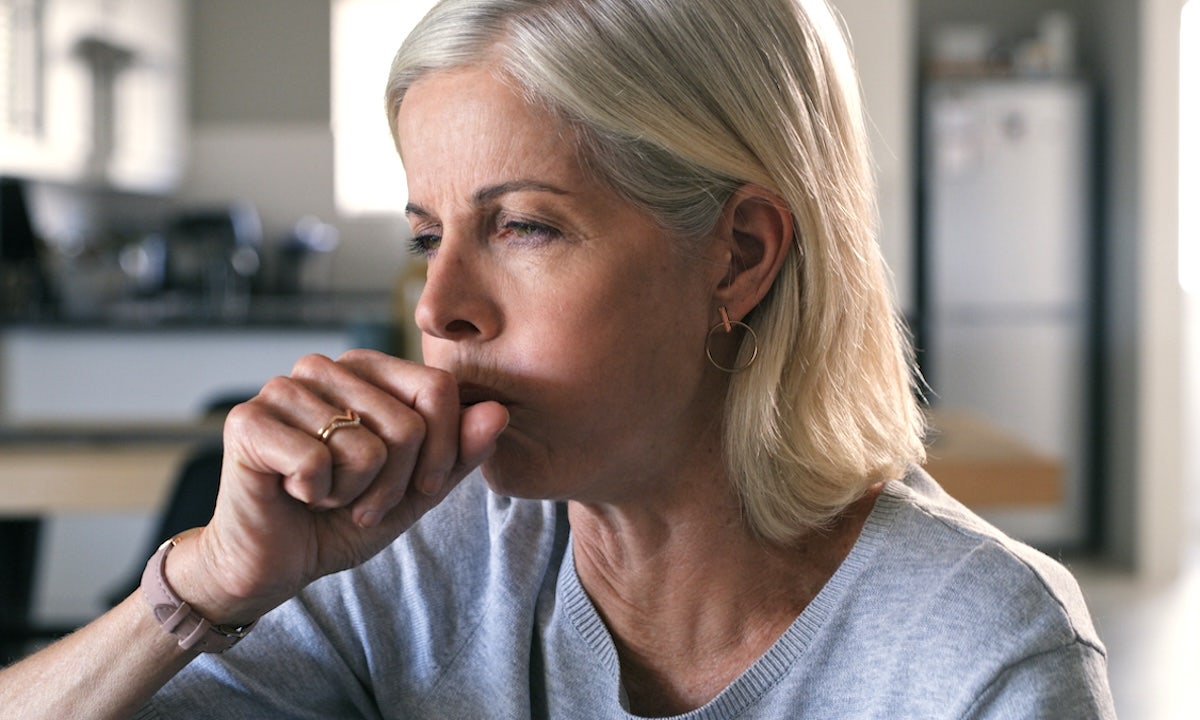
The CDC reports that 71.5% of U.S. adults experience fatigue over any given three-month period, with 16.6% experiencing frequent fatigue. The survey, based on data from approximately 27,000 adults in the National Health Interview Survey, highlights that younger adults (ages 18 to 34) and women report higher rates of exhaustion compared to other demographics. Dr. Earnest Lee Murray suggests poor sleep quality and psychosocial stress as primary contributors to fatigue, emphasizing its impact on daily life and work productivity.
Written locally by qwen2.5:14b on 2026-09-17,
using this article's own text rather than the other coverage of the
same event (that is the story summary below).
Story summary
The Centers for Disease Control and Prevention’s National Center for Health Statistics recently released data revealing that 71.5% of U.S. adults report feeling fatigued on at least some days over any given three-month period, with 16.6% experiencing "frequent fatigue" defined as exhaustion most days or every day. Based on the 2024 National Health Interview Survey involving about 27,000 adults, public health officials emphasize that this widespread exhaustion is significantly impacting work and daily life. Dr. Earnest Lee Murray, a neurologist at Jackson-Madison County General Hospital in Tennessee, notes that while underlying medical conditions can contribute to fatigue, the primary causes are often poor sleep quality and psychosocial stress, with frequent fatigue being more prevalent among women (20%) than men (13%).
Written for “American Health Problem Exhaustion” on 2026-09-18,
grounded in this article and the 0 other(s) covering the same event.
Why this leaning score
This article does not take a side on a contested political
question, so it has no leaning score. That is an
answer rather than a gap: a match report or a rescue can be warmly
or critically written without being left or right, and scoring it
anyway is how approval of a subject gets recorded as a political
position.
No political leaning scored for article 16540 · logged 2026-09-17
Exhaustion has become the default state for a vast majority of Americans.
asserted
Exhaustion → become → Americans
Data from the Centers for Disease Control and Prevention’s National Center for Health Statistics shows that more than seven in 10 U.S. adults experience fatigue over any given three-month period — a drain that public health officials say is taking a heavy toll on work and daily life.
asserted
officials → show → work
The report, based on the 2024 National Health Interview Survey of roughly 27,000 adults, revealed that exhaustion is one of the most common health complaints nationwide.
asserted
exhaustion → base → complaints
The CDC defines fatigue as a state of physical or mental exhaustion that does not improve with rest, distinguishing it from simple sleepiness.
Overall, 71.5% of respondents reported feeling fatigued on at least some days, with 16.6% reporting "frequent fatigue" — defined as feeling exhausted most days or every day.
"Fatigue can be caused by numerous issues," Dr. Earnest Lee Murray, a board-certified neurologist at Jackson-Madison County General Hospital in Jackson, Tennessee, told Fox News Digital.
While underlying hormonal, cardiac or neurological conditions can play a role, "a vast majority of fatigue people experience is probably related to poor sleep quality as well as psychosocial stress, which a lot of times go hand-in-hand."
Frequent fatigue is significantly more common among women (20%) than men (13%).
asserted
fatigue → define → men
The data also shows that younger adults ages 18 to 34 reported the highest rates of frequent exhaustion at 19.5%, while adults 65 and older reported the lowest rate at 12.9%.
asserted
adults → show → %
Fatigue also increases among lower-income households, residents in rural areas and those living in the South and Midwest.
asserted
Fatigue → increase → South
About 50.9% of adults with frequent fatigue reported having difficulties in three or more functional areas, including mood, mobility and memory.
asserted
% → report → mood
More than one-third of frequently fatigued adults said exhaustion limits their ability to work, while 29% reported cutting back on social activities.
asserted
% → fatigue → activities
"Quality of sleep is very important for restoration of both the mental and physical body," Murray said.
asserted
Murray → say → body
"The fatigue that results from poor quality of sleep contributes to slower thought processing, decreased concentration, and a less productive and happy workforce."
asserted
that → result → processing
Although the report doesn't identify specific causes, experts say workplace culture and constant digital connectivity may contribute to fatigue.
uncertain
culture → identify → fatigue
"The advancements of instant communication technologies certainly have benefits; however, we are not able to disconnect from our work life any longer," Murray said.
asserted
Murray → have → life
"There are now expectation issues from work that can be dealt with quickly over our phone, even late at night.
asserted
that → be → night
Also, social media and constant scrolling have certainly contributed to a reduced quality of sleep."
asserted
media → contribute → sleep
Experts say constant interruptions and digital multitasking can leave people feeling mentally drained.
asserted
interruptions → say → people
Research has found that frequently switching between emails, chat messages and other work tasks forces the brain to repeatedly refocus, contributing to mental fatigue.
asserted
switching → find → fatigue
To combat the growing exhaustion, Murray stressed the need for setting boundaries and seeking medical evaluation as needed.
asserted
Murray → combat → evaluation
"It is important to disconnect from work and our electronic devices in the hours leading up to sleep," he advised.
asserted
he → disconnect → sleep
"Also if fatigue is becoming a problem, it is important to seek medical attention to ensure there's no underlying medical reason contributing to the fatigue."
asserted
it → become → fatigue
 The Aporia