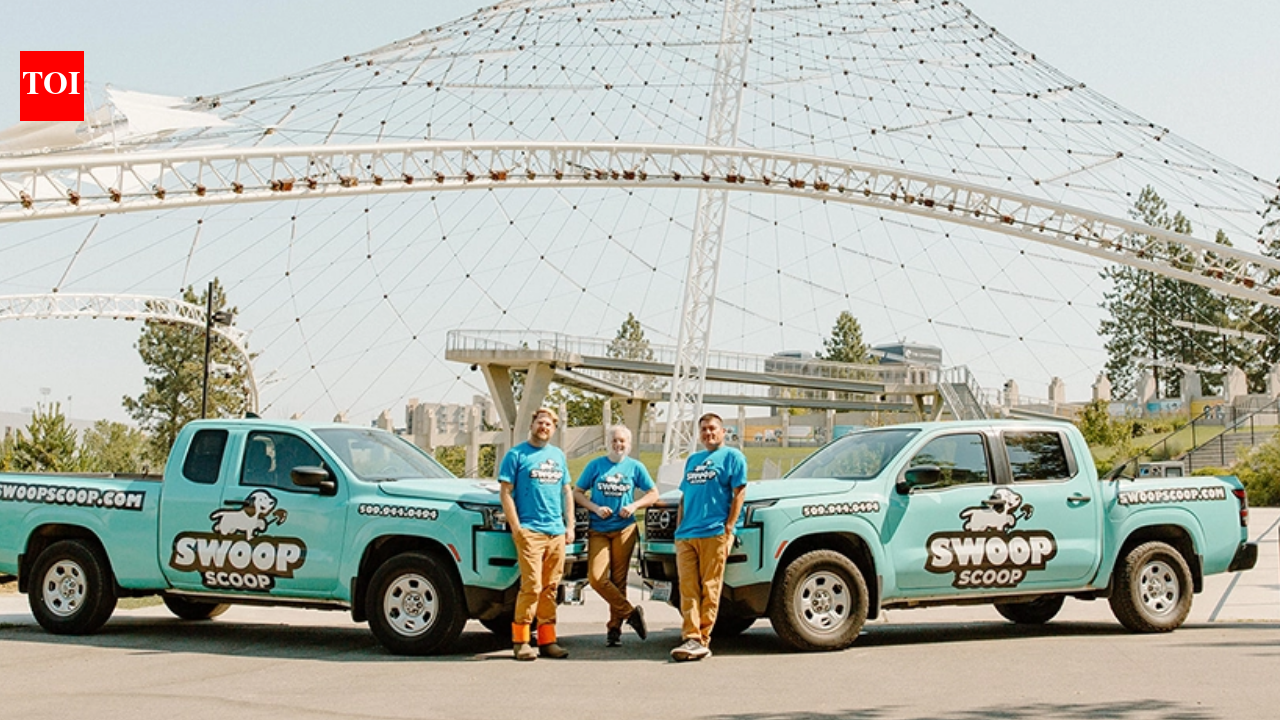
What started as a small Washington business built around one of the least glamorous chores of dog ownership has grown into a multi-market operation generating more than $200,000 a month.
asserted
started → start → 200,000
William Milliken and Levi Swartz founded Swoop Scoop in late 2020 in Spokane Valley, Washington, after recognising that picking up dog waste was an overlooked service that many pet owners would gladly outsource.
asserted
owners → found → that
According to the episode of Millionaire University, featuring Swoop Scoop president Milliken, the entrepreneurs started the business with about $1,000 and grew it from roughly 20 customers to more than 300 within just a few months.
uncertain
entrepreneurs → accord → months
In the episode, Milliken says the company now generates more than $200,000 a month and has expanded into multiple markets.
asserted
company → say → markets
Swoop Scoop's own website describes the company as a dog-waste removal service created to make life easier for pet owners and says it now serves customers across multiple markets.
asserted
it → describe → markets
Milliken and Swartz had both spent years cleaning up after their own dogs and recognised an opportunity in a chore that was necessary but rarely enjoyable.
asserted
that → spend → chore
Rather than creating a new product, the founders focused on providing a service.
asserted
founders → create → service
Customers could pay someone else to regularly remove dog waste from their yards, turning an unpleasant household task into a recurring business relationship.
uncertain
Customers → pay → relationship
According to Swoop Scoop, the company was founded in late 2020 in Spokane Valley with the goal of eliminating what it describes as one of the most dreaded chores for dog owners.
uncertain
it → accord → owners
The company says its founders recognised that professional pooper-scooping was an overlooked service across the United States.
asserted
scooping → say → States
That basic idea became the foundation for a business that could grow one customer and one neighbourhood at a time.
uncertain
that → become → time
Image Credit: Swoop Scoop
Starting with about $1,000
The company's beginnings were modest.
asserted
beginnings → start → 1,000
Milliken told Millionaire University that he and Swartz started Swoop Scoop with about $1,000.
asserted
he → tell → 1,000
The business then grew rapidly, with the podcast reporting that its customer base expanded from roughly 20 customers to more than 300 in a matter of months.
asserted
base → grow → months
The founders used relatively straightforward marketing methods to attract customers.
asserted
founders → use → customers
Milliken discusses Facebook advertising in the podcast, along with the importance of recurring subscription revenue to the company's model.
asserted
Milliken → discuss → model
That recurring element is particularly important for a service such as dog-waste removal.
asserted
element → recur → removal
A customer who signs up for regular cleaning can generate repeated revenue rather than providing the company with only a single transaction.
asserted
who → sign → transaction
The podcast describes this as part of the appeal of so-called “boring” businesses, where a simple service can create a dependable customer relationship without requiring a large initial investment.
asserted
service → describe → investment
Why dog-waste removal can scale
Dog-waste removal may not sound like a conventional high-growth business, but its simplicity can also make the model relatively easy to replicate.
uncertain
model → scale → business
A worker does not need to manufacture a product or maintain a large inventory.
asserted
worker → need → inventory
The company instead organises routes, schedules recurring visits and provides the service at customers' homes.
asserted
company → organise → homes
Swoop Scoop's current website shows how the original idea has developed into a broader service business.
asserted
idea → show → business
The company says it provides dog-waste removal and has built a team focused on delivering what it describes as a professional, “white glove” experience for customers.
asserted
it → say → customers
The company has also expanded geographically.
asserted
company → expand → ?
Its website lists service areas including Spokane, Seattle, Everett and North Idaho, reflecting its growth beyond the Spokane Valley market where it began.
asserted
it → list → market
Expanding beyond Spokane
The expansion accelerated as Swoop Scoop built its customer base and operations.
asserted
Scoop → expand → base
In 2023, the company, then known as Scoop Troop, acquired Dooky's Pet Waste Removal for $54,000, according to the Spokane Journal of Business.
uncertain
company → know → Business
At the time, the company had more than 1,500 customers and about a dozen employees and had expanded into Seattle.
asserted
company → have → Seattle
The company subsequently operated under the Swoop Scoop name as it continued developing its brand and expanding its reach.
asserted
it → operate → reach
The company's growth has also been reflected outside its own reporting.
asserted
growth → reflect → reporting
Swoop Scoop was included on the 2025 Inc. 5000 list at No. 653, with Inc. reporting 638% three-year growth.
asserted
Inc. → include → growth
A Spokane Journal of Business report on the Inc. 5000 recognition said the company's revenue had increased 638% between 2021 and 2024.
asserted
revenue → say → 2021
It also reported that Swoop Scoop had locations in Seattle and Everett, Washington, and North Idaho.
asserted
Scoop → report → Seattle
Building around recurring customers
The subscription model remains central to the company's approach.
asserted
model → build → approach
Instead of waiting for customers to call whenever their yards need cleaning, recurring services allow the company to schedule regular visits.
asserted
company → wait → visits
That creates a predictable need for the customer and a repeat service opportunity for the business.
asserted
That → create → business
The Millionaire University episode specifically identifies recurring subscription revenue as one of the reasons the business model is attractive.
asserted
model → identify → reasons
The podcast also discusses seasonal demand, expanding into new markets and knowing when to pivot as part of the challenges involved in growing the company.
asserted
podcast → discuss → company
For Swoop Scoop, scaling therefore involves more than simply finding more people willing to scoop dog waste.
asserted
scaling → involve → waste
…and 13 more, not listed.
 The Aporia