Claims extracted
15
sentences that state something as happening or true
Uncertain
7%
1 of 15 hedged
("reportedly", "may", "according to")
Leaning
Leans left
of the writing, not the subject · beta estimate
Publisher signals
59/100
Just The News's corrections and
hedging, across everything collected from it. Not a measure of accuracy.
Outlets on this story
2
Politics
Same framing elsewhere
1
articles that frame the event the way this one does
Incoming Democrats in House and Senate pushing massive Medicare expansion in new Congress
asserted
Democrats → income → Congress
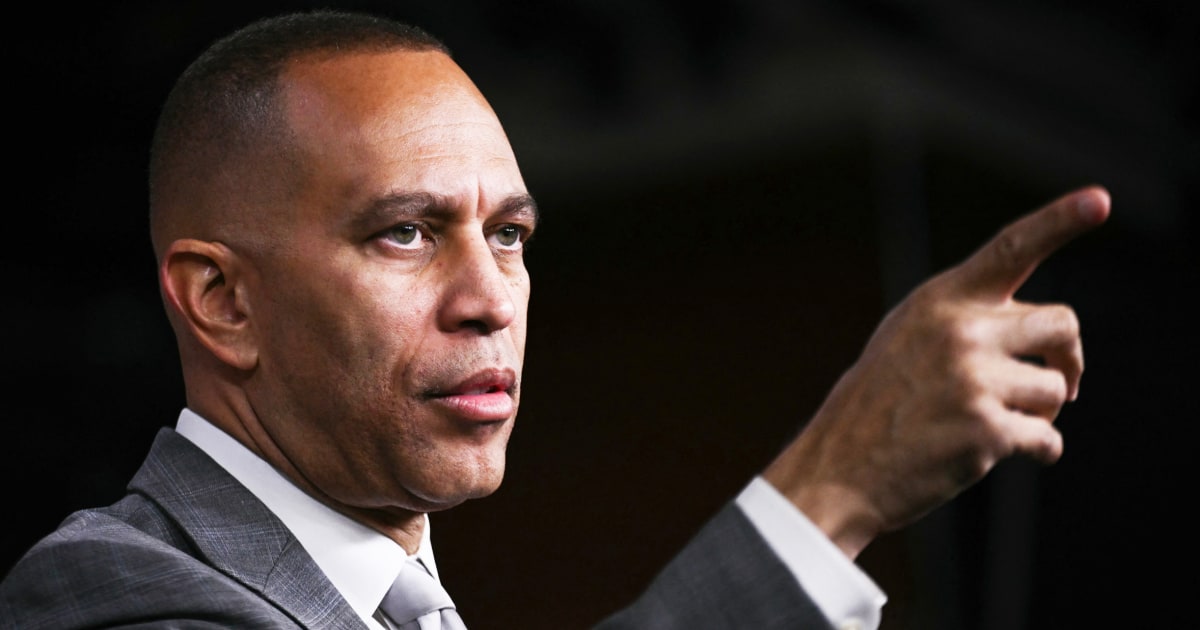
House Minority Leader Hakeem Jeffries, D-N.Y., told reporters Tuesday that broadening eligibility for Medicare coverage is “part of an ongoing conversation, and the great opportunity that we have in front of us.”
asserted
we → tell → us
Since scoring monumental wins in the 2026 midterm elections, Democrats in both chambers of Congress have swiftly pushed forward bills to substantially expand Medicare coverage.
asserted
Democrats → score → coverage
Now, Democratic leadership is publicly supporting such efforts, with House Minority Leader Hakeem Jeffries, D-N.Y., telling reporters Tuesday that broadening eligibility for Medicare coverage is “part of an ongoing conversation, and the great opportunity that we have in front of us.”
asserted
we → support → us
Jeffries, who is widely expected to become House Speaker in the upcoming 120th Congress, said Democrats “will aggressively work on fixing the extraordinary damage that's been done,” referring to Republicans’ Medicaid eligibility reforms and the lapsing of a pandemic-era expansion of the Premium Tax Credit.
But “a return to the status quo is not acceptable,” he added, when “achieving universal access to healthcare for the American people” is Democrats’ ultimate goal.
“[
asserted
achieving → expect → people
We should expand coverage to include vision, hearing, and dental, and we should cover all the kids in the United States of America,” Jeffries said.
asserted
Jeffries → expand → America
“Those are bold actions, meaningful actions, important actions that can be taken on our march toward universal health coverage in terms of the procedural process to enable us to get there.”
asserted
that → take → us
Undoing Republicans’ Medicaid eligibility reforms alone would spike the already $3.3 trillion ten-year cost of Republicans’ “One Big Beautiful Bill” to about $4 trillion by wiping out the roughly $714 billion in savings those measures are expected to produce.
asserted
measures → undo → savings
But even the most modest of Democrats’ newest Medicare expansion proposals would require additional hundreds of billions, if not trillions, in new deficit spending, according to available estimates.
uncertain
modest → require → estimates
Groups of Democratic lawmakers in both the House and Senate have introduced bills that would lower the Medicare eligibility age from 65 to 50.
asserted
that → introduce → 50
Neither the House bill, the Improving Medicare Coverage Act, nor the Senate bill, the Medicare at 50 Act, has an official cost estimate, since the most ambitious Medicare age-lowering proposal the Congressional Budget Office has analyzed is for eligibility at 60 years of age.
asserted
Office → improve → age
CBO’s cost estimate in 2022 for a proposal making every American 60 and older eligible for Medicare was $155 billion by 2031, a number that is likely higher now due to inflation and other program changes.
asserted
that → make → inflation
A recent 2026 analysis by the American Action Forum puts the 10-year cost of lowering the current eligibility age by merely three years at anywhere from $387 billion to $1.8 trillion, depending on how employers act in response.
asserted
employers → put → response
Rep. Rosa DeLauro, D-Conn., currently the top Democrat on the House Appropriations Committee, introduced a bill in late October that would implement universal healthcare in the U.S.
DeLauro offered no cost estimate for the Medicare for America Act, instead arguing that “[h]ealthcare is a right” and that her bill “guarantees that no one in this country will ever be without coverage.”
But despite robust legislative majorities in the next Congress, Democrats would need the support of at least four Republicans in the Senate for the proposals to override the filibuster — unless they utilize budget reconciliation.
Budget reconciliation, the same process Republicans used in 2025 to pass the OBBBA, would allow Democrats to bypass the filibuster entirely and pass legislation with a majority vote, so long as it follows the Byrd Rule.
asserted
it → introduce → Rule
Democrats also used budget reconciliation in 2010 to pass the Affordable Care Act.
asserted
Democrats → use → Act

 The Aporia