Duelling pledges by Labor and the Coalition to lock up more young people for low-level crimes have been slammed by drug, alcohol and youth justice experts, who say the plans will not address the core drivers of youth offending.
asserted
plans → duel → offending
Liberal leader Jess Wilson announced on Sunday a $60 million plan to establish prison “boot camps” where repeat low-level youth offenders will be sent to learn “discipline” through farm work, other labour and education.
asserted
offenders → announce → work
That followed a promise by Premier Ben Carroll to spend $204 million over two years establishing a youth rehabilitation detention system, where young people could be detained for up to 12 months for crimes such as theft, vandalism and minor assaults.
uncertain
people → follow → theft
But experts say the Labor proposal is a distortion of what those at the coalface have been asking for.
asserted
those → say → coalface
Youth crime has become a major headache for Labor in the lead-up to this month’s state election after a spike in youth offending following the COVID-19 pandemic.
asserted
crime → become → pandemic
Rates of crimes committed by kids aged 12 to 17 jumped 24 per cent between 2019 and 2025.
asserted
Rates → commit → 2019
Offending rates fell 9.6 per cent last year.
asserted
rates → fall → ?
Victoria Police chief commissioner Mike Bush earlier this year called for graduated mandatory sentencing for serious offences, including young people who needed “clarity” about the consequences of their actions.
But YSAS (Youth Support and Advocacy Service) chief executive Andrew Bruun said Labor’s announcement was a blow to the leaders in the drug and alcohol sector, who had spent close to a decade working on a plan for youth mandatory rehabilitation orders.
asserted
who → call → orders
Magistrate Jennifer Bowles kicked off that work after growing frustrated with the number of young people before the children’s court with severe substance abuse problems who were not accessing voluntary drug and alcohol rehabilitation services.
asserted
who → kick → services
In 2014, Bowles published a study into programs in Sweden, England, Scotland and New Zealand where young people at extreme risk from substance abuse and sexual or criminal exploitation could be treated in a secure environment.
uncertain
people → publish → environment
Twenty-four leading experts from the drug and alcohol and youth justice sectors have been part of a steering committee for the implementation of Bowles’ “What Can Be Done” model, intended to be a “circuit breaker” to stop children’s lives spiralling out of control.
asserted
lives → lead → control
Carroll referenced Bowles’ work when announcing the policy on Sunday, but Bruun said Labor’s plan was a serious distortion of her proposal.
asserted
plan → reference → proposal
Bruun said a critical element of Bowles’ proposal for mandatory rehabilitation was that they would be non-punitive health and welfare orders issued based on clinical need, not criminal offending.
asserted
they → say → need
Under Bowles’ proposal, treatment would be at “homely units” for up to six months, but with regular monitoring so the young person’s order could be relaxed as soon as they improved.
uncertain
they → relax → monitoring
It would be followed up with 12 months of intensive community care.
asserted
It → follow → care
In contrast, Labor has promised “youth rehabilitation detention” that judges could order at sentencing as an alternative to a community corrections order for low- and mid-level offences, including theft, vandalism, property damage and minor assaults.
uncertain
judges → promise → theft
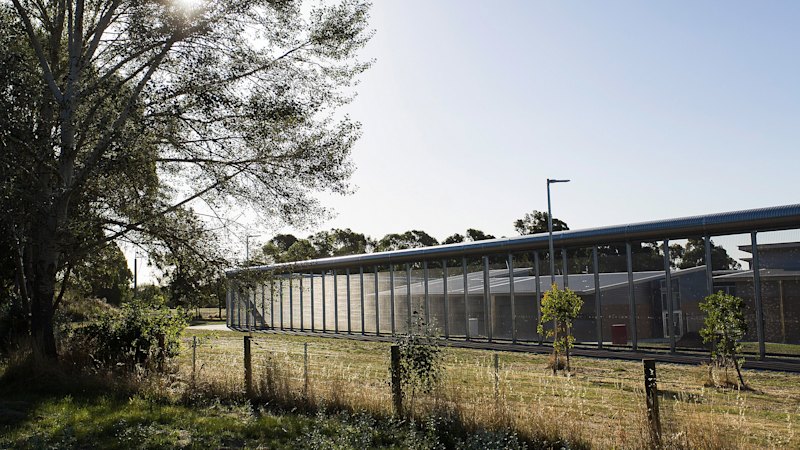
Sentences could be up to 12 months, including at the Malmsbury Youth Justice Centre, which closed in 2023 before the state government reopened it earlier this year to handle the swelling number of young offenders being held on remand.
uncertain
government → include → remand
“We’re trying to look at an option which is going to break that cycle for young people and give them a chance to actually treat the underlying issues and symptoms that are driving their involvement in unsafe and harmful behaviours,” Bruun said.
asserted
Bruun → try → behaviours
“But in this case, if you sentence young people and have them in larger numbers in a youth justice precinct, what is the difference between [this and] youth justice detention?”
asserted
difference → sentence → this
Bowles, who still serves as a reserve magistrate, declined to comment when contacted by The Age.
asserted
who → serve → Age
Labor said it would start with places for about 500 young people over the first two years, which is roughly 10 times the capacity Bowles’ work suggested would be necessary to treat the small number of extreme cases who needed mandatory rehabilitation.
uncertain
who → say → rehabilitation
The Coalition promised to introduce mandatory therapeutic orders based on Bowles’ work ahead of the 2018 election but has not revived the policy this campaign.
asserted
Coalition → promise → policy
Instead, Wilson on Sunday promised to send low-level young offenders to “boot camps” where they would be forced to do farm work and other labour, as well as education and training, at the former Dhurringile Prison near Shepparton.
asserted
they → promise → Shepparton
“This is about instilling the discipline and respect that so many young offenders have not learned throughout their life, and crucially giving them the skills they need to get on the right path,” Wilson said.
asserted
Wilson → instill → path
The “boot-camp” orders would apply to offenders aged 14 to 17 who had repeatedly committed low-level offences such as graffiti and vandalism, she said.
asserted
she → apply → graffiti
Victorian Aboriginal Legal Service CEO Nerita Waight said she was disappointed both major parties were promising to lock up more children rather than pursue evidence-based approaches to improve community safety.
asserted
parties → say → safety
“We have a long history of child labour camps in this country, the harmful effects well documented in the Bringing Them Home report and Yoorrook,” Waight said.
asserted
Waight → have → report
“You cannot punish children into submission.”
asserted
You → punish → submission
Joel McGregor, a senior lecturer in criminology at Swinburne University, said evidence from around the world showed that military-style boot camps did not work in reducing youth crime.
asserted
camps → say → crime
Queensland ended a short-lived youth boot-camp program in 2015 after finding it was expensive and ineffective.
asserted
it → end → 2015
“The thing about boot camps is it looks like the government is doing something, and that’s important; people want to feel safe in their communities.
asserted
people → look → communities
But it doesn’t address those underlining factors,” McGregor said.
asserted
McGregor → address → factors
“Getting young people involved in education and training, addressing drug or alcohol misuse, addressing trauma – those are the things that we know stop young people participating in crime.”
asserted
people → get → crime
McGregor said both major parties’ youth detention policies risked sending low-level offenders into environments where they would be negatively influenced by other detainees and in fact become more likely to reoffend.
asserted
they → say → fact
Justice Reform Initiative executive director Mindy Sotiri said the two major parties’ “evidence-free” policies would push children deeper into the justice system, and remove them from family, school and community when those connections mattered most.
asserted
connections → say → family
“We know that the earlier a child is locked up, the more likely they are to keep cycling through the system, which means more victims and greater cost to taxpayers in the years ahead,” Sotiri said.
asserted
Sotiri → know → years
Victorian Greens justice spokesperson Katherine Copsey said Labor and the Coalition were “locked in a grotesque competition to see who can announce the cruellest headline and lock up the most children”.
asserted
who → say → children
It cost Victoria $7304 per day to keep a young person in prison in 2025, or almost $2.6 million per year, according to the Productivity Commission.
uncertain
It → cost → Commission
In 2023, 56 per cent of young people released from prison were back in jail within 12 months, the commission found.
asserted
commission → release → months
- The polls: Labor is facing an election day wipeout
- Hot seats: Why teal independents are struggling in Victoria
- ‘Misleading’: Why these micro-parties aren’t what they seem
-
asserted
they → face → what
…and 2 more, not listed.
 The Aporia