The Guardian
· collected 2026-09-17 · by Bethan McKernan, Wales correspondent
A cultural initiative called "Cân y Cymoedd" in Port Talbot, Wales, has inspired locals to write songs based on their community's history and heritage. Liz Puleston-Jones found inspiration from the story of Isabel Thomas, a young girl who worked in a tin plate factory during World War II to support her family. Through workshops at schools and community centers, participants have created over two dozen new compositions about local life, rekindling cultural pride among residents and engaging schoolchildren in preserving their history through music. The project aims to produce an album of these original songs for future generations.
Written locally by qwen2.5:14b on 2026-09-17,
using this article's own text rather than the other coverage of the
same event (that is the story summary below).
Story summary
In Port Talbot, Wales, a project called Cân y Cymoedd (When Valleys Sing) has been inspiring residents to explore their heritage through songwriting. Organized by the national folk arts organization Trac Cymru, the initiative involves community and school workshops where musicians, historians, and volunteers help participants uncover stories from local heritage sites and museums. These findings have resulted in the creation of over two dozen new compositions that highlight life in Rhondda Cynon Taf and Neath Port Talbot. One notable story is Isabel Thomas, a 14-year-old girl who worked in a tin plate works during the 1940s to support her family, which inspired musician Liz Puleston-Jones to write about her experience. Jenny Pope, another participant, noted that the project has made Port Talbot feel like "a real beacon of folk music."
Written for “Port Talbot Heritage Project” on 2026-09-17,
grounded in this article and the 0 other(s) covering the same event.
Growing up in Wales, Liz Puleston-Jones was familiar with the country’s rich heritage of storytelling and traditional music, but none of it ever seemed to have much of a connection to her life in Swansea.
asserted
none → grow → Swansea
Researching the history of the area as part of Cân y Cymoedd (When Valleys Sing), a project in nearby Port Talbot, she came across the story of Isabel Thomas, a 14-year-old girl in the 1940s who left school and lied about her age to work in a tin plate works to support her family.
asserted
who → research → family
“Her story really spoke to me,” said Puleston-Jones.
asserted
Jones → speak → me
“Before I did this, I didn’t really have a connection to the history and storytelling aspect of folk music, and how much it’s about community and telling the stories of normal people ...
asserted
it → do → people
Anyone can be part of a tune, and write a tune, and share it.”
asserted
Anyone → write → it
Thomas’s story has now been celebrated in song form as part of the project from Wales’s national folk arts organisation, Trac Cymru.
asserted
story → celebrate → organisation
At Cân y Cymoedd community and school workshops, musicians, historians and volunteers have helped each group uncover stories at local heritage sites and museums, and channelled their findings into the creation of two dozen new compositions about local life in Rhondda Cynon Taf and Neath Port Talbot.
asserted
group → help → Taf
For many participants, the workshops have rekindled a sense of cultural pride and belonging in the community.
asserted
workshops → rekindle → community
Jenny Pope, who took part in the sessions in Port Talbot, said: “For me, it made the Port Talbot area feel like a real beacon of folk music – somewhere people might once have just driven past but now feels full of life and culture.
uncertain
people → take → life
Creating something we can pass on to the next generation has been amazing.”
asserted
we → create → generation
Puleston-Jones added: “I was terrified at the idea of having to write or produce something on my own but it was a collaborative experience.
asserted
it → add → own
Now instead of watching rubbish TV or doomscrolling I’m being drawn to songwriting and playing my violin after years and years.
asserted
I → watch → years
It feels much healthier.”
asserted
It → feel → ?
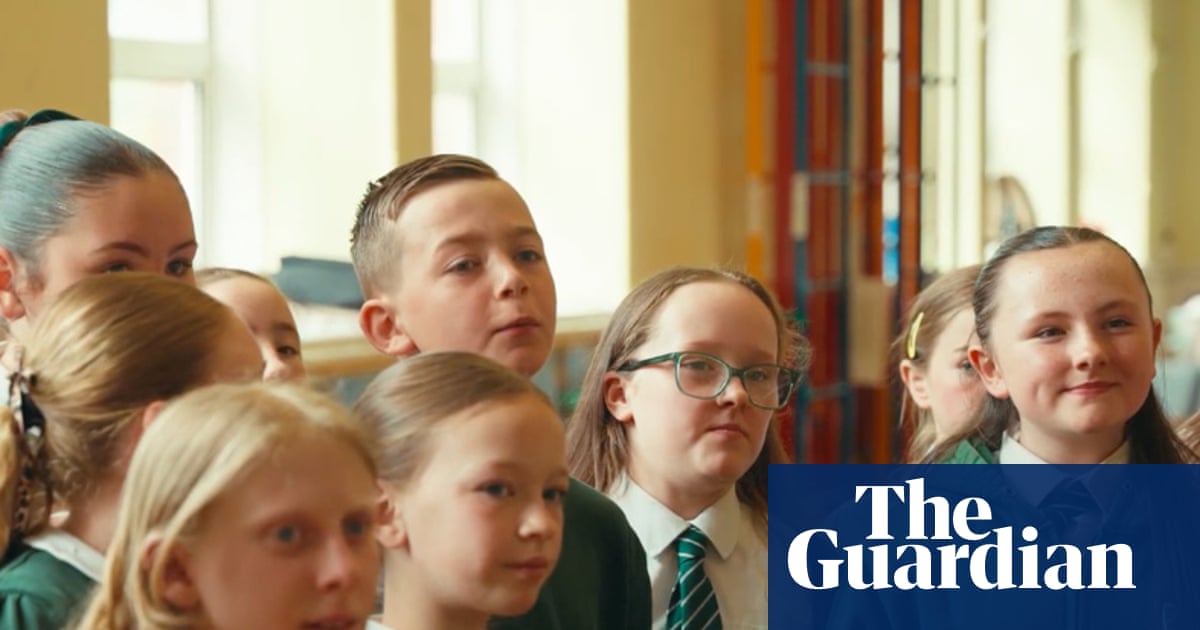
At Llwyncelyn primary school in Porth, in the Rhondda valley, a year 6 class has been busy learning the song about their village composed by last year’s cohort with the help of a fiddle player, Aneirin Jones, before recording a music video at Rhondda Heritage Park, a former colliery.
asserted
class → learn → Park
Their song, Ein Cân Fach Ni (Our Little Song), references the area’s mountains, mines and chapels, as well as the activities and places that make up the children’s day-to-day lives, such as the recycling centre and the playground.
asserted
that → reference → centre
Ifan, 10, said: “I knew Cwm Rhondda before but I didn’t really know anything else about folk music before this, it’s been really fun.
asserted
it → say → this
My sister is annoyed because her class wrote the song but my class is going to make the video!”
asserted
class → annoy → video
The original songs are being professionally recorded for an album Trac Cymru hopes will be accessible to a wider audience and become a resource for future generations.
asserted
Cymru → record → generations
The project manager, Antwn Owen-Hicks, said: “Cân y Cymoedd is about making sure that traditions continue to evolve.
asserted
traditions → say → ?
Magic happens when people explore all of this and begin to see where they’re from in a different light.
asserted
they → happen → light
It doesn’t matter what musical level you’re at or what language you speak.
asserted
you → matter → language
If you’ve got a story, you can write a song, and we help you do this.”
asserted
you → get → this
 The Aporia