Tripoli busts Gaddafi-shaped pill shipment as al-Assad's captagon appears in Libya's east

Read the original at Euronews ↗
Euronews · collected 2026-09-17 · by Aleksandar Brezar

Quick Summary

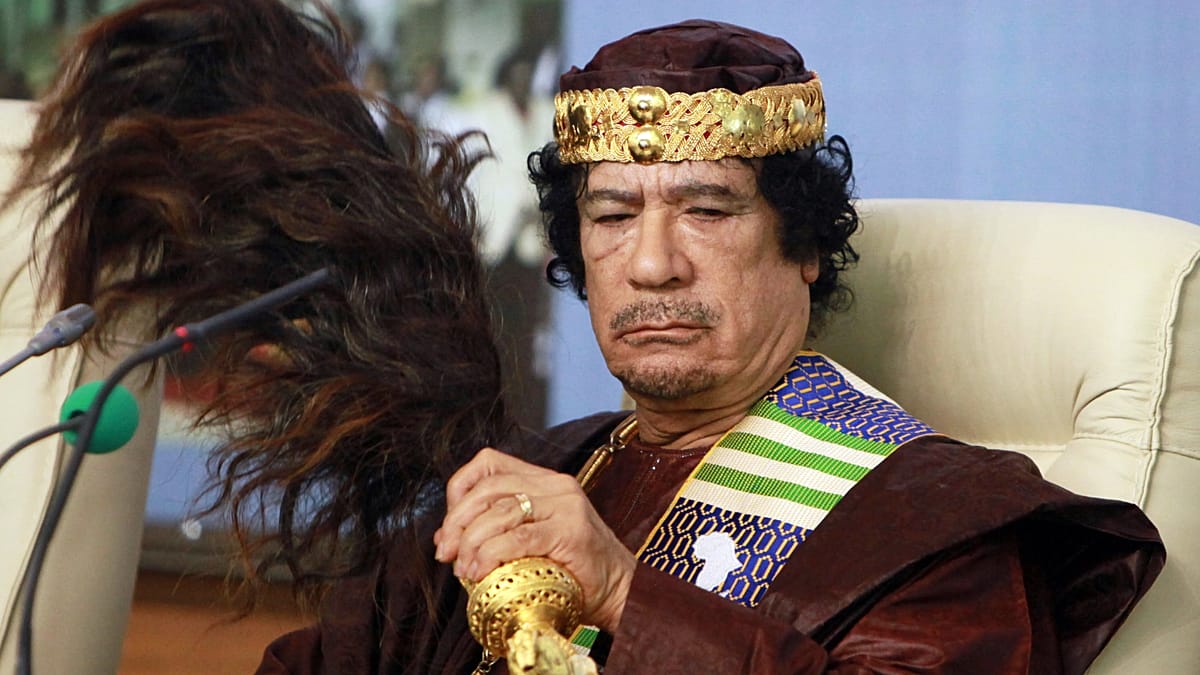
Libya’s Tripoli government security forces seized 100,000 ecstasy tablets shaped like Muammar Gaddafi in a Renault Master van on Saturday. The shipment was intercepted by the Deterrence Apparatus for Combating Terrorism and Organised Crime (Rada) after being smuggled through an unnamed European country and port. Separately, authorities in Benghazi seized captagon pills, with analysts estimating Syria’s captagon trade generated up to $10 billion annually during its peak, linked to the al-Assad regime.
Written locally by qwen2.5:14b on 2026-09-17, using this article's own text rather than the other coverage of the same event (that is the story summary below).

AI analysis runs on qwen2.5:14b, locally

Story summary

Libya security forces seized 100,000 ecstasy pills marked with the face of former leader Muammar Gaddafi in Tripoli. The drugs were smuggled into the country via sea from Europe and discovered after a tip-off led to their tracking. Each pill was shaped like Gaddafi’s head and shoulders, with distinct facial features pressed into them. Libya has become a significant transit hub for synthetic drugs due to ongoing internal conflict since 2011 when NATO-backed uprisings toppled Gaddafi.

In Benghazi, controlled by forces aligned with Marshal Khalifa Haftar and his LNA faction, another seizure took place involving captagon tablets believed to have originated in Syria. The Tripoli government did not disclose the street value of the ecstasy pills but they could be worth between $500,000 and $1.5 million in the broader Mediterranean region according to informal sources.

Written for “Gaddafis Face Drug Seizures Libya” on 2026-09-17, grounded in this article and the 2 other(s) covering the same event.
Why this leaning score
This article does not take a side on a contested political question, so it has no leaning score. That is an answer rather than a gap: a match report or a rescue can be warmly or critically written without being left or right, and scoring it anyway is how approval of a subject gets recorded as a political position.
No political leaning scored for article 16070 · logged 2026-09-17

Signals How these are calculated →

Claims extracted
27
claim-shaped sentences
Uncertain
11%
3 of 27 hedged
Leaning
not political
takes no side on a contested political question
Correction & hedging signals
95.5
corrections and hedging in what we collected; not a measure of accuracy
Outlets on this story
3
Crime & Law
Narrative spread
1
articles carrying this framing
Analyzed 2026-09-17 · how these are computed

Story

📰 Gaddafis Face Drug Seizures Libya
Crime & Law · 3 article(s) covering the same event. See how they differ ↓

How this is being covered How these are calculated →

Article leaning vs. publisher reliability
Source leaning vs. consistency

Compared with similar articles

This article reads unscored and hedges 11% of its claims. Each row says how that neighbour differs.
The Independent · 0.86 cosine similarity
⚖️ leaning not scored 🔴 9% hedged 1 of 11 📰 publisher trust 59
“Both articles describe the seizure of Gaddafi-shaped ecstasy pills in Tripoli on the same date.”
The Straits Times
⚖️ leaning not scored 🔴 10% hedged 1 of 10 📰 publisher trust 59
“While both articles describe drug seizures involving Gaddafi-shaped pills, Article B mentions a separate seizure of captagon tablets in Benghazi which is not covered in Article A.”

Publisher

Euronews · 294 article(s) · 0 correction(s) detected
No corrections detected for this publisher. That may mean careful reporting, or simply that nothing has been checked.

Who wrote this

Aleksandar Brezar
13 article(s) here · 1 carrying a prediction
🔮 Although Tripoli did not disclose the street value of the pills, the 100,000 tablets could be worth between 500,000 and 1.5 million in the broader Mediterranean region, according to available data and informal sources.
🔮 "These are unjust findings, but they are not final and will be subject to review on appeal," Kurti said in a Facebook post.
🔮 His replacement was then rejected by the late king's own family, who produced a 2022 will that the committee ignored.
🔮 Thousands of families have fled their homes in Taiz and nearby provinces in the past day alone, said Khanzad Shah, acting head of Islamic Relief, a charity that operates in the area. "Many of them don't have enough food or water as they had to flee with whatever they could carry.
🔮 "Boats carrying armed Houthi fighters reached Mayyun Island after government forces withdrew from it yesterday," the official said, referring to a rocky volcanic island also known as Perim that divides the narrowest part of the strait into two shipping lanes.
🔮 The Saudi-led coalition, which has been fighting the Houthis on the internationally recognised government's behalf since 2015, said it would "take all necessary measures and actions to respond to the sources of the threat and neutralise its danger".
🔮 Thousands are expected at Mladić's burial in Belgrade on Monday, which will proceed without serving officials, artillery salutes or ceremonial military presence.
🔮 Armenian Prime Minister Nikol Pashinyan told the country’s lawmakers on Monday that Armenia would begin preparing to apply for EU membership, in a historic geopolitical shift for a country formerly in Russia’s orbit and for the South Caucasus as a whole.
🔮 He also said Tokyo will respond in a timely manner by comprehensively considering what serves Japan's national interests, according to Japanese public broadcaster HNK.
Also by Aleksandar Brezar
Nothing else under this byline is closely related to this article, so these are simply their most recent.
All 13 articles by Aleksandar Brezar →

Topics

Benghazi Libyan Syria Tripoli captagon

Subjects

Gaddafi PERSON · 8× Benghazi GPE · 6× Syria GPE · 6× Libyan NORP · 4× Tripoli GPE · 4× Latakia GPE · 3× Libya GPE · 3× al-Assad PERSON · 3× captagon ORG · 3× Renault ORG · 2×

Narrative

In a separate operation in Benghazi — controlled by forces aligned with Marshal Khalifa Haftar and his LNA armed faction — the Criminal Investigation Agency stated this week it seized an undisclosed number of tablets it described as captagon, assessing that Syria was the likely manufacturing point of origin.
framing: assertive · carried by 1 article(s) · first seen 2026-09-17
🔮 Although Tripoli did not disclose the street value of the pills, the 100,000 tablets could be worth between 500,000 and 1.5 million in the broader Mediterranean region, according to available data and informal sources.

Claims (27 extracted, 3 hedged)

Tripoli intercepted 100,000 tablets bearing the late Libyan leader's image shipped via Europe in a Renault Master van, while Benghazi's investigators separately seized captagon tablets assessed to have originated in Syria, where the al-Assad regime once industrialised the billion-dollar trade. asserted
regime → intercept → trade
Tripoli government’s security forces have seized some 100,000 ecstasy tablets in the shape of Libya’s late leader Muammar Gaddafi, as a separate drug bust in the rival-controlled east discovered a shipment of captagon, the ousted Syrian dictator Bashar al-Assad regime's narcotic of choice. asserted
bust → seize → choice
The tablets in Tripoli, intercepted on Saturday by the Deterrence Apparatus for Combating Terrorism and Organised Crime known as Rada, featured Gaddafi’s bust decked out in his characteristic garb, according to Libyan news agency LANA. uncertain
tablets → intercept → LANA
Rada said investigators received information about a criminal network pushing the pills through an undisclosed European country. asserted
investigators → say → country
The shipment came by sea through an unnamed port, hidden inside a Renault Master van. asserted
shipment → come → van
Suspects were apprehended and referred to the public prosecutor’s office, according to reports. uncertain
Suspects → apprehend → reports
Libyan authorities identified the tablets as ecstasy, commonly associated with MDMA, a popular clubbing stimulant known for causing a state of euphoria and emotional warmth. asserted
authorities → identify → euphoria
Although Tripoli did not disclose the street value of the pills, the 100,000 tablets could be worth between 500,000 and 1.5 million in the broader Mediterranean region, according to available data and informal sources. uncertain
tablets → disclose → data
In a separate operation in Benghazi — controlled by forces aligned with Marshal Khalifa Haftar and his LNA armed faction — the Criminal Investigation Agency stated this week it seized an undisclosed number of tablets it described as captagon, assessing that Syria was the likely manufacturing point of origin. asserted
Syria → control → origin
Captagon is a cheap and highly addictive amphetamine-type stimulant that flooded Middle Eastern markets throughout the civil war in Syria, quickly becoming a major source of income for the al-Assad regime. asserted
that → flood → regime
Analysts at the New Lines Institute estimated Syria's captagon trade generated up to $10 billion (€8.6bn) per year at its peak, with the networks around the al-Assad family earning an estimated $2.4 billion (€2bn) annually. asserted
networks → estimate → billion
The regime's total earnings from the trade, which became industrialised around 2018-2019, remain difficult to calculate with precision. asserted
which → industrialise → precision
Multiple governments, including the US and the UK, have sanctioned al-Assad’s brother Maher and a network of associates for their alleged role in overseeing the drug's production and export from regime-controlled facilities in Latakia and the Qalamoun Mountains in cooperation with Hezbollah. asserted
governments → include → Hezbollah
A narcotics trading link between Latakia and Benghazi has been long established. asserted
link → establish → Latakia
In December 2018, Greek authorities intercepted a vessel carrying more than 3 million captagon pills from Latakia en route to the eastern Libyan port city, while separate reporting documented containers from Syria arriving in Benghazi carrying millions of tablets. asserted
reporting → intercept → tablets
Ecstasy meets Gaddafi Gaddafi-shaped tablets have also appeared in Libya before. asserted
tablets → meet → Libya
In August 2025, Benghazi authorities seized an undisclosed quantity of captagon-type tablets bearing Gaddafi’s image. asserted
authorities → seize → image
Forensic experts identified them as MDMA-type narcotics, and investigators stated that the manufacturing source was believed to be Syria. asserted
source → identify → narcotics
MDMA and captagon are both amphetamine-based stimulants. asserted
MDMA → base → ?
In a separate bust that same month, Benghazi said it found 45 ecstasy tablets in the shape of Gaddafi's face among a larger seizure of 1,355 assorted pills. asserted
it → say → pills
It is unknown whether the different sets of Gaddafi tablets are linked to the same manufacturing or trafficking networks. asserted
sets → link → networks
Gaddafi, who ruled Libya for 42 years as its “Brotherly Leader,” was captured and killed by rebel fighters in October 2011 following a popular uprising backed by NATO airstrikes during the Arab Spring. asserted
who → rule → Spring
Gaddafi's image has become increasingly visible in parts of the country 15 years on, often on clothing and at public gatherings marking the anniversary of his 1 September 1969 revolution. asserted
image → become → revolution
The United Nations drug watchdog UNODC said in its 2026 assessment that Libya was an increasingly significant regional transit point for synthetic drugs due to its political fragmentation and weak border controls. asserted
Libya → say → fragmentation
After al-Assad's fall in December 2024, the new Syrian authorities led by interim President Ahmed al-Sharaa destroyed multiple large-scale captagon production and storage facilities, including those found on the al-Assad regime’s former bases. asserted
authorities → lead → bases
However, some of the production and trade still persist after fragmenting into smaller networks mostly linked to al-Assad's loyalists with ties to Hezbollah in neighbouring Lebanon. asserted
some → persist → Lebanon
UN experts reported in late 2025 that significant stockpiles remained in circulation across the wider region. asserted
stockpiles → report → region

💬 Give feedback
🕘 History 🎫 Support