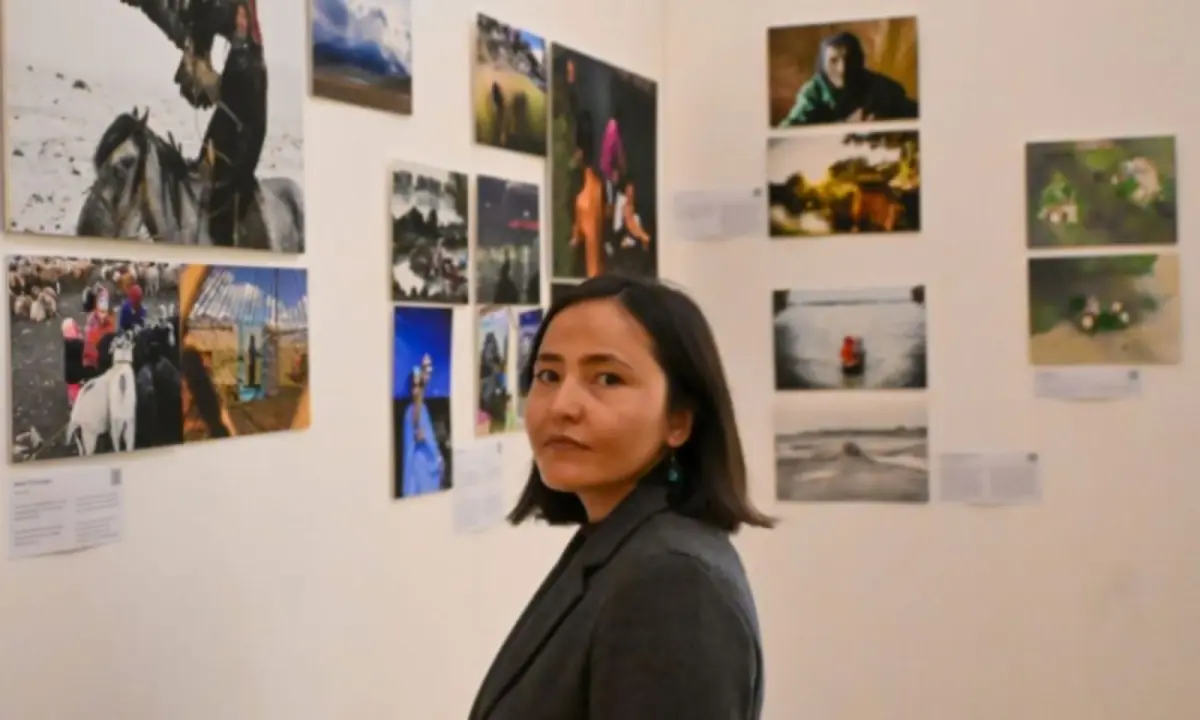
In Afghanistan, women journalists work covertly and communicate using encrypted platforms with colleagues abroad, finding creative ways to continue reporting under the Taliban’s repressive regime.
asserted
journalists → work → regime
Despite significant risks, many continue to write under pseudonyms and strict anonymity conditions – sharing stories driven largely by personal experiences of witnessing the sheer violence and diminishing freedoms within their own communities.
asserted
many → continue → communities
Zahra Nader, editor-in-chief of exiled media outlet Zan Times, works with such women across various provinces – providing them the opportunity to continue reporting under extremely difficult circumstances.
“We set up ourselves as exiled media to be able to cover the stories that could not be covered inside Afghanistan – and that’s the role that we are trying to play.
uncertain
we → work → that
We are doing it as Afghan women journalists.
asserted
We → do → journalists
“We are telling our own story and the story of our country and what’s happening there today,” she said at a keynote conference panel on ‘Voices under Pressure: Perspectives on Press Freedom across Asia’ hosted by the Konrad-Adenauer-Stiftung (KAS) Media Programme Asia in Chiang Mai, Thailand, on Nov 5.
asserted
she → tell → Nov
The outlet takes its name from ‘Zan’ – meaning ‘woman’ in the Afghan Dari language – and was founded in 2022, shortly after the Taliban’s takeover a year prior.
“Right now in Afghanistan, there is a war on women…
asserted
outlet → take → women
When the Taliban took over, women were their first target…
asserted
women → take → ?
Within the first month of the regime, they banned girls from going to school.
asserted
they → ban → school
“By December of 2021, they had banned women from travelling alone.
asserted
they → ban → women
Right now, women in Afghanistan cannot even visit a health clinic by themselves without a mahram [male guardian] or a man accompanying them,” Zahra said.
asserted
Zahra → visit → them
“Women are being arrested on the streets for not properly covering themselves up… There is absolutely no local media in Afghanistan that can report, so that’s why there is a group of us outside Afghanistan doing so,” she added.
asserted
she → arrest → Afghanistan
Yet, despite significant restrictions – Zahra emphasises the unrelenting determination of many Afghan women journalists to keep reporting.
asserted
Zahra → emphasise → journalists
Earlier this year, for example, Zan Times launched its first fellowship programme specifically for women within Afghanistan, receiving an unexpectedly overwhelming response.
asserted
Times → launch → response
“We had only 12 spots for 12 women inside the country – but only within two weeks of our application being opened, we received 860 applications from women living all across the country,” she said.
asserted
she → have → country
Alongside virtual training with media experts from across the world, the online fellowship most importantly prioritises the safety and wellbeing of its reporters.
asserted
fellowship → prioritise → reporters
“We also talk about mental health and about trauma-informed journalism, and we talk about how they can do this work safely from inside their own homes,” Zahra said.
asserted
Zahra → talk → homes
Nevertheless, under circumstances where these women do leave their homes, the precautions taken often include travelling with male chaperones, using burner phones, and preparing ‘cover stories’ in advance, in case they get interrogated by the Taliban.
asserted
they → leave → Taliban
“If our reporters encounter a Taliban checkpoint along the way, she has to have a story of why she’s outside, and where they are going,” Zahra said.
asserted
Zahra → encounter → story
Reporters also never carry the smartphones they use for work.
asserted
they → carry → work
Zahra recalls how one colleague always borrows her mother’s phone instead whenever she leaves the house, because “her mother is not talking to anybody that might be dangerous, so it would still be okay if the Taliban ever checks her phone.
uncertain
Taliban → recall → phone
These preventative measures are especially vital, given that working with exiled media is completely banned in Afghanistan, and journalists have been arrested simply for communicating with editors and colleagues abroad.
asserted
journalists → give → editors
If deemed too risky, stories are eventually dropped altogether to protect reporters and their sources.
“We try to tell them first that they are in charge of their own security.
asserted
they → deem → security
You have to tell us, this is a story that I cannot work on – and we accept that,” Zahra said.
asserted
Zahra → have → that
Local journalists who cannot cover a story themselves often pass the information to Zan Times instead.
asserted
who → cover → Times
Alongside physical safety, psychological safety also remains paramount to the reporters involved – especially given that the stories investigated by Zan Times journalists often revolve around deeply sensitive and violent matters, such as cases of femicide.
asserted
stories → remain → femicide
Earlier this year, for example, Zan Times had documented 231 killings of women, and the lack of accountability that followed.
asserted
that → document → accountability
The findings were later raised at the UN Human Rights Council in Geneva.
asserted
findings → raise → Geneva
“We found out that of every four women that was killed in Afghanistan, only one person was arrested – and even then, that one person was released only within hours.
asserted
person → find → hours
Simply, there’s an impunity for femicide, and there are absolutely no consequences for it,” Zahra said.
asserted
Zahra → ’ → it
When asked how outsiders could help, she urged international media to continue working with local journalists and exiled newsrooms.
uncertain
she → ask → journalists
Despite foreign journalists facing less intimidation and restrictions than local reporters, Zahra acknowledges that sending foreign reporters into Afghanistan is often also very difficult and costly, and many are also not entirely privy to the nuances of local customs.
asserted
many → face → customs
“They don’t know the context.
asserted
They → know → context
They often need fixers and translators, for example…
asserted
They → need → example
Whereas for Afghan journalists, we know the context, we know the language, we know the culture.
asserted
we → know → culture
And our journalists are local to the provinces that we are covering,” she said.
asserted
she → cover → that
“We would be able to tell a much fuller story if the media outlet or the journalists trust us and come to us and work with us.
asserted
outlet → tell → us
Which, unfortunately, is not happening a lot.”
asserted
Which → happen → ?
Real support, she added, also means “acknowledging our journalism, by considering us as colleagues” – and making it harder for governments in the region to ‘whitewash’ the Taliban through continued diplomatic relations and collaborations.
asserted
governments → add → relations
For Zahra, the work also remains deeply personal, and began long before she established Zan Times in 2022.
asserted
she → remain → 2022
As someone who grew up in Kabul and had worked as a journalist in the country prior to the Taliban takeover – even then, she said, Afghan women had rarely been given leadership roles or opportunities equal to their male colleagues.
“There were a lot of assumptions about gender, and about what a woman can or cannot do.
asserted
woman → grow → what
…and 15 more, not listed.
 The Aporia