That is 0 articles you have read today.
The Aporia is free and carries no advertising, so readers are the only
thing paying for it. If you are getting this much out of it, a small
donation is what keeps it independent.
Daily limit reached
You have read 0 articles today.
That is more than the 15 a day The Aporia gives away,
and well past what it can carry on nothing. Your allowance resets at
midnight.
There is no advertising here and nothing about you is sold, so readers
are the only thing paying for it. If the site is worth this much of
your day, it is worth a few dollars.
Everything else stays open: the
maps, the
directory and
search do
not count against this, and neither does re-opening something you have
already read today.
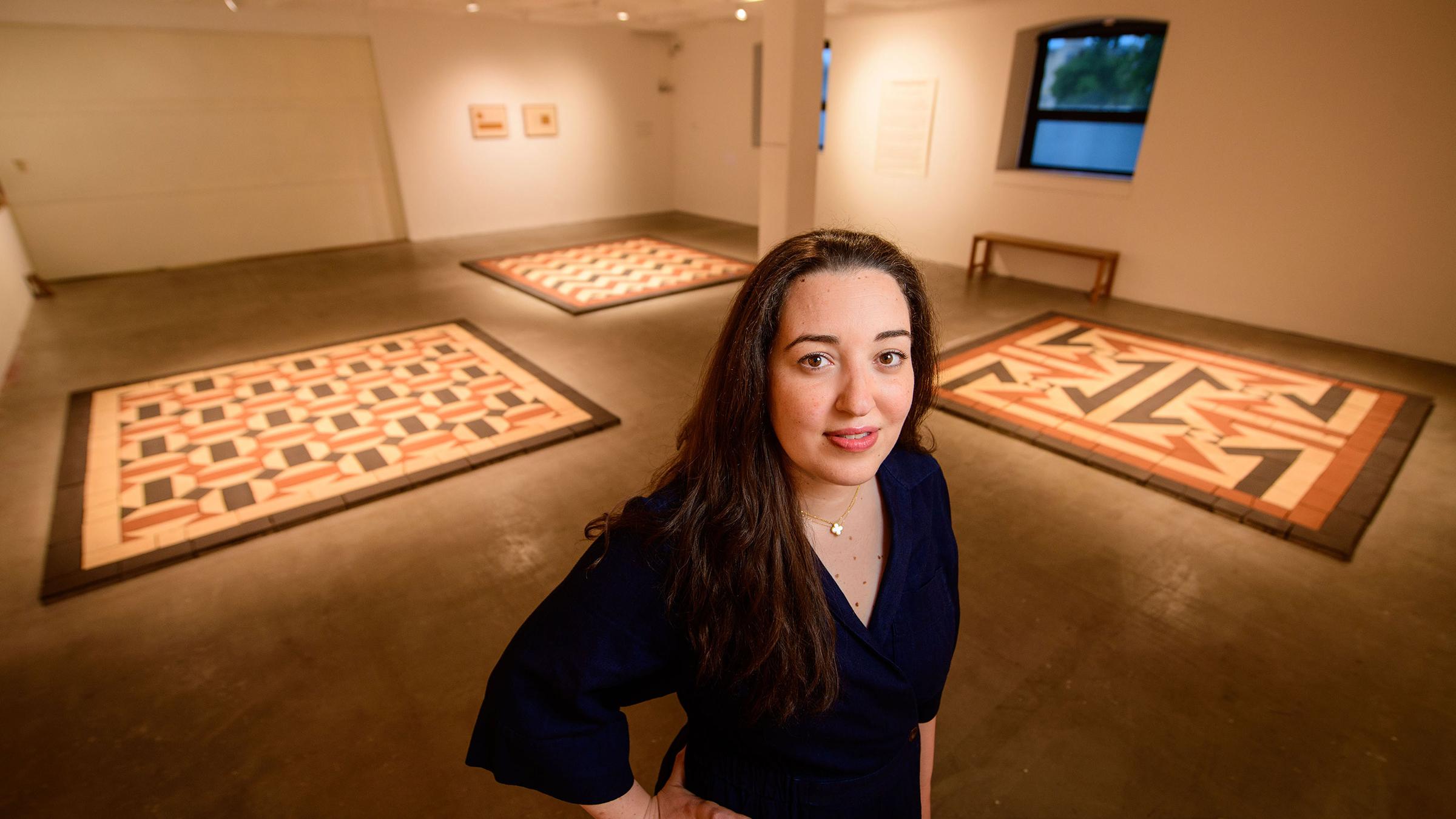
Dana Awartani, a 39-year-old Saudi Arabian artist, uses her work to explore the concept of healing through art. She creates installations from silk panels that she tears and repairs, as well as collaborates with experts in ancient crafts to build memorials for sites damaged by conflict. At the Venice Biennale, Awartani covered the floor of Saudi Arabia’s pavilion with 29,000 handmade clay bricks, symbolizing the destruction of cultural heritage. This installation featured a cracked surface that deteriorated over time, highlighting the fragility of historical and cultural sites affected by violence.
Written locally by qwen2.5:14b on 2026-09-17,
using this article's own text rather than the other coverage of the
same event (that is the story summary below).
Story summary
Dana Awartani, a 39-year-old Saudi Arabian artist trained in Islamic art traditions, created an immersive installation for the 2023 Venice Biennale. She covered the floor of Saudi Arabia’s pavilion with 29,000 clay bricks, handmade by 32 master artisans, to reference 23 damaged cultural sites across the Levant region. The installation was designed to crack over time, symbolizing the fragility of cultural heritage in conflict zones. Awartani’s work highlights art's potential for healing and preserving history. She will open solo shows at Lisson Gallery in London in November 2023 and Stavanger Art Museum in Norway next year.
Written for “Dana Awartani Art Exhibition” on 2026-09-17,
grounded in this article and the 0 other(s) covering the same event.
Why this leaning score
This article does not take a side on a contested political
question, so it has no leaning score. That is an
answer rather than a gap: a match report or a rescue can be warmly
or critically written without being left or right, and scoring it
anyway is how approval of a subject gets recorded as a political
position.
No political leaning scored for article 15897 · logged 2026-09-17
Can art offer a blueprint for healing?
asserted
art → offer → healing
That’s the argument Dana Awartani, 39, makes in her work.
asserted
Awartani → ’ → work
The Saudi Arabian artist creates immersive installations of silk panels by ripping and “darning” (or repairing) the fabric.
asserted
artist → create → fabric
She also works with experts in ancient craft traditions to build installations that double as memorials to places destroyed by conflict.
asserted
that → work → conflict
At this year’s Venice Biennale, she covered the floor of Saudi Arabia’s pavilion with 29,000 clay bricks, handmade by 32 master artisans, which referenced 23 damaged sites across the Levant.
asserted
which → cover → Levant
Entering the installation felt like being transported into an archaeological dig.
asserted
Entering → enter → dig
Laid without binding agents, the floor was designed to crack over the course of the show’s run—an acknowledgement of the fragility of cultural heritage and the violence of erasure.
asserted
floor → lay → erasure
Awartani, who trained in Islamic art traditions, will open solo shows at Lisson Gallery in London in November and Norway’s Stavanger Art Museum next year.
asserted
who → train → November
 The Aporia