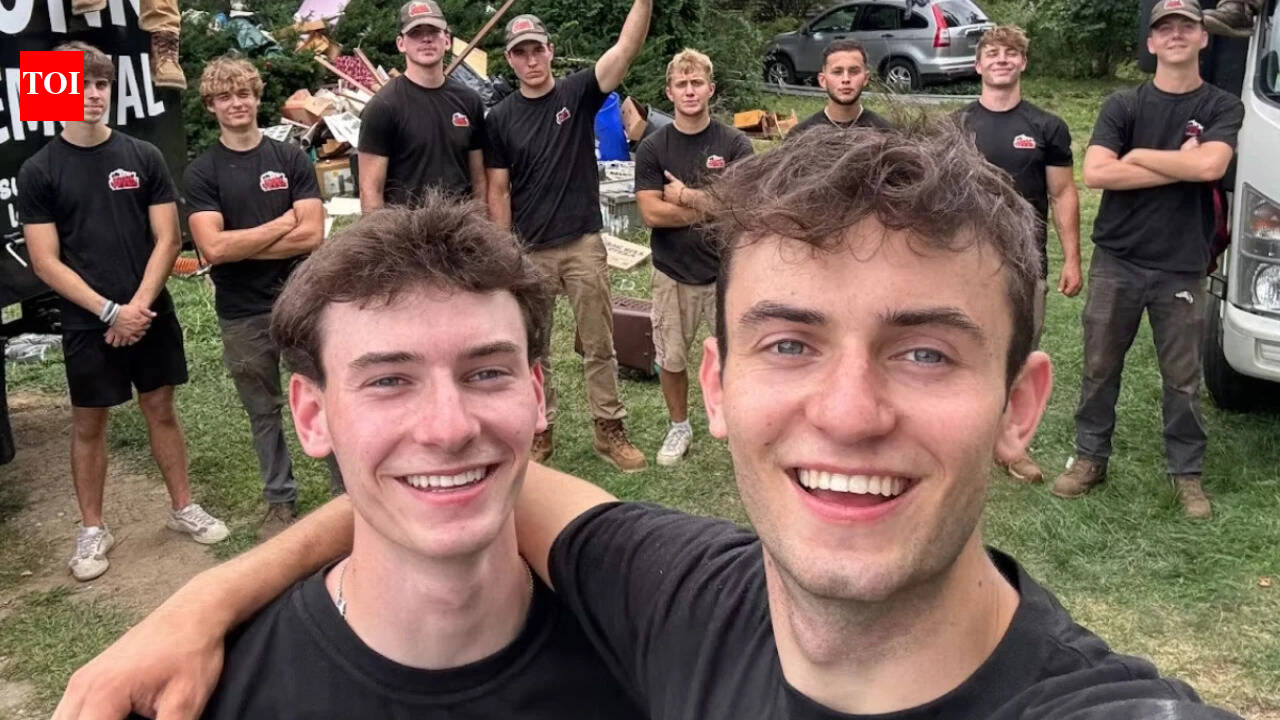
Massachusetts brothers Kirk and Jacob McKinney started Junk Teens as teenagers with a $4,000 truck after finding valuable items at local dumps. By 2025, the company had grown to five dump trucks, over 10 full-time employees, and more than 5,500 jobs completed, generating $3.04 million in revenue. The brothers now study entrepreneurship while running their successful junk removal and reselling business.
Written locally by qwen2.5:14b on 2026-09-17,
using this article's own text rather than the other coverage of the
same event (that is the story summary below).
A bike ride to a local dump led Massachusetts brothers Kirk and Jacob McKinney to start a business that has grown into a multimillion-dollar junk-removal company.
asserted
that → lead → company
Kirk was a teenager when he found a pair of working speakers at the dump and became interested in finding and reselling unwanted items, CNBC reported.
asserted
CNBC → find → items
The brothers launched Junk Teens in February 2021 in Norwood, Massachusetts.
asserted
brothers → launch → Norwood
The company generated $3.04 million in revenue in 2025.
asserted
company → generate → 2025
I just kept going back to the dump and, eventually, my bedroom looked like a mini hoarder’s house,” Kirk said.
asserted
Kirk → keep → house
He began selling items found at dumps and on Facebook Marketplace as a side business.
asserted
He → begin → business
His interest in discarded items soon connected with a local demand for junk removal.
asserted
interest → discard → removal
Kirk said he met people at the dump who were willing to pay local teenagers to remove unwanted items from their homes.
asserted
who → say → homes
He left his grocery store job and asked Jacob to join him.
asserted
He → leave → him
The brothers then bought a used 2006 Ford F-150 pickup truck for $4,000 of their own money.
asserted
brothers → buy → money
“We didn’t really know that we wanted to start this business,” Jacob said.
asserted
Jacob → know → business
They initially took on other jobs, including landscaping and moving work.
asserted
They → take → landscaping
Junk removal and reselling eventually became the part of their work they found most enjoyable and profitable.
asserted
they → become → work
From one to five dump trucks
Customers also showed interest when they learnt that Junk Teens was repurposing items instead of simply removing them.
asserted
Teens → show → them
The business grew from its early pickup-truck operation into a company with five dump trucks and two locations in eastern Massachusetts covering Boston and the Cape Cod area.
asserted
business → grow → Boston
The company completed more than 5,500 jobs in 2025, mostly residential and commercial junk-removal work.
asserted
company → complete → 2025
The brothers said they generally charge $300 to $600 per job, depending on its size and the service required.
asserted
they → say → size
Junk Teens now has 10 full-time employees and about 10 to 15 part-time employees.
asserted
Teens → have → employees
The workers are high school students, college students or people taking gap years.
asserted
workers → take → years
The brothers plan to add two more dump trucks later in 2026.
asserted
brothers → plan → 2026
Kirk and Jacob are also studying entrepreneurship at Babson College while running the company.
asserted
Kirk → study → company
In 2025, each paid themselves salaries in the low-to-mid six figures.
asserted
each → pay → figures
Some of that money went towards their college tuition, while their parents covered the rest.
asserted
parents → go → rest
“The money is great, but that’s not what the whole point of this is,” Kirk said.
asserted
Kirk → ’ → this
“We want to build futures for our friends, and we want to do what we love and not have to work at a job that we hate.”
asserted
we → want → that
The brothers had some business experience at home because their parents run a local tree service company.
asserted
parents → have → company
Kirk said this gave them an early understanding of administration and bookkeeping.
asserted
this → say → administration
“One thing that we were very fortunate for is growing up in a family business background,” he said.
asserted
he → grow → background
“We grew up watching our parents do all of that stuff for their business, and we would ask them questions in the beginning,” Kirk added.
asserted
Kirk → grow → beginning
The brothers also used YouTube to learn how to run the company.
asserted
brothers → use → company
Kirk said they searched for “how to start a junk removal business” and learnt about setting up the legal structure and putting aside money for taxes.
asserted
they → say → taxes
Junk Teens later began posting its own instructional videos, including content about negotiating prices and deciding whether items should be disposed of, flipped or donated.
asserted
items → begin → prices
The company now has more than 400,000 combined followers on Instagram and TikTok.
asserted
company → have → Instagram
Running business while in school
asserted
Running → run → school
In the early days, the brothers worked around their school schedules.
asserted
brothers → work → schedules
They sometimes handled only one or two jobs a week after school or at weekends.
asserted
They → handle → weekends
As the company grew, they hired friends, gave up hobbies such as playing video games and changed their schedules.
asserted
they → grow → schedules
Jacob said they became “really crafty” with their time.
asserted
they → say → time
During his senior year, he negotiated a block of midday free time with his guidance counsellor because local dumps operated during school hours.
asserted
dumps → negotiate → hours
The brothers sometimes parked their dump truck in the school car park.
asserted
brothers → park → park
…and 19 more, not listed.
 The Aporia