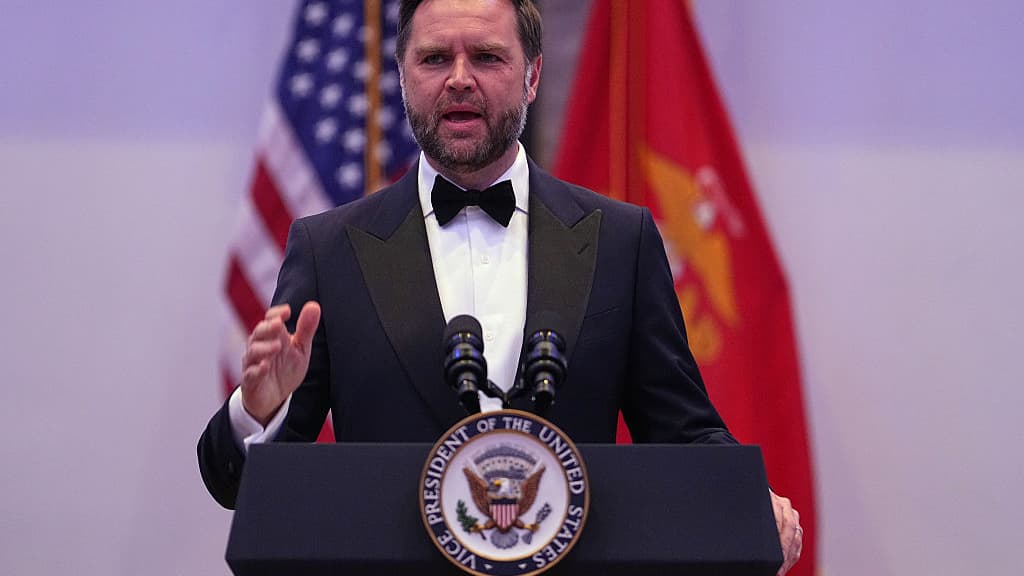
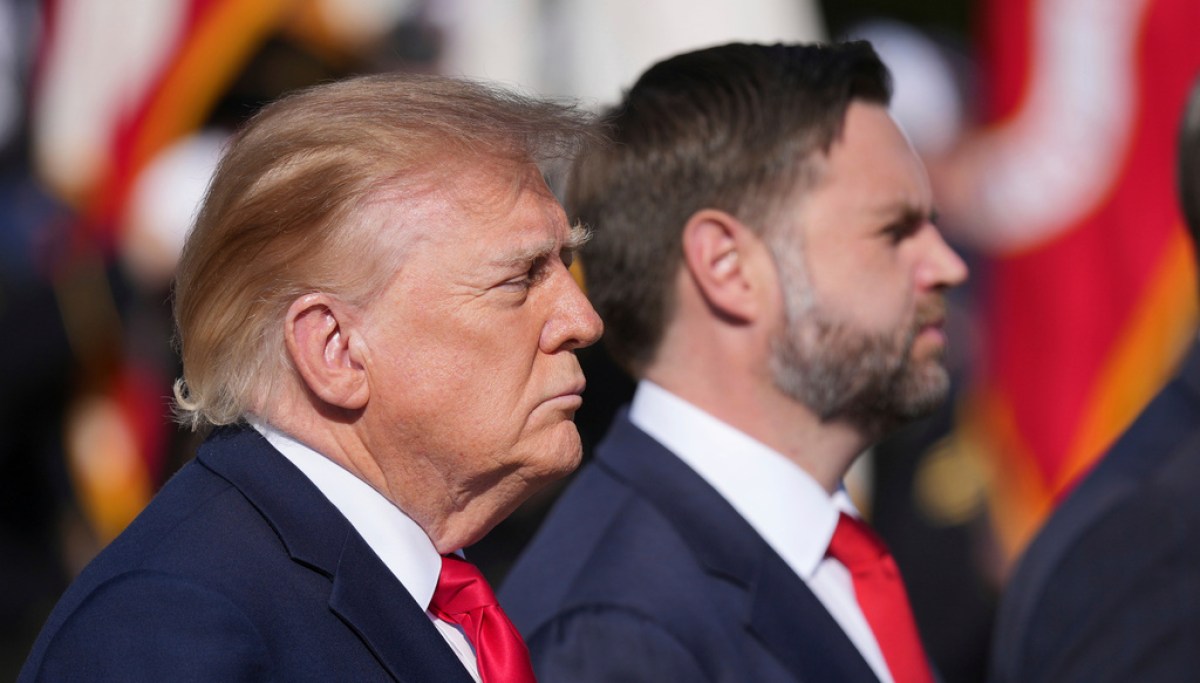
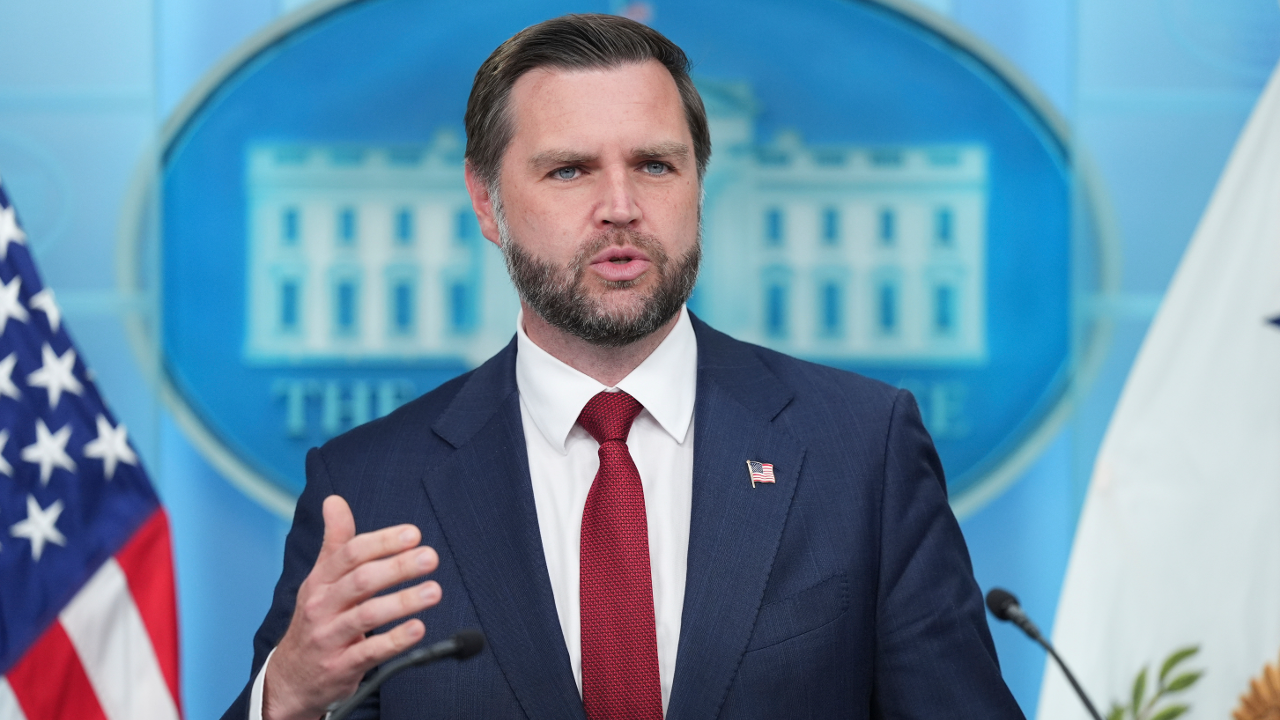
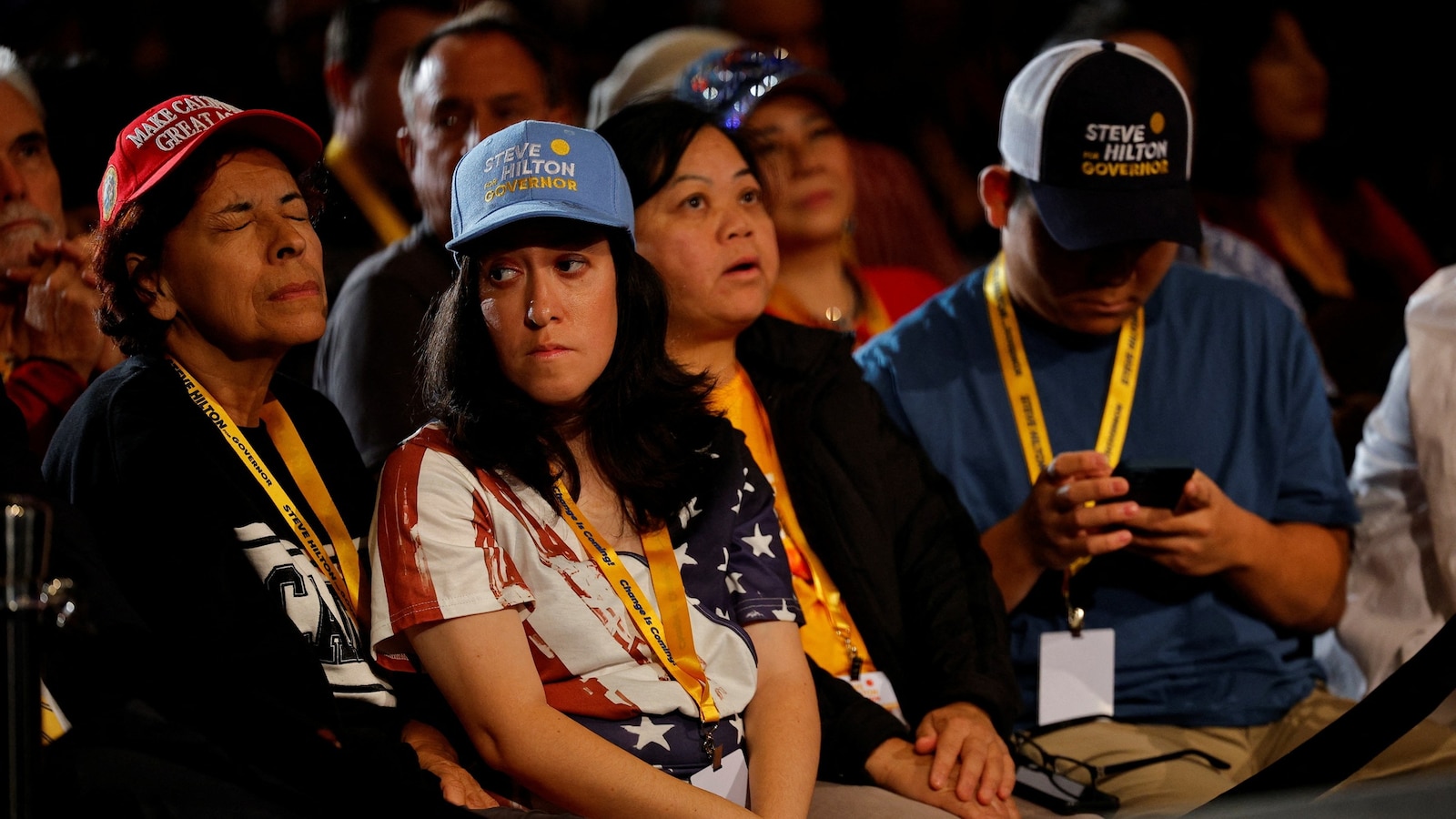
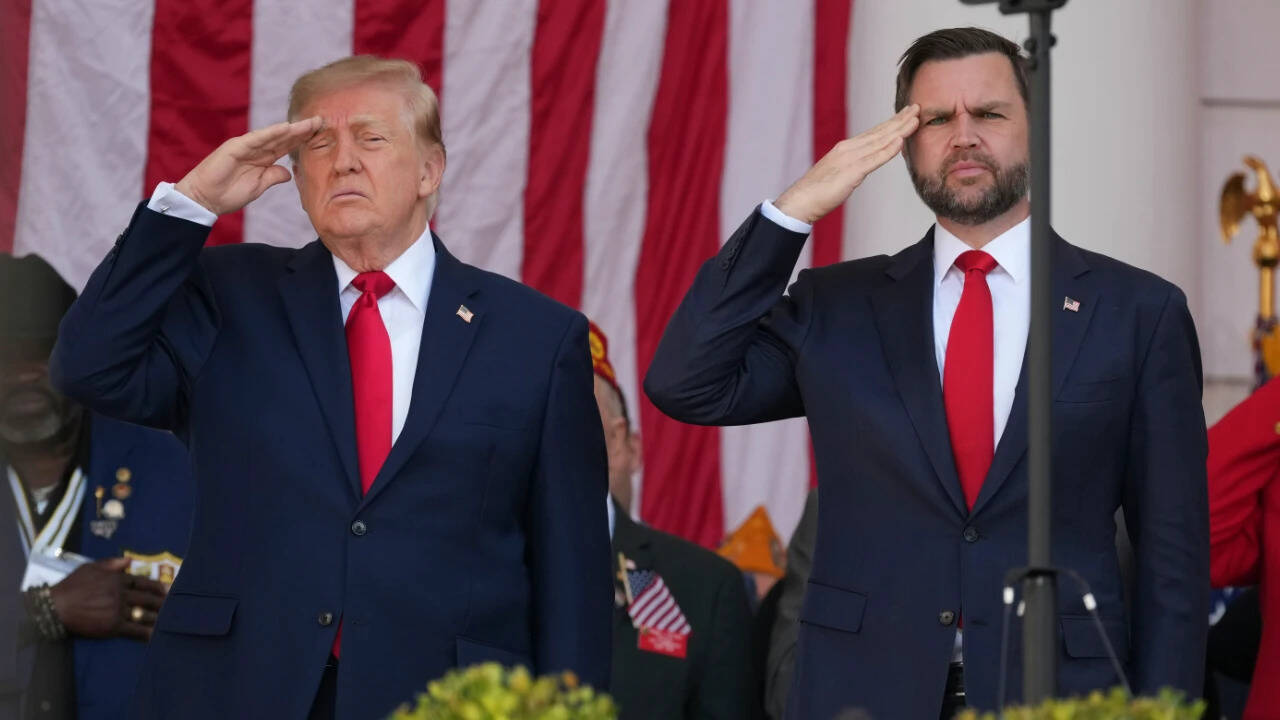
Democrats’ sweeping wins in the midterm elections have dealt a devastating blow to President Donald Trump, and could spell trouble for the speculated presidential ambitions of his second-in-command, Vice President J.D. Vance, as the contest to succeed Trump on the Republican ticket and in the Oval Office looms.
uncertain
contest → deal → Office
Vance is widely considered to be one of the top potential Republican contenders for the 2028 presidential election, though he has previously dismissed suggestions that he intends to run for the White House in two years.
asserted
he → consider → years
(Vance’s office did not respond to a request for comment on this article.
asserted
office → respond → article
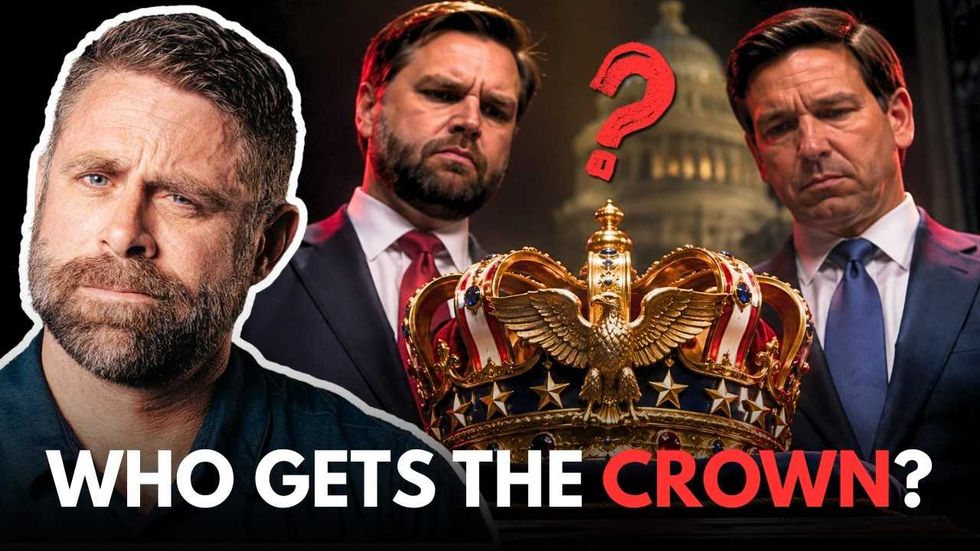
Still, many people have predicted that Vance will ultimately throw his hat in the ring, along with other notable GOP names, including Secretary of State Marco Rubio and Senator Ted Cruz of Texas.
asserted
Vance → predict → Texas
Senate Majority Leader John Thune told POLITICO last week that he is “not going to take sides because we’ll have, probably, several senators maybe in that conversation."
asserted
we → tell → conversation
Trump himself, meanwhile, has repeatedly floated a ticket including both Vance and Rubio, without specifying which of the two he would like to run for President or Vice President.
asserted
he → float → President
Vance led a group of potential candidates for the Republican presidential nomination in a recent YouGov/Economist survey conducted in the wake of the midterm elections, with 40% of respondents saying that they would be most likely to vote for the Vice President to get the GOP nod if the primary were held today.
asserted
primary → lead → nod
But many political pundits have read the results of this month’s elections as a stunning rebuke of Trump—one that, they say, could throw a wrench into a potential Vance presidential run in 2028.
uncertain
they → read → 2028
“The midterms were viewed as being a rebuff of the Administration, which went beyond even the normal loss that the presidential party suffers in the initial midterm,” says Joel K. Goldstein, an expert on the Vice Presidency who has written two books on the subject.
asserted
who → view → subject
Are Democrats’ Stunning Midterm Upsets in Deep-Red States a Blip—or Is Their Map Expanding?
asserted
Map → expand → States
Much of Democrats’ success in the midterms has been attributed to the unpopularity of the President, whose approval rating in the month leading up to Election Day dropped to a historic low, due in large part to the public’s disapproval over his approach to the economy and the Iran war.
asserted
rating → attribute → economy
And because Vance is “closely tied to the Trump Administration,” he “ends up being tarnished” in the aftermath of the midterms, Goldstein says.
asserted
Goldstein → tie → midterms
“Before the midterms, J.D. Vance kind of had [the Republican nomination] almost locked down,” says GOP consultant Barrett Marson.
asserted
Marson → have → midterms
“Now, there are serious questions about whether he—or anyone in the Administration, quite frankly—would be right.”
asserted
he → be → Administration
The Vice Presidency: A ‘presidential springboard’ with ‘baggage’
Goldstein describes the Vice Presidency as “the best presidential springboard” because it can “elevate” a politician in the national spotlight.
asserted
it → describe → spotlight
“Nobody was suggesting that Senator Vance run for President in 2024,” Goldstein says.
asserted
Goldstein → suggest → 2024
“The fact that he was selected as Trump’s running mate and then was elected sort of catapulted him to prominence and really put him in a strong position on the Republican side and that follows sort of a normal pattern of Vice Presidents
asserted
that → select → Presidents
On the other hand, Goldstein points out that there are disadvantages to the job—a major one being that the Vice President ends up inheriting “the baggage” of the Administration.
asserted
President → point → Administration
Costas Panagopoulos, a professor of political science at Northeastern University, says former Vice President Kamala Harris was in a similar position when she ran for President in 2024.
asserted
she → say → 2024
“Part of what made it so difficult for Kamala Harris in 2024 was the high level of dissatisfaction with Joe Biden and perceptions about how his policies or lack thereof affected inflation and prices across the country,” Panagopoulos says.
asserted
Panagopoulos → make → country
“It’s not only difficult for Vice Presidents to get out of the shadow of the President whose Administration they served and establish themselves as an independent voice—it’s even harder when those Presidents are unpopular.”
asserted
Presidents → ’ → voice
“[Harris] was stuck between a rock and a hard place, and J.D. Vance is going to find himself in the same position,” he continues.
asserted
he → stick → position
“I think the same could be said for several high-profile Republicans who are serving in or who have served in the Trump Administration—but there’s no individual who is as closely linked to a President as the Vice President.”
uncertain
who → think → President
What could Vance do to mitigate fallout from the midterms?
uncertain
Vance → do → midterms
Political experts agree that one strategy Vance could take in the aftermath of the midterms is to try to “distance” himself from the President.
uncertain
Vance → agree → President
The public saw a first glimpse of that the morning after Election Day: In a lengthy social media post, Vance blamed the Republican losses in the midterms on the unpopularity of the Iran war.
asserted
Vance → see → war
“There will be a lot of infighting and arguing over what happened and why that is.
asserted
that → happen → infighting
One of the pollsters I really respect told me that our economic messaging wasn’t sharp enough down the stretch.
asserted
messaging → respect → stretch
I’m sure that's true.
asserted
that → ’m → ?
But the real reason we lost is obvious to almost everyone,” Vance said.
asserted
Vance → lose → everyone
“The reason we lost is the war.
asserted
we → lose → ?
The president himself said so last night.”
asserted
president → say → ?
News outlets have reported that Vance had shared reservations in private about launching the war in the Middle East.
asserted
Vance → report → East
When asked about Vance’s social media post, Trump told reporters that he thought the message was “largely true because [the war] drove the gasoline up a little.”
asserted
war → ask → gasoline
But he said, again, that he stood by his decision to launch the war.
asserted
he → say → war
“At the same time, if I had to do it again, I’d have to do it again because long-term, it’s the only answer,” Trump said.
asserted
Trump → have → it
Political experts cast doubt that Vance’s post would be enough to distance himself, in the public’s view, from the unpopular conflict.
asserted
post → cast → conflict
Marson describes Vance’s statement as “incredibly gentle pushback,” adding that the Vice President would “need a course correction—not a tinkering around the edges.”
asserted
President → describe → edges
“He would have to distance himself quite a bit from Trump, and it’s clear that he is trying to do that in part by reinforcing his initial opposition to the war in Iran,” Panagopoulos says.
asserted
Panagopoulos → have → Iran
“But that’s going to be a tough sell for the American public because on most other things, he’s backed up the President, and even on things they might have disagreed on, Vance is viewed as a loyal foot soldier for Donald Trump, for MAGA, and for the Republican Party as it is currently constituted.”
uncertain
it → go → Party
…and 10 more, not listed.
 The Aporia