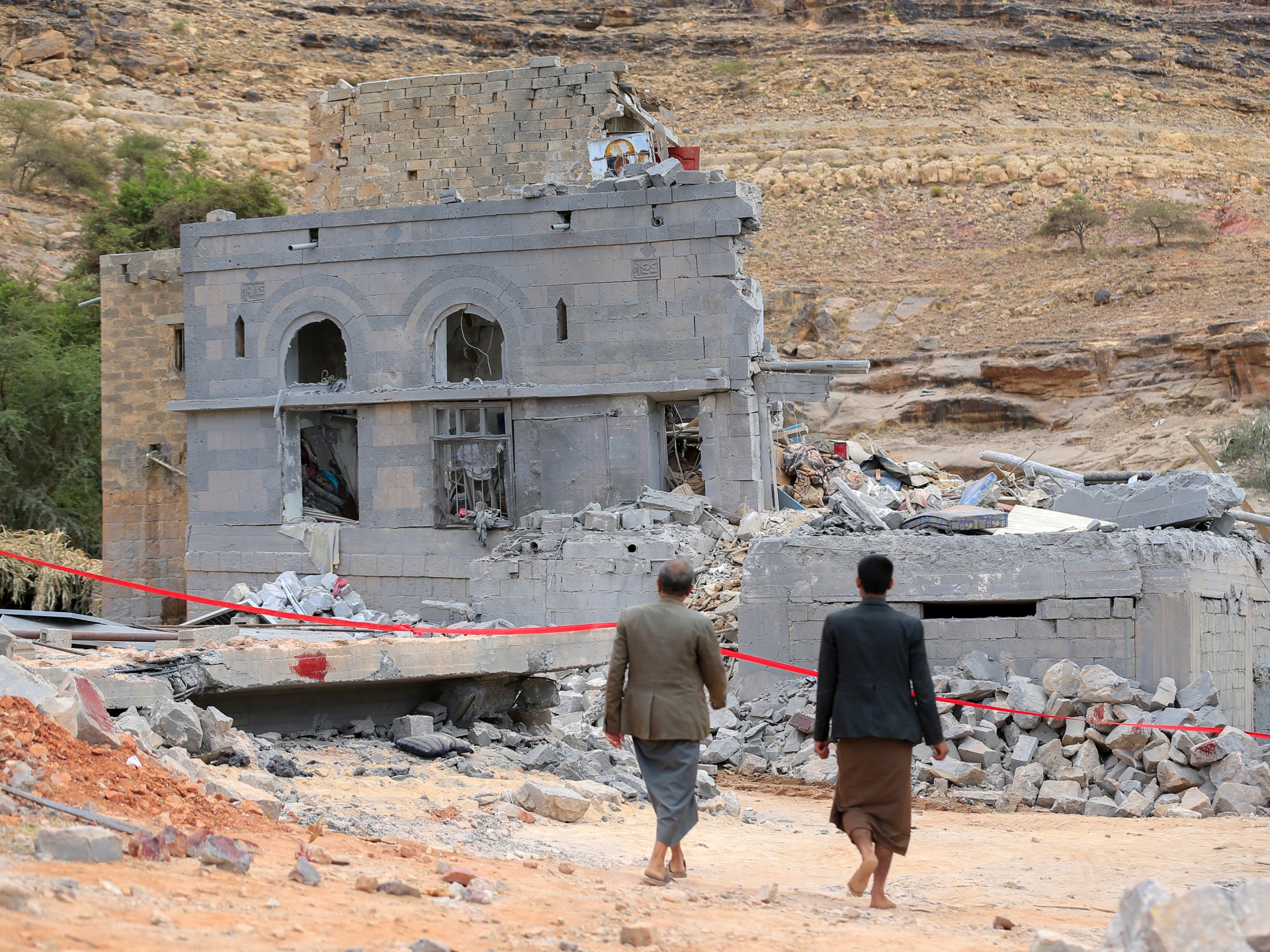
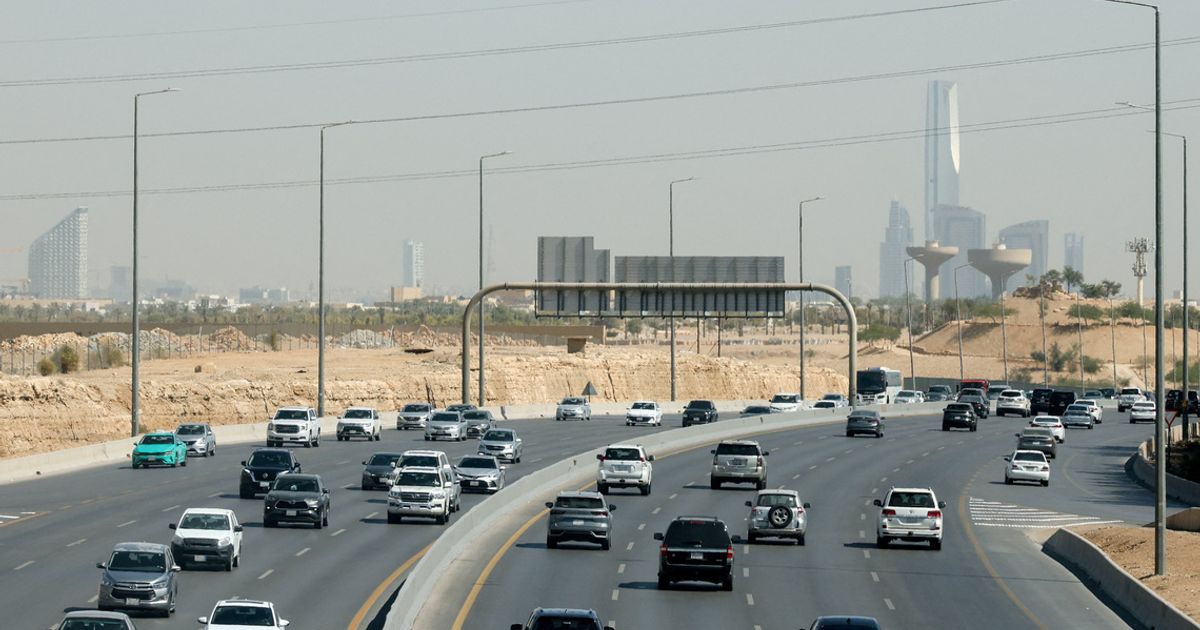
Photo via The Guardian

Saudi Arabia challenged by Yemeni allies over ceding ground to Houthis

Read the original at The Guardian ↗
Cite

editor, P. W. D. (2026, November 16). Saudi Arabia challenged by Yemeni allies over ceding ground to Houthis. The Guardian. https://www.theguardian.com/world/2026/nov/16/saudi-arabia-challenged-yemeni-allies-ceding-ground-houthis

Dated from the outlet's own feed. Check the original for its byline.

The Guardian · collected 2026-11-16 · by Patrick Wintour Diplomatic editor

Quick Summary

Anti-Houthi forces in Yemen are criticizing Saudi Arabia for its military strategy after Yemeni troops withdrew from strategic areas, including the Bab al-Mandab strait and parts of Marib. The Saudi-backed government justified the troop movements as a reallocation to focus on breaking the siege in Taiz and protecting Aden. The Houthi advance and the withdrawal of Yemeni troops have led to the displacement of over 300,000 civilians. The Southern Transitional Council, a separatist anti-Houthi force, accused Saudi Arabia of incompetence and called for greater support and recognition of southern independence to effectively counter the Houthis.
Written by AI on 2026-11-16, from this article's own text only (the story summary below draws on all the coverage).
See how they differ ↓

AI analysis

Story summary

As of November 16, 2026, Yemeni government forces have withdrawn from an area near the Bab el-Mandeb Strait, ceding full control to the Houthis, an Iran-aligned rebel group. This withdrawal marks a significant setback for the Saudi-backed coalition fighting the Houthis. The government forces pulled back to focus on defending Aden, the interim capital, after a six-week battle over the strategic strait, which is a crucial shipping lane connecting the Red Sea and the Gulf of Aden. The move follows a series of Houthi advances along Yemen’s western coast, threatening Saudi Arabia’s position in the broader conflict between the U.S. and Iran. In response to the military defeat, Saudi King Salman replaced Lieutenant General Fahd bin Hamad Al-Salman as commander of the coalition. The loss of control over the Bab el-Mandeb Strait could further destabilize global shipping and the economy, given its importance for oil transportation.

Written for “Houthis Advance in Yemen” on 2026-11-17, grounded in this article and the 21 other(s) covering the same event.

How they differ

11 outlets covered “Houthis Advance in Yemen”.

What each outlet says

One AI summary per outlet of its latest article on this story, written from that article alone and checked against it. Open the article for the outlet's own words.

The GuardianThis outlet16 Nov

Anti-Houthi forces in Yemen are criticizing Saudi Arabia for its military strategy after Yemeni troops withdrew from strategic areas, including the Bab al-Mandab strait and parts of Marib. The Saudi-backed government justified the troop movements as a reallocation to focus on breaking the siege in Taiz and protecting Aden. The Houthi advance and the withdrawal of Yemeni troops have led to the displacement of over…

Saudi Arabia challenged by Yemeni allies over ceding ground to Houthis (this article)
The Straits Times16 Nov

On November 16, Houthi fighters advanced to the southern coastal area of Khor Omairh, near the Bab el-Mandeb Strait, after government forces withdrew to defend Aden. This move brings the Houthis 25 km from government lines at Qawah. The withdrawal marks a significant setback for Saudi-backed forces, as it leaves Aden more vulnerable to Houthi attacks. Analysts note that infighting among government forces has…

Houthis seize ground on Yemen's southern coast, edge closer to Aden →5 articles from The Straits Times on this story
Al Jazeera16 Nov

Saudi Arabia has replaced Lieutenant General Fahd bin Hamad al-Salman with General Fayyad al-Ruwaili as the commander overseeing coalition forces battling the Houthis in Yemen. The change came as coalition forces withdrew from areas near the Bab al-Mandeb strait to reinforce the Yemeni government’s interim capital, Aden, following a significant Houthi advance that forced them to abandon territory along the Red Sea…

Saudi Arabia dismisses commander of coalition forces fighting Houthis →5 articles from Al Jazeera on this story
Times of India16 Nov

On Sunday, Yemeni government forces announced their withdrawal from the area near the Bab el-Mandeb Strait, focusing instead on defending their base in Aden. This move comes after a six-week counteroffensive against the Houthi rebels, who seized coastal areas near the Red Sea in September. The retreat signals a significant setback for the Saudi-backed campaign against the Houthis and raises concerns about potential…

Yemeni govt force retreats in a setback in war against Houthis →2 articles from Times of India on this story
The Hindu16 Nov

Saudi Arabia replaced Lieutenant General Fahd bin Hamad Al-Salman with Chief of the General Staff General Fayyad Al-Ruwaili as the commander of the Saudi-led coalition in Yemen following significant territorial losses to the Iran-backed Houthi rebels. The Houthis have advanced to within 25 km of government lines near Qawah and have taken control of areas near the strategically important Bab el-Mandeb Strait, causing…

After Yemen setback, Saudi Arabia replaces military commander →2 articles from The Hindu on this story
BBC16 Nov

The Iran-backed Houthi rebels in Yemen have made significant territorial gains, forcing the internationally recognized government's army to retreat from the Red Sea coast to defend Aden. This advance could threaten the Bab al-Mandab Strait, a crucial maritime route accounting for about 12% of global trade, potentially destabilizing global oil markets and the economy. Nicholas Hopton, a former British ambassador to…

Houthi rebel advance in Yemen may further destabilise global economy →2 articles from BBC on this story
Show 5 more outlets
New York Post15 Nov

On Sunday, Yemeni forces backed by Saudi Arabia withdrew from the Bab el-Mandeb Strait, allowing the Iran-backed Houthi group to gain full control. The strait, through which $1 trillion worth of goods pass annually, has become a strategic point for the Houthis to disrupt maritime traffic. The Houthis also continued their attacks on Saudi Arabia, firing two missiles and three drones at Riyadh, although they were…

Major Red Sea strait falls under full Houthi control as Yemeni forces retreat →
Dawn16 Nov

Yemen’s Houthis freed 600 government forces as part of the largest unilateral prisoner release, according to the International Committee of the Red Cross. This development coincided with Yemeni forces withdrawing from a strategic area near the Bab al-Mandeb Strait, which now places the Houthis in control of a critical maritime chokepoint. Additionally, the Houthis launched attacks near Aden, killing eight people and…

Houthis free 600 fighters as Yemen forces redeployed →
Just the News16 Nov

This article reports that the Houthis, an Iran-backed group in Yemen, have made significant military progress, pushing towards the city of Aden. Over the past few months, the Houthis seized the port of Mokha and several islands in the Bab al-Mandeb Strait, then advanced south along the main road connecting government-held areas to Aden. This offensive forced government-aligned forces to retreat from the Bab…

Houthis achieve breakthrough in push toward city of Aden →
ABC News (AU)16 Nov

Yemen's pro-government forces, backed by Saudi Arabia, have retreated from parts of the western region to defend the strategic port city of Aden, which serves as the base for the internationally recognized government. The Houthis, who are supported by Iran, now control areas within 60 kilometers of Aden. This strategic withdrawal aims to secure Aden and counter the Houthi advance, which has intensified following the…

Yemen's pro-government forces retreat to defend key port city of Aden →
Daily Caller16 Nov

Saudi Arabia replaced Lieutenant General Fahd bin Hamad Al-Salman, the commander of the Saudi-led coalition in Yemen, after the coalition suffered a significant defeat at the hands of the Iran-backed Houthi rebels. The Houthis captured large territories in Yemen's southern coast, pushing closer to the strategic port city of Aden. General Fayyad Al-Ruwaili was appointed as the new commander to lead the coalition…

Saudi Arabia Boots Top Military Commander After Stunning Battlefield Defeat →

Where they agree and split

Agreed

Reported by outlets on both sides of the middle

The government's retreat from the Bab el-Mandeb area hands the Houthis greater leverage over the maritime chokepoint, creating a potent pressure point on global shipping while Iran continues to disrupt traffic through the Strait of Hormuz on the other side of the Arabian Peninsula.

4 outlets
Show 2 more

"The Southern Armed Forces announce the implementation of a redeployment operation for its forces from Dhubab Airport and the Bab el-Mandeb area, west of Taiz Governorate," the southern forces said in a statement.

4 outlets

Yemen’s civil war had been dormant since 2022 until it reignited this summer as a spillover of the Iran war.

4 outlets

Framing

How the first headlines put it

Stated as fact5
The headlines (5)

Yemen government forces withdraw from area near Bab el-Mandeb Strait, Houthis in control The Straits Times · stated as fact

Yemeni forces withdraw from Bab el-Mandeb as Houthis cement foothold Times of India · stated as fact

Yemeni government forces retreat from strait in major setback in war against Houthis The Hindu · stated as fact

Yemeni government forces redeploy from Bab al-Mandeb to defend Aden Al Jazeera · stated as fact

Major Red Sea strait falls under full Houthi control as Yemeni forces retreat New York Post · stated as fact

The full story: what happened, how it changed, and all 22 articles →

Compared with similar articles

This article reads unscored and hedges 0% of its claims. Each row says how that neighbour differs.
The Hindu
Hedges 0 of 21 claims Outlet record 78/100
Al Jazeera
Hedges 4 of 16 claims Outlet record 60/100
“The articles describe different aspects of the conflict in Yemen, with the first focusing on the denial of targeting Mecca and the second on the strategic military withdrawal by Saudi-backed forces.”
The Straits Times
Hedges 0 of 6 claims Outlet record 64/100
“The articles describe different events related to the conflict but do not refer to the same specific incident of missile and drone interceptions.”
Al Jazeera
Hedges 4 of 17 claims Outlet record 60/100
“The articles describe different military actions on separate dates: one interception of missiles and drones in Riyadh, and another regarding troop movements in Yemen.”
Times of India
Leans right Hedges 1 of 15 claims Outlet record 59/100
The Straits Times
Leans left Hedges 3 of 30 claims Outlet record 64/100
The Hindu
Leans left Hedges 0 of 19 claims Outlet record 78/100
Al Jazeera
Hedges 1 of 17 claims Outlet record 60/100
New York Post
Leans right Hedges 1 of 10 claims Outlet record 66/100
Times of India
Leans left Hedges 0 of 5 claims Outlet record 59/100

Story

Houthis Advance in Yemen
World · 22 article(s) covering the same event. Compare every outlet's account →
How this article was measured signals, leaning charts, publisher record, byline, topics and claims

Signals How these are calculated →

Claims extracted
28
sentences that state something as happening or true
Uncertain
0%
0 of 28 hedged ("reportedly", "may", "according to")
Leaning
withheld
no quote in the article backed the model's score
Publisher signals
65/100
The Guardian's corrections and hedging, across everything collected from it. Not a measure of accuracy.
Outlets on this story
22
World
Same framing elsewhere
1
articles that frame the event the way this one does
Analyzed 2026-11-16 · how these are computed

How this is being covered How these are calculated →

Article leaning vs. publisher reliability
Source leaning vs. consistency

Publisher

The Guardian · 3553 article(s) · 7 correction(s) detected
Running correction rate · 7 correction(s)

Who wrote this

Patrick Wintour Diplomatic editor
31 article(s) here · 1 carrying a prediction
Amr al-Bidh, special representative of the exiled Southern Transitional Council (STC) leader, Aidarous al-Zubaidi, a separatist anti-Houthi force that is opposed by Saudi Arabia, accused the Saudis of incompetence – and in effect warned Riyadh that unless it became more open to a southern state it would lack the cohesive forces required to prevent the Houthis becoming a permanent security threat.
Donald Trump has said in a series of media interviews over the past 24 hours that he will attack Iran only if necessary, claiming that Gulf countries, such as Saudi Arabia, have urged him to hold back from planned large-scale military strikes.
Senior Iranian officials believe the US is planning either further military strikes or an ever-tightening economic stranglehold that will push Tehran into retaliatory action.
Iran would not be required to make any commitment that the stockpile would be removed from the country, with other options on the table, including reducing the uranium content by down-blending it.
The government has become dependent on southern troops to fend off Houthi advances, but these forces insist they will fight only to defend land inside former South Yemen.
The billboard pledged in English: “We will kill Trump” – elevating the degree of personal animus with which Donald Trump is viewed in official Iranian circles.
Dapo Akande will now serve as one of the ICJ’s 15 judges for a minimum nine-year term.
There had been fierce criticism of the UK foreign secretary Ed Miliband’s decision in September to impose a trade ban and wider sanctions on illegal settlements, with some claiming it would drive Israeli voters into the arms of Benjamin Netanyahu.
Officials from the Gulf states are “braced for the worst” as they wait for Washington’s response to an Iranian proposal that could reopen the strait of Hormuz before the US midterm elections on Tuesday.
Any US president would have had to address the Iran issue, itself a product of system failure, the inability of the multilateral system to incorporate and change Iran.
Also by Patrick Wintour Diplomatic editor
Nothing else under this byline is closely related to this article, so these are simply their most recent.
All 31 articles by Patrick Wintour Diplomatic editor →

Topics

Houthis STC Saudi Saudi Arabia Yemen

Subjects

Yemen GPE · 7× Houthis NORP · 6× STC ORG · 6× Riyadh GPE · 5× Saudi Arabia GPE · 5× Saudi NORP · 4× Aden GPE · 3× Yemeni NORP · 3× Houthi NORP · 2× anti-Houthi PERSON · 2×

Narrative

Amr al-Bidh, special representative of the exiled Southern Transitional Council (STC) leader, Aidarous al-Zubaidi, a separatist anti-Houthi force that is opposed by Saudi Arabia, accused the Saudis of incompetence – and in effect warned Riyadh that unless it became more open to a southern state it would lack the cohesive forces required to prevent the Houthis becoming a permanent security threat.
framing: assertive · carried by 1 article(s) · first seen 2026-11-16
Amr al-Bidh, special representative of the exiled Southern Transitional Council (STC) leader, Aidarous al-Zubaidi, a separatist anti-Houthi force that is opposed by Saudi Arabia, accused the Saudis of incompetence – and in effect warned Riyadh that unless it became more open to a southern state it would lack the cohesive forces required to prevent the Houthis becoming a permanent security threat.
2026-11-16 · The Guardian
Saudi Arabia challenged by Yemeni allies over ceding ground to Houthis · assertive framing

Claims (28 extracted, 0 hedged)

Saudi Arabia has been accused by anti-Houthi forces over its military strategy after its Yemeni allies withdrew troops from the strategic Bab al-Mandab strait and pulled back forces from parts of Marib in the central part of the country. asserted
allies → accuse → country
The Saudi-backed government explained the repositioning by saying the strategic priority was to break the attritional siege on Taiz, Yemen’s third city, and to protect Aden, the southern port city in which the Saudi-backed and UN-recognised government is now based. asserted
government → back → which
Many blame the Houthi advance on the absence of a consolidated military command and control among the disparate forces backing the Aden-based government. asserted
Many → blame → government
Saudi Arabia responded to the setback by sidelining the commander of its Yemen coalition, Lt Gen Fahd bin Abdulaziz al-Salman, and replacing him with the chief of staff, Gen Fayyad bin Hamed bin Ruqad al-Ruwaili. asserted
Arabia → respond → staff
The Houthis’ steady advance towards the areas surrounding Bab al-Mandab, the narrow strait linking the Red Sea with the Indian Ocean on Yemen’s west coast, culminated on Sunday with a formal withdrawal of Yemen government forces, including some in the Southern Giants Brigades that had always been reluctant to defend territory outside the old southern Yemen. asserted
that → surround → Yemen
In 1990 Yemen had been divided in two, and many in the south want to return to a separated state. asserted
many → divide → state
The Saudi-backed government launched a fresh military campaign 42 days ago to drive the Houthis from Yemen but so far it has backfired. asserted
it → back → Yemen
The forces redeployed on Sunday have moved along the coast to al-Suqyah, 95 miles west of Aden, and inside the old Southern Yemen. asserted
forces → redeploy → Yemen
The retreat seems to be acknowledgment of Houthi resilience and is all the more remarkable given the Saudi air superiority. asserted
retreat → seem → superiority
More than 300,000 Yemeni civilians have been displaced. asserted
civilians → displace → ?
Amr al-Bidh, special representative of the exiled Southern Transitional Council (STC) leader, Aidarous al-Zubaidi, a separatist anti-Houthi force that is opposed by Saudi Arabia, accused the Saudis of incompetence – and in effect warned Riyadh that unless it became more open to a southern state it would lack the cohesive forces required to prevent the Houthis becoming a permanent security threat. asserted
Houthis → exile → forces
He said: “When there is no strategy and no plan, it is inevitable the Saudis would take advantage. asserted
Saudis → say → advantage
The STC will defend the south to the last man but we are fighting with one hand behind our backs since January after Saudi Arabia attacks on the STC. asserted
we → defend → STC
“The STC forces retain a credible capability on the ground. asserted
forces → retain → ground
But we need practical and political support from the region to counter the Houthis and create the basis for a negotiated settlement, one in which the pathway towards southern independence is fully recognised. asserted
pathway → need → independence
We cannot continue like this or else the Houthis will keep expanding.” asserted
Houthis → continue → this
The breadth of support for the STC, backed by the United Arab Emirates, however, remains disputed. asserted
breadth → back → Emirates
The movement suffered a near fatal setback in January and since then some of the Giants Brigades have switched to backing Riyadh. asserted
some → suffer → Riyadh
Saudi Arabia continues in effect to keep as many as 10 STC leaders hostage in Riyadh, and has refused to let al-Zubaidi to return from exile in Abu Dhabi. asserted
Zubaidi → continue → Dhabi
Al-Bidh argued the priority should be defensive, avoiding counteroffensives that backfire, improving command and control, and widening the coalition. asserted
that → argue → coalition
Al-Bidh said reconciliation would require Riyadh to acknowledge the political declaration al-Zubaidi made about a timetable for a southern state in January, and that al-Zubaidi’s return would boost morale and help unify chaotic southern military factions. asserted
return → say → factions
He said a recent Yemeni government cabinet reshuffle, including a new information minister, was designed primarily to try draw southerners into fighting the Houthis and not to change policy toward the south. asserted
reshuffle → say → south
He also urged the UK to use its diplomacy to bring in other actors rather than simply backing Riyadh. asserted
He → urge → Riyadh
A group of southern Yemenis have written to the foreign secretary, Ed Miliband, seeking a review of UK policy. asserted
group → write → policy
“We recognise that the longstanding advice from your office is to continue following the Saudi line while calling for unity among the anti-Houthi forces,” the letter said. asserted
letter → recognise → forces
“But you must surely recognise that every time Britain calls for ‘the unity and territorial integrity of Yemen’, it is asking the southern people and their armed forces to fight for a political outcome in which they do not believe”. asserted
they → recognise → which
The former US special envoy to Yemen Tim Lenderking said the US administration was treating Yemen like a sideshow adding “world powers do not understand the gravity of what it is at stake here”. asserted
it → say → stake
He warned “the problem is only going to get bigger through apathy and lack of attention”. asserted
problem → warn → attention
Give feedback · no sign-in needed

No sign-in needed for now. Your note is sent without a name, so it cannot be answered.

History Support