Oil flows nearly tripled before US-Iran MoU expired, analysis shows

Read the original at Al Jazeera ↗
Cite

Power, J. (2026, August 20). Oil flows nearly tripled before US-Iran MoU expired, analysis shows. Al Jazeera. https://www.aljazeera.com/economy/2026/8/20/oil-flows-nearly-tripled-before-us-iran-mou-expired?traffic_source=rss

Dated when The Aporia collected the article, usually within hours of publication. Check the original for its exact date and byline.

Al Jazeera · collected 2026-08-20 · by John Power

Quick Summary

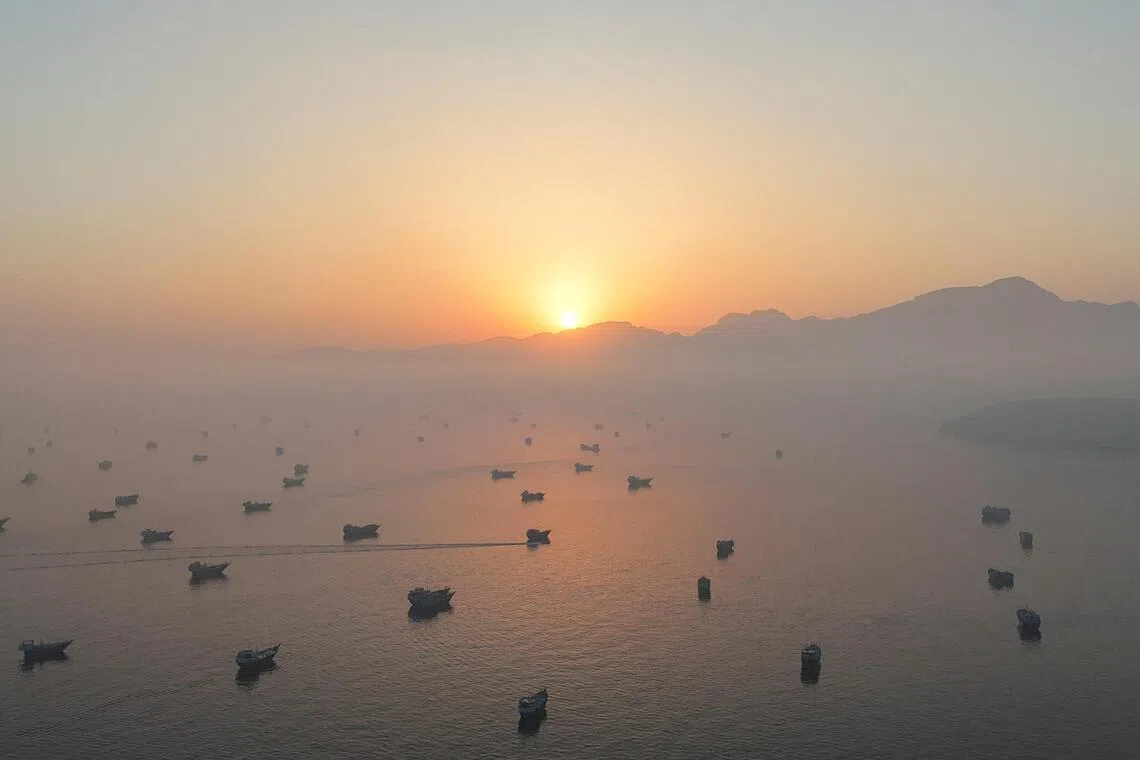
Oil flows through the Strait of Hormuz nearly tripled while the US-Iran Memorandum of Understanding (MoU) was in effect, with 374 million barrels of oil exiting the Gulf over a 60-day period. The rate of oil flow increased from an average of 2.3 million barrels per day before the MoU to 6.1 million barrels per day during its term. However, this still only accounted for about 40% of pre-war levels, which were around 15 million barrels per day. This analysis comes from ship tracking data provided by trade intelligence firm Kpler.
Written locally by qwen2.5:14b on 2026-08-20, using this article's own text rather than the other coverage of the same event (that is the story summary below).

AI analysis runs on qwen2.5:14b, locally

Story summary

Oil exports through the Strait of Hormuz nearly tripled during the 60-day period covered by a US-Iran Memorandum of Understanding (MoU), which expired recently. According to ship tracking data from trade intelligence firm Kpler, 374 million barrels of oil exited the Gulf between May 17 and July 16, averaging 6.1 million barrels per day. This is compared to an average of 2.3 million barrels per day in the period from April until the MoU was signed on June 17. Despite the increase, oil flows remained far below pre-war levels, reaching only about 40% of the roughly 15 million barrels that transited the Strait each day in 2025. The surge in oil exports suggests that the MoU had a significant impact on increasing trade through the region.

Written for “Iran-US Oil Trade Deal” on 2026-10-16, grounded in this article and the 0 other(s) covering the same event.

Story

📰 Iran-US Oil Trade Deal
Politics · 1 article(s) covering the same event.

Compared with similar articles

This article reads leans right and hedges 28% of its claims. Each row says how that neighbour differs.
The Straits Times
⚖️ Leans strongly left further left than this 🔴 0% hedged 0 of 7 📰 publisher trust 60
“Article A describes a statement made by Ghalibaf regarding US-Iran negotiations, while Article B discusses oil flows through the Strait of Hormuz during the MoU's effect, indicating two separate topics related to the same issue”
Al Jazeera
⚖️ Leans strongly right further right than this 🔴 10% hedged 5 of 52 📰 publisher trust 60
“Article A mentions Trump's threat to designate the Strait of Hormuz a US territory, while Article B reports on oil flows through the Strait during the expired MoU period, without mentioning Trump's statement”
The Independent
⚖️ Leans left further left than this 🔴 19% hedged 6 of 31 📰 publisher trust 59
“Article A discusses a statement by Iran's top negotiator about the Strait of Hormuz and President Trump's threat against Oman, while Article B reports on oil flows through the Strait during the time when the US-Iran MoU was in effect”
ABC News (AU)
⚖️ Leans strongly right further right than this 🔴 18% hedged 4 of 22 📰 publisher trust 70
“Article A reports on ship attacks with casualties, while Article B discusses oil flows through the Strait of Hormuz before a US-Iran MoU expired”
CBS News
⚖️ Leans right 🔴 12% hedged 16 of 136 📰 publisher trust 66
“Article A discusses oil flows during a specific time period (while the MoU was in effect), while Article B mentions sanctions and a stalemate between countries, without directly referencing oil flows or the specific time period mentioned in Article A.”
How this article was measured signals, leaning charts, publisher record, byline, topics and claims

Signals How these are calculated →

Claims extracted
18
sentences that state something as happening or true
Uncertain
28%
5 of 18 hedged ("reportedly", "may", "according to")
Leaning
Leans right
of the writing, not the subject · beta estimate
Publisher signals
60/100
Al Jazeera's corrections and hedging, across everything collected from it. Not a measure of accuracy.
Outlets on this story
1
Politics
Same framing elsewhere
1
articles that frame the event the way this one does
Analyzed 2026-08-20 · how these are computed

How this is being covered How these are calculated →

Article leaning vs. publisher reliability
Source leaning vs. consistency

Publisher

Al Jazeera · 3186 article(s) · 2 correction(s) detected
Running correction rate · 2 correction(s)

Who wrote this

John Power
24 article(s) here · 0 carrying a prediction
🔮 Who will be attending the meetings?
🔮 Prosecutors disclosed the alleged flight booking to a judge on October 8 in a motion seeking to seal the criminal complaint against Alfozan, arguing he had the “means – and will have an incentive – to flee” the United States.
🔮 China’s economy is expected to grow 4.5 percent in 2026, according to the International Monetary Fund’s latest growth outlook, which would be the slowest expansion since 1990, excluding the outlier years of the COVID pandemic.
2026-10-14 · assertive framing · China’s exports surge amid AI-driven demand
🔮 Despite the heady expansion, Singapore’s central bank left its monetary policy settings untouched in its latest announcement on Wednesday, citing expectations that AI demand will cool in 2027. The Monetary Authority of Singapore, which manages monetary policy through currency exchange rates rather than interest rates, said it expected core inflation to average 1.5–2.0 percent in 2026. “Global AI-driven growth is expected to ease in the latter half of next year from its current exceptional pace, while higher interest rates, amid elevated inflation in the advanced economies, would weigh on final demand growth,” the central bank said in a statement.
🔮 The economy of the Middle East and Central Asia is set to shrink in 2026 amid the fallout of the US-Israel war on Iran, with countries such as Kuwait and Qatar facing double-digit contractions, according to the International Monetary Fund (IMF).
🔮 After three years of Israel’s multi-front war in the Middle East, it would be no surprise if this month’s Knesset elections were taking place against the backdrop of an economy in dire straits.
🔮 In an open letter published in tandem with their social media posts, Balesni, Korbak and Wang expressed concerns that their dismissal would make their former colleagues “afraid to speak and operate in ways that, until last week, were an integral part of working at OpenAI”.
🔮 South Korea’s Ministry of Finance and Economy has forecast real GDP to grow 3 percent in 2026, which would be the strongest performance since 2017, excluding the outlier years of the COVID-19 pandemic. The AI boom has also propelled the country’s stock market into the ranks of the best-performing bourses this year, with the benchmark Kospi rising nearly 60 percent.
2026-10-01 · assertive framing · South Korea’s exports hit record high on AI boom
🔮 The launch comes after Meta’s release of AI assistant Muse earlier this month, and Google’s unveiling of Gemini Spark in May.
🔮 “The Middle East conflict remains unresolved, and there are scenarios where inflation is higher and activity lower than forecast,” it said.
2026-09-29 · assertive framing · Australia raises interest rates to 15-year high
Also by John Power
Nothing else under this byline is closely related to this article, so these are simply their most recent.
All 24 articles by John Power →

Topics

INTERCARGO Iran Israel Kpler the Memorandum of Understanding

Subjects

Kpler ORG · 4× INTERCARGO ORG · 3× Iran GPE · 3× Iranian NORP · 2× Israel GPE · 2× Tehran GPE · 2× Washington GPE · 2× Russian NORP · 1× Ukraine GPE · 1× the United States GPE · 1×

Narrative

Some 374 million barrels of oil exited the Gulf during the 60-day window covered by the since-expired MoU, equalling about 6.1 million barrels per day, trade intelligence firm Kpler said in a briefing published on Wednesday. Recommended Stories list of 4 items- list 1 of 4Trump vows ‘economic warfare’ on countries helping Iran - list 2 of 4At least 6 killed in multiple Russian missile strikes across Ukraine - list 3 of 4Exclusive: Pentagon sends ‘political loyalty’ survey to US allies - list 4 of 4Australian
framing: mixed · carried by 1 article(s) · first seen 2026-08-20

Claims (18 extracted, 5 hedged)

Oil flows through the Strait of Hormuz nearly tripled while the Memorandum of Understanding (MoU) between the United States and Iran was in effect, though it remained far below pre-war levels, according to ship tracking data. uncertain
it → triple → data
Some 374 million barrels of oil exited the Gulf during the 60-day window covered by the since-expired MoU, equalling about 6.1 million barrels per day, trade intelligence firm Kpler said in a briefing published on Wednesday. Recommended Stories list of 4 items- list 1 of 4Trump vows ‘economic warfare’ on countries helping Iran - list 2 of 4At least 6 killed in multiple Russian missile strikes across Ukraine - list 3 of 4Exclusive: Pentagon sends ‘political loyalty’ survey to US allies - list 4 of 4Australian asserted
Pentagon → exit → allies
Israel drops World Central Kitchen deaths case asserted
Israel → drop → case
In the period from April until the MoU was signed on June 17, an average of 2.3 million bpd were exported via the Gulf, Kpler said. asserted
Kpler → sign → Gulf
While the MoU led to a significant boost in oil flows, volumes only reached about 40 percent of the roughly 15 million barrels that transited the Strait of Hormuz each day in 2025, according to Kpler. uncertain
that → lead → Kpler
More than half of the shipments occurred in the first three weeks of the agreement, and “by the end the flow was thinner, darker and re-accumulating behind the chokepoint”, said Emmanuel Belostrino, head of Global Crude and Geopolitical Market Data at Kpler. asserted
Belostrino → occur → Kpler
The MoU, announced on June 17 following a flurry of diplomatic activity primarily facilitated by Pakistan, expired on Monday without a peace deal in place amid stalled negotiations between Washington and Tehran. asserted
MoU → announce → Washington
The expiration of the MoU, which US and Iranian officials cast as a step towards a permanent end to the war, came as attacks on commercial shipping in the Strait of Hormuz continued to cast a shadow over one of the most critical nodes in the global energy supply chain. asserted
attacks → cast → chain
Five commercial vessels have been attacked in the strait over the past week, according to the UKMTO Operations Centre, including a cargo ship that reported being struck by an unknown projectile off Oman on Tuesday, resulting in the death of one seafarer. uncertain
that → attack → seafarer
The International Association of Dry Cargo Shipowners (INTERCARGO), a trade association, identified the deceased mariner as a crew member on board the Liberia-flagged bulk carrier Minoan Dignity. asserted
Association → identify → carrier
“Behind every vessel caught up in conflict are seafarers – civilians carrying out their professional duties, far from their homes and families, who keep global trade moving,” INTERCARGO said in a statement. asserted
INTERCARGO → catch → statement
“INTERCARGO reiterates its fundamental position: seafarers are civilians and must never become targets or collateral victims of geopolitical conflicts. asserted
seafarers → reiterate → conflicts
No government or group has claimed responsibility for the attack, the first such incident involving a confirmed death since July. asserted
government → claim → July
At least 18 seafarers have been killed in attacks on commercial vessels in the region since the US and Israel launched their war on Iran in late February, according to the International Maritime Organization. Iranian forces have claimed responsibility, or been blamed for, dozens of attacks on commercial shipping since the start of the war. US forces have acknowledged responsibility for about half a dozen attacks, including a June 10 strike on a Palau-flagged tanker that killed three Indian seafarers. uncertain
that → kill → seafarers
The critical strait, a conduit for about one-fifth of the global oil supply before the war, saw 73 transits between August 10 and 16, down from 91 the previous week, according to preliminary data from Lloyd’s List Intelligence. uncertain
strait → see → Intelligence
Oil prices edged higher on Thursday, with Brent crude futures up about 0.3 percent at $91.93 per barrel as of 06:00 GMT. asserted
futures → edge → GMT
Tim Waterer, chief market analyst at Australia-based KCM Trade, said markets anticipate further declines in oil flows amid the impasse between Washington and Tehran. “The market isn’t convinced by the more optimistic take from the US administration on the security of passage through the Strait,” Waterer told Al Jazeera. asserted
Waterer → base → Jazeera
“Until there is clearer evidence of sustained, safe transit and a more durable diplomatic framework, confidence among operators is likely to stay low and volumes are unlikely to recover meaningfully,” Waterer said. asserted
Waterer → be → operators

💬Give feedback
🕘History 🎫Support