- Published
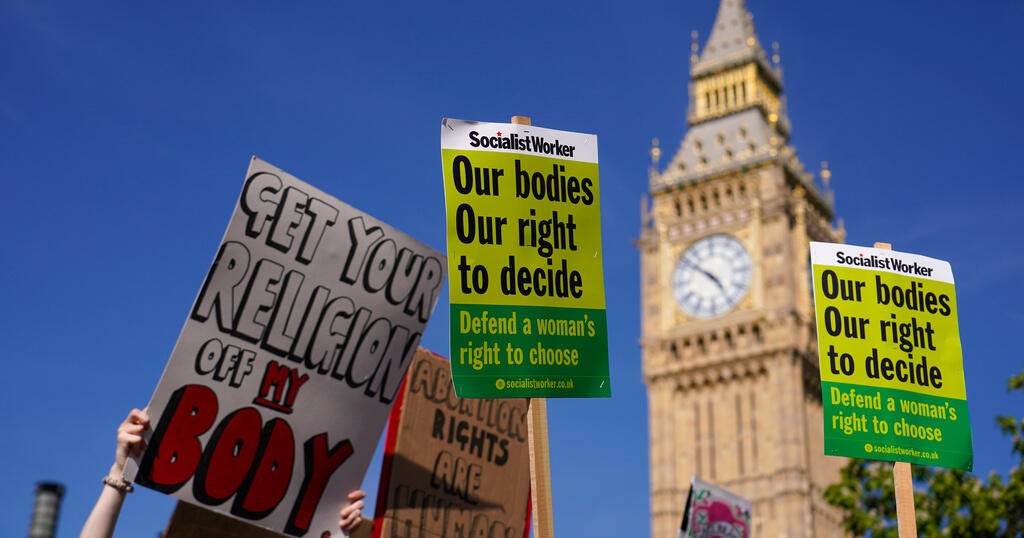
Women arrested or convicted for having illegal abortions will have their criminal records wiped as new automatic pardons come into force in England and Wales, external.
asserted
pardons → publish → England
Ending the Victorian-era law should avoid traumatic experiences such as that of Nicola Packer, who was recently cleared by a jury after taking medication at home during a Covid lockdown.
asserted
who → end → lockdown
She had ended a pregnancy without realising she was around 26 weeks pregnant, far beyond the legal 10 week limit.
asserted
she → end → limit
Her friend Helle Tumbridge told the BBC's Today Programme she had been "treated appallingly" until justice was served.
asserted
justice → tell → Programme
Labour MP Tonia Antoniazzi, who brought forward the decriminalisation amendment last year, says the change will clear the names of more than 100 women who have been "unnecessarily harmed" by an "outdated" law.
asserted
who → bring → law
Nicola's story
Ms Packer, who was 41 at the time, took pills called mifepristone and misoprostol, which were prescribed over the phone due to Covid restrictions, to end a pregnancy in 2020.
asserted
which → take → 2020
Prosecutors alleged that she knew she had been pregnant for more than 10 weeks, which she denied.
asserted
she → allege → which
Jurors deliberated for more than six hours to reach their unanimous verdict, clearing her name.
asserted
Jurors → deliberate → name
Speaking with the BBC and Nicola's consent, her friend Ms Tumbridge said the whole incident was "incredibly traumatic".
asserted
incident → speak → BBC
"Nicky had what's known as a cryptic pregnancy - that's when you don't have any sign of a pregnancy, no baby bump, no other symptoms.
"She thought she was just a few weeks pregnant and she sought an abortion and was prescribed that by the NHS.
asserted
she → have → NHS
Unfortunately, she was a lot more far gone."
asserted
she → go → ?
Nicola experienced a stillbirth and went to hospital.
asserted
Nicola → experience → hospital
The staff there called the police.
"
asserted
staff → call → police
She was arrested.
asserted
She → arrest → ?
She spent a time in her hospital room recovering with two police officers present, one was a man.
asserted
one → spend → officers
She was treated appallingly.
asserted
She → treat → ?
She was made to use the toilet with the door open in front of the police officers.
asserted
door → make → officers
"
It took five years of investigations for a trial to eventually find her not guilty.
asserted
her → take → investigations
"Of course, by that point the damage had been done," says Tumbridge, "and she'll live with that trauma for the rest of her life.
asserted
she → do → life
At the time, The Royal College of Obstetricians and Gynaecologists said Nicola's trial demonstrated "just how outdated and harmful" that law was.
asserted
law → say → Obstetricians
It is now no longer a criminal offence for a pregnant woman to terminate her own pregnancy at any stage.
asserted
woman → terminate → stage
Women affected do not need to take any action.
asserted
Women → affect → action
Minister for Victims and Tackling Violence Against Women and Girls, Alex Davies-Jones, said pardoning women for abortion offences related to their own pregnancy had been a priority.
asserted
pardoning → tackle → pregnancy
I'm pleased to be able to commence the change that Parliament voted for.
asserted
Parliament → commence → that
"For those affected, I know that clear and accessible information about what happens next is vital.
asserted
what → affect → those
Women do not have to take any direct action themselves, but can find out more information online and contact our dedicated casework team."
Heidi Stewart, from the abortion care provider BPAS, said: "While no pardon can undo the distress and trauma these women have experienced, this historic change in the law recognises the profound harm caused by their criminalisation and represents a meaningful step towards justice."
asserted
change → have → justice
Abortion in England and Wales is legal with an authorised provider up to 24 weeks, with very limited circumstances allowing one after this time, such as when the mother's life is at risk or the child would be born with a severe disability.
asserted
child → allow → disability
It is also legal to take prescribed medication at home if a woman is less than 10 weeks pregnant.
asserted
woman → take → home

 The Aporia