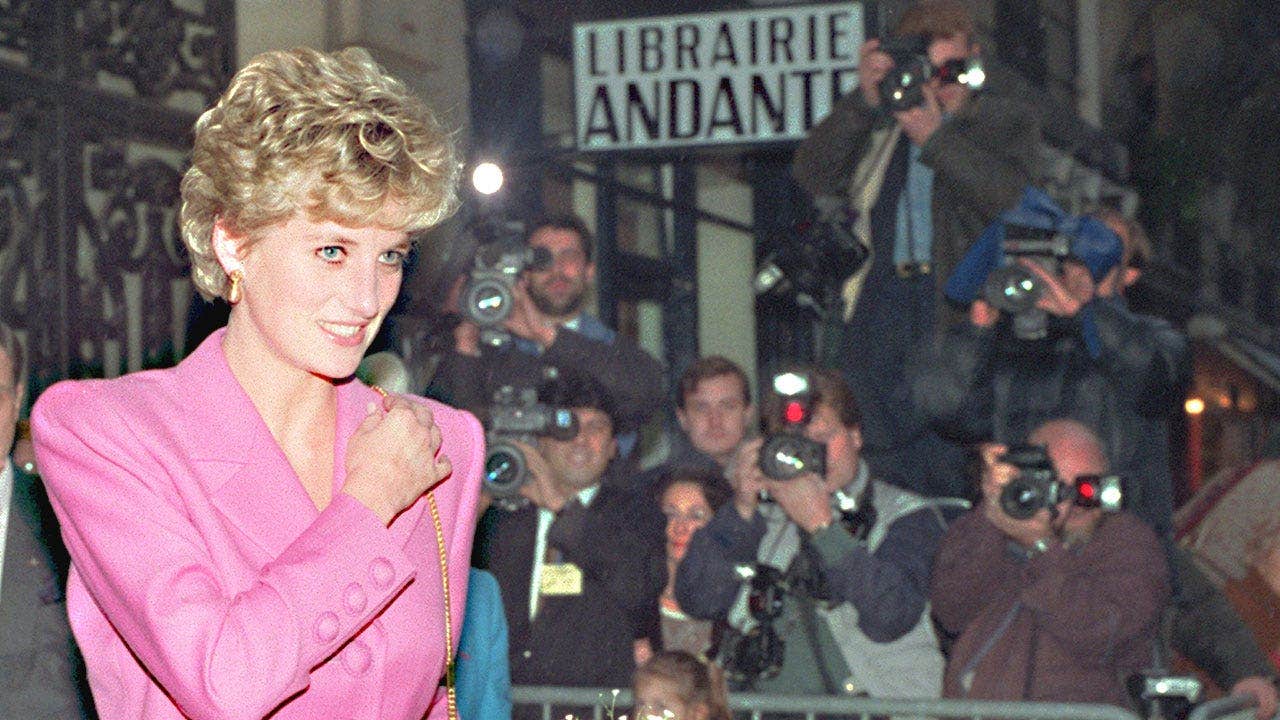
One small decision before Princess Diana’s 1997 crash could have saved her life and changed history.
uncertain
decision → save → history
On Aug. 31, 1997, Diana, Princess of Wales, was killed alongside her companion, Dodi Fayed, and their driver, Henri Paul, when their Mercedes crashed at high speed in a Paris tunnel while paparazzi pursued them.
asserted
paparazzi → kill → them
The tragedy is getting a fresh examination in FOX’s new special, "Celebrity Crime Scene: Princess Diana," which airs Aug. 20.
asserted
which → get → special
Using modern recreation technology to reconstruct the events surrounding the crash, host and investigative crime journalist Jakson Buhaj joins British forensic psychologist Kerry Daynes and former U.S. Secret Service agent Rich Staropoli to revisit the evidence, scrutinize the theories and explore what really happened that night in Paris.
asserted
what → use → Paris
Buhaj told Fox News Digital that knowing one simple thing might have saved the princess makes her death all the more haunting
uncertain
death → tell → princess
"It's very odd that no one was wearing a seat belt," he said.
asserted
he → wear → belt
"You would think that [Dodi Fayed's bodyguard] Trevor Rees-Jones, who was sitting in the front seat directly ahead of Diana ... would caution her that she should definitely put a seat belt on, considering the car is driving way over the speed limit. ...
asserted
car → think → limit
Yet no one thinks to do that."
Rees-Jones accompanied Diana and Fayed on their final trip, but he worked as a bodyguard for Fayed's family, not as Diana's official protection officer.
WATCH: PRINCESS DIANA'S FINAL MOMENTS: WHAT COULD HAVE SAVED HER?
"What I think is the most tragic thing about this is that had everyone been wearing their seat belt, unfortunately, Henri Paul and Dodi Fayed probably would’ve passed away, but Diana most likely still would’ve been with us," Buhaj said.
uncertain
Buhaj → think → us
"And I think that’s something that really stuck with me after we wrapped filming, that there is a whole other timeline out there where a seat belt could have saved Princess Diana."
For years, one detail about the crash was widely repeated: Rees-Jones survived because he was the only person in the Mercedes wearing a seat belt.
uncertain
he → think → belt
Investigators later determined that wasn't true.
asserted
that → determine → ?
The official British inquiry concluded that no one in the car was wearing a seat belt when it crashed.
asserted
it → conclude → belt
After the official British police inquiry concluded in 2006, Lord Stevens said Diana, Fayed and Paul might not have died had they been wearing seat belts, The Guardian reported.
uncertain
Guardian → conclude → belts
Paul was scheduled to be off duty that night.
asserted
Paul → schedule → duty
His blood alcohol level was later found to be more than three times the French legal limit, People magazine reported.
asserted
magazine → find → ?
Surveillance video did not show obvious signs that Paul was intoxicated, and several witnesses said they noticed nothing unusual about his behavior.
asserted
they → show → behavior
People magazine reported that Paul taunted photographers by announcing, "You won’t catch up with us."
asserted
You → report → us
As he picked up speed, he couldn't shake the paparazzi chasing the Mercedes, including several photographers traveling on motorcycles and scooters.
asserted
he → pick → motorcycles
"There are many, many things that could have prevented the death of Princess Diana," Buhaj said.
uncertain
Buhaj → be → Diana
"I think getting into that car with Henri Paul was a death sentence for Princess Diana. ...
asserted
getting → think → Diana
And had she not done that, she could still be with us today."
uncertain
she → do → us
The Mercedes slammed into the 13th concrete pillar of Paris’ Pont de l’Alma underpass shortly after midnight.
asserted
Mercedes → slam → midnight
The car then rebounded and struck the tunnel wall before coming to a stop.
asserted
car → rebound → stop
In the front seat, airbags were sprayed with blood, and Paul’s body pressed on the horn, People reported.
asserted
People → spray → horn
Paul and Fayed died at the scene, while Rees-Jones suffered critical injuries.
asserted
Jones → die → injuries
Diana was found on the floor of the mangled car, severely injured.
asserted
Diana → find → car
Photographers descended on the crash scene and began taking pictures.
asserted
Photographers → descend → pictures
Buhaj also found it alarming that about an hour and 40 minutes passed between the crash and Diana's arrival at the hospital.
asserted
minutes → find → hospital
It's noted that French emergency teams followed an approach to trauma care that emphasized treating and stabilizing critically injured patients at the scene before transporting them.
asserted
that → note → them
Diana also had to be freed from the wreckage and went into cardiac arrest before she was placed in the ambulance.
asserted
she → have → ambulance
Even after the ambulance left, the driver was instructed to proceed slowly because Diana's condition was so unstable.
asserted
condition → leave → ?
At one point, the ambulance stopped when her blood pressure dropped.
asserted
pressure → stop → point
Diana, whose heart had been restarted once, was treated by a team of about 20 doctors and nurses, People reported.
asserted
People → restart → doctors
She again went into cardiac arrest.
asserted
She → go → arrest
In surgery, physicians discovered a ruptured pulmonary vein and massive internal bleeding.
asserted
physicians → discover → vein
Doctors tried to repair the torn vein and stop the bleeding, but they were unable to restart Diana’s heart.
asserted
they → try → heart
She was pronounced dead at 4 a.m.
In the years before her death, Diana had expressed concerns about her safety.
asserted
Diana → pronounce → safety
She believed she was being watched and that her phones could be tapped.
uncertain
phones → believe → ?
She also wrote privately about fears that she could be harmed in a car crash.
uncertain
she → write → crash
"People in her close circle described her as quite paranoid," Buhaj said.
asserted
Buhaj → describe → her
So not only are billions of people across the world glued to the screen whenever she appears on it, but she’s also constantly having to look over her shoulder out of fear."
asserted
she → glue → fear
…and 15 more, not listed.
 The Aporia