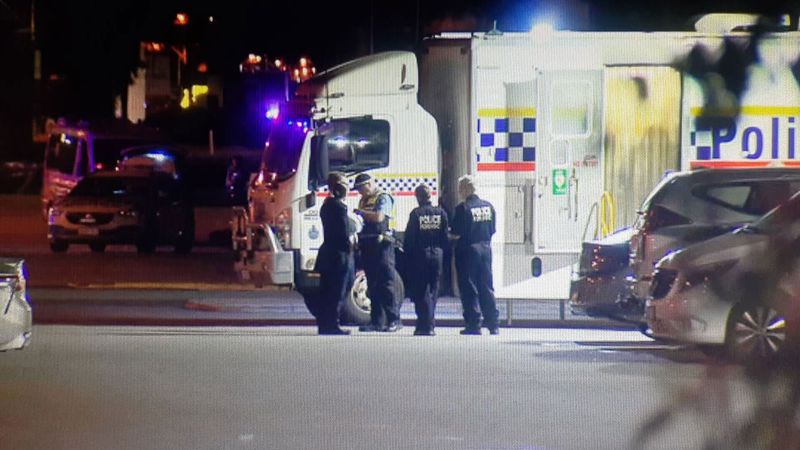
A Perth teenager who stabbed a man before he was shot dead by police had been caught with graphic beheading videos at school, laughed during an Anzac Day ceremony and bragged he was being monitored by officials after becoming increasingly radicalised online, an inquest has heard.
asserted
inquest → stab → officials
The hearing into the death of 16-year-old Rossmoyne Senior High School student James Hollands opened in the WA Coroner’s Court on Monday, examining the lead-up to his death on May 4, 2024, and hearing how he had become the “most watched” child at his high school due to his fixation on explosives, firearms, military history, Marxism, Christianity and Islam.
uncertain
he → open → explosives
The court heard James, who lived with autism and attention deficit disorder, phoned his dad for 30 minutes and had a conversation where he appeared in good spirits and had been making plans for his week before heading out to Islamic school Zakariya Academy later in the day.
asserted
he → hear → day
He stopped at home in Perth’s south to pick up his wallet before visiting an IGA and petrol station, where he bought four dollars’ worth of fuel, and set a series of small fires around a nearby park.
asserted
he → stop → park
The inquest heard James then sent a text message to about 30 people indicating he was “going on the path of jihad”, describing himself as a soldier and taking responsibility for that night’s events.
asserted
he → hear → events
The teenager subsequently phoned triple-zero himself, and told police it was his intention to “kill all male civilians” in the area before hanging up.
asserted
it → phone → area
Minutes later, he was later seen on High Road in Riverton armed with a 35-centimetre knife, and ran at a member of the public who escaped and phoned police.
asserted
who → see → police
The boy then approached another man from behind and stabbed him in the back, puncturing his lung.
asserted
boy → approach → lung
Patrolling police officers later spotted James walking in a Bunnings car park carrying the knife, and they approached him in their car.
asserted
they → patrol → car
He repeatedly ran at them and officers attempted to maintain distance, but became concerned for a civilian driver who was also loitering.
asserted
who → run → driver
The boy ran at the other car and opened the passenger door, before the car drove off.
asserted
car → run → door
The officers got out of their car armed with tasers and a gun, and repeatedly ordered James to drop his knife.
asserted
officers → get → knife
Both officers discharged Tasers at him, however James continued to run at them, and charged the officer armed with a gun, who shot him in the upper abdomen.
The boy was later pronounced dead.
asserted
boy → discharge → abdomen
An investigation by WA Police found the officer who shot the boy had been “justified”, and the event was declared a terrorist attack.
asserted
event → find → boy
The man who was stabbed survived, but was significantly injured.
asserted
who → stab → ?
The inquest is examining the lead up to James’ death, and the interactions he had with multiple authorities and programs who attempted to guide him away from extremism.
asserted
who → examine → extremism
The inquest heard James had converted to Islam when he was in year 9, and while his educators were not initially concerned about his religious beliefs, they noticed he had become fixated on “weapons, explosives, violent topics, religion, and extremism”.
asserted
he → hear → weapons
Rossmoyne Senior High School principal Alan Brown told the inquest he first become aware of the boy’s fixations when the boy downloaded extreme videos to the school computer.
asserted
boy → tell → computer
Brown confirmed a beheading was pictured in one of the videos, and the school subsequently limited the boy’s internet access and ability to bring in his own device.
asserted
school → confirm → device
Instead, the inquest heard, the boy started to use library computers to circumvent the rules, and was suspended for five days.
asserted
boy → hear → days
However, Brown said it was only after one incident in a school toilet that he and others at the school became engaged with counterterrorism programs run by WA Police.
asserted
he → say → Police
Brown said in late 2022, James had put a lithium unit into a toilet, which caused a “minor explosion”.
asserted
which → say → explosion
As a result, he was referred to a “multi-agency” group aimed at halting his descent into extremism.
asserted
he → refer → extremism
They started having ongoing meetings with psychologists, experts, and the boy’s family – who he had previously been violent with – and got him a religious mentor to guide him towards the positives of the Islamic religion and away from the extremist material he found online.
asserted
he → start → material
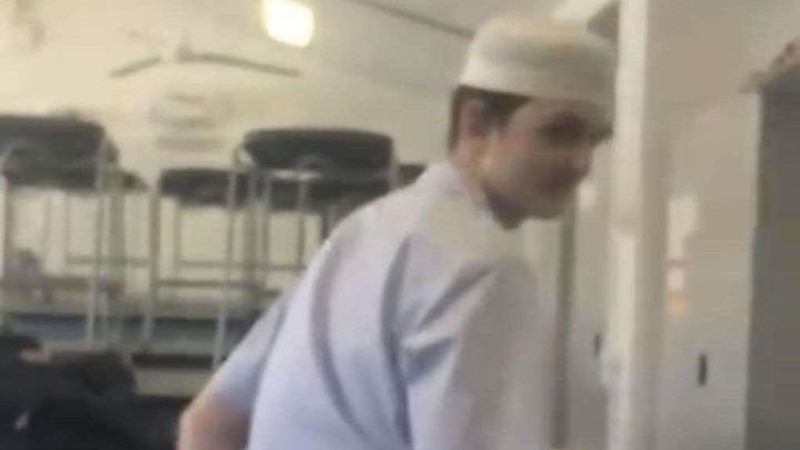
The boy began to wear traditional Islamic dress to school.
“[He was] the most watched child at Rossmoyne Senior High School,” a psychologist who had been engaged to help James told the inquest.
asserted
who → begin → inquest
Several other incidents were reported to the group managing James, including one where a Jewish student was attacked after making a remark about his Islamic faith, and another where he was again caught with graphic extremist videos on a USB.
asserted
he → report → USB
Brown told the inquest he had personally spoken with James following his “disrespectful” behaviour at an Anzac Day ceremony in 2024.
asserted
he → tell → 2024
He said James had been seen laughing, and he refused to stand during proceedings.
asserted
he → say → proceedings
“We had a conversation about respect and the right to have different beliefs and my respect of that - but with that, he needs to respect the rights of others,” Brown said.
asserted
Brown → have → others
“He politely disagreed.”
asserted
He → disagree → ?
The inquest heard just 24 hours before he died in May 2024, a school librarian found pamphlets in James’ possession depicting a man with a gun on the front, containing an “inflammatory speech”.
uncertain
librarian → hear → speech
The school reported it to the relevant authorities, but the inquest was told the discovery had only been made at the end of the day, and as such, the email had likely not been read until later.
asserted
email → report → day
Brown said the school had been surprised to hear of the James’ final actions.
asserted
school → say → actions
“While [the boy] was quite devout in his faith and his beliefs, we hadn’t seen any indication that he was wanting to [carry out] that kind of attack on other people,” he said.
asserted
he → see → people
“He had not indicated that at all ...
asserted
He → indicate → that
it was a surprising event from the school’s point of view, as we thought we were making a positive difference.”
asserted
we → think → difference
That view was echoed by psychologist Elizabeth Pinkleton, who had been involved in James’ care, and said it was her view he had begun to improve, as he had become more engaged in school and his work had improved.
asserted
work → echo → school
However, she said he still refused to accept certain supports.
asserted
he → say → supports
“He didn’t want to be different,” Pinkleton said.
asserted
Pinkleton → want → ?
Both Brown and Pinkleton told the inquest there had been no significant red flags prior to James’ death, but in retrospect, the death of his grandmother a week before had likely put his mental health at risk.
asserted
death → tell → risk
…and 1 more, not listed.
 The Aporia