Why tie ourselves more closely to the one continent on the planet that is experiencing no real economic growth?
asserted
that → tie → growth
We already have the most comprehensive trade deal that the EU has ever struck with a country not in the process of joining.
asserted
EU → have → process
What else do we need so badly that we must pay the monstrous price demanded?
asserted
we → need → price
We have a good idea of what will be announced later this week, because Brussels has more or less leaked the communique.
asserted
Brussels → have → communique
Britain is accepting the kind of deal that an occupied nation signs under duress.
asserted
nation → accept → duress
We are giving away our money, sovereignty, competitiveness, fisheries, freedom.
asserted
We → give → freedom
We are also giving away our right to deport foreign criminals.
asserted
We → give → criminals
As The Mail on Sunday reports today, according to a leaked draft of the agreement, the UK ‘commits not to proceed with such removals and deportations [of criminals to their EU country of origin] in the future’.
uncertain
UK → report → future
Largely, as far as I can see, so that ministers can feel good about expunging the sin of the 2016 referendum.
asserted
ministers → see → referendum
Consider what a normal negotiation between two partners would look like.
asserted
negotiation → consider → partners
Each side would come to the table with objectives and potential concessions.
asserted
side → come → objectives
The EU, for example, might want to tie Britain in more closely to its rules.
uncertain
EU → want → rules
It might not like the idea of us signing more competitive trade deals or outperforming it through deregulation.
uncertain
us → like → deregulation
It might want to restore free movement.
uncertain
It → want → movement
'To what problem is the EU reset a solution?' asks Daniel Hannan.
asserted
Hannan → ask → ?
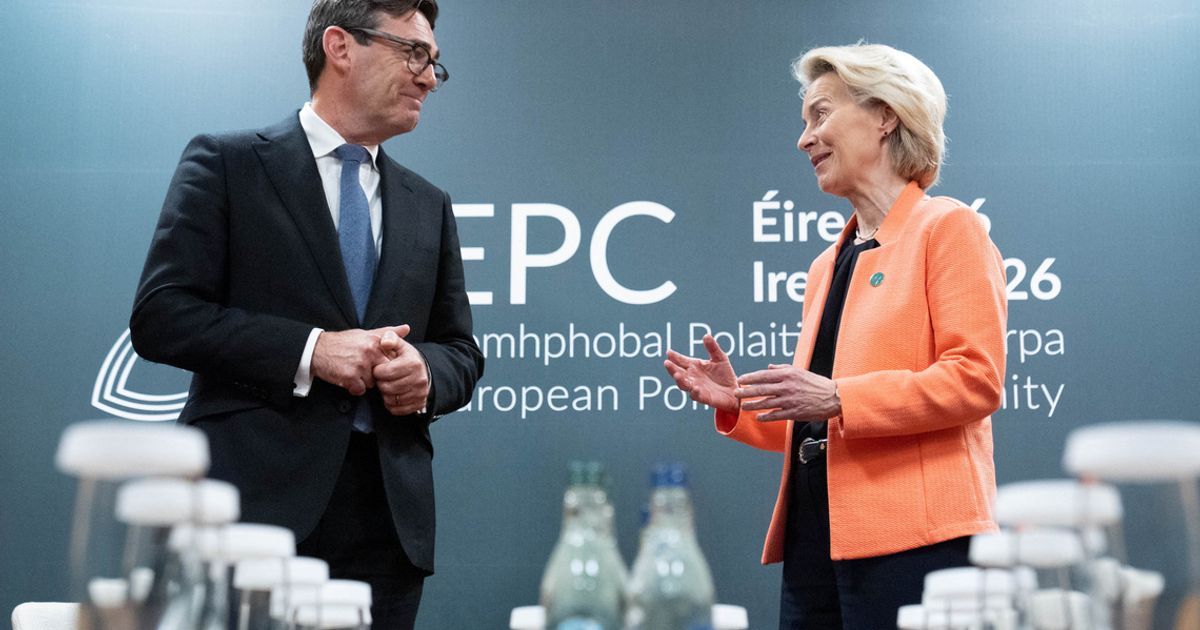
Brexit critic PM Andy Burnham is seen meeting with President of the European Commission Ursula von der Leyen in Dublin this week
It might want taxpayers to cover the university fees of its students (this matters disproportionately in Brussels, as the chief beneficiaries are the offspring of Eurocrats – Eurobrats, so to speak).
uncertain
beneficiaries → see → Eurocrats
Britain, similarly, would come to the table with its own asks.
asserted
Britain → come → asks
It would want the removal of the goods checks between Great Britain and Northern Ireland – a concession that was agreed only because most MPs were, in effect, voting with Brussels against their own government.
asserted
MPs → want → government
It would want sovereignty over its territorial waters.
asserted
It → want → waters
It would want to return illegal migrants to the country from which they had crossed into Britain.
asserted
they → want → Britain
Then there are the issues that both sides would gain, and which should be straightforward: recognition of professional qualifications, airport e-gate use, acknowledgment of each other’s food standards, a common energy grid.
asserted
which → be → standards
That, though, is not what has happened.
asserted
what → happen → ?
If Britain had any asks of its own, they were plainly ditched at the outset.
asserted
they → have → outset
The EU’s demands have been met without demur, and then presented as something that Britain had wanted all along.
asserted
Britain → meet → that
The areas of mutual benefit, even when the benefit is mainly on the EU side, have been settled on only after the UK agreed to make further concessions.
Let’s start with the abject surrender on food standards.
asserted
’s → settle → standards
In the original disengagement talks, Britain proposed a straightforward mutual recognition agreement, such as the EU has with New Zealand.
asserted
EU → propose → Zealand
It was hardly an unreasonable demand: Britain’s food standards are much closer to the EU’s than New Zealand’s are – unsurprisingly, given that they were identical for half a century.
asserted
they → give → century
You might think, from the coverage, that we are a big food exporter, and that getting such a deal is critical for our agri-businesses.
uncertain
getting → think → businesses
In fact, food accounts for just 1.3 per cent of our total exports, and the EU’s share of that is diminishing.
asserted
share → account → that
According to the Department for Environment, Food and Rural Affairs, British exports to the EU in food and drink, live animals, plants and seeds are worth £15billion a year; our imports from the EU in the same categories come to £51billion.
uncertain
imports → accord → 51billion
Why, then, did the EU not agree to such a deal at the outset?
asserted
EU → agree → outset
Because, listening to the stream of anti-Brexit MPs who made pilgrimages to Brussels between 2017 and 2019, Eurocrats decided to demand the whole farm.
asserted
Eurocrats → listen → farm
Britain, they said, must agree to any regulations that they or their successors might adopt at any time in the future.
uncertain
they → say → future
If Brussels decided, perhaps under pressure from a rival company, to ban a particular technology or pesticide, Britain would have to do the same.
asserted
Britain → decide → same
British negotiators, understanding what the trade balance was, declined.
asserted
balance → understand → ?
So their European counterparts decided to wait and see whether they might deal with a more compliant government.
uncertain
they → decide → government
Now, incredibly, they have got one.
asserted
they → get → one
What goes for food standards goes across the board.
asserted
goes → go → board
In energy, for example, Britain is abandoning its carbon trading scheme (where firms that pollute over an agreed limit buy carbon credits from companies with greener emissions).
asserted
that → abandon → emissions
It’s joining the EU version, instead, even though that will mean a hike in prices over-polluting firms pay of between 15 and 20 per cent.
asserted
firms → join → cent
…and 20 more, not listed.
 The Aporia