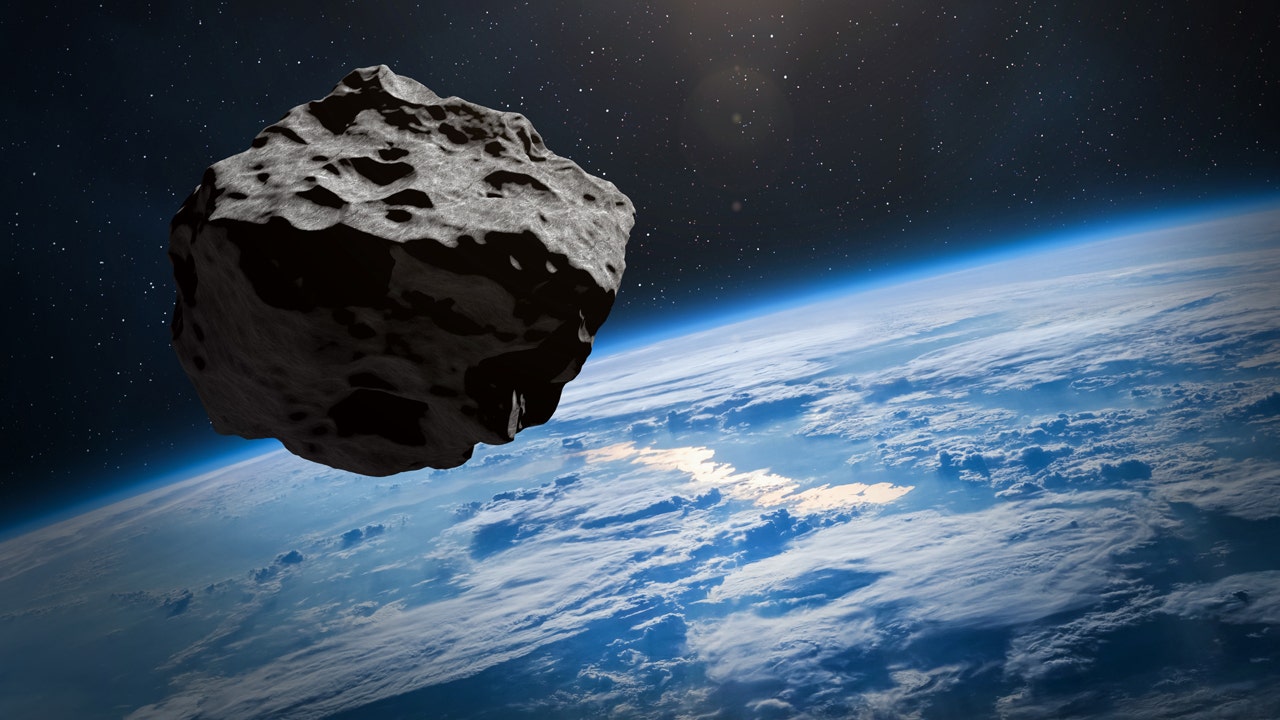
Photo via Euronews

Mysterious object in space: Could it be a Soviet probe missing for 40 years?

Read the original at Euronews ↗
Cite

Mysterious object in space: Could it be a Soviet probe missing for 40 years? (2026, November 15). Euronews. https://www.euronews.com/2026/11/15/mysterious-object-in-space-could-it-be-a-soviet-probe-missing-for-40-years

Dated from the outlet's own feed. Check the original for its byline.

Euronews · collected 2026-11-15

Quick Summary

An object called "1998 KY26," approximately 11 meters wide, is exhibiting unusual acceleration near Earth, leading scientists to speculate it might be the Soviet spacecraft Phobos 1, which disappeared in 1988. Harvard astrophysicist Avi Loeb and colleagues have proposed this hypothesis after modeling Phobos 1 and finding a match with observations of KY26, including its reflective properties and rotation speed. However, other researchers suggest that 1998 KY26 is likely a dehydrated asteroid rather than a spacecraft, and a Japanese mission with Hayabusa2 is scheduled to study the object in 2031 to resolve the mystery.
Written by AI on 2026-11-15, from this article's own text only (the story summary below draws on all the coverage).
See how they differ ↓

AI analysis

Story summary

A mysterious object, known as 1998 KY26, is accelerating in a way that cannot be explained by gravity alone, leading some scientists to speculate that it might be a lost Soviet spacecraft. Harvard astrophysicist Avi Loeb challenges NASA Administrator Jared Isaacman's assertion that the object is just an asteroid, arguing that 1998 KY26 exhibits non-gravitational acceleration, suggesting it is influenced by forces other than gravity. The object is approximately 36 feet wide and is currently 189 million miles from Earth, with its closest approach to Earth expected to be within 32 million miles in 2028. Scientists are closely monitoring the object, which was originally thought to be a near-Earth asteroid but now raises questions due to its unusual acceleration pattern.

Written for “Mysterious Object In Space Debate” on 2026-11-18, grounded in this article and the 4 other(s) covering the same event.

How they differ

4 outlets covered “Mysterious Object In Space Debate”.

What each outlet says

One AI summary per outlet of its latest article on this story, written from that article alone and checked against it. Open the article for the outlet's own words.

EuronewsThis outlet15 Nov

An object called "1998 KY26," approximately 11 meters wide, is exhibiting unusual acceleration near Earth, leading scientists to speculate it might be the Soviet spacecraft Phobos 1, which disappeared in 1988. Harvard astrophysicist Avi Loeb and colleagues have proposed this hypothesis after modeling Phobos 1 and finding a match with observations of KY26, including its reflective properties and rotation speed…

Mysterious object in space: Could it be a Soviet probe missing for 40 years? (this article)
Fox News15 Nov

Harvard astrophysicist Avi Loeb is challenging NASA Administrator Jared Isaacman's assertion that the mysterious space object 1998 KY26 is an asteroid. Loeb argues that the object's unusual acceleration suggests it is not a typical asteroid but could be the Soviet spacecraft Phobos 1. Isaacman stated during a Fox & Friends appearance that there is no evidence to suggest otherwise, while Loeb, in an interview with…

Harvard scientist pushes back on NASA chief over mystery space object: 'It's not an asteroid' →2 articles from Fox News on this story
Daily Mail12 Nov

Scientists have observed that the near-Earth object 1998 KY26, initially thought to be a simple asteroid, is accelerating at a rate unexplained by gravitational forces alone. This mysterious acceleration has led Harvard Professor Avi Loeb to propose that 1998 KY26 might actually be the lost Soviet spacecraft Phobos 1, which vanished in 1988. The object, approximately 36 feet in length and spinning very rapidly, will…

Object heading toward Earth is mysteriously accelerating as scientist claims it is a long-lost spacecraft →
New York Post12 Nov

Scientists are investigating the unusual acceleration of an object in space called 1998 KY26, which measures about 36 feet wide and is speeding through the solar system. Researchers have proposed theories ranging from it being a dark comet with buried water ice to a Soviet spacecraft from 1988. However, a new study by Georgia Institute of Technology scientists, published in the journal Icarus, casts doubt on the…

Scientists question what is pushing strange, speeding object through space as new theory grows →

Where they agree and split

Framing

How the first headlines put it

A claim to check1
Stated as fact2
The headlines (3)

Object heading toward Earth is mysteriously accelerating as scientist claims it is a long-lost spacecraft Daily Mail · a claim to check

Mysterious object moving through space could be lost Soviet probe as NASA weighs in on theory Fox News · stated as fact

Scientists question what is pushing strange, speeding object through space as new theory grows New York Post · stated as fact

The full story: what happened, how it changed, and all 5 articles →

Compared with similar articles

This article reads unscored and hedges 28% of its claims. Each row says how that neighbour differs.
Fox News
Hedges 7 of 27 claims Outlet record 67/100
New York Post
Hedges 7 of 27 claims Outlet record 66/100
Fox News
Hedges 7 of 29 claims Outlet record 67/100

Story

Mysterious Object In Space Debate
Science · 5 article(s) covering the same event. Compare every outlet's account →
How this article was measured signals, leaning charts, publisher record, byline, topics and claims

Signals How these are calculated →

Claims extracted
29
sentences that state something as happening or true
Uncertain
28%
8 of 29 hedged ("reportedly", "may", "according to")
Leaning
not political
takes no side on a contested political question
Publisher signals
60/100
Euronews's corrections and hedging, across everything collected from it. Not a measure of accuracy.
Outlets on this story
5
Science
Same framing elsewhere
1
articles that frame the event the way this one does
Analyzed 2026-11-15 · how these are computed

How this is being covered How these are calculated →

Article leaning vs. publisher reliability
Source leaning vs. consistency

Publisher

Euronews · 1473 article(s) · 1 correction(s) detected
Running correction rate · 1 correction(s)

Who wrote this

No reporter is named on this article.

Topics

Harvard Japanese KY26 NASA Soviet Union

Subjects

Harvard ORG · 2× Japanese NORP · 2× Adam Crowl PERSON · 1× Adam Hibberd PERSON · 1× Avi Loeb PERSON · 1× Jared Isaacman PERSON · 1× Loeb PERSON · 1× NASA ORG · 1× Soviet NORP · 1× Soviet Union GPE · 1×

Narrative

This unusual behaviour is known as "non-gravitational acceleration", meaning that forces other than gravity are influencing the object's path and speed. NASA chief Jared Isaacman said on Thursday that the agency is monitoring KY26 but stressed there is no reason for concern.
framing: mixed · carried by 1 article(s) · first seen 2026-11-15
A mysterious object speeding through the Solar System has shown unusual acceleration, raising speculation that it could be a spacecraft from the former Soviet Union that went missing nearly 40 years ago.

Claims (29 extracted, 8 hedged)

The object, known as "1998 KY26", about 11 metres wide, is moving near Earth; yet something other than the Sun's or Earth's gravity seems to affect its path and speed. asserted
something → know → path
A mysterious object speeding through the Solar System has shown unusual acceleration, raising speculation that it could be a spacecraft from the former Soviet Union that went missing nearly 40 years ago. uncertain
that → speed → Union
Known as 1998 KY26, the object is an 11-metre-wide body passing near Earth. asserted
object → know → Earth
Scientists have noticed that its trajectory cannot be fully explained by the gravitational pull of the Sun or Earth. asserted
trajectory → notice → Sun
This unusual behaviour is known as "non-gravitational acceleration", meaning that forces other than gravity are influencing the object's path and speed. NASA chief Jared Isaacman said on Thursday that the agency is monitoring KY26 but stressed there is no reason for concern. asserted
agency → know → concern
He reassured the public that the object poses no known threat to Earth and that there is no evidence it could collide with our planet. uncertain
it → reassure → planet
Has Phobos 1 been found? asserted
Phobos → find → ?
A group of researchers has put forward an unusual explanation. asserted
group → put → explanation
Harvard astrophysicist Avi Loeb and two colleagues, Adam Hibberd and Adam Crowl, believe KY26 could be Phobos 1, an unmanned Soviet spacecraft launched on 7 July 1988. uncertain
KY26 → believe → July
The probe lost contact with Earth while on its way to Mars. asserted
probe → lose → Mars
The researchers built a simplified model of Phobos 1 and compared how it would reflect sunlight as it rotated with observations of KY26. asserted
it → build → KY26
They found that the model closely matched eight separate sets of observations of the object. asserted
model → find → object
KY26 reflects almost 52% of the sunlight that hits it and completes one full rotation every 5.35 minutes. asserted
that → reflect → rotation
Loeb and his colleagues argue that these characteristics are consistent with their hypothesis that KY26 could be an artificial object. uncertain
KY26 → argue → hypothesis
New study challenges the dark comet theory One explanation, first proposed in a 2023 study, is that KY26 is a so-called 'dark comet' containing trapped water that turns into gas, creating thrust as the object moves through space. asserted
object → challenge → space
However, astronomers have not detected the cloud of gas or tail normally associated with comets. asserted
astronomers → detect → comets
A separate scientific study has offered a contrasting explanation. asserted
study → offer → explanation
Researchers concluded that 1998 KY26 is most likely a dehydrated asteroid. asserted
KY26 → conclude → ?
This would mean that water ice is unlikely to be responsible for its unusual acceleration, as temperatures are too high for sufficient ice to survive over an extended period. asserted
ice → mean → period
Another possible explanation is solar radiation, which can exert pressure on the object's surface and slightly alter its trajectory. asserted
which → exert → trajectory
Other observations also point towards a natural, rocky asteroid rather than an old spacecraft. asserted
observations → point → spacecraft
A study published in the journal Nature Communications in 2025 estimated its diameter at just 11 metres. asserted
study → publish → metres
Japanese spacecraft could solve the mystery uncertain
spacecraft → solve → mystery
A Japanese space mission could eventually provide important answers. uncertain
mission → provide → answers
The Hayabusa2 spacecraft is due to reach 1998 KY26 in July 2031 and study it at close range. asserted
spacecraft → reach → range
It would be the first mission to directly investigate an asteroid of this tiny size. asserted
It → investigate → size
Images and measurements taken during the encounter could reveal whether the object is indeed a natural rocky body or potentially something artificial. uncertain
object → take → encounter
Until then, Avi Loeb's suggestion remains a fascinating but unproven theory. asserted
suggestion → remain → ?
The Harvard astrophysicist has even joked that Hayabusa2's cameras might discover a label reading "Made in the U.S.S.R." rather than a block of ice. uncertain
cameras → joke → ice

Give feedback · no sign-in needed

No sign-in needed for now. Your note is sent without a name, so it cannot be answered.

History Support