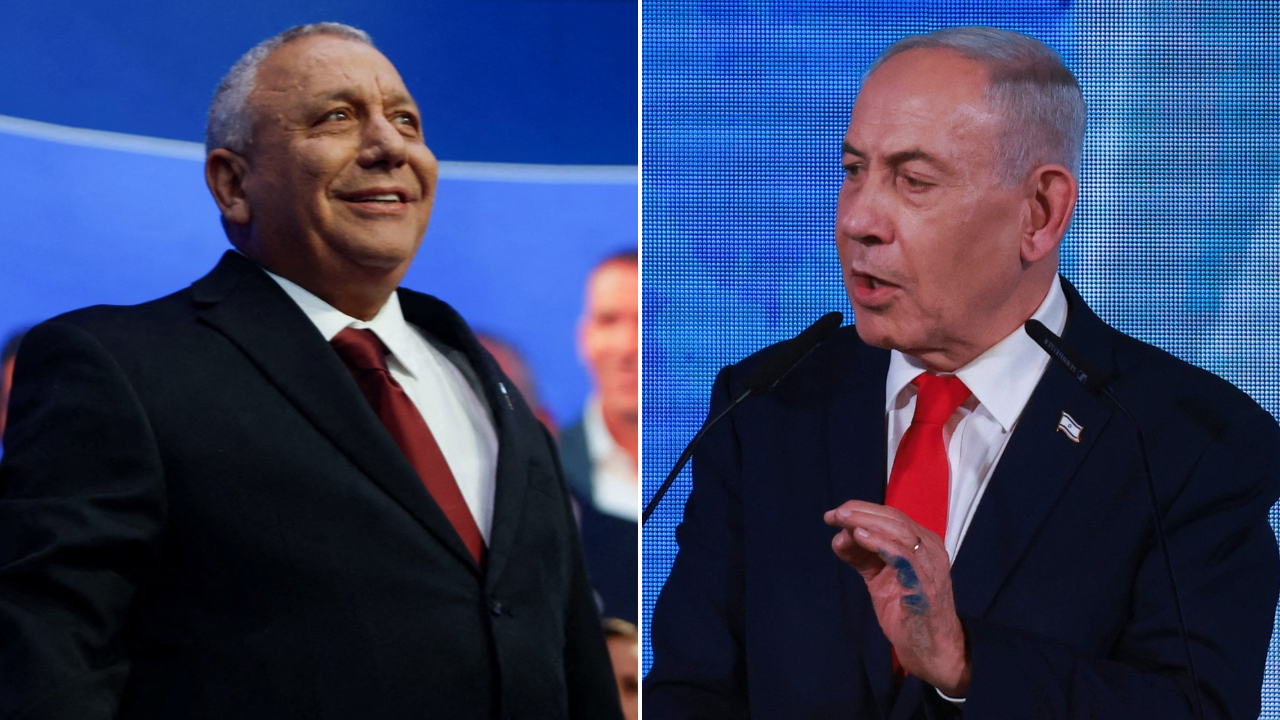
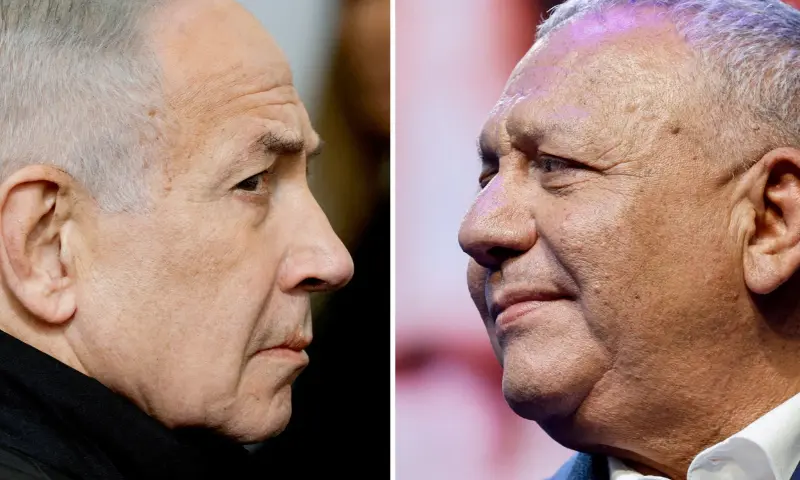
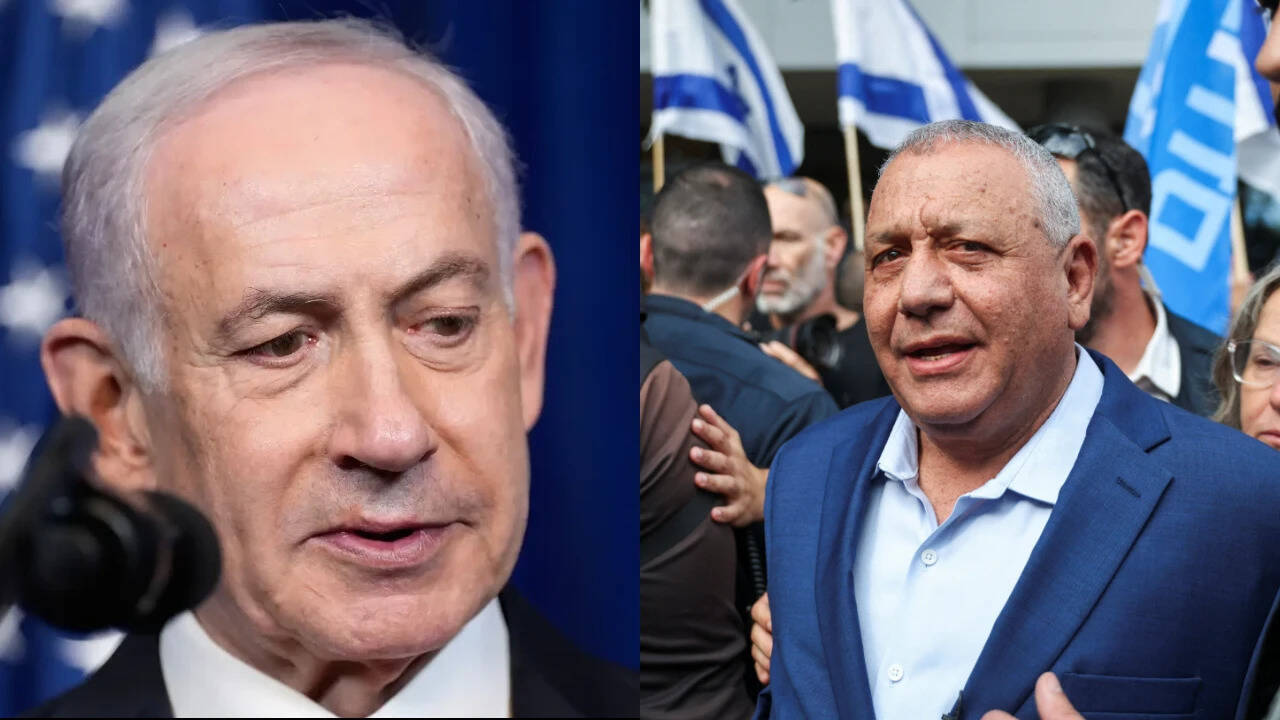
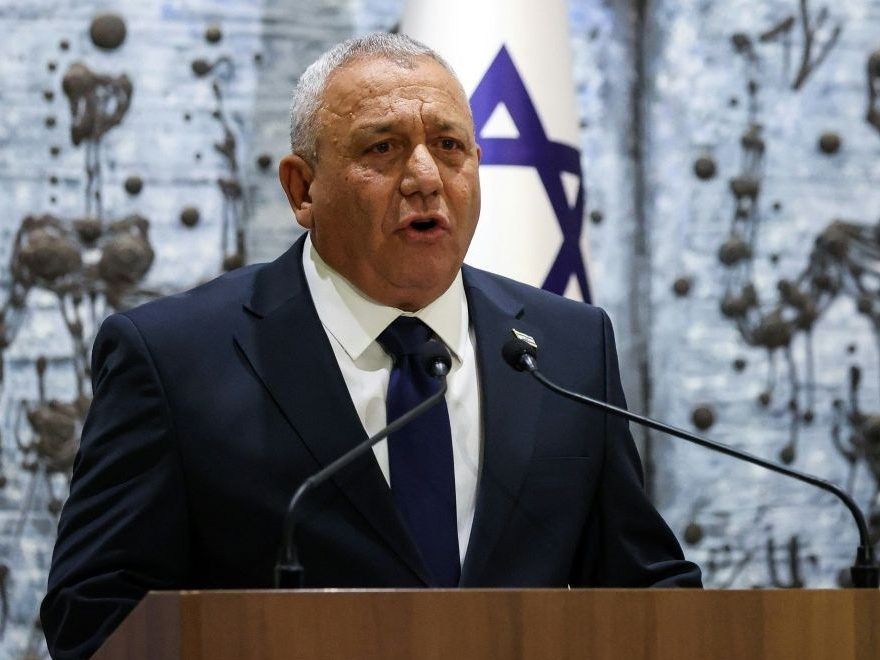
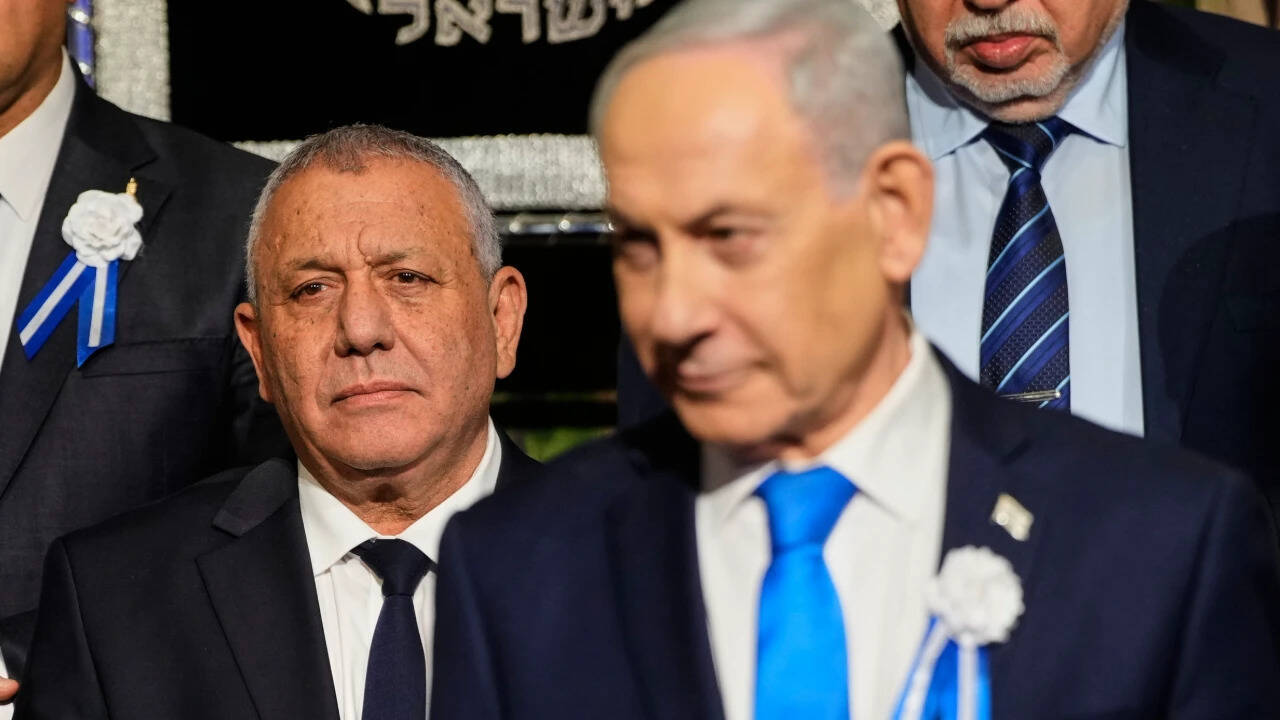
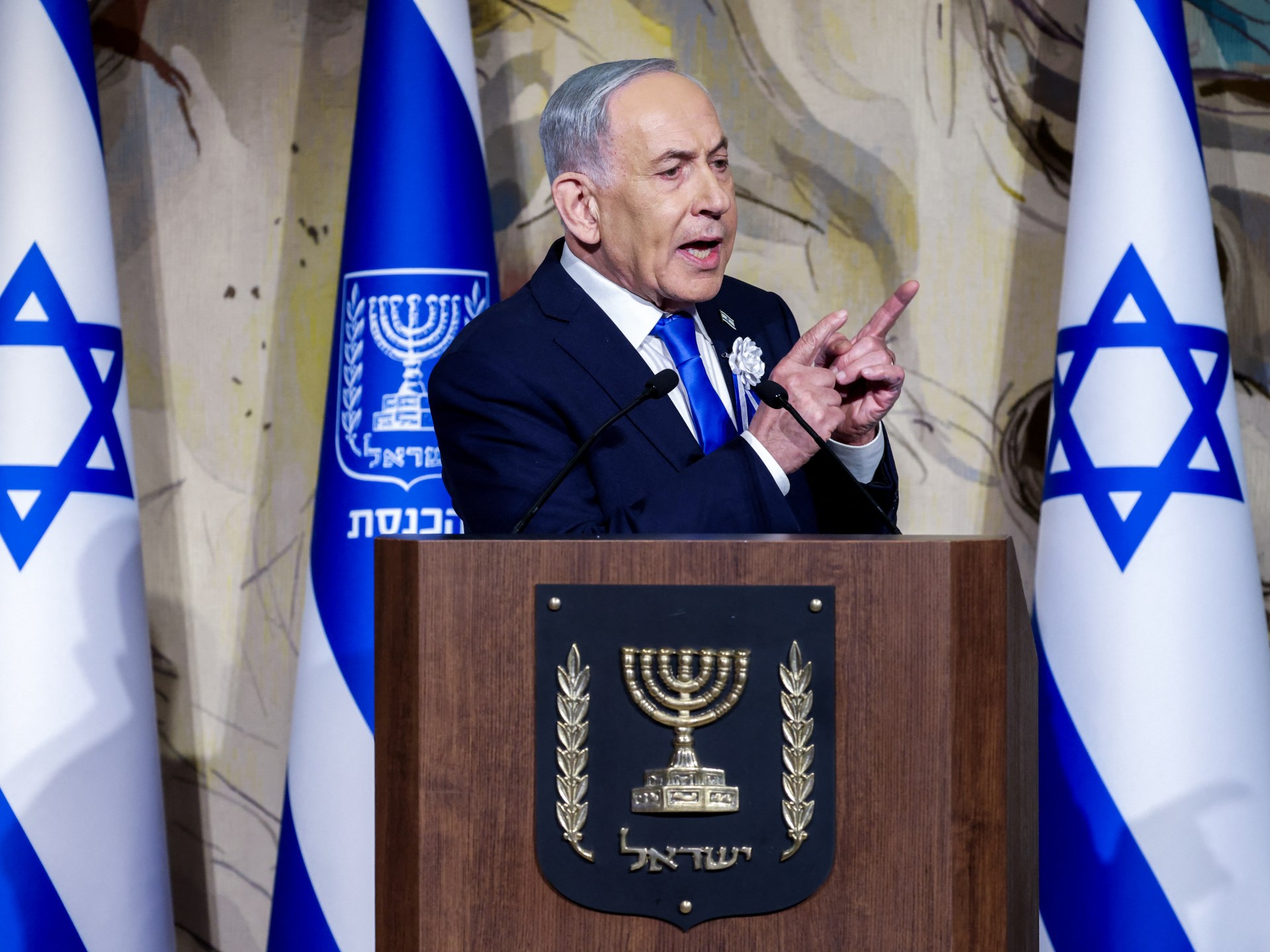
Israeli caretaker Prime Minister Benjamin Netanyahu has renewed his call for a national unity government with his rival, Gadi Eisenkot, saying only such a government can guarantee Israel’s security.
asserted
government → renew → security
In a video statement on Saturday, Netanyahu said a meeting with Eisenkot on Thursday “only strengthened the conviction that it is essential to form a national unity government”.
asserted
it → say → government
Recommended Stories
list of 3 items- list 1 of 3Netanyahu fights to stay relevant as Israel’s opposition closes in
- list 2 of 3‘Greater Israel’: Christian Zionism’s role in US policy
- list 3 of 3Iranophobia:
asserted
opposition → fight → policy
The prime minister said such a government could “eliminate the Iranian threat once and for all”, claiming Tehran would “not hesitate to use nuclear weapons against us”.
uncertain
Tehran → say → us
“Let’s meet in one room, without preconditions,” he said.
asserted
he → meet → preconditions
Within minutes, however, Eisenkot dismissed the appeal as a ploy.
asserted
Eisenkot → dismiss → ploy
A former army chief, Eisenkot said Netanyahu “knows he lost the election”.
asserted
he → say → election
“Netanyahu is calling for negotiations while they are already underway,” he said.
asserted
he → call → negotiations
“These tricks don’t work on me.”
asserted
tricks → work → me
Who has the numbers?
asserted
Who → have → numbers
Neither side won a majority in the October 27 election.
asserted
side → win → election
Netanyahu’s right-wing and religious bloc took 53 seats in the 120-seat Knesset, Eisenkot’s four-party bloc got 48 seats, and Arab-led parties won a record 19.
asserted
parties → take → record
President Isaac Herzog last week tasked Eisenkot with forming a government, after 67 lawmakers, including those from Arab-led parties, endorsed him, while 46 backed Netanyahu.
asserted
46 → task → Netanyahu
Eisenkot has 28 days, with a possible 14-day extension.
asserted
Eisenkot → have → extension
He has ruled out including Arab-led parties in his government.
asserted
He → rule → government
Under Eisenkot’s plan for a minority “national emergency government”, his bloc’s 48 lawmakers would vote in favour against the 46 Netanyahu supporters, while the 26 lawmakers from Arab and ultra-Orthodox parties could abstain.
uncertain
lawmakers → vote → parties
It would allow his government to be approved without an absolute majority in the Knesset.
asserted
government → allow → Knesset
Netanyahu has warned that such a government would lead to Israel’s “collapse”.
asserted
government → warn → collapse
Points of contention
Netanyahu’s version would include Jewish parties from the centre and the right and exclude Arab parties.
asserted
version → include → parties
He and his allies have made unsubstantiated claims that Arab-led parties “stole” the election.
uncertain
parties → make → election
On Friday, Eisenkot called Netanyahu’s campaign against them “racist”.
asserted
Eisenkot → call → them
Eisenkot has said he could work with members of Netanyahu’s Likud party and with Bezalel Smotrich’s Religious Zionism if their commitment to unity is “sincere”, but he insisted on a “break with the extremists”, notably supporters of far-right minister Itamar Ben-Gvir.
uncertain
he → say → Gvir
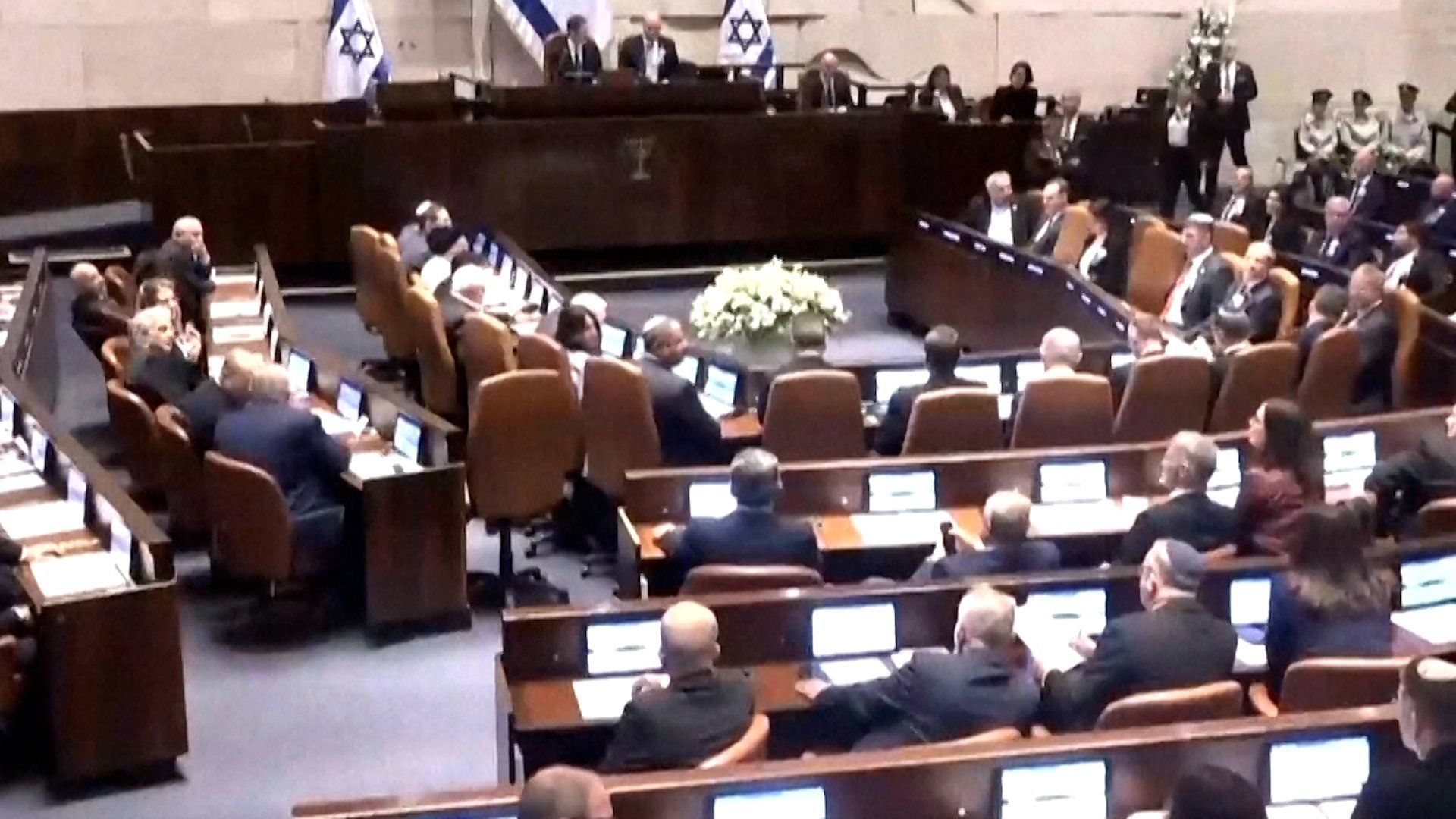
The Knesset will elect its speaker on Tuesday.
asserted
Knesset → elect → Tuesday
The post is currently held by Netanyahu ally Amir Ohana, and the opposition has put forward Matan Kahana, a former military officer, in his place.
asserted
opposition → hold → place

 The Aporia