Safia Southey is an international lawyer and writer who focuses on how societies reckon with wartime abuses.
asserted
societies → focus → abuses
A Twilight Zone Between War and Peace
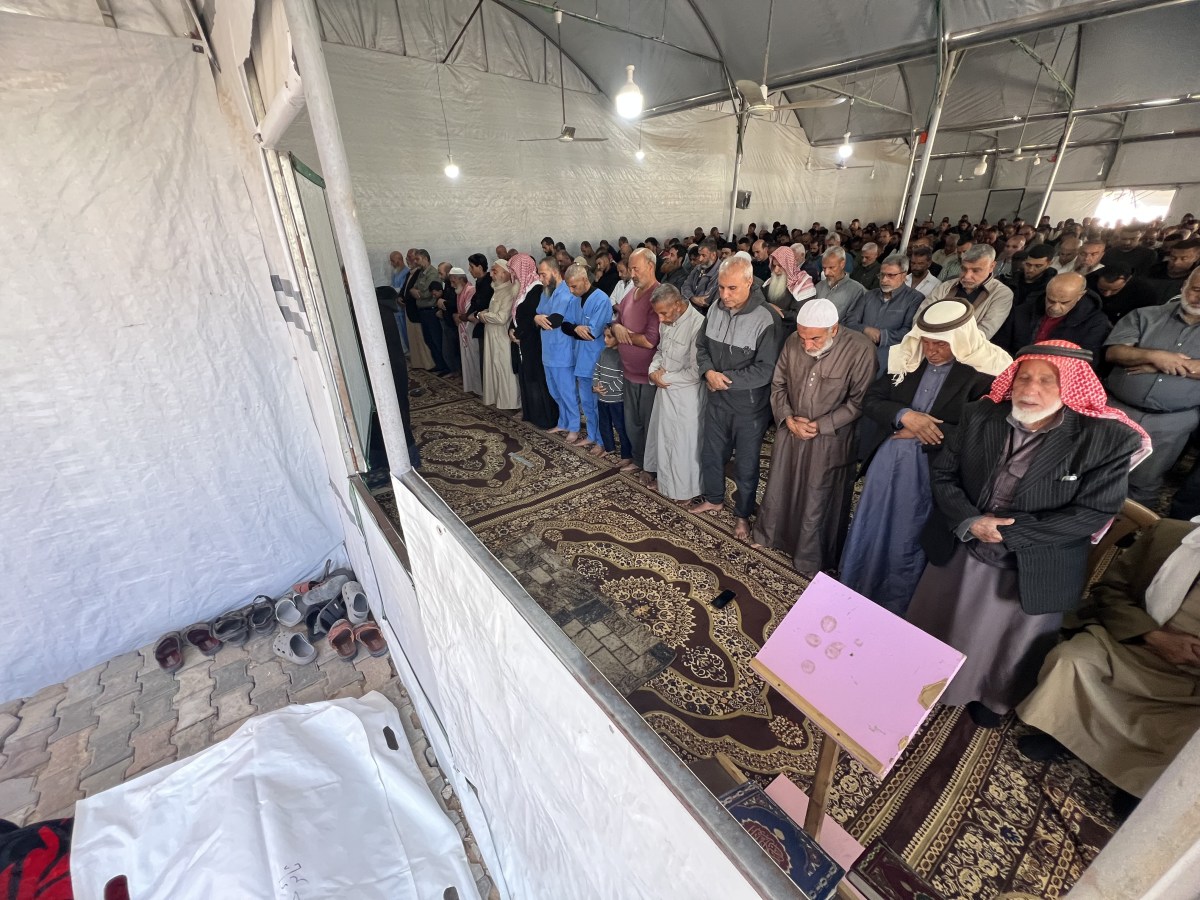
Abdullah Abu Zubaida’s family spent the first anniversary of the Gaza ceasefire last month in a shelter they built from the debris of their own home.
asserted
they → spend → home
Ne’man Abu Jarad and his five daughters spent it in tents, still displaced and with no clear way back.
asserted
Jarad → spend → way
These families and millions of other Palestinians find themselves in a twilight state between war and peace: a zombie conflict in which a ceasefire has been announced while Israeli military control and attacks continue.
asserted
control → find → which
The agreement risks making that condition permanent by leaving Palestinian governance and Israeli withdrawal dependent on decisions made largely by outside powers.
asserted
governance → risk → powers
For these families, whose circumstances were reported by the Associated Press, and others in their position, the ceasefire that was supposed to end the war has brought little control over what happens next.
asserted
what → report → control
Whether they can return home, rebuild, or resume anything resembling ordinary life remains subject to decisions made by outside authorities, whose hold on Gaza’s future may be further entrenched by the agreement itself.
uncertain
hold → return → agreement
While violations of the ceasefire warrant the attention they receive (and more), the agreement’s own terms demand scrutiny too, since arrangements negotiated to end wars also decide who holds power once the fighting stops.
asserted
fighting → warrant → power
Christine Bell, a legal scholar specializing in peace accords, has shown how such agreements can perform constitutional functions.
asserted
agreements → specialize → functions
They determine who governs, over what territory, and subject to whose approval.
asserted
who → determine → approval
In Gaza, the conditions for Israeli withdrawal and Palestinian self-government give outside actors considerable power to determine when, and whether, the transition ends.
asserted
transition → give → power
The framework therefore threatens to turn the temporary administration of a devastated territory into a durable system of external control with no enforceable end, legitimized by the very agreement meant to bring peace.
asserted
framework → threaten → peace
A Long History of Outside Control
Gaza’s current predicament has a long history of displacement and outside control.
asserted
predicament → have → displacement
In 1947, the United Nations General Assembly adopted a plan to partition Palestine (then under British rule) into Arab and Jewish states.
asserted
Assembly → adopt → states
While Jewish leadership accepted the plan, Arab leadership rejected it.
asserted
leadership → accept → it
During the war surrounding Israel’s establishment in 1948, approximately 750,000 Palestinians fled or were expelled from their homes.
asserted
Palestinians → surround → homes
Many sought refuge in Gaza.
asserted
Many → seek → Gaza
The mass displacement and dispossession of the Nakba — Arabic for “catastrophe” – never ended.
asserted
displacement → end → catastrophe
Israel occupied Gaza and the West Bank, including East Jerusalem, in 1967.
asserted
Israel → occupy → 1967
In 2005, it removed its settlements and withdrew its army from inside Gaza while retaining control over its airspace and maritime access and substantial authority over its borders and the movement of people and goods.
asserted
it → remove → people
In 2024, the International Court of Justice concluded that because Israel continued to exercise authority over Gaza’s borders and the movement of people and goods, the withdrawal had not entirely released it from its obligations under the law of occupation.
asserted
withdrawal → conclude → occupation
The current institution of Palestinian self-governance also began as a temporary arrangement intended to last no more than five years.
asserted
institution → begin → years
The Oslo process of the 1990s provided for an interim Palestinian government in Gaza and the West Bank until a permanent settlement could be reached.
uncertain
settlement → provide → Gaza
That institution, the Palestinian Authority, remains central to proposals for Gaza’s future.
asserted
institution → remain → future
Hamas won the 2006 Palestinian legislative elections and took control of Gaza in 2007 after armed conflict with Fatah, the rival Palestinian faction.
asserted
Hamas → win → Fatah
Israel, citing security concerns, tightened its border restrictions into a blockade by land, sea, and air, restricting the movement of people into and out of Gaza and the entry of food, construction materials, and other necessities.
asserted
Israel → cite → food
Egypt restricted passage through its own border crossing.
asserted
Egypt → restrict → crossing
Years before the current war, the U.N.’s humanitarian office documented the effects: restrictions on movement and trade had undermined Gaza’s economy, increased its dependence on aid, and obstructed access to healthcare and education.
asserted
restrictions → document → healthcare
On Oct. 7, 2023, Hamas-led groups attacked Israel, deliberately killing civilians and taking hostages; Human Rights Watch has documented these acts as crimes against humanity and war crimes.
asserted
Watch → lead → humanity
Israel’s subsequent military response devastated Gaza.
asserted
response → devastate → Gaza
By Oct. 21 of this year, Gaza’s Health Ministry reported 74,494 Palestinians killed and 175,604 injured.
asserted
175,604 → report → year
In an October 2026 report, the U.N. Independent International Commission of Inquiry concluded that Israeli authorities and forces continued committing genocidal acts against Palestinians in Gaza after the ceasefire, with the intent to destroy the group in whole or in part.
asserted
authorities → conclude → part
By September of this year, Israeli military control had expanded beyond the approximately 53 percent of Gaza envisioned under the ceasefire agreement to at least 60 percent.
asserted
control → expand → percent
By the ceasefire’s first anniversary, nearly two-thirds of housing units had been destroyed, many of the remaining buildings were unsafe, and large-scale reconstruction had yet to begin.
asserted
reconstruction → destroy → buildings
With winter approaching, displaced families need immediate decisions about shelter.
asserted
families → approach → shelter
The Israeli authorities who control access to their homes and to building materials can postpone those decisions.
asserted
who → control → decisions
Such delays favor whoever controls access, and waiting itself becomes a source of political leverage.
asserted
waiting → favor → leverage
From Resolution 2735 to Resolution 2803
In June 2024, the U.N. Security Council endorsed a three-phase framework in Resolution 2735.
asserted
Council → endorse → Resolution
An initial ceasefire and exchanges of hostages and prisoners were to lead, upon agreement, to a permanent end to hostilities and full Israeli withdrawal, followed by major reconstruction.
asserted
ceasefire → lead → reconstruction
The initial ceasefire was to continue for as long as negotiations over the second phase went on.
asserted
negotiations → continue → phase
…and 70 more, not listed.
 The Aporia