Climate change could triple area hit by European wildfires: Study

The Straits Times World News · collected 2026-08-20
Read the original at The Straits Times World News ↗

Summary

A new study warns that climate change could nearly triple the area of land hit by wildfires in Europe every year, with a possible increase of 192% more land burned per year by 2100 if greenhouse gas emissions continue to rise. The study found that this could overwhelm even experienced firefighting capacities and lead to widespread increases in burned areas, especially around the Mediterranean and Western/Central Europe. According to the researchers, better fire management could potentially reduce these increases by up to 92%, but would be limited in extreme conditions. The warning comes after a summer of devastating wildfires across Europe.
Written by the local model on 2026-08-20, using this article's own text rather than the other coverage of the same event (that is the story summary below).

Signals How these are calculated →

Claims extracted
16
claim-shaped sentences
Uncertain
50%
8 of 16 hedged
Leaning
not scored
needs a local LLM pass
Publisher trust
94.6
red-flag proxy, not a credibility rating
Outlets on this story
1
Environment
Narrative spread
1
articles carrying this framing
Analyzed 2026-08-20 · how these are computed

AI analysis (generated at analysis time, not now)

Story summary

A recent study published on August 20th predicts that climate change could nearly triple the area of land hit by wildfires in Europe each year. The continent has already seen devastating wildfires fueled by hot and dry conditions, affecting countries like Belgium, France, Greece, Portugal, and Spain. According to lead author Maik Billing, researcher at the Potsdam Institute for Climate Impact Research, climate change is driving up fire activity across Europe due to increasingly severe hot, dry, and windy conditions. The study found that even under relatively low global warming of around 1.8°C, there could be widespread increases in burned area, with 39% more land burned per year by the end of the century compared to today's average. If greenhouse gas emissions continue to rise, temperatures could reach 3.6°C, leading to even greater fire activity and potentially overwhelming those experienced in preventing and fighting them.

Written for “European Wildfires Increase” on 2026-08-31, grounded in this article and the 0 other(s) covering the same event.
Why this leaning score
No quote from the article could be verified for this score. The model gave a number without evidence that survives checking, so there is nothing here for you to read against the original.
Score -0.35 Confidence low 1 quote(s) discarded as not found in the article
Leaning score -0.35 for article 1524 (low confidence, 0 verified quotes) · logged 2026-08-21

Story

📰 European Wildfires Increase
Environment · 1 article(s) covering the same event. This is the one the site leads with.

How this is being covered How these are calculated →

Article leaning vs. publisher reliability
Source leaning vs. consistency

Compared with similar articles

This article reads unscored and hedges 50% of its claims. Each row says how that neighbour differs.
BBC News
⚖️ leaning not scored 🔴 26% hedged 8 of 31 📰 publisher trust 96
“Article A describes satellite images of Europe's scorched landscapes after summer heatwaves, while Article B discusses a study warning about climate change potentially tripling the area hit by European wildfires”
News | Euronews RSS
⚖️ leaning not scored 🔴 20% hedged 1 of 5 📰 publisher trust 95
“Article A reports on a specific wildfire in Aragon, Spain that occurred on Monday, while Article B mentions a general trend of wildfires across Europe over several weeks without referencing the specific incident in Aragon.”
The Straits Times World News
⚖️ leaning not scored 🔴 14% hedged 3 of 21 📰 publisher trust 95
“Article A reports on a specific wildfire in Belgium on August 18, while Article B discusses the potential impact of climate change on wildfires in Europe, mentioning several countries including Belgium but not providing details about the specific event described in Article A”
World | Deutsche Welle
⚖️ leaning not scored 🔴 10% hedged 3 of 30 📰 publisher trust 95
“Article A describes efforts to contain a wildfire on Tuesday, while Article B mentions a study about the impact of climate change on European wildfires in general, but does not specify the same incident or location.”
Al Jazeera – Breaking News, World News and Video from Al Jazeera
⚖️ leaning not scored 🔴 0% hedged 0 of 7 📰 publisher trust 96
“Article A discusses a broader economic impact of heatwaves and energy costs, while Article B specifically talks about the effects of climate change on wildfires in Europe”
BBC News
⚖️ leaning not scored 🔴 18% hedged 3 of 17 📰 publisher trust 96
“Article A reports on a specific wildfire in Belgium's High Fens nature reserve on August 15-16 (implied by 'since Friday'), while Article B refers to multiple wildfires across Europe, including those in Belgium, without specifying the same location or time”
CBC | World News
⚖️ leaning not scored 🔴 8% hedged 3 of 37 📰 publisher trust 95
“Article A describes a Belgian wildfire approaching Germany and a fire near Athens' main airport, while Article B discusses a broader study on climate change's impact on European wildfires, mentioning various countries affected, but does not describe the same specific event”
World | Deutsche Welle
⚖️ leaning not scored 🔴 10% hedged 3 of 29 📰 publisher trust 95
“Article A reports on current wildfires across Europe, while Article B mentions a study predicting future consequences of climate change, but does not describe the same specific happening”
Al Jazeera – Breaking News, World News and Video from Al Jazeera
⚖️ leaning not scored 🔴 0% hedged 0 of 15 📰 publisher trust 96
“Article A describes a specific wildfire incident on record, while Article B discusses a general study about climate change's impact on European wildfires, mentioning several countries but not referencing the specific event in Article A”

Publisher

The Straits Times World News · 95 article(s) · 0 correction(s) detected
SignalValueWeight
Correction rate 0.000 0.4
Uncertainty density 0.108 0.25
Assertive mismatch rate 0.000 0.35
No corrections detected for this publisher. That may mean careful reporting, or simply that nothing has been checked.

Who wrote this

No reporter is named on this article.

Topics

AFP Belgium European France PARIS

Subjects

AFP ORG · 2× Billing PERSON · 2× Belgium GPE · 1× European NORP · 1× France GPE · 1× Greece GPE · 1× Maik Billing PERSON · 1× PARIS GPE · 1× Portugal GPE · 1× Spain GPE · 1×

Narrative

“If we emit more, and global temperatures rise by roughly 3.6 deg C, we see fires become much more prevalent, especially around the Mediterranean and across much of Western and Central Europe, including areas that to date have not experienced many fires,” Billing said.
framing: mixed · carried by 1 article(s) · first seen 2026-08-20
🔮 Climate change could triple area hit by European wildfires: Study AI generated
2026-08-20 · The Straits Times World News
Climate change could triple area hit by European wildfires: Study · mixed framing

Claims (16 extracted, 8 hedged)

Climate change could triple area hit by European wildfires: Study AI generated uncertain
change → triple → wildfires
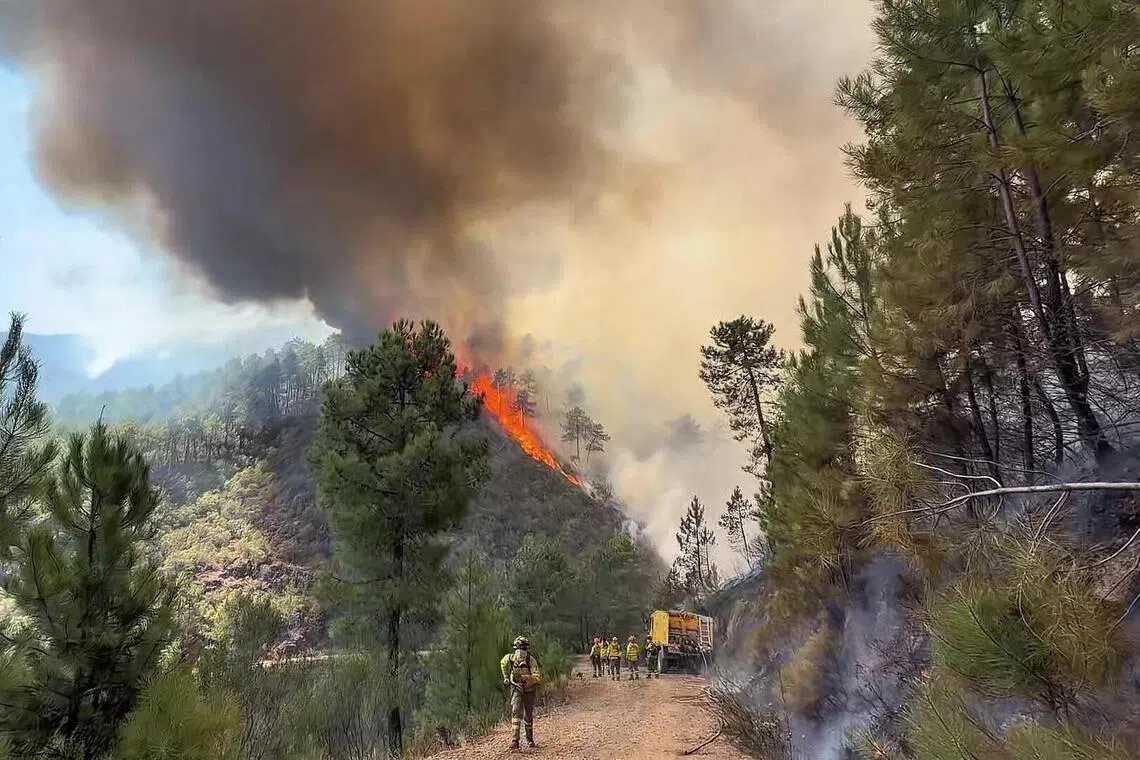
Climate change could nearly triple the area of land hit by wildfires every year in Europe, and even fuel blazes in regions with little experience of tackling them, a study said on Aug 20. uncertain
study → triple → Aug
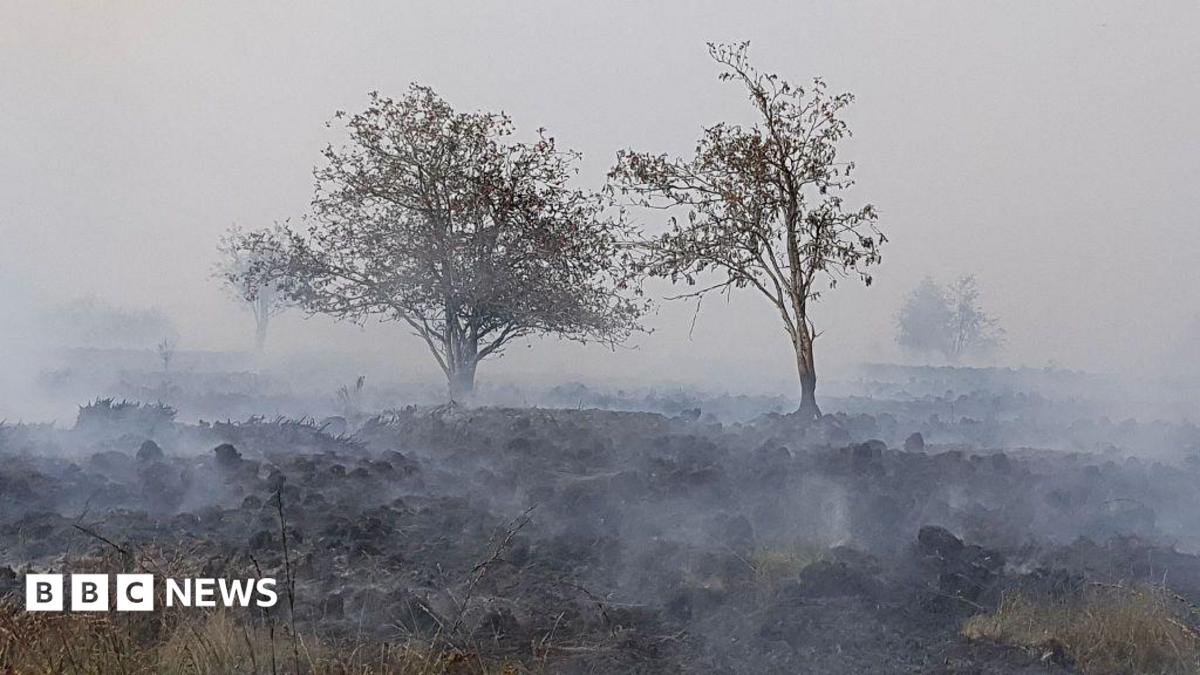
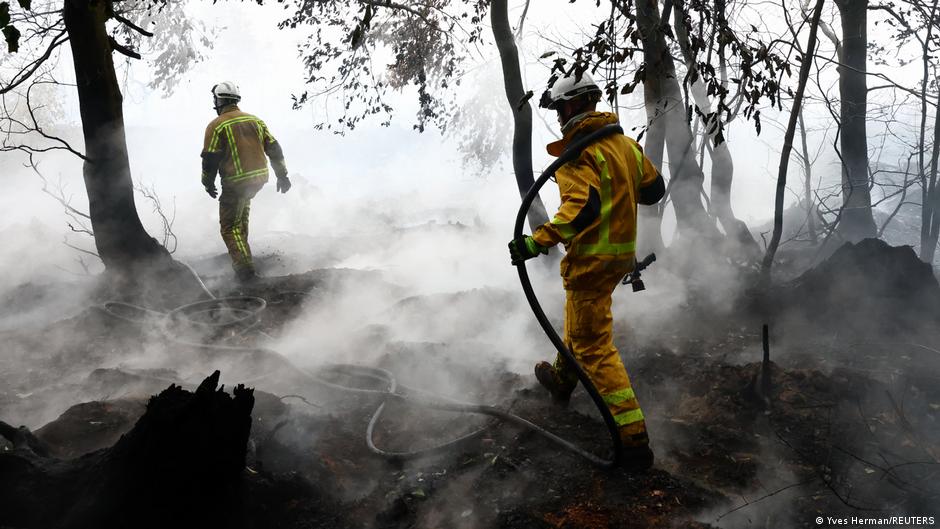
The warning comes after the continent has battled weeks of devastating wildfires fuelled by dry conditions and a historically hot summer, with Belgium, France, Greece, Portugal and Spain hit by major blazes. asserted
Belgium → come → blazes
Wildfires may become more unpredictable and could overwhelm even those experienced in preventing and fighting them, the study said. uncertain
study → become → them
“Climate change is driving up fire activity across Europe as hot, dry and windy conditions become more severe,” said lead author Maik Billing, researcher at the Potsdam Institute for Climate Impact Research. asserted
Billing → drive → Research
“Our results indicate there could be widespread increases in burned area even under comparatively low (global) warming of around 1.8 deg C,” he added. uncertain
he → indicate → C
The study said that by the end of the century, in the case of low greenhouse gas emissions, around 39 per cent more land would be burned per year compared to today’s average. asserted
land → say → average
The scientists obtained the result using one of the two fire models they tested. asserted
they → obtain → models
The second suggested a possible decrease in burned areas at a low level of global warming, but the researchers cautioned that it was based on historical data that may not necessarily be repeated in the future. uncertain
that → suggest → future
“Under increasingly extreme fire-weather conditions, fire behaviour may become more unpredictable and fires may overwhelm even well-developed firefighting capacities,” Billing told AFP. uncertain
Billing → become → AFP
“If we emit more, and global temperatures rise by roughly 3.6 deg C, we see fires become much more prevalent, especially around the Mediterranean and across much of Western and Central Europe, including areas that to date have not experienced many fires,” Billing said. asserted
Billing → emit → fires
Under the high emission scenario, by 2100 nearly 192 per cent more land would be burned per year – almost triple the area affected now. asserted
land → burn → year
But the study’s authors said better fire management could “substantially moderate” the increases, reducing burned area by 72 per cent to 92 per cent compared to scenarios without the improvements. uncertain
management → say → improvements
But this offset potential would be limited in the event of strong global warming. asserted
potential → limit → warming
“If Europe increases investment in wildfire management – training fire crews, proper equipment, good coordination etc – our projections show that this can make a significant difference,” said study co-author Thomas Hickler. asserted
Hickler → increase → difference
“But if fires become really extreme, our ability to contain them might break down and we do not know yet where this point is,” added the scientist at the Senckenberg Biodiversity and Climate Research Centre in Germany. uncertain
scientist → become → Germany

💬 Give feedback
🕘 History 🎫 Support