Astronauts heading on long missions to Mars could face a surprisingly ordinary problem: how to keep their clothes clean without wasting precious water.
uncertain
Astronauts → head → water
Scientists at the University of Alabama in Huntsville, working with
NASA's Marshall Space Flight Center, have developed a small device that could offer a solution.
uncertain
that → work → solution
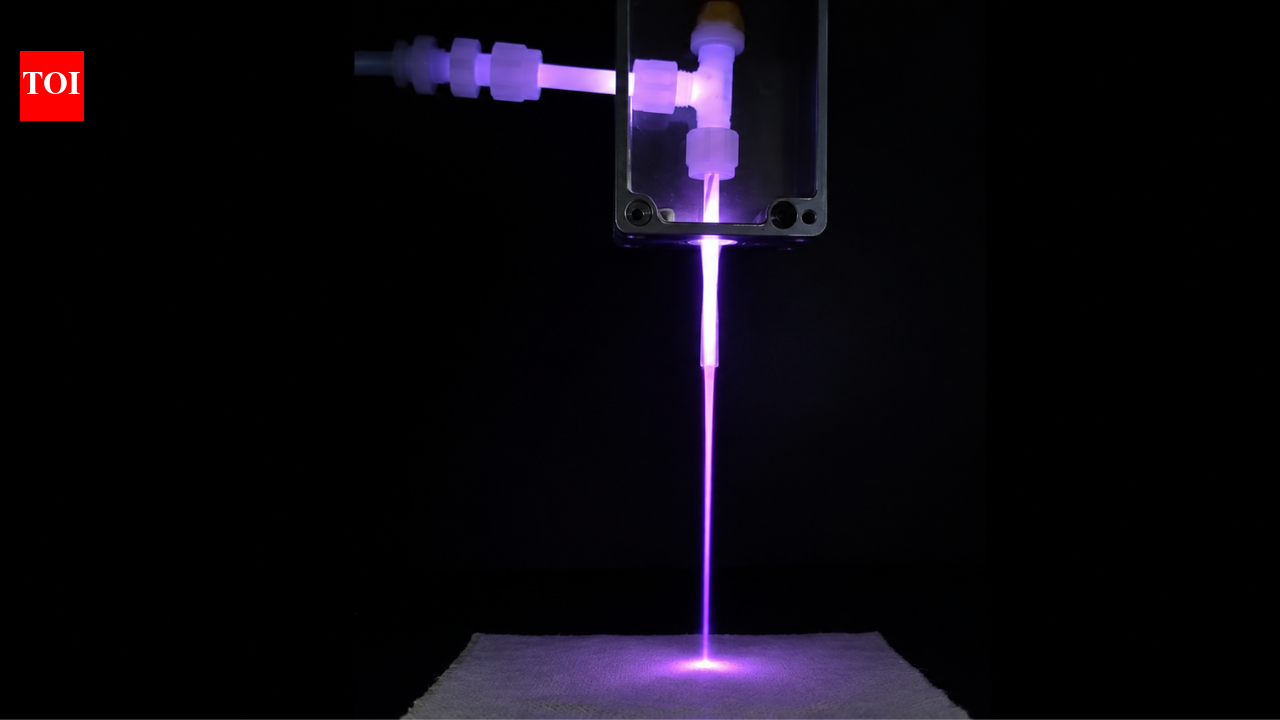
Nicknamed a “laundry gun”, the prototype shoots cold plasma at fabric to reduce the number of microbes living on astronauts' clothes and other soft surfaces.
asserted
prototype → nickname → clothes
In early tests, the device reduced microbial spore colonies on fabric by more than 75%.
asserted
device → reduce → %
Unlike a washing machine, it does not use large amounts of water or cleaning chemicals.
asserted
it → use → water
The researchers say the technology could eventually help astronauts stay healthier during long missions where every kilogram of supplies and every drop of water matters.
uncertain
kilogram → say → water
How the ‘laundry gun’ works
The device uses cold plasma, an electrically charged mixture of particles that can be produced without heating the fabric to extremely high temperatures.
asserted
that → work → temperatures
When the plasma reaches the material, energetic particles interact with gases such as oxygen and water vapour in the surrounding air.
asserted
particles → reach → air
These reactions create highly reactive molecules that can attack and damage the outer membranes of microorganisms.
asserted
that → create → microorganisms
The process is designed to reduce bacteria and other microbes living on fabric rather than physically wash away dirt.
asserted
process → design → dirt
The current prototype is about the size of a pen and treats only a small patch of material at a time.
asserted
prototype → treat → time
Early laboratory tests produced promising results.
asserted
tests → produce → results
Researchers found that plasma treatment reduced spore colonies on a fabric sample by more than 75%.
asserted
treatment → find → %
The result suggests the technology could substantially lower the microbial load on clothing and other soft surfaces.
uncertain
technology → suggest → clothing
That could be important inside a spacecraft because astronauts live together in a confined environment for long periods, giving microorganisms plenty of opportunities to spread.
uncertain
astronauts → live → opportunities
However, the result does not mean the device kills 75% of every microorganism on every type of fabric.
asserted
device → mean → fabric
More testing is needed to determine how well the technology works against different microbes and under realistic spaceflight conditions.
asserted
technology → need → conditions
The plasma can help kill or reduce microbes, but it does not remove visible dirt, food stains or other substances from clothing.
asserted
it → help → clothing
The researchers have even noted that the device will not remove stains such as coffee marks.
asserted
device → note → marks
Astronauts could potentially reuse clothing for longer if microbial contamination can be controlled without repeatedly washing the fabric in water.
uncertain
contamination → reuse → water
Why Mars missions need a new approach
Laundry is much harder in space than it is on Earth because water is a limited and valuable resource.
asserted
water → need → Earth
Astronauts on the International Space Station do not have a conventional washing machine.
asserted
Astronauts → have → machine
Instead, clothing is worn multiple times and eventually discarded or replaced with supplies delivered from Earth.
asserted
clothing → wear → Earth
That approach is possible because the ISS regularly receives cargo.
asserted
ISS → receive → cargo
A crew travelling to Mars would face a very different situation.
asserted
crew → travel → situation
The journey would last months and there would be no practical way to regularly send replacement clothes from Earth.
asserted
journey → last → Earth
Reducing the amount of clothing, water and cleaning supplies required could therefore make a major difference.
uncertain
Reducing → reduce → difference
The device could also sanitise spacesuits and tools
The researchers are looking beyond everyday clothing.
uncertain
researchers → sanitise → clothing
The same plasma technology could potentially be used to sanitise spacesuits, tools and other equipment before astronauts leave a habitat and operate on another world.
uncertain
astronauts → use → world
This could have implications for planetary protection, where space agencies try to prevent Earth-based microorganisms from being transported to other worlds.
uncertain
agencies → have → worlds
The technology could also potentially be used on bedding and other soft surfaces inside a spacecraft or habitat.
uncertain
technology → use → spacecraft
These applications remain under development, but they show why the researchers see the device as more than a simple alternative to laundry.
asserted
researchers → remain → laundry
The plasma comes with an ozone problem
The technology also creates a challenge that researchers must solve before it can be safely used inside a spacecraft.
asserted
it → come → spacecraft
Plasma interactions with oxygen can produce ozone, which can be harmful at high concentrations.
asserted
which → produce → concentrations
That is particularly important in a spacecraft where the same air is continuously circulated and reused.
asserted
air → circulate → spacecraft
The researchers are therefore working on a filtration system that could remove excess ozone generated during treatment.
uncertain
that → work → treatment
A future space-ready version would need to balance effective microbial reduction with safe air quality, low power consumption and minimal impact on the fabric being treated.
asserted
version → need → fabric
Researchers want a larger version
asserted
Researchers → want → version
The current pen-sized prototype is too small to clean or sanitise an entire item of clothing efficiently.
asserted
prototype → clean → clothing
It can treat only about a square centimetre at a time, meaning an astronaut could not realistically use it on a complete shirt or spacesuit in its present form.
uncertain
astronaut → treat → form
…and 12 more, not listed.
 The Aporia