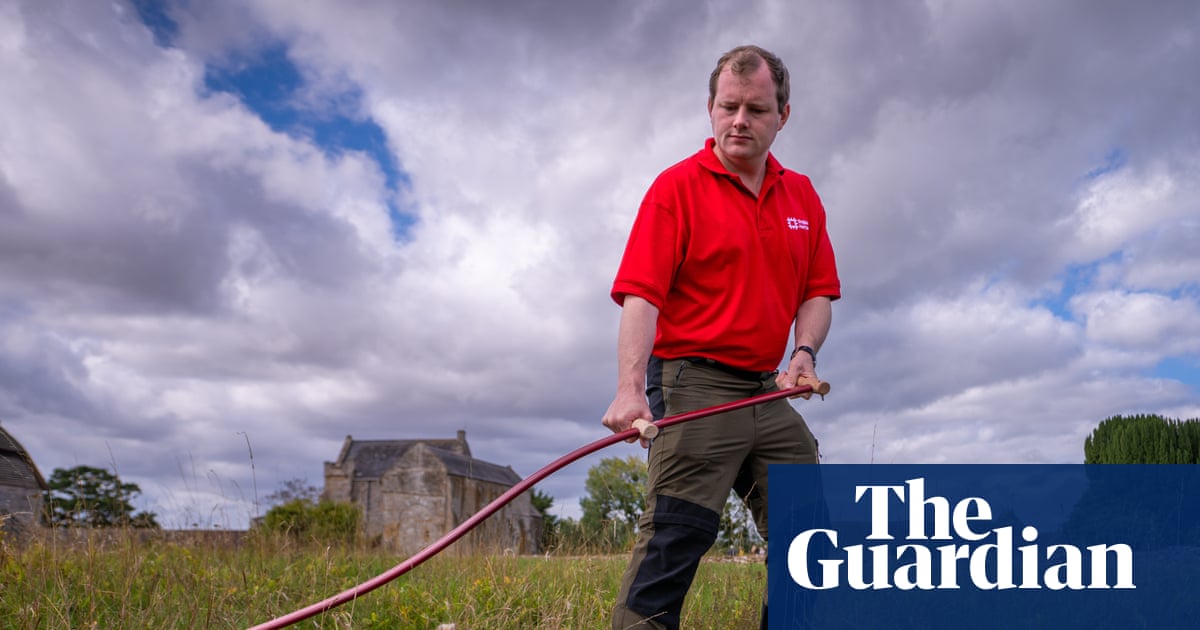
English Heritage is training volunteers to maintain historic meadows using traditional scythes. These new recruits will work on a three-year project at Muchelney Abbey in Somerset, helping preserve the shrill carder bee by creating diverse, flower-rich habitats. Volunteers like Ginny Slade find the practice both therapeutic and enjoyable, connecting with nature through repetitive movement and sensory experiences while addressing modern conservation challenges.
Written by the local model on 2026-09-17,
using this article's own text rather than the other coverage of the
same event (that is the story summary below).
Story summary
English Heritage, a British conservation charity, has trained a group of volunteers as scythe-wielding meadow caretakers to maintain historic meadows around an abbey in Somerset. The initiative aims to preserve the traditional practice of hand-mowing while also aiding in the protection of a rare type of bumblebee. Ginny Slade, one of the trained scythers, noted that the activity is physically demanding but offers a unique way to connect with nature through its rhythmic and meditative qualities. Participants are encouraged to monitor not just bee populations but also their interactions with various flowers and plants in the meadow ecosystem over time. This approach combines heritage skills with contemporary ecological conservation efforts.
Written for “Scythe Training for Meadow Maintenance” on 2026-09-17,
grounded in this article and the 0 other(s) covering the same event.
Why this leaning score
This article does not take a side on a contested political
question, so it has no leaning score. That is an
answer rather than a gap: a match report or a rescue can be warmly
or critically written without being left or right, and scoring it
anyway is how approval of a subject gets recorded as a political
position.
No political leaning scored for article 15196 · logged 2026-09-17
It sounds like something out of a Thomas Hardy novel: a merry band of men and women roaming the West Country cutting meadows by hand in exchange for hunks of bread and cheese.
asserted
It → sound → bread
But the conservation charity English Heritage is recruiting a team of volunteer scythers to maintain 21st-century meadowland in the old-fashioned way.
asserted
charity → recruit → way
The first scythers have been trained and will use their new skills in the meadows around an abbey in Somerset, where it is hoped that as well as helping to keep the age-old practice alive, they will protect a rare type of bumblebee.
asserted
they → train → bumblebee
Ginny Slade, who has completed the training, said she found there was something therapeutic about scything.
asserted
she → complete → scything
“You need a level of physical fitness but it’s also about enthusiasm and the passion to learn heritage skills,” she said.
asserted
she → need → skills
“It’s a repetitive movement.
asserted
It → ’ → ?
You find your rhythm and zone into it.
asserted
You → find → it
You can really connect with the meadow, the landscape.”
asserted
You → connect → meadow
The first volunteers have also found that using the scythe is something of a sensual treat – the sound of the blade cutting, the scent of the meadow.
asserted
using → find → meadow
Slade said: “Scything is a wonderful example of how traditional skills can still have a role in addressing modern challenges.
asserted
skills → say → challenges
We hope to help create the diverse, flower-rich habitats that pollinators need while also preserving knowledge and skills that have shaped our landscapes.”
asserted
that → hope → landscapes
Slade, a volunteer and community engagement manager with English Heritage, is one of the first to be trained by professionals at the Exmoor National Park Authority in the art of using and maintaining a scythe.
asserted
Slade → train → scythe
“You want a really good scythe,” said Slade.
asserted
Slade → want → scythe
“If you look after them, they can last generations.”
asserted
they → look → generations
English Heritage rewards volunteers with bread and cheese (it also thought about providing West Country cider but thought this was not a good idea on health and safety grounds).
asserted
this → reward → grounds
The first group of scythers will help care for the meadow at Muchelney Abbey, in Somerset, which was once a wealthy and important monastery with features including a thatched two-storey monks’ lavatory, which is unique in Britain.
asserted
which → help → Britain
They will work on a three-year project with the Bumblebee Conservation Trust to improve habitat for the shrill carder bee, a species that has declined significantly because of the loss of flower-rich grasslands.
asserted
that → work → grasslands
As part of the project, English Heritage volunteers have been trained by the bumblebee trust to carry out wildlife surveys.
asserted
volunteers → train → surveys
Rather than simply recording numbers, volunteers will monitor the relationship between bees and the meadow ecosystem, including which flowers are in bloom, which plants they are using, how far bees travel from their nests and how the habitat changes over time.
asserted
habitat → record → time
Hardy wrote about scything in prose and poetry: in Far From the Madding Crowd, Bathsheba Everdene watches haymaking, and the farm hand Mark Clark is described as “humming a tune to the strokes of his scythe”.
asserted
hand → write → scythe
In his poem Four in the Morning, Hardy wrote about the “to-and-fro/Wheezed whettings of a scythe apace”.
asserted
Hardy → write → apace
The meadow at Muchelney is one of 100 that English Heritage pledged to create and enhance to mark the coronation of King Charles in 2023.
asserted
Heritage → pledge → 2023
Slade said Muchelney was the pilot site but the idea was for the volunteers to travel to other English Heritage sites to use their skills.
asserted
volunteers → say → skills
“We’re really at the beginning of this journey, but we’re very excited about it.”
asserted
we → ’re → it
 The Aporia