WHAT’S HAPPENING TODAY:
asserted
WHAT → happen → ?
We may not have made it to Thanksgiving yet, but holiday markets are already popping up around D.C.
uncertain
markets → make → D.C.
The Downtown D.C. Holiday Market officially opened today in Chinatown, which has more than 120 local vendors and will remain open through Dec. 23.
asserted
which → open → Dec.
In today’s newsletter, we take a look at the ongoing standoff between the U.S. and China over Beijing’s export controls on rare earth materials.
asserted
we → take → materials
If a friend sent this to you and you’d like to sign up, click here.
asserted
you → send → you
If signing up doesn’t work, shoot us an email, and we’ll add you to our list.
asserted
we → sign → list
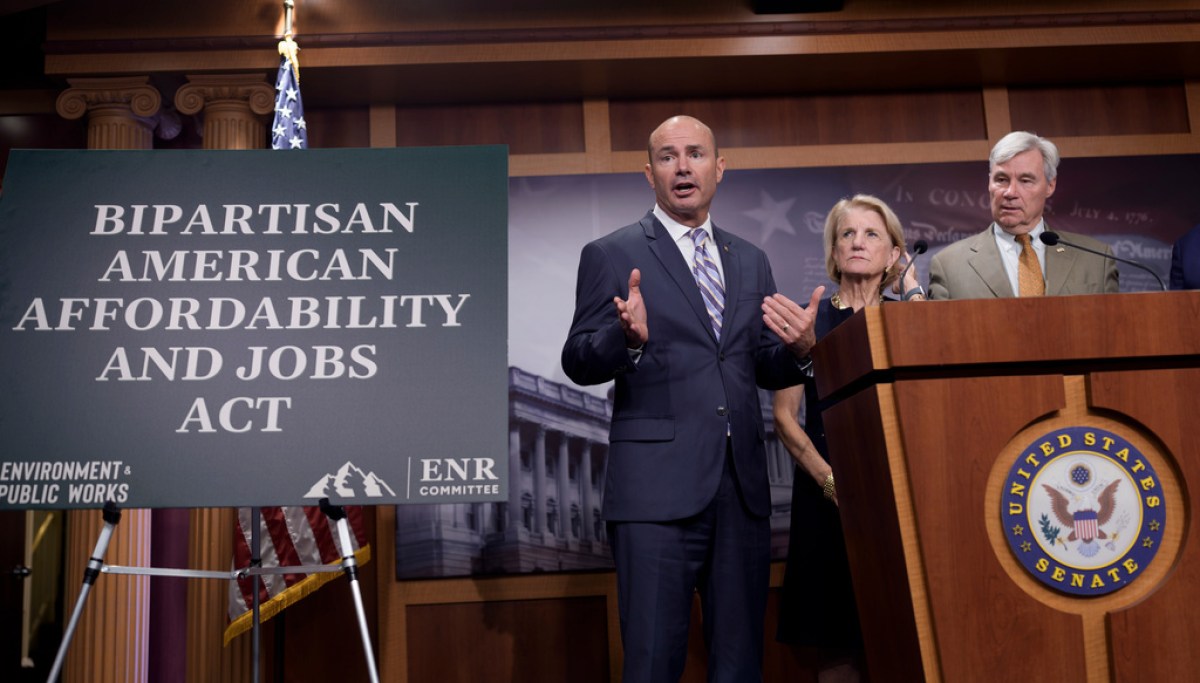
House minority leader Hakeem Jefferies of New York confirmed today that he is committed to getting permitting reform across the finish line, as some members of his party are pushing to punt the bill to the next Congress.
asserted
members → confirm → Congress
“It’s working its way through the Senate.
asserted
It → work → Senate
It’ll come over to the House.
asserted
It → come → House
There’s still some issues that need to be addressed,” he said.
asserted
he → ’ → ?
“We’re going to have a conversation as a House Democratic Caucus when it comes over to the House, but we are committed to getting this done as part of our effort to build upon the need to decisively address the affordability crisis.”
asserted
this → go → crisis
ONE YEAR AFTER US-CHINA RARE EARTH TRUCE, THE STALEMATE REMAINS
asserted
STALEMATE → remain → TRUCE
It’s been one year since President Donald Trump and Chinese President Xi Jinping struck an agreement to ease the dispute between the two countries on rare earths materials.
asserted
Trump → strike → materials
Last October, China and the United States reached a truce over Beijing’s most recent export restrictions on an additional five rare earths.
asserted
China → reach → earths
China agreed to suspend the restrictions for one year in exchange for U.S. tariff reductions.
asserted
China → agree → reductions
The waiver on export controls were set to end at the beginning of the month.
asserted
waiver → set → month
However, China announced earlier this week that it would extend the export control waivers by two months, through Jan. 10.
asserted
it → announce → Jan.
Trump is set to travel next week to Shenzhen, China for the Asia-Pacific Economic Cooperation summit, where he is expected to meet with Xi.
asserted
he → set → Xi
The two leaders are also expected to meet one more time in December.
asserted
leaders → expect → December
Zoe Oysul, a policy manager at the Center for Critical Mineral Strategy for SAFE, a nonprofit group, told Maydeen that the extension was expected, adding that continuing the waivers in the medium term was welcome.
“Again, we want to ensure that these continued lukewarm relationships are not diluting the interest for the downstream to really diversify.
asserted
downstream → tell → interest
We hope they see that these restrictions can come into play anytime in the future and extensions are not a long term solution,” she said.
asserted
she → hope → future
The agreement last October, however, did not address restrictions imposed by China in April 2025, when it suspended exports of seven types of rare-earth metals and magnets, requiring companies to obtain a ministry-issued license for any exports.
asserted
it → address → exports
Despite pauses in the implementation of certain export controls, supply chains in industries such as aerospace, defense, and automotive remain tight.
asserted
chains → remain → aerospace
Before the restrictions took effect in April 2025, the U.S. imported a monthly average of 76.8 metric tons of rare earth compounds and metals from China between June 2024 to March 2025, according to the Center for Strategic and International Studies.
uncertain
U.S. → take → Studies
In the 11 months after the U.S. and China reached a truce last October, monthly imports averaged just 19.3 metric tons, representing a nearly 75% decline compared with the earlier period, CSIS added.
asserted
CSIS → reach → period
The International Energy Agency found that China’s full implementation of restrictions on rare earths could put nearly $6.5 trillion in annual downstream production outside of China at risk.
uncertain
implementation → find → risk
Export restrictions on Chinese critical minerals such as gallium, germanium, and antimony to the U.S. have remained paused until Nov. 27.
asserted
restrictions → remain → Nov.
China dominates the global supply chains for rare earth and critical minerals, using its leverage against the U.S.
asserted
China → dominate → U.S.
The Trump administration has sought to expand the domestic supply chain and reduce reliance on China, but experts warn it may take years to become self-sufficient.
uncertain
it → seek → years
Chris Berry, a minerals and industry analyst and consultant, told Maydeen, “It’s not that we had these supply chains up and running 10, 15, 20 years ago, and we just shut them down and we can sort of do a brownfield revamp.
asserted
we → tell → revamp
We’re sort of starting from scratch.”
asserted
We → start → scratch
“The short answer to all of this is: the United States is not ready to meet any of these deadlines, not Nov. 10, not Jan. 10, not Nov. 27,” Berry said.
asserted
Berry → meet → deadlines
The global oil market is set to return to a surplus for the first time since the war in Iran began, the International Energy Agency has said.
asserted
Agency → set → Iran
In its monthly oil report released today, the Paris-based agency said the markets were showing “tentative signs of rebalancing,” with oil supplies surpassing demand for the first time in months.
asserted
supplies → release → months
The IEA said global crude supply increased by 2.3 million barrels a day in October, hitting around 105.4 million barrels per day.
asserted
supply → say → day
Markets are expected to remain in a surplus in the final quarter of this year and throughout 2027.
asserted
Markets → expect → 2027
Inventories for crude also rose last month, increasing by an average of 1.7 million barrels per day.
asserted
Inventories → rise → day
This was the first increase since June, the IEA said.
asserted
IEA → say → June
While the news will instill more confidence in the markets, the IEA warned that it does not mean consumers will not continue to be affected by disrupted supply or lower inventories overall.
“For now, the severe tightness in product supply, especially for diesel, remains the overriding concern of the broader market and consumers,” the IEA said.
asserted
IEA → instill → market
“Persistent attacks on Russian energy infrastructure continue to choke off the country’s diesel supplies to international markets, adding to losses from the Middle East.”
asserted
attacks → continue → East
…and 26 more, not listed.
 The Aporia