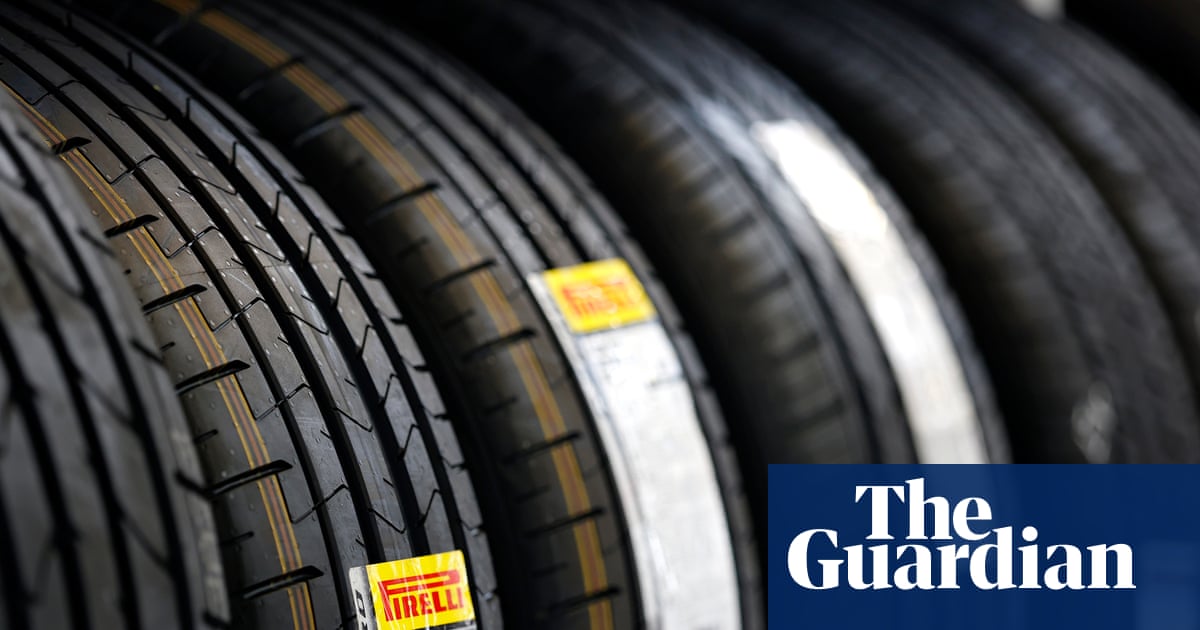
California has become the first state in the nation to mandate that replacement tires be energy efficient, a major auto industry regulation set to block the sale of older tires and make vehicles on the road greener.
asserted
vehicles → become → road
State regulators have said the new rules will reduce emissions and drivers’ fuel costs.
asserted
rules → say → emissions
But the rules – which come as the Trump administrations fights to block other California restrictions to promote greener cars – have already sparked a rightwing backlash, with one conservative news outlet calling the policies a “massive overreach”.
asserted
outlet → come → policies
The new policies were unanimously approved by the California Energy Commission (CEC) this week and praised by environmental and clean-air advocates, who said they hoped other states would adopt similar standards.
asserted
states → approve → standards
Industry groups and some tire makers have opposed the standards, raising concerns about the increased costs for replacement tires.
asserted
groups → oppose → tires
The first phase of the regulations is set to start in 2029.
asserted
phase → set → 2029
The standards dictate that replacement tires be at least as energy efficient, on average, as tires sold on new vehicles.
asserted
tires → dictate → vehicles
When drivers replace their tires, they typically lose mileage on their cars or lose range in the case of electric vehicles, the CEC notes.
asserted
CEC → replace → vehicles
New cars come with tires that have low “rolling resistance”, which means they can go further per gallon of gas, while replacement tires can be used or older and waste more energy.
asserted
tires → come → energy
The CEC estimates the standards will save drivers in California nearly $1bn per year in gasoline and electricity costs.
asserted
standards → estimate → costs
The regulations, the commission says, will also reduce carbon dioxide emissions by 2m metric tons per year, equivalent to taking roughly 400,000 gasoline cars off the roads.
asserted
commission → say → roads
“California drivers want to save money and want to reduce harmful emissions, so I think Californians will be very pleased by having higher-quality tires on the market,” said Bill Magavern, policy director for the Coalition for Clean Air, a California advocacy group that backed the regulations.
asserted
that → want → regulations
He said it was particularly significant for the state to adopt regulations that do not require federal approval, given the Trump administration’s repeated attacks on California’s green transportation measures: “This will make tires more efficient, reduce emissions that cause air pollution and climate chaos … and save money for drivers who these days are faced with high fuel costs.”
asserted
who → say → costs
Michelin, a major tire manufacturer, has supported the regulations, saying in a statement that California’s policies were in line with the company’s “holistic approach for reducing the impact of tires at every stage of the life cycle without compromising safety” and that the efficiency goals were “technically feasible”.
asserted
goals → support → safety
But other industry groups and manufacturers objected to the regulations in an April letter, the San Diego Union Tribune reported, including Goodyear, Yokohama and the California Tire Dealers Association.
asserted
Tribune → object → Goodyear
The letter said the cost of replacement tires would increase by roughly $6 to $10 per tire, with the industry leaders rejecting the state’s arguments that fuel savings would outweigh those costs.
asserted
savings → say → costs
The groups raised concerns about the standards in phase two of the regulations, arguing that the tires mandated under those stricter rules, which would begin in 2033, are “typically priced hundreds of dollars more per set than baseline alternatives”.
asserted
which → raise → alternatives
Some opponents have raised concerns that the state would struggle to enforce the regulations, allowing foreign manufacturers to import cheap tires that cut corners on safety, with Tracey Norberg, of the United States Tire Manufacturers Association, telling the New York Times the regulation was not “ready for primetime”.
asserted
regulation → raise → primetime
The rules were swiftly criticized in the rightwing press, with the California Post, a conservative news outlet, calling the standards a “massive regulatory overreach” and interviewing drivers and business owners who said they worried about the impact of higher prices.
asserted
they → criticize → prices
The policy was also criticized by Spencer Pratt, a former Republican and reality TV star who ran for LA mayor, and other prominent conservatives.
asserted
who → criticize → mayor
But the CEC argued the incremental cost increases for consumers would be low – $1.50 per tire in phase one and $6.50 per tire in phase two, and that a typical gasoline car with more efficient tires would save $179 on gasoline over the life of the tires, roughly seven times the incremental costs.
asserted
car → argue → tires
And given the sky-high gas prices this year, stemming from the US-Israel war with Iran, the CEC said those savings could be 25% higher than estimated.
uncertain
savings → give → Iran
State legislators passed a bill in 2003 requiring tire standards, but the state paused efforts on writing rules as it waited for the federal government to adopt similar regulations, which it did not.
asserted
it → pass → regulations
Magavern said other states were interested in passing similar regulations but were waiting for California which, as the fourth largest economy in the world, can have a significant impact on the market.
asserted
which → say → market
The Trump administration has sued California cities to block laws restricting fossil fuels, blocked the state’s first-in-the-nation rule banning the sale of new gas-powered cars by 2035 and filed a lawsuit challenging the state’s clean car rules.
asserted
administration → sue → rules
“At a time when the Trump administration is taking us backwards, here’s a place where the state of California can go forward and reduce costs and reduce emissions,” Magavern said.
asserted
Magavern → take → emissions
 The Aporia