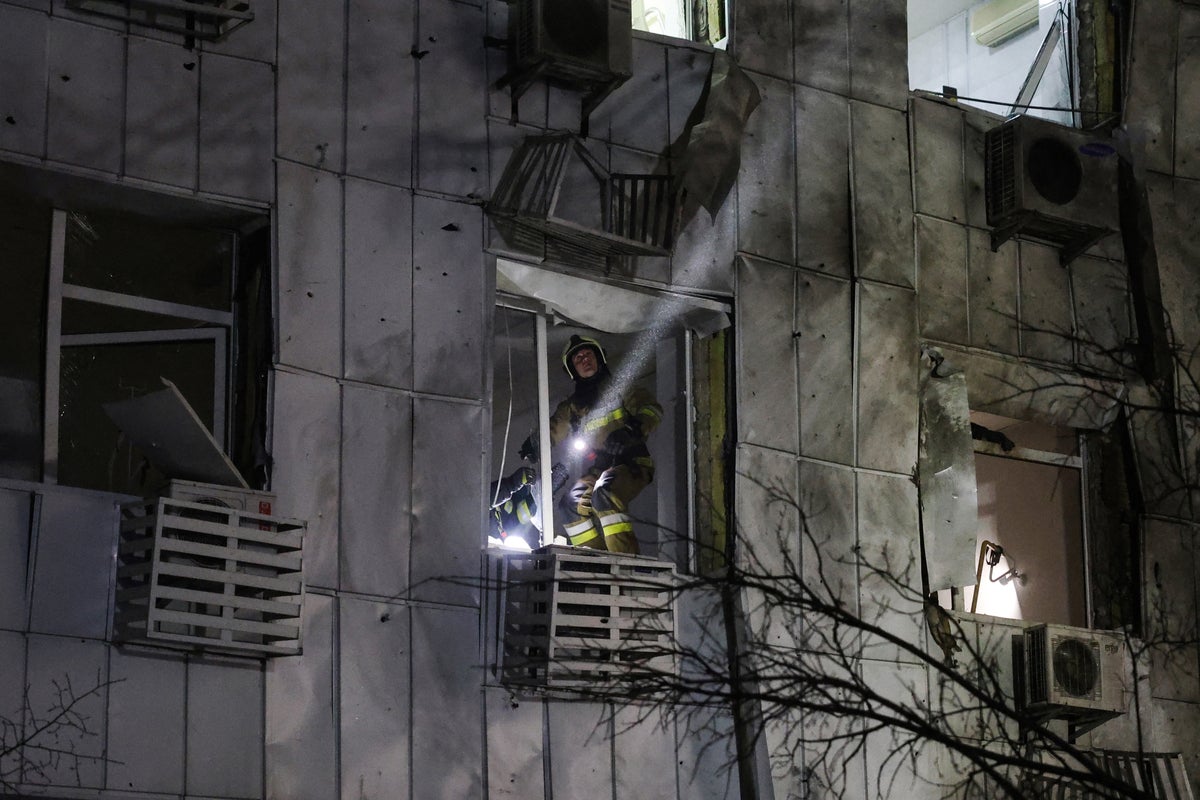
Photo via The Independent

Europeans overwhelmingly back creation of EU army amid fears of war with Russia

Read the original at The Independent ↗
Cite

Croft, A. (2026, November 13). Europeans overwhelmingly back creation of EU army amid fears of war with Russia. The Independent. https://www.independent.co.uk/news/world/europe/europeans-eu-army-poll-russia-war-b3084330.html

Dated from the outlet's own feed. Check the original for its byline.

The Independent · collected 2026-11-13 · by Alex Croft

Quick Summary

The 2026 GLOBSEC Trends report reveals that nearly 71% of Europeans support the creation of a unified EU army as a response to fears that Russia's war in Ukraine could spread across the continent. The survey of 14 countries found that support is particularly high on the Eastern Flank, with 82% in Romania and 78% in Lithuania favoring the move, while 78% of all respondents still support remaining in the NATO alliance. The report takes an analytical angle on how this push for independent defense capabilities is being driven by the potential for a significant US troop withdrawal and growing tensions over the deployment of long-range missiles by Germany.
Written by AI on 2026-11-13, from this article's own text only (the story summary below draws on all the coverage).

AI analysis

Story summary

A recent survey of 14 countries conducted by the 2026 GLOBSEC Trends report found that nearly three in four Europeans support the creation of a unified EU army. This surge in support follows reports that the United States may consider withdrawing up to one-third of its forces stationed in Europe. Support for the initiative is particularly high on the Eastern Flank, with 82% in Romania, 78% in Lithuania, and 73% in Latvia. Other nations showing significant backing include Estonia (71%), Bulgaria (70%), Poland (70%), and France (75%), while even Germany showed 69% support. Furthermore, 78% of respondents agreed that the European Union should develop its own independent defence capabilities, and 78% still support remaining in the Nato alliance. The report suggests these sentiments are driven by growing fears that Russia's war in Ukraine could spread across the continent. Additionally, some countries recorded majorities in favor of developing nuclear weapons to strengthen security, including Poland (61%), Ukraine (57%), France (53%), and the United Kingdom (51%).
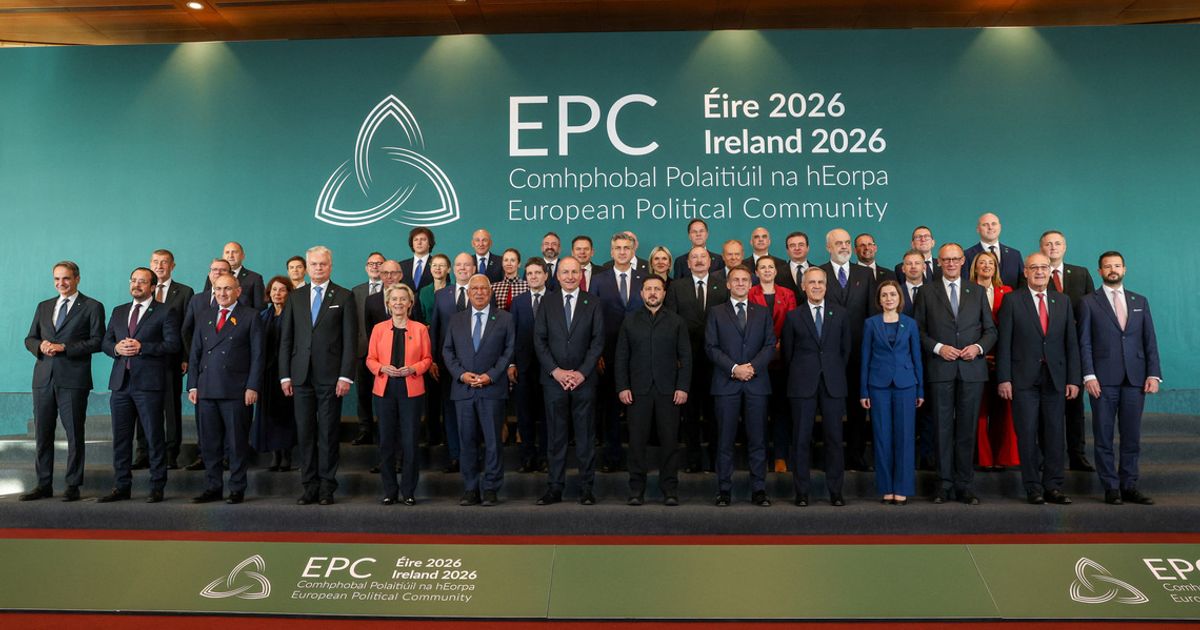
Written for “EU army creation support” on 2026-11-14, grounded in this article and the 0 other(s) covering the same event.

Compared with similar articles

This article reads unscored and hedges 35% of its claims. Each row says how that neighbour differs.
The Straits Times
Leans left Hedges 1 of 12 claims Outlet record 64/100
“The articles discuss related themes but describe different specific events: one is about polling results supporting an EU army, while the other is about a summit declaration on European security decision-making.”

Story

EU army creation support
Politics · 1 article(s) covering the same event.
How this article was measured signals, leaning charts, publisher record, byline, topics and claims

Signals How these are calculated →

Claims extracted
17
sentences that state something as happening or true
Uncertain
35%
6 of 17 hedged ("reportedly", "may", "according to")
Leaning
not political
takes no side on a contested political question
Publisher signals
59/100
The Independent's corrections and hedging, across everything collected from it. Not a measure of accuracy.
Outlets on this story
1
Politics
Same framing elsewhere
1
articles that frame the event the way this one does
Analyzed 2026-11-13 · how these are computed

How this is being covered How these are calculated →

Article leaning vs. publisher reliability
Source leaning vs. consistency

Publisher

The Independent · 4342 article(s) · 10 correction(s) detected
Running correction rate · 10 correction(s)

Who wrote this

Alex Croft
67 article(s) here · 1 carrying a prediction
Zelensky said the curbs also sent Russia a signal that Washington might treat Ukrainian territory occupied by Russian forces differently.
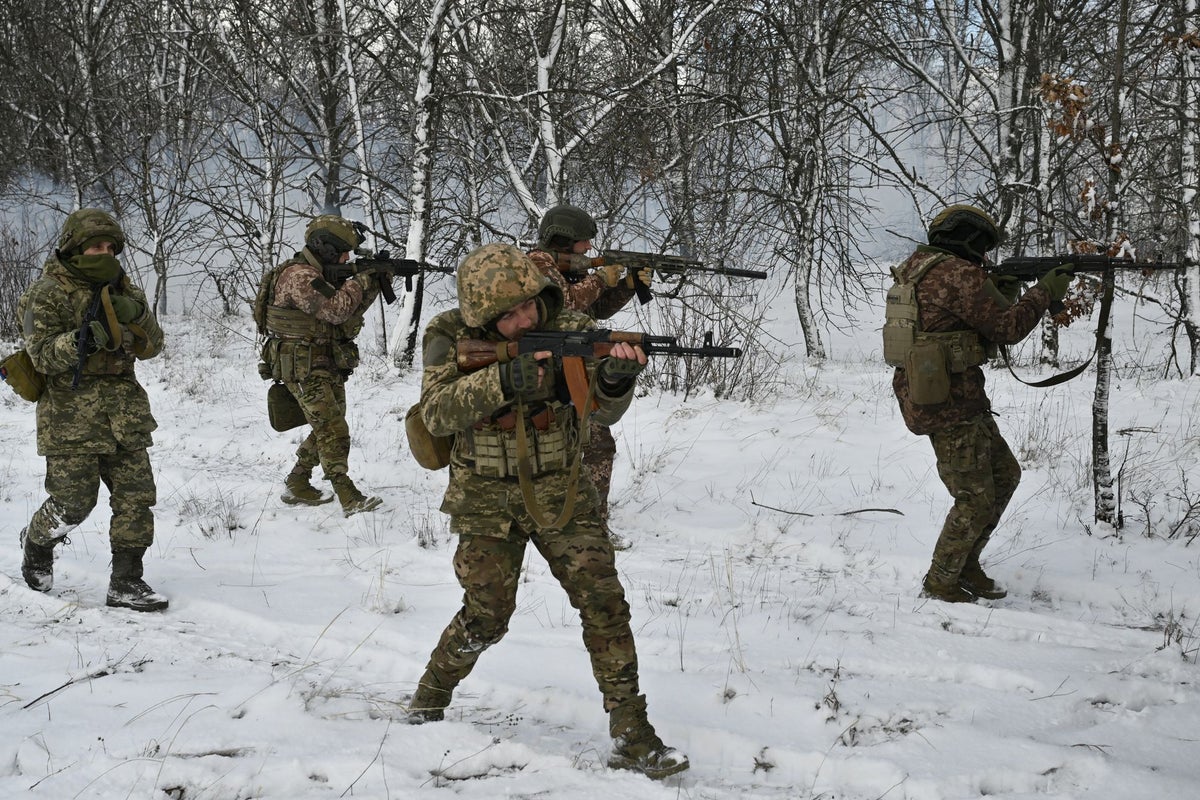
The 2026 GLOBSEC Trends report, surveying 14 countries, found that support for the united army was strong as concerns also grow about how Russia’s war in Ukraine could continue to spread across Europe.
Such a deployment, he said, would be a "continuation of war".
They pair then heard Russian voices down the tunnel, and Cuerbo told his colleagues he would investigate, ordering his colleagues to stay behind.
“Due to operations security, we will not provide further information on movement of assets.”
Donald Trump has declared the Iran war “effectively over” as he revealed the US will hold off on threatened military strikes after a disastrous defeat in the midterm elections.
Former British prime minister Tony Blair is set to meet with Israeli opposition leader Gadi Eisenkot, according to reports in Israel, as the latter looks to win approval to form a coalition amid ongoing election deadlock.
Axios now reports that Vance has been lambasting Israeli Prime Minister Benjamin Netanyahu for dragging the U.S. back into the Middle East, warning the president that the war was “highly unpopular and could cost Republicans the election,” albeit to no avail.
The midterm elections are over, and that means only one thing: the simmering rivalries in the Republican and Democrat parties will bubble to the surface.
Axios now reports that Vance has been lambasting Israeli Prime Minister Benjamin Netanyahu for dragging the U.S. back into the Middle East, warning the president that the war was “highly unpopular and could cost Republicans the election,” albeit to no avail.
Also by Alex Croft
Nothing else under this byline is closely related to this article, so these are simply their most recent.
All 67 articles by Alex Croft →

Topics

European France Germany Nato Russia

Subjects

France GPE · 4× European NORP · 3× Germany GPE · 3× Nato ORG · 3× Russia GPE · 3× Europeans NORP · 2× Poland GPE · 2× Ukraine GPE · 2× GLOBSEC Trends ORG · 1× Romania GPE · 1×

Narrative

A significant proportion of respondents also believe that more EU countries should develop nuclear weapons in order to strengthen Europe’s security, with some countries recording majorities including Poland (61%), Ukraine (57%), France (53%), the UK (51%).
framing: mixed · carried by 1 article(s) · first seen 2026-11-13
The 2026 GLOBSEC Trends report, surveying 14 countries, found that support for the united army was strong as concerns also grow about how Russia’s war in Ukraine could continue to spread across Europe.

Claims (17 extracted, 6 hedged)

Nearly three in four Europeans support the creation of an EU army, according to new polling, as the US considers a significant withdrawal of its forces from Europe. uncertain
US → support → Europe
The 2026 GLOBSEC Trends report, surveying 14 countries, found that support for the united army was strong as concerns also grow about how Russia’s war in Ukraine could continue to spread across Europe. uncertain
war → survey → Europe
Europe would not turn its back on the Nato alliance, however, with some 78% of Europeans supporting remaining in the alliance. asserted
% → turn → alliance
The survey saw significant support (71%) for the European army across several member states, including 82% in Romania, 78% in Lithuania, and 75% in France. asserted
survey → see → France
Latvia (73%), Estonia (71%), Bulgaria (70%) and Poland (70%) were the next most positive of the surveyed countries. asserted
Latvia → survey → countries
Support for an army is “stronger along the Eastern Flank, as well as in France”, the report said. asserted
report → say → France
In Germany, historically more wary of deeply integrated defence, around 69% supported a European army. asserted
% → integrate → army
It follows suggestions in recent months that the US could withdraw up to one third of its forces stationed in Europe, according to NBC News. uncertain
US → follow → News
A total of 78% of respondents agreed that the EU should develop its own defence capabilities alongside Nato. asserted
EU → agree → Nato
The concept of a European army has been discussed for decades, and was revived in the 1990s before faltering due to opposition by the US and Europe’s commitment to Nato. asserted
concept → discuss → Nato
Max Bergman, director of the Europe, Russia and Eurasia Program at the Center for Strategic and International Studies (CSIS), said that the main stumbling block as been that it is “not seen as practical”, despite making sense in principle. asserted
it → say → principle
A significant proportion of respondents also believe that more EU countries should develop nuclear weapons in order to strengthen Europe’s security, with some countries recording majorities including Poland (61%), Ukraine (57%), France (53%), the UK (51%). asserted
countries → believe → Poland
In Germany 41%, backed more nuclear weapons in Europe. asserted
% → back → Europe
However, the report said that nuclear weapons “remain a sensitive issue” and that “in most surveyed countries they are not seen as a deterrence capability Europe should invest in”. asserted
Europe → say → capability
It comes after France warned Germany that it could trigger a nuclear conflict with Russia if it does not define how it would use its newly acquired long-range missiles. uncertain
it → come → missiles
Berlin is reportedly acquiring and developing ground-range missiles with ranges varying from 500km to more than 2,000km, as several countries in Europe take steps to bolster defences and deter Russian attack. uncertain
countries → acquire → attack
French and German officials are set to hold talks on how these will be used amid fears that their use could trigger a “nuclear response” from Russia, according to the Financial Times. uncertain
use → set → Times
Give feedback · no sign-in needed

No sign-in needed for now. Your note is sent without a name, so it cannot be answered.

History Support