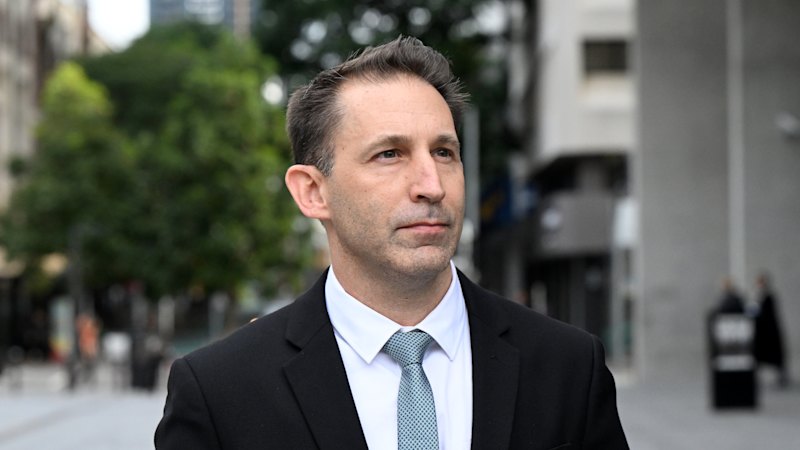
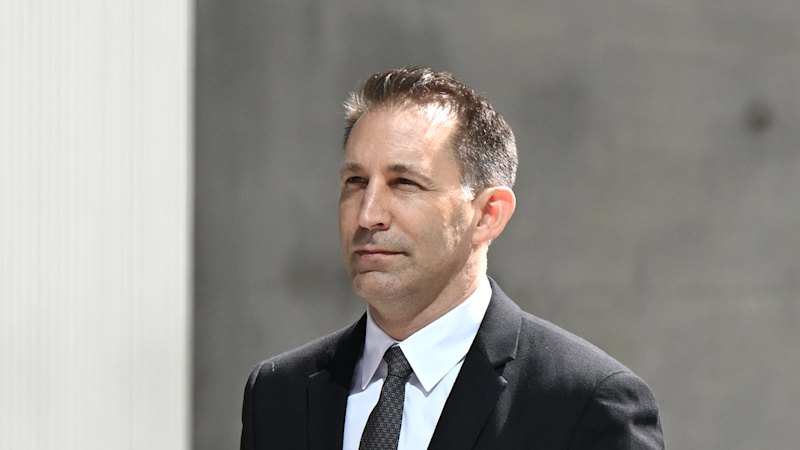
Robert Crawford’s defence barrister has told a trial the accused pilot “hid nothing” in the police investigation, as forensic analysis of his phone revealed how the device was used in the hours surrounding his wife’s alleged murder.
asserted
device → tell → murder
Former Royal Australian Air Force pilot Robert Crawford, 49, has pleaded not guilty to the murder of his wife Frances, who was found at the bottom of a retaining wall along with a mower at their rural south-east Queensland property.
asserted
who → plead → property
His defence team have told the jury that her death was a tragic accident, with Crawford claiming he believed his wife died while moving the ride-on mower late at night because the sprinklers were going to come on.
asserted
sprinklers → tell → night
The trial has so far heard about a series of messages about moving the mower sent between the two Crawford phones on July 29, in the hours before Frances’ death.
asserted
trial → hear → death
On the prosecution case, some of those messages, including one at 11:21pm sent from Frances’ phone asking “Hey, are you going to move the mower soon?” were staged by Crawford.
asserted
you → include → Crawford
By this time Frances was likely dead, dying or unconscious, the prosecution claims.
uncertain
prosecution → die → time
Defence barrister Saul Holt, KC, told the jury in his opening address that 17 seconds after that message was sent, but before Crawford had read it, he was ringing a RAAF colleague to discuss a work issue on the airforce base.
“Right at that time Mr Crawford is on the phone before he’s even read the message that he’s apparently faked, having a conversation with [colleague] Jason McClure,” Holt said earlier.
asserted
Holt → tell → McClure
On Friday, Queensland police investigative computer analyst Sean Dalton gave evidence regarding forensic data extraction of the two Crawford phones.
asserted
Dalton → give → phones
Dalton analysed usage on Crawford’s phone between 1.09am and 1.51am, and 2.35am to 3.20am.
asserted
Dalton → analyse → 3.20am
Dalton ran a series of tests using an Oppo phone, the same type as Crawford’s.
asserted
Dalton → run → Crawford
He found that messaging app Signal had been opened during those periods on Crawford’s phone, and that the device was unlocked at those times.
asserted
device → find → times
The trial has heard that Crawford called emergency services at 3.37am.
asserted
Crawford → hear → 3.37am
Crawford told police he last physically saw his wife about 9.45pm, before going to bed to study, and must have fallen asleep before she came to bed.
asserted
she → tell → bed
The court heard the last search on Crawford’s phone at 6.10pm related to a park run.
asserted
search → hear → run
In analysing Frances’ iPhone, Dalton found that her device was unlocked, and a message sent at 7:43pm to her son showing a photo of korma paste.
asserted
device → analyse → paste
Her phone also received a message at 9.23pm.
asserted
phone → receive → 9.23pm
The phone was then unlocked at 11.20pm, and a minute later, a Signal message was set.
asserted
message → unlock → 11.20pm
The phone was then locked at 11:26pm.
asserted
phone → lock → 11:26pm
When asked about limitations in his findings, Dalton said his testing was incredibly clinical and structured.
asserted
testing → ask → findings
In the replica phone used, he did not have the same version of Signal.
asserted
he → use → Signal
Under cross-examination, Holt put to Dalton that the last time the keyboard was used on Crawford’s phone was at 12:35am.
asserted
keyboard → put → 12:35am
Dalton agreed.
asserted
Dalton → agree → ?
Following the evidence, Holt told the jury Crawford’s defence team would be calling three witnesses in their case for next week.
asserted
team → follow → week
They would include a forensic physician for a second medical opinion, an acoustic engineer who went to the Crawford property to examine how loud the mower would have been, and a biomedical engineer.
asserted
mower → include → property
Holt said the acoustic engineer may address a question the jury had, which was how a mower would be heard on a rural property on a quiet night.
uncertain
mower → say → night
In addressing the jury, Holt said his client did everything police asked of him, including allowing access to his phone and photographing him.
“He hid nothing,” Holt said.
asserted
Holt → address → nothing
The court has also previously heard Crawford’s phone was bugged by investigators for a month after his wife’s death.
asserted
phone → hear → death
The jury were also shown a series of commands the Crawfords had used their Alexa device for in the days before Frances’ death, including to turn on their pump on the property for set times.
asserted
Crawfords → show → times
On July 29, about 11.30am, Alexa was asked under the “Frances” profile, about turning on the pump.
asserted
Alexa → ask → pump
The trial earlier heard evidence from Crawford about how the property’s sprinkler and pump systems worked.
asserted
systems → hear → Crawford
The last question the device was asked was: “Alexa, how do you spell ‘axle’?” which was under the “Rob” profile at 8.48pm on July 29.
asserted
which → ask → July
Cassandra James, a forensic biologist who examined DNA samples in the case, gave evidence that both Crawford’s DNA were found on various parts of the mower.
It was also determined that a blood stain on the left side of the mower’s engine cover was likely Frances’ DNA, the court heard.
asserted
court → examine → cover
Frances’ fingernails were also examined, with both her and Crawford’s DNA found.
asserted
DNA → examine → ?
Under cross-examination by defence, James confirmed studies indicated that it was not uncommon for one to have the DNA of their cohabiting partner under their fingernails.
asserted
one → confirm → fingernails
The trial before Justice Lincoln Crowley continues.
asserted
trial → continue → Crowley
 The Aporia