Photo via New York Post

Bombshell new memo reveals supercharged El Niño set to smash California: ‘Not normal’

Read the original at New York Post ↗
Cite

Peña, M. (2026, November 12). Bombshell new memo reveals supercharged El Niño set to smash California: ‘Not normal’. New York Post. https://nypost.com/2026/11/12/us-news/historic-el-nino-threatens-california-with-severe-impacts/

Dated from the outlet's own feed. Check the original for its byline.

Share
New York Post · collected 2026-11-12 · by Marina Peña

Quick Summary

A new report from the National Oceanic and Atmospheric Administration (NOAA) indicates a supercharged El Niño is intensifying in the Pacific Ocean and could significantly impact California later this year and into early 2027. There is a 60% chance it could be the strongest El Niño since 1950, with temperatures in the eastern equatorial Pacific rising more than 4 degrees Celsius above normal. NOAA predicts a greater than 79% chance of strong to very strong El Niño conditions persisting through January to March 2027, potentially leading to increased rainfall and flooding in Southern California.
Written by AI on 2026-11-14, from this article's own text only (the story summary below draws on all the coverage).

AI analysis

Story summary

The National Oceanic and Atmospheric Administration (NOAA) has released a report predicting a supercharged El Niño, which could significantly impact California later this year and into early 2027. NOAA forecasts a 60% chance that this El Niño will be the strongest since 1950, with temperatures in the eastern equatorial Pacific rising more than 4 degrees Celsius above normal. Physical oceanographer Daniel Rudnick from UC San Diego’s Scripps Institution of Oceanography described this El Niño as “not your normal El Niño.” The likelihood of strong to very strong El Niño conditions persisting through January to March 2027 is now greater than 79%. Forecasters predict the phenomenon will continue to intensify before gradually weakening in early 2027. NOAA’s next update on El Niño is scheduled for December 10, 2026.

Written for “El Niño Memo Reveals Extreme Conditions” on 2026-11-16, grounded in this article and the 0 other(s) covering the same event.

Compared with similar articles

This article reads unscored and hedges 25% of its claims. Each row says how that neighbour differs.
New York Post
Hedges 5 of 18 claims Outlet record 66/100
“The articles describe different stages of a broader weather pattern; Article A forecasts a supercharged El Niño expected to develop later, while Article B reports on an immediate storm affecting Southern California.”
CBS News
Hedges 0 of 1 claims Outlet record 67/100
“Article A describes a forecast of a supercharged El Niño expected to hit California later, while Article B reports on actual high surf and flooding that occurred in Northern California, suggesting a different specific event.”
The Straits Times
Hedges 3 of 20 claims Outlet record 64/100
“While both articles discuss the intensification of El Niño and its effects on global temperatures, they describe different aspects and implications of the same phenomenon occurring at slightly different times.”
Just The News
Hedges 11 of 34 claims Outlet record 94/100
“While both articles discuss the same weather phenomenon, El Niño, and its potential impacts on California, they present different viewpoints and sources, one dismissing the term 'Super El Niño' as fearmongering and the other reporting on a new NOAA memo predicting a powerful El Niño.”
New York Post
Hedges 3 of 17 claims Outlet record 66/100
“Article A describes a report predicting a supercharged El Niño, while Article B reports on the actual impact of El Niño on coastal homes in Seal Beach, California, after the event.”
The Independent
Hedges 3 of 26 claims Outlet record 59/100
“The articles describe the onset and potential future impacts of a super El Niño, but they focus on different aspects and timeframes, suggesting they are reporting on separate stages of the event.”
Just The News
Hedges 11 of 34 claims Outlet record 94/100
“Article A discusses the misuse of the term 'Super El Niño' as fearmongering, while Article B reports on a new NOAA memo predicting a powerful El Niño event in California.”

Story

El Niño Memo Reveals Extreme Conditions
Environment · 1 article(s) covering the same event.
How this article was measured signals, leaning charts, publisher record, byline, topics and claims

Signals How these are calculated →

Claims extracted
24
sentences that state something as happening or true
Uncertain
25%
6 of 24 hedged ("reportedly", "may", "according to")
Leaning
not political
takes no side on a contested political question
Publisher signals
66/100
New York Post's corrections and hedging, across everything collected from it. Not a measure of accuracy.
Outlets on this story
1
Environment
Same framing elsewhere
1
articles that frame the event the way this one does
Analyzed 2026-11-14 · how these are computed

How this is being covered How these are calculated →

Article leaning vs. publisher reliability
Source leaning vs. consistency

Publisher

New York Post · 20305 article(s) · 41 correction(s) detected
Running correction rate · 41 correction(s)

Who wrote this

Marina Peña
73 article(s) here · 1 carrying a prediction
The city has warned that more trouble could be ahead, with unusually high ‘king tides’ expected during Thanksgiving week, from Nov. 22 through Nov. 27.
The rescuer managed to flip it upright, get the surfer aboard and transport him to another location where he could safely get out of the ocean, Central Fire Chief Nigel Miller told NBC4.
A supercharged El Niño is gaining strength in the Pacific Ocean and could batter California later this year and into next, according to a new report.
The Santa Barbara County Public Health Department said Monday that the illnesses appeared to be connected to heat and physical exertion during the 13.1-mile race, following widespread speculation that water stations along the course may have been contaminated or even spiked.
Race organizers believe the runners suffered from heat exhaustion, but unverified rumors circulating on social media suggested a water station along the course may have been spiked.
Five of the six newly charged individuals were already in custody Monday morning, Essayli said, adding that the sixth was expected to be taken into custody shortly.
LA mayoral candidate Nithya Raman has dismissed a part-time staffer after he posted a video claiming former Michigan Senate candidate Haley Stevens had “tried to brainwash a lot of the black vote.”
In a post on X, Essayli questioned why California could not use the same database it relies on to verify the citizenship of Medi-Cal applicants.
Voters for the Fresno Unified School District race will still be able to make their selections, but when the machine prints their marked ballots, it will incorrectly identify the race as belonging to the Fowler Unified School District.
“I could tell you that, we have had issues with sleep.
Also by Marina Peña
Nothing else under this byline is closely related to this article, so these are simply their most recent.
All 73 articles by Marina Peña →

Topics

California El Niño NOAA the National Oceanic and Atmospheric Administration theSFGATE

Subjects

NOAA ORG · 4× California GPE · 3× Australia GPE · 1× Climate Prediction Center ORG · 1× Daniel Rudnick PERSON · 1× SFGATE ORG · 1× Scripps Institution of Oceanography ORG · 1× UC San Diego’s ORG · 1× the National Oceanic and Atmospheric Administration ORG · 1× theSFGATE ORG · 1×

Narrative

The agency’s latest findings show temperatures in portions of the eastern equatorial Pacific have climbed more than 4 degrees Celsius above normal, with unusually warm waters spreading farther west.
framing: mixed · carried by 1 article(s) · first seen 2026-11-14
A supercharged El Niño is gaining strength in the Pacific Ocean and could batter California later this year and into next, according to a new report.

Claims (24 extracted, 6 hedged)

A supercharged El Niño is gaining strength in the Pacific Ocean and could batter California later this year and into next, according to a new report. uncertain
Niño → gain → report
The latest outlook, released Thursday by the National Oceanic and Atmospheric Administration, warns El Niño is expected to intensify through the end of the year, theSFGATE reports. asserted
theSFGATE → release → year
There’s also a 60% chance the weather phenomenon becomes the most powerful recorded since 1950, according to NOAA. uncertain
phenomenon → ’ → NOAA
“This is not your normal El Niño,” Daniel Rudnick, a physical oceanographer at UC San Diego’s Scripps Institution of Oceanography, told SFGATE. asserted
Rudnick → tell → SFGATE
According to NOAA’s Climate Prediction Center, there is now a greater than 79% chance that strong to very strong El Niño conditions will persist through Jan. to March 2027. uncertain
conditions → accord → March
The agency’s latest findings show temperatures in portions of the eastern equatorial Pacific have climbed more than 4 degrees Celsius above normal, with unusually warm waters spreading farther west. asserted
waters → show → normal
Forecasters believe the phenomenon will continue gaining strength before gradually weakening in early 2027. asserted
phenomenon → believe → 2027
NOAA’s next El Niño update is scheduled for Dec. 10. asserted
update → schedule → Dec.
But NOAA cautioned that even an exceptionally powerful El Niño does not guarantee that every region will experience the extreme weather typically associated with the phenomenon. asserted
region → caution → phenomenon
California could be among the areas most affected by the intensifying weather pattern, which has historically been associated with wetter winters across the southern US. uncertain
which → affect → US
El Niño occurs when ocean temperatures rise above normal in the central and eastern tropical Pacific, disrupting atmospheric circulation and influencing weather patterns around the globe. asserted
temperatures → occur → globe
The phenomenon typically develops every two to seven years and can go on for anywhere between nine and 12 months. asserted
phenomenon → develop → months
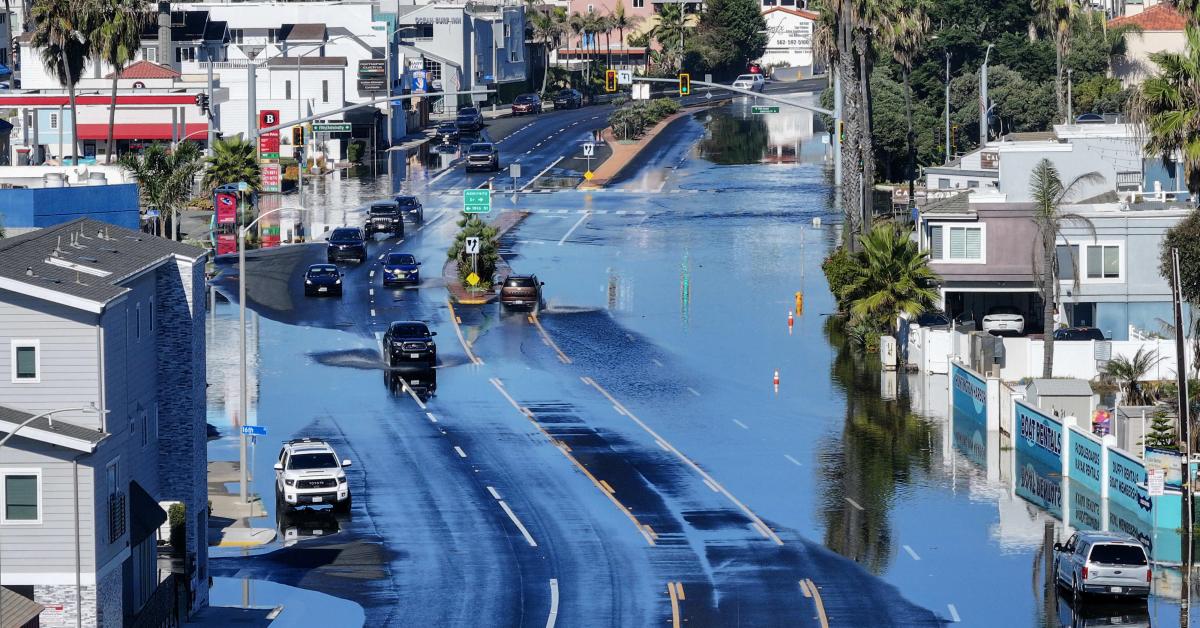
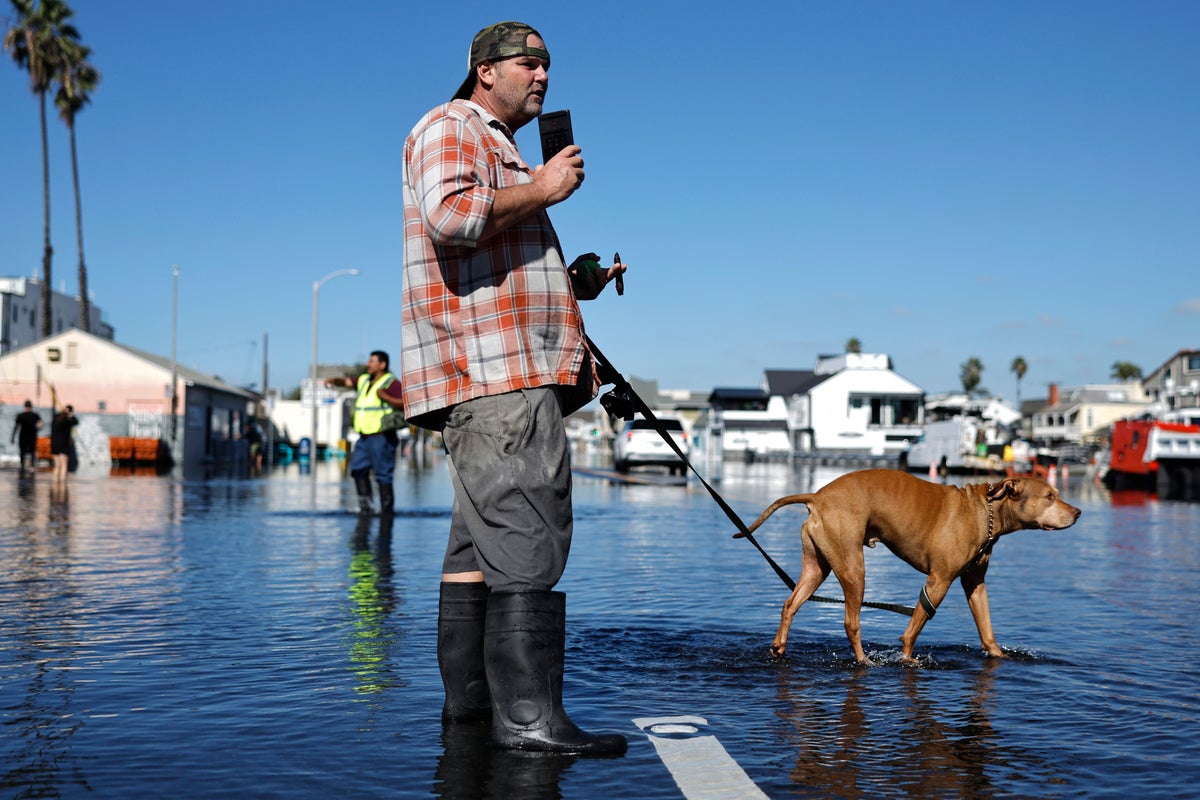
In Southern California, stronger El Niño events can increase the likelihood of storms arriving from the Pacific, potentially bringing heavy rainfall, flooding and other weather-related hazards. asserted
events → increase → rainfall
Northern portions of North America, meanwhile, tend to experience milder and drier winter conditions during El Niño years. asserted
portions → tend → years
The weather pattern’s influence extends far beyond the US’s general geography. asserted
influence → extend → geography
Some parts of South America, Africa, Australia and southern Asia can experience prolonged drought, while other regions face unusually heavy rainfall and destructive flooding. asserted
regions → experience → rainfall
Those shifts can have major consequences for agriculture, fishing industries and communities dependent on rainfall for water and electricity. asserted
shifts → have → water
El Niño can also reshape hurricane activity across the world’s oceans. asserted
Niño → reshape → oceans
In the Atlantic, the phenomenon generally creates atmospheric conditions that suppress tropical storm development, while warmer Pacific waters can help fuel more powerful hurricanes and typhoons. asserted
waters → create → hurricanes
The contrast has been particularly noticeable in 2026, with the Atlantic experiencing unusually low tropical storm activity as the Pacific recorded exceptionally intense systems. asserted
Pacific → experience → systems
The Eastern Pacific has already seen 21 named tropical systems this year, while 32 typhoons have been tracked in the Western Pacific, according to CBS News. uncertain
typhoons → see → News
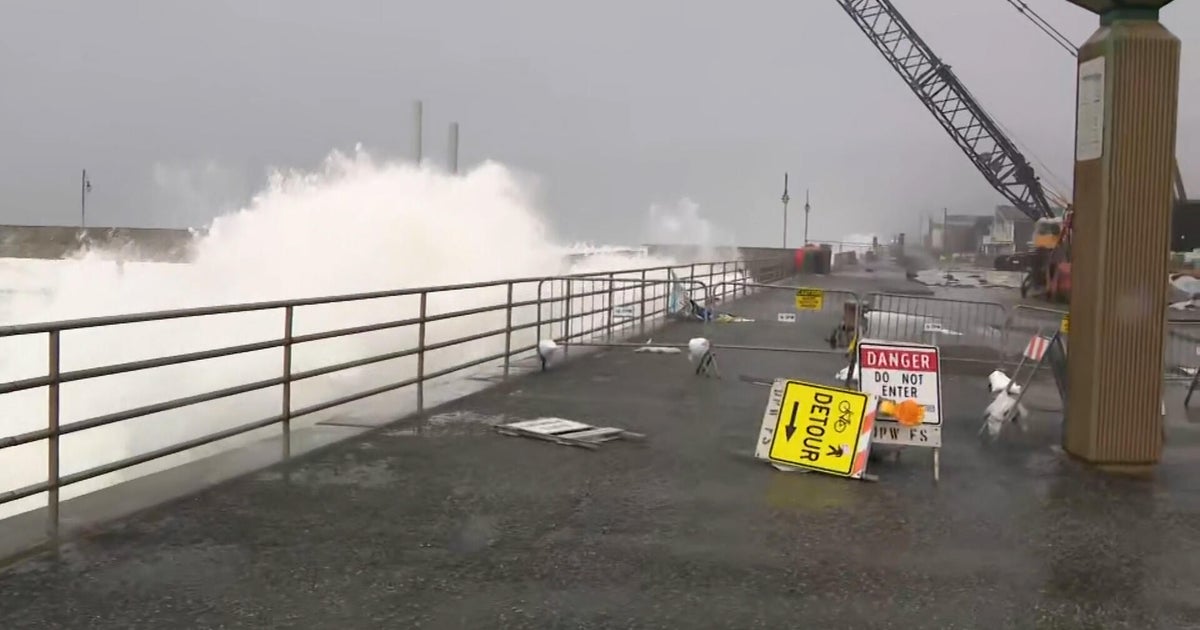
Some Pacific storms have also generated powerful waves that reached the California coastline, contributing to beach erosion. asserted
that → generate → erosion
Beyond storms and flooding, researchers have raised concerns about the broader consequences of the unusually warm conditions. asserted
researchers → raise → conditions
A University of Chicago study released in September estimated that this year’s El Niño could contribute to about 451,000 additional heat-related deaths worldwide compared with a typical year. uncertain
Niño → release → year

Give feedback · no sign-in needed

No sign-in needed for now. Your note is sent without a name, so it cannot be answered.

History Support