Photo via The Independent

Your air purifier could stop you getting diabetes, study finds

Read the original at The Independent ↗
Cite

Musto, J. (2026, November 12). Your air purifier could stop you getting diabetes, study finds. The Independent. https://www.independent.co.uk/life-style/health-and-families/air-purifier-pollution-blood-sugar-prediabetes-b3083992.html

Dated from the outlet's own feed. Check the original for its byline.

Share
The Independent · collected 2026-11-12 · by Julia Musto

Quick Summary

A study from NYU Langone Health presented at the American Heart Association conference found that using air purifiers for a month reduced harmful air pollution levels by 36% and daily blood sugar spikes by 8% in 75 New Yorkers with prediabetes. The air purifiers capture at least 99.97% of fine airborne particles larger than 0.3 micrometers, potentially helping to regulate blood sugar and reduce cardiovascular risks associated with prediabetes. Researchers suggest that cleaner air, especially in bedrooms, could be a low-cost tool to help manage blood sugar alongside other healthy habits.
Written by AI on 2026-11-15, from this article's own text only (the story summary below draws on all the coverage).

AI analysis

Story summary

A new study from NYU Langone Health suggests that using air purifiers in homes could help regulate blood sugar levels and potentially reduce the risk of developing diabetes. The study, presented at a conference of the American Heart Association, involved 75 New Yorkers with prediabetes and found that using air purifiers for a month reduced harmful air pollution by 36 percent. Participants who slept in rooms with air purifiers saw an 8 percent drop in daily blood sugar spikes. Experts believe that particulate pollution can enter the bloodstream, causing inflammation that contributes to diabetes and cardiovascular risks. This finding could impact the 115 million Americans estimated to have prediabetes, many of whom are unaware of their condition. The NYU team plans to conduct longer-term studies to explore whether air filtration can slow or stop the progression from prediabetes to diabetes and reduce the risk of heart attack, stroke, and other cardiovascular issues.

Written for “Air Purifiers Linked to Diabetes Prevention” on 2026-11-16, grounded in this article and the 0 other(s) covering the same event.

Compared with similar articles

Nothing to compare against. No article is close enough to this one for the pipeline to have linked or judged the pair.

Story

Air Purifiers Linked to Diabetes Prevention
Health · 1 article(s) covering the same event.
How this article was measured signals, leaning charts, publisher record, byline, topics and claims

Signals How these are calculated →

Claims extracted
22
sentences that state something as happening or true
Uncertain
32%
7 of 22 hedged ("reportedly", "may", "according to")
Leaning
not political
takes no side on a contested political question
Publisher signals
59/100
The Independent's corrections and hedging, across everything collected from it. Not a measure of accuracy.
Outlets on this story
1
Health
Same framing elsewhere
1
articles that frame the event the way this one does
Analyzed 2026-11-15 · how these are computed

How this is being covered How these are calculated →

Article leaning vs. publisher reliability
Source leaning vs. consistency

Publisher

The Independent · 4392 article(s) · 10 correction(s) detected
Running correction rate · 10 correction(s)

Who wrote this

Julia Musto
50 article(s) here · 1 carrying a prediction
The dataset analyzed by Cleveland Clinic researchers, known as TriNetX, is large but may not be representative of the wider population, said Dr. Lucy Hooper, a private general practitioner and co-founder of London-based Coyne Medical.
A Pacific storm is expected to dump more rain on the West as a nor’easter affected by the subtropical jet stream continues to hammer the Northeast.
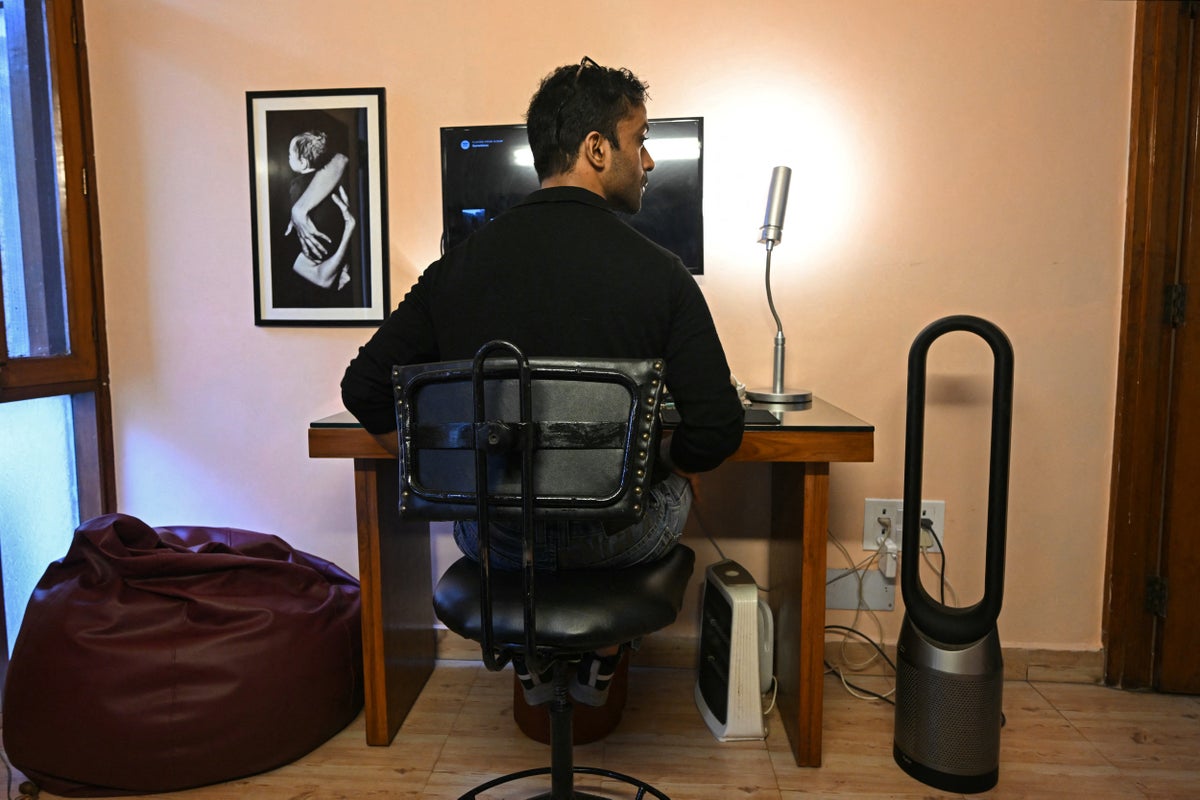
People who use air purifiers in their homes could also be unknowingly regulating their blood sugar levels, new research from NYU Langone Health suggests.
Prostate cancer is the second most common cause of cancer deaths in U.S. men, and will lead to an estimated 36,000 deaths and 333,000 cases this year.
"It was one of the best things I could’ve ever done for my self-confidence, and it made me feel a lot better in my skin," she said.
The makers of blockbuster weight-loss drugs such as Ozempic and Zepbound will be required to include warnings about a rare eye condition that can cause permanent vision loss.
A nor’easter could form this week, bringing the first snow of the season for tens of millions of Americans.
The makers of blockbuster weight loss drugs such as Ozempic and Zepbound will be required to include warnings about a rare eye condition that can cause permanent vision loss.
While the likelihood of developing the condition is slim, people who drastically increase their exercise training intensity or length are at a higher risk, Dr. William Roberts wrote in Runner’s World in 2017.
Though strokes may occur at any age, the risk for strokes rises as we get older and, each year, strokes kill 140,000 of the close to 800,000 people who have them.
Also by Julia Musto
Nothing else under this byline is closely related to this article, so these are simply their most recent.
All 50 articles by Julia Musto →

Topics

Americans NYU Langone Health New Yorkers the American Heart Association the NYU Grossman School of Medicine

Subjects

Americans NORP · 1× Jonathan Newman PERSON · 1× NYU ORG · 1× NYU Langone Health ORG · 1× New York GPE · 1× New Yorkers GPE · 1× Sharine Wittkopp PERSON · 1× U.S. GPE · 1× the American Heart Association ORG · 1× the NYU Grossman School of Medicine ORG · 1×

Narrative

The NYU team plans to run longer-term studies, looking at whether air filtration can slow or stop the progression from prediabetes to diabetes and whether it can reduce the risk of heart attack, stroke and other signs of cardiovascular-kidney-metabolic syndrome.
framing: mixed · carried by 1 article(s) · first seen 2026-11-15
People who use air purifiers in their homes could also be unknowingly regulating their blood sugar levels, new research from NYU Langone Health suggests.
2026-11-15 · The Independent
Your air purifier could stop you getting diabetes, study finds · mixed framing

Claims (22 extracted, 7 hedged)

People who use air purifiers in their homes could also be unknowingly regulating their blood sugar levels, new research from NYU Langone Health suggests. uncertain
research → use → Health
Using air purifiers for a month helped cut levels of harmful air pollution tied to spikes in blood sugar and developing diabetes by 36 percent, according to the study presented last month at a conference of the American Heart Association. uncertain
Using → use → Association
The study involved 75 New Yorkers with prediabetes, a condition in which blood sugar levels are higher than normal. asserted
levels → involve → which
It found those who slept in rooms with the machines saw an 8 percent drop in daily blood sugar spikes. asserted
who → find → spikes
A similar drop was also seen among those in the study who ate breakfast. asserted
who → see → breakfast
Experts believe the polluting particles can get into the bloodstream, triggering inflammation that leads to diabetes and raises cardiovascular risks. asserted
that → believe → risks
Purifiers help counter this pollution and are designed to capture at least 99.97 percent of fine airborne particles larger than at least 0.3 micrometer. asserted
Purifiers → help → micrometer
The findings could have major implications for the 115 million Americans living with prediabetes, most of whom don’t know they have the condition. uncertain
they → have → condition
Prediabetes raises the risk for developing Type 2 diabetes, and people who have large swings in blood sugar are more at risk. asserted
who → raise → risk
"Our findings suggest that cleaner air at home, especially in the bedroom, may help people with prediabetes keep their blood sugar steady and blunt morning spikes," lead author Dr. Sharine Wittkopp, from the NYU Grossman School of Medicine, said in a statement. uncertain
Wittkopp → suggest → statement
"Installing HEPA filters offers an easy, low-cost tool to help protect heart and metabolic health along with healthy eating, regular exercise and prescribed medications. asserted
Installing → instal → eating
Participants in the experiment wore sensors that monitored blood sugar every few minutes for a week before the test and after four weeks of using the filters. asserted
that → wear → filters
That way, the researchers could track how daily blood sugar levels changed over time. uncertain
levels → track → time
The researchers also used an AI tool that analyzed blood sugar patterns to detect when people were eating and see changes during breakfast. asserted
people → use → breakfast
The NYU team plans to run longer-term studies, looking at whether air filtration can slow or stop the progression from prediabetes to diabetes and whether it can reduce the risk of heart attack, stroke and other signs of cardiovascular-kidney-metabolic syndrome. asserted
it → plan → syndrome
"Our results add to a growing body of evidence that poor air quality is a threat not only to lung health but to heart and metabolic health as well,” senior author Dr. Jonathan Newman said. asserted
Newman → add → health
"These findings support broader efforts to reduce air pollution and suggest that healthcare providers should consider indoor air quality when helping patients manage their cardiometabolic risk.” asserted
patients → support → risk
The findings may not apply to people who already have diabetes or are living in different air quality than New York. uncertain
who → apply → York
Nor does the study prove that air filtration caused improvements in blood sugar, but rather points to the benefits of reducing air pollution. asserted
filtration → prove → pollution
How much air pollution could contribute to blood sugar rises isn’t completely clear. uncertain
contribute → contribute → rises
However previous research has found that air pollution contributes significantly to diabetes case increases worldwide. asserted
pollution → find → increases
The diabetes risk occurs even at levels of air pollution considered to be safe by the U.S. government. asserted
risk → occur → government

Give feedback · no sign-in needed

No sign-in needed for now. Your note is sent without a name, so it cannot be answered.

History Support