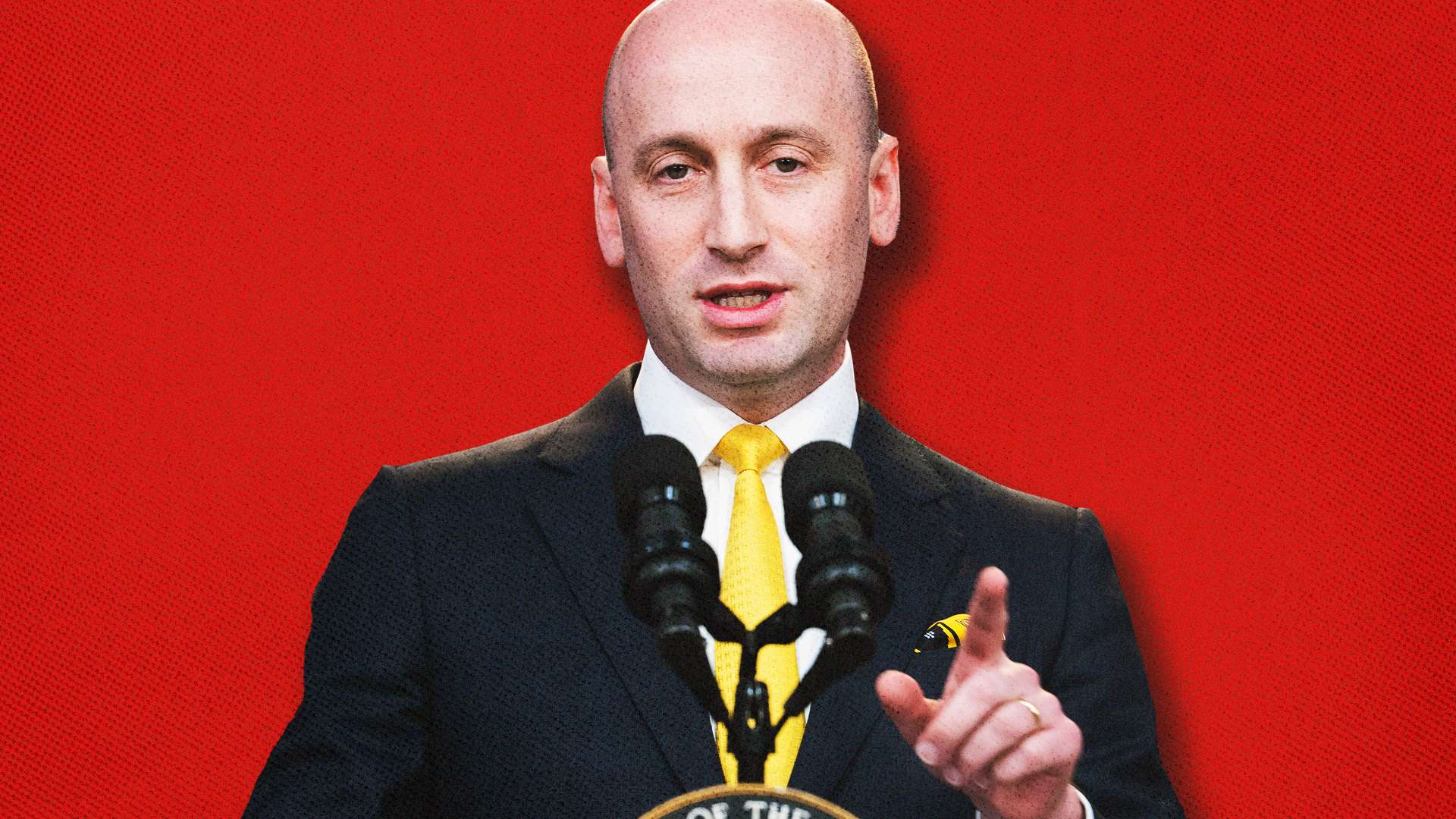
Photo via Reason

A Maryland County Unconstitutionally Disarmed Jews Facing Antisemitic Threats, a Synagogue Says

Read the original at Reason ↗
Cite

Sullum, J. (2026, November 12). A Maryland County Unconstitutionally Disarmed Jews Facing Antisemitic Threats, a Synagogue Says. Reason. https://reason.com/2026/11/12/a-maryland-county-unconstitutionally-disarmed-jews-facing-antisemitic-threats-a-synagogue-says/

Dated from the outlet's own feed. Check the original for its byline.

Reason · collected 2026-11-12 · by Jacob Sullum

Quick Summary

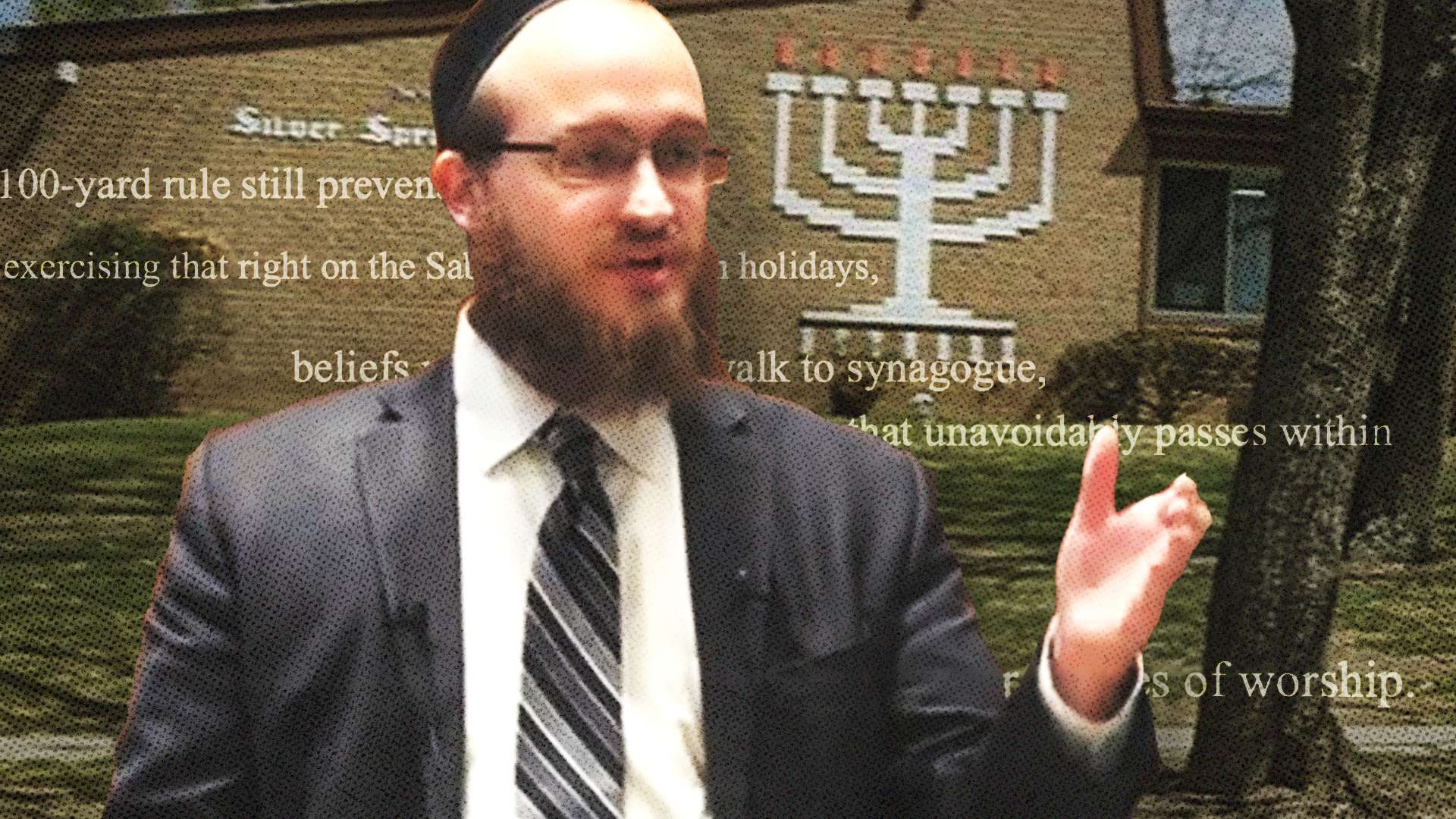
Montgomery County, Maryland, implemented a ban on firearms in public assembly areas, including houses of worship and within 300 feet of such locations, in July 2023. Three days later, the Silver Spring Jewish Center (SSJC) sued the county, arguing the ban unconstitutionally disarmed congregants facing antisemitic threats. In September, a federal judge issued a preliminary injunction allowing carry-permit holders to possess guns inside the synagogue but maintaining the 300-foot rule, which affects pedestrians but not motorists. This week, SSJC and a congregant are asking the U.S. Court of Appeals for the 4th Circuit to address the constitutional issues this creates, particularly for Orthodox Jews who do not drive on the Sabbath.
Written by AI on 2026-11-13, from this article's own text only (the story summary below draws on all the coverage).

Compared with similar articles

This article reads leans strongly right and hedges 0% of its claims. Each row says how that neighbour differs.
Just The News
Hedges 1 of 8 claims Outlet record 94/100
“While both articles discuss legal challenges to a gun ban affecting a synagogue in Montgomery County, Maryland, they describe different stages of the legal process (a preliminary injunction and an appeal to the 4th Circuit Court of Appeals).”
The Daily Caller
Hedges 2 of 19 claims Outlet record 92/100
“While both articles discuss legal challenges to a gun ban in Montgomery County, Maryland, involving a synagogue, Article A focuses on an appeal to block the law and allow carrying guns to the synagogue, while Article B describes the initial lawsuit and the preliminary injunction allowing guns inside the synagogue but not addressing the broader ban.”
The Daily Caller
Hedges 2 of 14 claims Outlet record 92/100
“While both articles discuss legal challenges to Montgomery County's gun-control ordinance, they describe different stages or aspects of the legal process rather than the same specific event.”
The Daily Wire
Leans right further left than this Hedges 3 of 29 claims Outlet record 59/100
“While both articles discuss the same synagogue and the same gun ban issue, they describe different stages of legal proceedings and different specific issues (the initial lawsuit and a subsequent court filing).”
Washington Examiner
Leans right further left than this Hedges 0 of 3 claims Outlet record 67/100
“While both articles discuss the same legal challenge to a firearms ban near places of worship, they describe different stages of the legal process: Article A is about the initial request to halt enforcement, while Article B mentions a subsequent court ruling.”
Just The News
Hedges 1 of 8 claims Outlet record 94/100
“The articles describe different stages of the legal process involving the same synagogue and gun-carry ban, but do not refer to the same specific incident or ruling.”

Story

A Maryland County Unconstitutionally Disarmed Jews Facing
Other · 1 article(s) covering the same event.
How this article was measured signals, leaning charts, publisher record, byline, topics and claims

Signals How these are calculated →

Claims extracted
42
sentences that state something as happening or true
Uncertain
0%
0 of 42 hedged ("reportedly", "may", "according to")
Leaning
Leans strongly right
of the writing, not the subject · beta estimate
Publisher signals
67/100
Reason's corrections and hedging, across everything collected from it. Not a measure of accuracy.
Outlets on this story
1
Other
Same framing elsewhere
1
articles that frame the event the way this one does
Analyzed 2026-11-13 · how these are computed

How this is being covered How these are calculated →

Article leaning vs. publisher reliability
Source leaning vs. consistency

Publisher

Reason · 1322 article(s) · 4 correction(s) detected
Running correction rate · 4 correction(s)

Who wrote this

Jacob Sullum
42 article(s) here · 1 carrying a prediction
That means SSJC members cannot even legally transport their guns to the vicinity of the synagogue on those occasions, since they would pass within 300 feet of parks, schools, and other houses of worship while walking there.
In a 60 Minutes interview that aired on Sunday night, President Donald Trump conceded that his mass deportation campaign may have contributed to the Republican rout in last week's midterm elections because "a lot of people think it's too tough."
2026-11-11 · assertive framing · Trump Debates Mass Deportation With Himself
They say Hegseth is flouting the law, undermining basic principles of justice, and perverting the mission of the U.S. military by treating civilians as combatants who can be killed at will, from a distance and in cold blood, without any semblance of due process.
Attorney General Todd Blanche nevertheless seemed to reinforce Trump's threat during an interview on CNN's State of the Union yesterday, saying members of the House Oversight Committee, which will be chaired by Rep. Robert Garcia (D–Calif.) in the next congressional session, should "be very worried."
President Donald Trump today announced that Stephen Miller will replace Susie Wiles as White House chief of staff.
Like many other police officers in New Mexico, Paul Jessen Jr., a Bernalillo County sheriff's deputy, was willing to accept bribes from Albuquerque defense attorney Thomas J. Clear III in exchange for compromising DWI cases against Clear's clients.
These results might be dismissed as anomalous, the product of anger at the party of an unpopular president whose war, tariff, and deportation policies, combined with his constant self-aggrandizement and presidential profiteering, alienated Americans who otherwise might have voted for Republicans.
On July 17, 2025, The Wall Street Journal reported that a 2003 album marking the 50th birthday of financier Jeffrey Epstein, who would later be implicated in state and federal sex offenses involving underage girls, included a letter from Donald Trump, a longtime friend.
The U.S. Constitution says "the times, places and manner of holding elections" for senators and representatives "shall be prescribed in each state by the legislature thereof," although Congress "may at any time by law make or alter such regulations."
The New York Times presents Ho's speech as evidence that he hopes Trump will nominate him to the Supreme Court, assuming that opportunity arises during the next two years.
Also by Jacob Sullum
Nothing else under this byline is closely related to this article, so these are simply their most recent.
All 42 articles by Jacob Sullum →

Topics

Maryland Montgomery County Montgomery County's NCLA SSJC

Subjects

SSJC ORG · 8× Montgomery County GPE · 3× Bruen PERSON · 2× Jews NORP · 2× Montgomery County's GPE · 2× NCLA ORG · 2× Maryland GPE · 1× Orthodox NORP · 1× the Becket Fund for Religious Liberty ORG · 1× the Silver Spring Jewish Center ORG · 1×

Narrative

In addition to barring those volunteers from bringing their guns into the synagogue after parking nearby, Montgomery County's law, even as modified by U.S. District Judge Deborah Chasanow's injunction, presents a special problem for Orthodox Jews, who do not use automobiles on the Sabbath or on holidays that entail similar restrictions.
framing: assertive · carried by 1 article(s) · first seen 2026-11-13
That means SSJC members cannot even legally transport their guns to the vicinity of the synagogue on those occasions, since they would pass within 300 feet of parks, schools, and other houses of worship while walking there.

Claims (42 extracted, 0 hedged)

Last July, Montgomery County, Maryland, enacted a ban on firearms in any "place of public assembly," which it defined to include parks, schools, and houses of worship, or within 300 feet of those locations. asserted
it → enact → locations
Three days after that law took effect, the Silver Spring Jewish Center (SSJC), an Orthodox synagogue, sued the county, arguing that it had unconstitutionally disarmed congregants at a time of rising antisemitic threats. asserted
it → take → threats
A federal judge agreed in September, when she issued preliminary injunction that allowed carry-permit holders to possess guns inside the synagogue but left in place the 300-foot rule, which applies to pedestrians but not motorists. asserted
which → agree → pedestrians
That order, the Becket Fund for Religious Liberty notes, created "a bizarre constitutional catch-22 where Jews can carry firearms inside the synagogue, but they cannot cross the street to bring them there." asserted
they → note → them
This week the SSJC and Menashe Shapiro, a congregant who is also an ordained rabbi, asked the U.S. Court of Appeals for the 4th Circuit to remedy that puzzling situation, arguing that it violates the plaintiffs' Second Amendment right to armed self-defense and their First Amendment right to the free exercise of religion. asserted
it → ask → religion
"Protecting synagogue members' right to carry within their synagogue but prohibiting them from carrying to the entrance is no protection at all," says Becket Fund Senior Counsel Eric Baxter, who represents the SSJC along with lawyers at the New Civil Liberties Alliance (NCLA). asserted
who → protect → Alliance
"We're asking the Fourth Circuit to end this assault on Marylanders' bedrock constitutional rights." asserted
We → ask → rights
Especially since the October 2023 Hamas attack on Israel and the ensuing war in Gaza, "antisemitic incidents have threatened" the SSJC, the plaintiffs say. asserted
plaintiffs → ensue → SSJC
"For example, in October 2024, a visibly Jewish member was attacked just outside the building, and in June 2026, an unknown individual attempted to gain entry." asserted
individual → attack → entry
In response, the SSJC created "an armed volunteer security team" consisting of carry-permit holders like Shapiro. asserted
SSJC → create → Shapiro
In addition to barring those volunteers from bringing their guns into the synagogue after parking nearby, Montgomery County's law, even as modified by U.S. District Judge Deborah Chasanow's injunction, presents a special problem for Orthodox Jews, who do not use automobiles on the Sabbath or on holidays that entail similar restrictions. asserted
that → bar → restrictions
That means SSJC members cannot even legally transport their guns to the vicinity of the synagogue on those occasions, since they would pass within 300 feet of parks, schools, and other houses of worship while walking there. asserted
they → mean → worship
"The Second Amendment protects everyone's right to carry a firearm as they go about daily life," NCLA senior litigation counsel Jacob Huebert notes. asserted
Huebert → protect → life
"The First Amendment protects the right to freely exercise one's religion. asserted
Amendment → protect → religion
The 100-yard rule deprives Silver Spring Jewish Center members of both. asserted
rule → deprive → both
Although Montgomery County's buffer zones are ostensibly aimed at protecting public safety, they have the opposite effect as applied to the SSJC. asserted
they → aim → SSJC
"Our synagogue has long been a sanctuary for Jews to worship, pray, and gather in peace," says SSJC Rabbi Yaakov Greiniman. asserted
Greiniman → worship → peace
"As the scourge of antisemitic violence grows more widespread and brazen, we have a sacred duty to defend our congregation. asserted
we → grow → congregation
Montgomery County has made that impossible." asserted
that → make → ?
The plaintiffs' Second Amendment argument relies on New York State Rifle & Pistol Association v. Bruen, the 2022 decision in which the Supreme Court recognized that the constitutional right to bear arms includes the right to carry guns in public for self-defense. asserted
right → rely → defense
To meet that test, Montgomery County has the burden of citing historical analogs that are "relevantly similar" to its law in motivation and scope. asserted
that → meet → motivation
The county has identified "no historical support for a 100-yard buffer around places of worship," the plaintiffs say. asserted
plaintiffs → identify → worship
As for parks, they argue, the local ordinances cited in prior litigation are not sufficient to establish a historical tradition. asserted
ordinances → argue → tradition
They note that "three of the five ordinances come from Pennsylvania, so only three States are represented" and that all but one were enacted in the late 19th or early 20th century. asserted
all → note → century
Chasanow perceived a historical tradition supporting Montgomery County's buffer zone around schools. asserted
Chasanow → perceive → schools
But she relied on a case from the Eastern District of California that involved the federal Gun-Free School Zones Act, which makes an exception for people with state-issued carry permits. asserted
which → rely → permits
"The federal statute is therefore not relevantly similar to Montgomery County's law," the plaintiffs say. asserted
plaintiffs → say → law
Montgomery County offered several more purported historical analogs, including polling-place laws that "do not concern places of worship, parks, or schools" and "applied only on election or registration days." asserted
that → offer → days
The county, in short, "has identified no historical tradition of banning firearms within 100 yards of places of worship, parks, or schools." asserted
county → identify → worship
The plaintiffs also argue that Montgomery County's law impinges on religious liberty. asserted
law → argue → liberty
"Talmudic and later religious sources command Jews to proactively provide their own security and the security of other Jews," they say. asserted
they → command → Jews
"In light of the threat environment, SSJC considers it a religious obligation to ensure that at least some members carry firearms." asserted
members → consider → firearms
They add that Shapiro "holds the sincere religious belief that Jewish law requires him to carry a firearm for personal, family, and communal protection, a duty he must perform personally." asserted
he → add → duty
Chasanow agreed that "SSJC and Rabbi Shapiro have demonstrated a burden on their sincere religious practice." asserted
SSJC → agree → practice
She also concluded that Montgomery County's ban on guns in houses of worship implicates the Free Exercise Clause because it is not "neutral and generally applicable," noting that it does not cover fraternal lodges and "numerous other privately owned businesses and properties" where people gather. asserted
people → conclude → lodges
Chasanow said the law was therefore subject to "strict scrutiny," a demanding test that the county did not even try to pass: "Defendants have not made any showing as to whether the law's application to places of worship is the 'least restrictive means of achieving some compelling state interest.' asserted
application → say → interest
The plaintiffs argue that Chasanow nevertheless erred by treating their argument against the buffer zones as a facial challenge, meaning they had to show the rules were unconstitutional in every application. asserted
rules → argue → application
Given the specific relief they sought, they say, it should have been clear that they were challenging the restrictions as applied to them. asserted
they → give → them
"It takes a lot of chutzpah to trample on the First and Second Amendments at the same time," Shapiro says. asserted
It → take → time
"Yet that's precisely what Montgomery County has done here, forcing Jews to choose between different tenets of their faith and simultaneously compromising their safety. asserted
County → do → safety
…and 2 more, not listed.

Give feedback · no sign-in needed

No sign-in needed for now. Your note is sent without a name, so it cannot be answered.

History Support