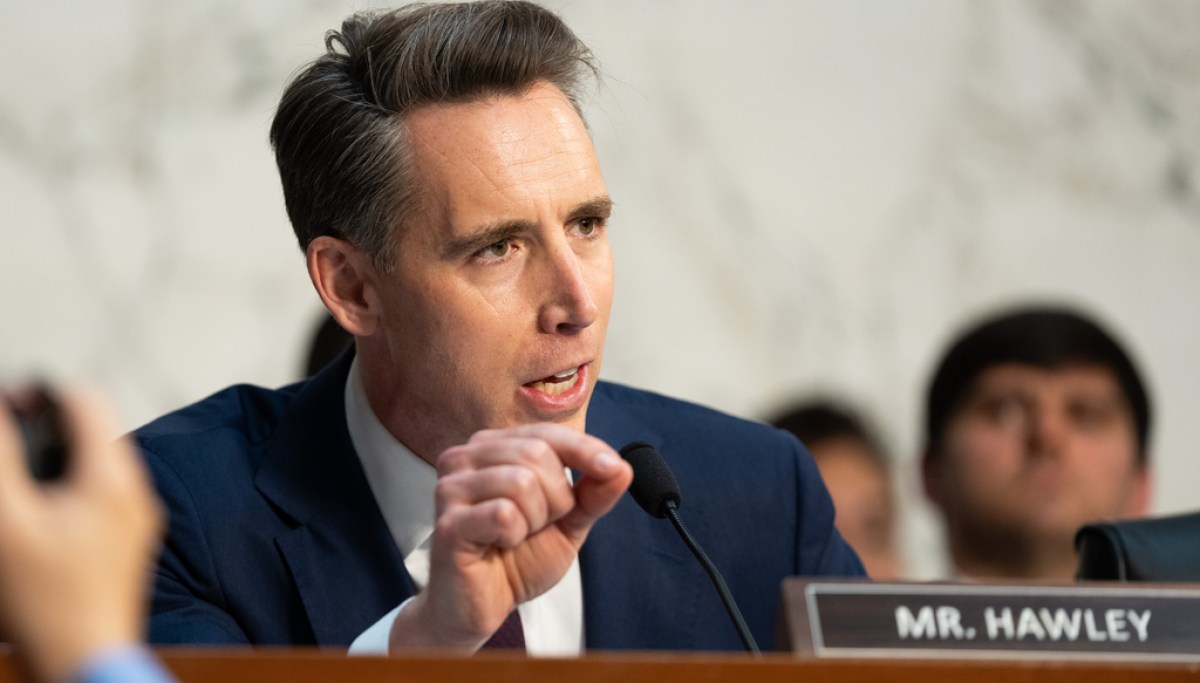
Republican Missouri Sen. Josh Hawley is pushing for a nationwide data center moratorium a week after his party’s midterm drubbing.
asserted
Hawley → push → drubbing
Hawley listed a moratorium on data centers among five things he wants Senate Republicans to get done over the next six weeks, he wrote on X on Wednesday.
asserted
he → list → Wednesday
He is the first Republican senator to back a nationwide moratorium, The Hill reported.
asserted
Hill → back → moratorium
The senator wants the federal moratorium to last until Congress passes protections that guarantee taxpayers no rate increases, a Hawley spokesperson said in a statement to the Daily Caller News Foundation.
asserted
spokesperson → want → Foundation
“Senate Republicans trying to figure out what to do in the next 6 weeks?” Hawley asked in the post.
asserted
Hawley → try → post
The rest of his list called for defunding Planned Parenthood, suspending the gas tax, funding rural hospitals and passing the SAVE America Act.
asserted
rest → call → Act
(RELATED: Data Centers Have Brutal Election Night)
asserted
Centers → have → Night
Democrats won the Senate and the House on Nov. 3, in a decisive fashion that many have dubbed a “blue tsunami.”
asserted
many → win → that
As of Thursday afternoon, NBC News has projected that the party has won at least 55 Senate seats, including an upset win in the deep red state of Mississippi.
asserted
party → project → Mississippi
The Alaska race remained uncalled as Democrat Mary Peltola led in the raw vote count heading into ranked-choice voting tabulation.
asserted
Peltola → remain → tabulation
NBC News’ exit polls asked voters how concerned they were about utility costs.
asserted
they → ask → costs
Fifty-three percent said they were very concerned, and Democrats won those voters 66 percent to 32 percent.
asserted
Democrats → say → percent
The same poll asked whether voters would favor or oppose building a data center where they live.
asserted
they → ask → center
Seventy-six percent were opposed, and Democrats won that group 64 percent to 34 percent.
asserted
Democrats → oppose → percent
CBS News’ exit polling found most voters who called themselves Republicans also opposed having a data center nearby.
asserted
who → find → center
Most of them still voted for GOP candidates.
asserted
Most → vote → candidates
Fifty-seven percent of voters also said artificial intelligence will “do more to hurt society,” the NBC poll found.
asserted
poll → say → society
The Nov. 3 results and exit polls “sent a clear message: Americans reject data centers in their communities, especially if they bring higher electricity bills,” Travis Fisher, director of energy and environmental policy studies at the libertarian Cato Institute, said in a Nov. 5 statement to the DCNF.
asserted
Fisher → send → DCNF
“However, data center bans are a blunt instrument that would reduce upward pressure on utility bills but crush economic growth,” Fisher said.
asserted
Fisher → reduce → growth
Alex Stevens, manager of policy and communications at the free-market Institute for Energy Research, blamed state policies that favor wind and solar power.
asserted
that → blame → wind
“The real culprit behind rising utility bills is the massive transmission expense required to connect far-flung, taxpayer-subsidized projects,” Stevens told the DCNF in a statement.
asserted
Stevens → rise → statement
“Policymakers should advance policies that let data centers supply their own power, while cutting regulatory red tape to make it easier to build that new generation,” Stevens said.
asserted
Stevens → advance → generation
“Data Centers Done Right must be the new Republican chant,” Stuart Turley, president and CEO of Sandstone Group and host of the Energy News Beat podcast, said in a statement to the DCNF.
asserted
Turley → do → DCNF
Republicans need “a plan that can install data centers not in neighborhoods, not on farmland,” Turley said.
asserted
Turley → need → farmland
The Pew Research Center surveyed 10,548 U.S. adults between July 20 and Aug. 9.
asserted
Center → survey → July
Sixty percent said they would be uncomfortable with a data center opening near them, including 54 percent of Republicans and 68 percent of Democrats, counting those who lean toward each party.
asserted
who → say → party
Half said the facilities mostly hurt what they pay for energy at home, up from 38 percent in January, Pew found.
asserted
Pew → say → January
In February, Hawley and Democratic Connecticut Sen. Richard Blumenthal introduced a bill that would make new data centers get their power from sources separate from the grid, Hawley’s office announced.
asserted
office → introduce → grid
President Donald Trump has said he “never want[s] Americans to pay higher Electricity bills because of Data Centers,” the release noted.
asserted
release → say → Centers
Congress.gov shows no movement on the bill, S. 3852, since the day it was introduced and sent to the Senate Energy and Natural Resources Committee.
asserted
it → show → Committee
Republican Kansas Sen. Roger Marshall joined Blumenthal as a cosponsor in August.
asserted
Marshall → join → August
Hawley called for a similar pause in June, saying the Senate should “absolutely” act on the Ratepayer Protection Act, adding that “there shouldn’t be any more data center development until it’s done,” E&E News reported.
asserted
News → call → Act
Republican Ohio Sen. Jon Husted led the Senate push for the Ratepayer Protection Act, which passed the House 417-3 on Sept. 16.
asserted
which → lead → Sept.
It would have states weigh rules that put the added electricity costs of data centers on the tech companies that run them.
asserted
that → have → them
Senate Democrats blocked it Sept. 30 in a 57-43 procedural vote, The Hill reported.
asserted
Hill → block → vote

 The Aporia