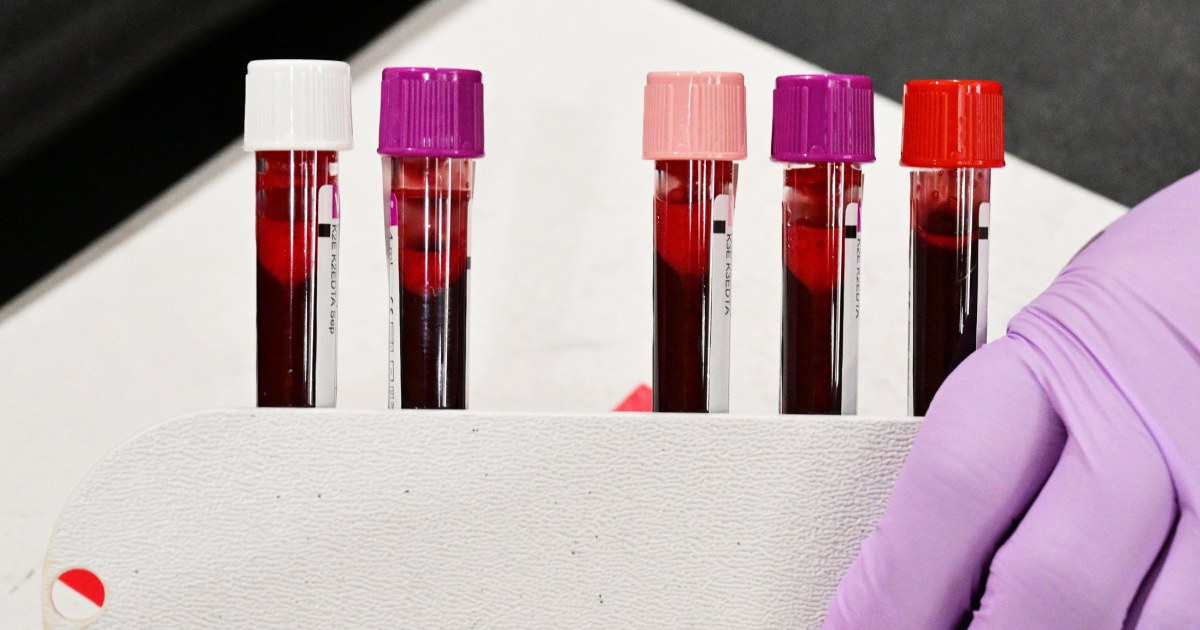
Photo via CBC News

The U.S. is now urging middle-aged men to routinely screen for prostate cancer. What about Canada?

Read the original at CBC News ↗
Cite

The U.S. is now urging middle-aged men to routinely screen for prostate cancer. What about Canada? (2026, November 12). CBC News. https://www.cbc.ca/news/health/prostate-cancer-screening-update-50s-9.7419249?cmp=rss

Dated from the outlet's own feed. Check the original for its byline.

CBC News · collected 2026-11-12 · by CBC

Quick Summary

The American Cancer Society recently updated its guidelines, now recommending that men at average risk of prostate cancer start getting PSA tests every two years from age 50 to 69, while high-risk men should begin yearly testing at age 45. In Canada, however, guidelines have not been updated since 2014 and do not recommend routine PSA testing due to concerns about false positives and unnecessary biopsies. Canadian experts argue that these guidelines need to be revised to reflect recent advancements in PSA testing.
Written by AI on 2026-11-12, from this article's own text only (the story summary below draws on all the coverage).
See how they differ ↓

AI analysis

Story summary

The American Cancer Society recently updated its guidelines, now urging men at average risk to start screening for prostate cancer with a PSA blood test every two years starting at age 50. For men at high risk, including Black men and those with a strong family history, the recommendation is to begin annual screenings at age 45. In contrast, Canada's guidelines, last updated in 2014, vary by province and lack a unified national advisory. The Canadian Cancer Society has highlighted the need for an update to better align with current scientific evidence. The PSA test measures a protein produced by both normal and cancerous prostate cells, which can signal the presence of a tumor but may also result from benign conditions.

Written for “Us Prostate Cancer Screening Guidance” on 2026-11-13, grounded in this article and the 6 other(s) covering the same event.

How they differ

5 outlets covered “Us Prostate Cancer Screening Guidance”.

What each outlet says

One AI summary per outlet of its latest article on this story, written from that article alone and checked against it. Open the article for the outlet's own words.

CBCThis outlet12 Nov

The American Cancer Society recently updated its guidelines, now recommending that men at average risk of prostate cancer start getting PSA tests every two years from age 50 to 69, while high-risk men should begin yearly testing at age 45. In Canada, however, guidelines have not been updated since 2014 and do not recommend routine PSA testing due to concerns about false positives and unnecessary biopsies. Canadian…

The U.S. is now urging middle-aged men to routinely screen for prostate cancer. What about Canada? (this article)
NBC News13 Nov

The American Cancer Society updated its prostate cancer screening guidelines, recommending that men aged 50 to 69 should undergo testing every two years, while those at higher risk should be tested annually. For men over 70, the guidelines suggest that testing decisions should be made on an individual basis after consulting with a doctor. NBC News reporter Stephanie Gosk covers the story.

New prostate cancer screening guidelines →2 articles from NBC News on this story
The Independent12 Nov

The American Cancer Society has issued new guidelines recommending that most men aged 50-69 receive a prostate-specific antigen (PSA) blood test every other year, while high-risk groups like Black men and those with a family history should begin screening at age 45. The updated guidance is based on evidence that these tests significantly reduce mortality and advanced-stage diagnoses, including a 2025 European study…

New guidance issued for prostate cancer screening in the US: Here is what you need to know →
Washington Examiner12 Nov

The American Cancer Society is issuing new guidance recommending more frequent prostate cancer blood test screenings as diagnoses of the disease rise nationwide. Men between the ages of 50 and 69 are advised to be tested every other year, while higher-risk individuals—specifically Black men and those with family histories of the disease—should receive annual screenings. The report highlights a shift toward more…

Doctors encourage prostate cancer blood test for younger men →

Compared with similar articles

This article reads unscored and hedges 12% of its claims. Each row says how that neighbour differs.
NBC News
Hedges 5 of 48 claims Outlet record 77/100
The Independent
Hedges 6 of 24 claims Outlet record 59/100
CBS News
Hedges 6 of 27 claims Outlet record 68/100
Washington Examiner
Hedges 1 of 2 claims Outlet record 68/100
CBS News
Hedges 0 of 2 claims Outlet record 68/100
NBC News
Hedges 1 of 4 claims Outlet record 77/100

Story

Us Prostate Cancer Screening Guidance
Health · 7 article(s) covering the same event. See how they differ ↑
How this article was measured signals, leaning charts, publisher record, byline, topics and claims

Signals How these are calculated →

Claims extracted
25
sentences that state something as happening or true
Uncertain
12%
3 of 25 hedged ("reportedly", "may", "according to")
Leaning
not political
takes no side on a contested political question
Publisher signals
71/100
CBC News's corrections and hedging, across everything collected from it. Not a measure of accuracy.
Outlets on this story
7
Health
Same framing elsewhere
1
articles that frame the event the way this one does
Analyzed 2026-11-12 · how these are computed

How this is being covered How these are calculated →

Article leaning vs. publisher reliability
Source leaning vs. consistency

Publisher

CBC News · 2152 article(s) · 6 correction(s) detected
Running correction rate · 6 correction(s)

Who wrote this

No reporter is named on this article, beyond the feed's “CBC”.

Topics

Black Canada U.S. the American Cancer Society the Canadian Cancer Society

Subjects

U.S. GPE · 6× Canada GPE · 5× the American Cancer Society ORG · 2× the Canadian Cancer Society ORG · 2× Black NORP · 1× British Columbia GPE · 1× Canadian NORP · 1× Ontario GPE · 1× the Canadian Task Force on Preventive Health Care ORG · 1× the National Advisory Committee on Preventive Health Services ORG · 1×

Narrative

Canadian guidelines need update, experts say In Canada, guidelines for prostate cancer screening vary by province and organization, but official guidelines for clinicians from Canada's national advisory body haven't been updated since 2014 — something the Canadian Cancer Society has flagged as a serious issue.
framing: assertive · carried by 1 article(s) · first seen 2026-11-12
The tests look for a protein produced by both normal and cancerous prostate cells, meaning a high level might signal a tumour, but also could be from a benign enlarged prostate or be a temporary spike from vigorous exercise.

Claims (25 extracted, 3 hedged)

The U.S. is now urging middle-aged men to routinely screen for prostate cancer. asserted
U.S. → urge → cancer
Men at average risk should start testing twice a year starting at age 50, updated U.S. guidelines say Middle-aged men should undergo regular screening for prostate cancer, the American Cancer Society said Thursday in a major change to U.S. guidelines. asserted
Society → start → guidelines
The screening involves a simple blood test, and men at average risk of getting prostate cancer should get that PSA test every two years between the ages of 50 and 69, the society advised. asserted
society → involve → 50
Men at high risk, including Black men and those with a strong family history of prostate cancer, should get yearly PSA checks and start earlier, at age 45, it said. asserted
it → include → age
Thursday's guideline update marks a shift in thinking in the U.S. about routine blood tests for PSA, or prostate-specific antigen. asserted
update → mark → PSA
Since 2010, the American Cancer Society has recommended that men at average risk talk with their doctors about whether to get regular PSA tests. asserted
men → recommend → tests
The tests look for a protein produced by both normal and cancerous prostate cells, meaning a high level might signal a tumour, but also could be from a benign enlarged prostate or be a temporary spike from vigorous exercise. uncertain
level → look → exercise
Widespread PSA testing in the past was blamed for overtreatment of slow-growing tumours and unnecessary followup testing in men who turned out to not have cancer. asserted
who → blame → cancer
Why many people with advanced prostate cancer are living much longer Cancer remains top cause of death in Canada as new study shows multiple types rising The updated advice in the U.S. asserted
types → live → U.S.
This includes steps such as repeating a PSA test to be sure it's really high or adding an MRI scan to help identify who needs a biopsy. asserted
who → include → biopsy
Canadian guidelines need update, experts say In Canada, guidelines for prostate cancer screening vary by province and organization, but official guidelines for clinicians from Canada's national advisory body haven't been updated since 2014 — something the Canadian Cancer Society has flagged as a serious issue. asserted
Society → need → issue
The national body that historically issued cancer screening guidelines was the Canadian Task Force on Preventive Health Care. asserted
that → issue → Care
But after years of criticism that it was too slow to update guidelines, it was overhauled and replaced with the National Advisory Committee on Preventive Health Services this summer. asserted
it → update → Services
The 2014 guidelines don't recommend the use of PSA tests for prostate cancer screening, citing a concern for false positives and unnecessary biopsies. asserted
guidelines → recommend → positives
Canada launches new preventive health advisory committee after disbanding task force - First Person My financial planner convinced me to be tested for prostate cancer. asserted
me → launch → cancer
It turns out I had it New research suggests surge in incurable prostate cancer from lack of early screening The Canadian Cancer Society — which advises on its website that men should talk to their health-care providers and consider screening with PSA tests starting at age 45 for those of high risk, and age 50 for those of average risk — issued an open letter to the new advisory body in September, urging them to update guidelines. uncertain
men → turn → guidelines
"What we have now is a guideline that is frozen in time from over a decade ago, and increasingly out of step with contemporary clinical practice," the open letter states. asserted
letter → freeze → practice
"In Ontario and British Columbia, the outdated guidance continues to be cited as a reason for denying public coverage of PSA testing for asymptomatic men who have received a referral from their physician. asserted
who → continue → physician
" How long should men continue screening? asserted
men → continue → ?
The new U.S. guidelines say that starting at 70, men should talk with their doctors about whether it's beneficial to continue the routine PSA checks. asserted
it → say → checks
But it discourages screening for men 80 and older, as well as for those of any age who aren't expected to live another 10 years because of other health problems. asserted
who → discourage → problems
This 1974 microscope image made available by the Centers for Disease Control and Prevention shows changes in cells indicative of adenocarcinoma of the prostate. asserted
image → make → prostate
The American Cancer Society estimates more than 333,000 men in the U.S. will be diagnosed with prostate cancer in 2026, and about 36,000 will die of it. asserted
36,000 → estimate → it
In Canada, prostate cancer is the second leading cause of death from cancer for men, according to the Canadian Cancer Society. uncertain
cancer → lead → Society
The society estimates 29,300 men in Canada will be diagnosed with prostate cancer in 2026, and 5,300 will die of it. asserted
5,300 → estimate → it
Give feedback · no sign-in needed

No sign-in needed for now. Your note is sent without a name, so it cannot be answered.

History Support