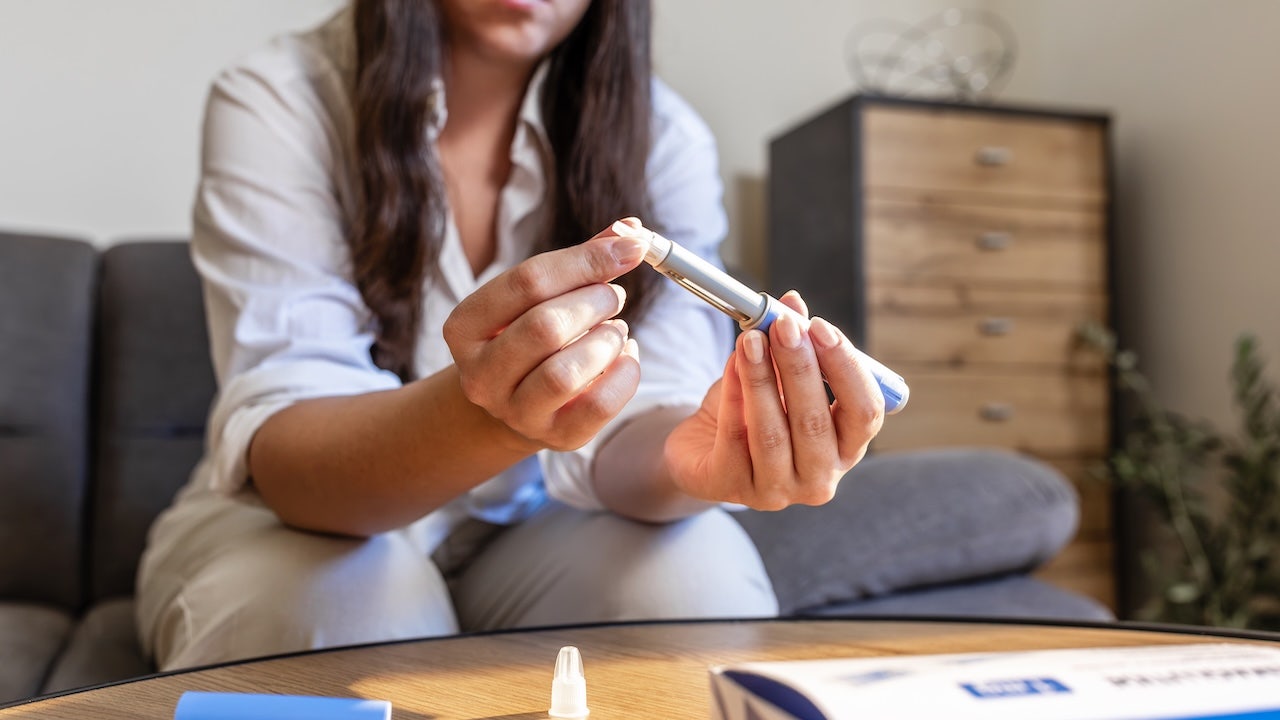
Photo via Fox News

Ozempic and Zepbound users face 6 rebound risks after stopping, doctor warns

Read the original at Fox News ↗
Cite

Stabile, A. (2026, November 12). Ozempic and Zepbound users face 6 rebound risks after stopping, doctor warns. Fox News. https://www.foxnews.com/health/ozempic-zepbound-users-face-6-rebound-risks-stopping-doctor-warns

Dated from the outlet's own feed. Check the original for its byline.

Fox News · collected 2026-11-12 · by Angelica Stabile

Quick Summary

Internal medicine physician Dr. Frank Dumont explains the medical risks and side effects associated with GLP-1 medications like Ozempic and Zepbound during an interview with Fox News Digital. He identifies six potential risks after discontinuing the drugs, including the return of intense "food noise" and weight regain, noting that participants in the STEP 1 trial regained about two-thirds of their lost weight within one year of stopping semaglutide. The report emphasizes that while patients may stop the drugs due to side effects like nausea or concerns over lean muscle loss, obesity is a chronic condition requiring ongoing management rather than a short-term prescription.
Written by AI on 2026-11-14, from this article's own text only (the story summary below draws on all the coverage).
See how they differ ↓

AI analysis

Story summary

A new study published in The Lancet Regional Health — Europe suggests that people with type 2 diabetes who start and then stop GLP-1 drugs may face an increased risk of heart attack, stroke, or death compared to those who continue taking the medication. The study, which followed more than 80,000 Italians between 2004 and 2024, found that individuals who discontinued GLP-1 treatments had a risk double that of those who remained on the medication. For those who stopped treatment, four in every 100 experienced a non-fatal heart attack, stroke, or death annually, compared to about two in 100 among those who stayed on the medication. Lead author Antonio Ceriello, head of diabetes research at IRCCS MultiMedica in Italy, noted the association was "not a complete surprise." However, some experts caution that the study cannot prove causation and lacks data on why people stopped using the drugs.

Written for “GLP-1 Rebound Risks Warning” on 2026-11-18, grounded in this article and the 3 other(s) covering the same event.

How they differ

4 outlets covered “GLP-1 Rebound Risks Warning”.

What each outlet says

One AI summary per outlet of its latest article on this story, written from that article alone and checked against it. Open the article for the outlet's own words.

Fox NewsThis outlet12 Nov

Internal medicine physician Dr. Frank Dumont explains the medical risks and side effects associated with GLP-1 medications like Ozempic and Zepbound during an interview with Fox News Digital. He identifies six potential risks after discontinuing the drugs, including the return of intense "food noise" and weight regain, noting that participants in the STEP 1 trial regained about two-thirds of their lost weight within…

Ozempic and Zepbound users face 6 rebound risks after stopping, doctor warns (this article)
ABC News (AU)9 Nov

A new international study published in The Lancet Regional Health—Europe indicates that people with type 2 diabetes who start and then stop using GLP-1 receptor agonists, like Ozempic, may face an increased risk of heart attack, stroke, or death compared to those who continue taking the medication. The research followed over 80,000 Italian participants between 2004 and 2024 and found that approximately four in every…

Study links heart issues to starting and stopping Ozempic-like drugs →
Global News11 Nov

A new study published in the Lancet Regional Health Europe finds that people with type 2 diabetes who stop taking GLP-1 weight loss medications face a doubled risk of heart attack, stroke, or death compared to those who continue their medication. The research, conducted over two decades and involving more than 80,000 Italians, shows that about four in every hundred patients who discontinued the drugs experienced…

Stopping GLP-1 drugs could increase heart attack risk for some, study says →
New York Post12 Nov

Fox News reports on the risks associated with discontinuing GLP-1 weight-loss drugs like Ozempic and Wegovy. Dr. Frank Dumont, an internal medicine physician, highlights that many patients stop using these medications within a year, citing side effects such as nausea and serious concerns like acute pancreatitis. He lists six potential risks of stopping GLP-1 drugs, including the immediate return of intense hunger…

GLP-1 users face 6 rebound risks after stopping the weight-loss drugs →

Compared with similar articles

This article reads unscored and hedges 23% of its claims. Each row says how that neighbour differs.
New York Post
Hedges 9 of 45 claims Outlet record 66/100
Global News
Hedges 6 of 27 claims Outlet record 63/100
“Article A reports on a specific study published in a journal, while Article B reports on a doctor's warning based on general research trends and does not reference the exact same study.”

Story

GLP-1 Rebound Risks Warning
Health · 4 article(s) covering the same event. See how they differ ↑
How this article was measured signals, leaning charts, publisher record, byline, topics and claims

Signals How these are calculated →

Claims extracted
48
sentences that state something as happening or true
Uncertain
23%
11 of 48 hedged ("reportedly", "may", "according to")
Leaning
not political
takes no side on a contested political question
Publisher signals
67/100
Fox News's corrections and hedging, across everything collected from it. Not a measure of accuracy.
Outlets on this story
4
Health
Same framing elsewhere
1
articles that frame the event the way this one does
Analyzed 2026-11-14 · how these are computed

How this is being covered How these are calculated →

Article leaning vs. publisher reliability
Source leaning vs. consistency

Publisher

Fox News · 8110 article(s) · 15 correction(s) detected
Running correction rate · 15 correction(s)

Who wrote this

Angelica Stabile
18 article(s) here · 1 carrying a prediction
Why patients stop Some patients may stop taking GLP-1 medications because of medical concerns or side effects, while others prefer not to remain on long-term medication, Dumont said.
As this study focused mainly on older PFAS chemicals that have been largely phased out, the researcher said experts know "very little" about the PFAS that are replacing them, which could serve as a limitation.
"Maxwell Rollins, assistant dean of graduate programs for the Nielsen College of Business, shared a recent class assignment where Apa stated her current mission was to take advantage of the talents and opportunities she had been blessed with to make an impact in any way she could in the lives of those around her," the statement reads.
The National Museum of Railroad History & Innovation will reportedly mark the 200-year anniversary with a $38 million upgrade.
The difference between a good relationship and a great relationship could boil down to one formula.
In that case, he said, taking a magnesium supplement could help to balance out levels.
"I'm hoping that within four or five years, a screening CT scan will only be confirmatory after they have a positive blood test done at your doctor's office," he added.
In most cases, early-stage lung cancer will not come with any symptoms, according to Robinson.
The statement continued that recovery will "take time," but the young athlete acknowledged that she’s "incredibly fortunate to be surrounded by amazing people who continue to lift me up, encourage me, and remind me that every challenge is an opportunity to grow.
As Americans live longer, experts say everyday habits may be taking a toll on eye health earlier than expected.
Also by Angelica Stabile
Nothing else under this byline is closely related to this article, so these are simply their most recent.
All 18 articles by Angelica Stabile →

Topics

Dumont Fox News Digital Ozempic Wegovy Zepbound

Subjects

Dumont PERSON · 8× Fox News Digital ORG · 2× AMA ORG · 1× Frank Dumont PERSON · 1× San Francisco GPE · 1× Virta Health ORG · 1× the American Medical Association ORG · 1× the Obesity Medicine Association ORG · 1×

Narrative

In the SURMOUNT-4 trial for tirzepatide, patients who were switched to a placebo after 36 months of treatment regained more than half the weight they had lost over the following year, even while receiving diet and exercise counseling. "That's just so devastating for people who felt like they'd finally found a solution that would work," Dumont said.
framing: mixed · carried by 1 article(s) · first seen 2026-11-14
Why patients stop Some patients may stop taking GLP-1 medications because of medical concerns or side effects, while others prefer not to remain on long-term medication, Dumont said.

Claims (48 extracted, 11 hedged)

While GLP-1 medications like Ozempic, Wegovy and Zepbound have reshaped weight management and diabetes control, research shows that many patients stop taking them within a year. asserted
patients → reshape → year
Research has found that cycling off these medications can bring potential rebound risks, ranging from rapid weight regain to the loss of cardiovascular protection. asserted
cycling → find → protection
Dr. Frank Dumont, internal medicine physician and executive medical director at Virta Health in San Francisco, spoke with Fox News Digital about why patients stop taking GLP-1s, the potential risks and how to maintain progress afterward. asserted
patients → speak → progress
Why patients stop Some patients may stop taking GLP-1 medications because of medical concerns or side effects, while others prefer not to remain on long-term medication, Dumont said. uncertain
Dumont → stop → medication
Common side effects include nausea, vomiting, constipation and diarrhea. asserted
effects → include → nausea
"Those types of things can become troublesome enough that people actually have a hard time eating enough food to get good nourishment," he told Fox News Digital. asserted
he → become → Digital
"Working with your physician to make a decision about whether it's right for you to stay on the medicine or not is important." asserted
you → work → medicine
Other serious side effects, like acute pancreatitis, would prompt immediate discontinuation of the drug. asserted
effects → prompt → drug
"We know that's fairly rare, but if the pancreas becomes involved, that is not a good thing," Dumont said. asserted
Dumont → know → ?
It can even be life-threatening." asserted
It → threaten → ?
Certain GLP-1 medications carry a warning about thyroid tumors based on animal studies, though the risk in humans remains unknown. asserted
risk → carry → humans
"When people take the GLP-1 medications, they lose weight, but they tend to lose both fat mass and lean muscle mass." asserted
they → take → mass
These medications should not be used by people with a personal or family history of medullary thyroid carcinoma or a condition called multiple endocrine neoplasia syndrome type 2 (MEN 2). asserted
medications → use → carcinoma
Dumont outlined six potential risks patients may face after stopping a GLP-1. uncertain
patients → outline → GLP-1
The most immediate side effect patients notice after stopping a GLP-1 is the return of intense cravings and a sharp spike in appetite, often referred to as "food noise," according to Dumont. uncertain
patients → notice → Dumont
Many patients assume they can treat GLP-1s like a short-term prescription, taking the drug to hit a target weight or blood sugar goal and then stopping, the doctor noted. asserted
doctor → assume → goal
However, major medical organizations, including the American Medical Association (AMA) and the Obesity Medicine Association, classify obesity as a chronic condition that typically requires ongoing management. asserted
that → include → management
"Unless you have significantly changed what you're doing in terms of the types of foods you're eating, it's likely you'll go back to the same foods you were eating before, and hunger and cravings will go up," Dumont said. asserted
Dumont → change → foods
No. 2: Weight regain It is typical for GLP-1 users to experience weight regain after quitting, according to Dumont. uncertain
users → experience → Dumont
In the STEP 1 trial extension, participants regained about two-thirds of the weight they had lost within a year of stopping semaglutide and lifestyle interventions. asserted
they → regain → semaglutide
In the SURMOUNT-4 trial for tirzepatide, patients who were switched to a placebo after 36 months of treatment regained more than half the weight they had lost over the following year, even while receiving diet and exercise counseling. "That's just so devastating for people who felt like they'd finally found a solution that would work," Dumont said. asserted
Dumont → switch → solution
Change in biomarkers Biomarkers — which are measurable indicators of what’s happening inside the body, such as blood sugar, blood pressure and cholesterol levels asserted
what → happen → sugar
— tend to improve while taking a GLP-1, which is beneficial for those with pre-diabetes or diabetes. asserted
which → tend → diabetes
When a GLP-1 is stopped, these markers can reverse if not countered with a change in diet, according to Dumont. uncertain
markers → stop → Dumont
Improvements in fatty liver disease may also fade after treatment stops, the doctor said. uncertain
doctor → fade → disease
"We know that these medications can help to decrease some of that steatotic or fatty liver disease that occurs," he noted. asserted
he → know → disease
"And when you go off the medicine, if you go back to eating the way you did before, those numbers have a tendency to worsen. asserted
numbers → go → tendency
No. 4: Worsening body composition Weight loss while taking GLP-1 medications can include a loss of muscle, raising concerns about body composition and long-term physical function, according to Dumont. uncertain
loss → worsen → Dumont
"When people take the GLP-1 medications, they lose weight, but they tend to lose both fat mass and lean muscle mass," he told Fox News Digital. asserted
he → take → Digital
In a body-composition study of tirzepatide, about 25% of the weight lost was lean mass, which includes muscle and other nonfat tissue. asserted
which → lose → muscle
The remaining 75% was fat. asserted
% → remain → ?
Dumont expressed concern that patients who regain weight after stopping treatment may not fully replace the muscle they lost. uncertain
they → express → muscle
"So, there's a bit of a ratcheting-down effect if someone is on and off these medications, where they lose fat and muscle, stop the medicine, regain fat, go back on the medicine, and lose fat and muscle," he added. asserted
he → be → fat
The doctor emphasized that preserving muscle is important for metabolism, injury prevention and everyday activities. asserted
preserving → emphasize → metabolism
No. 5: Mental health effects In addition to the physical consequences, Dumont noted that stopping a weight-loss drug can take a heavy toll on mental health. asserted
stopping → note → health
Many patients have spent years cycling through diets and programs without lasting success, often viewing GLP-1s as a final solution, according to the doctor. When the medication isn't right for them — adding to a history of past weight-loss setbacks — experiencing a "regression on all fronts" can be "really devastating from a mental health standpoint," Dumont said. uncertain
Dumont → spend → standpoint
"It can make you feel disheartened and like you don’t have the control you thought you did," he added. asserted
he → make → control
No. 6: Loss of health protection An observational study published in BMJ Medicine found that adults with type 2 diabetes who stopped GLP-1 treatment had a higher risk of major cardiovascular events than those who continued. asserted
who → publish → those
Longer periods without treatment were associated with greater risk. asserted
periods → associate → risk
Dumont noted that the stakes of stopping a GLP-1 go far beyond weight, pointing to the broader risk of losing metabolic benefits. asserted
stakes → note → benefits
…and 8 more, not listed.
Give feedback · no sign-in needed

No sign-in needed for now. Your note is sent without a name, so it cannot be answered.

History Support