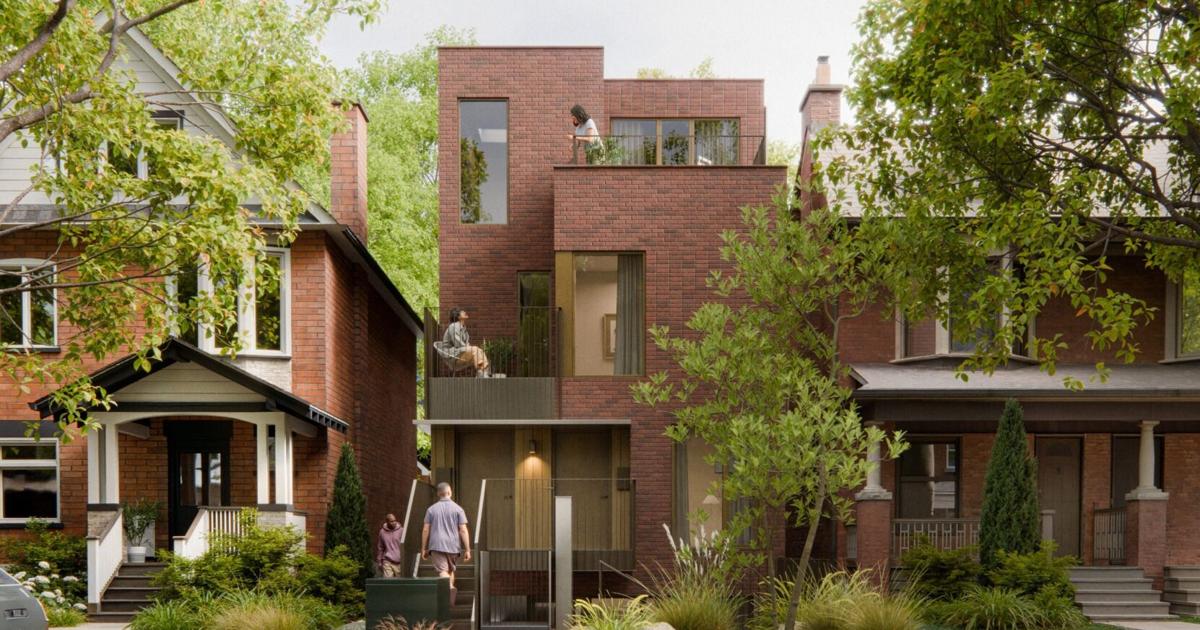
The City of Toronto has received more than 60 applications to build sixplexes since it began allowing the developments in select neighbourhoods over a year ago, with more than half of the properties also seeking permission to add an extra garden or laneway suite, new data from the city shows.
asserted
data → receive → city
It isn’t yet dramatic, but it shouldn’t have been expected to be,” said Ken Greenberg, a former director of urban design and architecture for the City of Toronto.
asserted
Greenberg → expect → Toronto
“You really have to judge the success of this, not over a year or two or three, but over a decade.”
asserted
You → have → decade
While the applications suggest interest in adding smaller-scale housing to traditionally single-family neighbourhoods — the “missing middle” that housing advocates have long called for — they come amid a contentious debate over how much density established communities should accommodate.
asserted
communities → suggest → density
Some residents have raised concerns about the impact on street parking, tree canopy, stormwater drainage and neighbourhood character, while experts say financial and practical hurdles remain.
asserted
hurdles → raise → parking
Toronto allowed multiplexes of up to four units without special permissions in eligible lowrise neighbourhoods across the city in 2023.
asserted
Toronto → allow → 2023
While city staff recommended permitting fiveplexes and sixplexes more broadly, in June 2025 council voted after intense pushback from suburban wards to restrict the larger buildings to the former Toronto and East York district and Ward 23 (Scarborough North).
asserted
council → recommend → district
Five wards where sixplexes aren’t allowed as of right saw applications, such as in York Centre and Etobicoke North, each with two.
asserted
sixplexes → allow → two
More than half of the properties with sixplex applications have also sought permission for a garden or laneway suite.
asserted
half → seek → suite
Because those backyard units would be in addition to the six homes in the main building, they would need special permission from the city.
asserted
they → need → city
Thaddeus Sherlock, a volunteer with More Neighbours Toronto who advocated for larger multiplexes to be allowed in more wards, said there’s been pushback against sixplexes, particularly in parts of North York and Scarborough.
asserted
multiplexes → advocate → York
He said some of the resistance reflects a broader reluctance to accept more density in areas long dominated by detached homes.
asserted
some → say → homes
“That type of housing is unfortunately vulnerable to NIMBYism, to cultural and political backlash,” Sherlock said.
asserted
Sherlock → say → backlash
Small infill homes made up 10 times more of Toronto’s housing starts last year than in 2023, CMHC says.
asserted
CMHC → make → 2023
Small infill homes made up 10 times more of Toronto’s housing starts last year than in 2023, CMHC says.
asserted
CMHC → make → 2023
Greenberg said Toronto is trying to make up for a long-standing gap in its housing supply, and multiplexes could allow more people to live in established neighbourhoods without requiring larger apartment buildings.
uncertain
people → say → buildings
It would help give residents more housing choices as their circumstances change, including allowing young adults, families, older people and multi-generational households to remain in the same communities, he added.
asserted
he → help → communities
“This is a missing chapter in Toronto’s housing evolution and this is a way of making up for lost time,” said Greenberg.
asserted
Greenberg → miss → time
Hurdles remain, even in permitted wards
Greenberg cautioned property owners still have to secure building permits, address any site-specific planning requirements and determine whether the projects make financial sense.
asserted
projects → remain → sense
Changing zoning rules does not immediately create the financing, construction expertise or development networks needed to build multiplexes, Greenberg said.
asserted
Greenberg → change → multiplexes
The industry has traditionally been geared toward either individual homeowners or large-scale apartment developers, leaving smaller projects in an unfamiliar middle ground.
asserted
industry → gear → ground
In an effort to make construction easier, the city recently released free, pre-approved designs for fourplexes and sixplexes, although property owners still need building permits and must meet site-specific requirements.
asserted
owners → make → requirements
Sean Galbraith, the president of urban planning firm Galbraith & Associates, said the case for sixplexes isn’t consistent across the city.
asserted
case → say → city
“Just because you can build it, doesn’t mean that that’s what that market is demanding,” Galbraith said.
asserted
Galbraith → build → what
Builders have to weigh the cost of buying the land against the housing demands in the area and projected rental income, as well as construction expenses, parking requirements and demand for different types of units, Galbraith said.
asserted
Galbraith → have → units
Properties in transit-accessible neighbourhoods may also be better suited to sixplexes without on-site parking, while in more suburban areas a smaller building with three or four larger, family-sized apartments and parking space might be a better fit.
uncertain
building → suit → apartments
“Developers will review different scenarios — three units, four units, five units, six units — and they’ll run the math, and there will be a winner in the various scenarios,” Galbraith said.
asserted
Galbraith → review → scenarios
For Sherlock, multiplexes offer a way to add housing and flexibility for families while retaining some of the characteristics of lowrise neighbourhoods.
asserted
multiplexes → offer → neighbourhoods
“They balance the best of both worlds,” he said.
asserted
he → balance → worlds
“This is the solution to that missing middle that urban planning planners and advocates have been looking for.”
asserted
planners → miss → that
 The Aporia