Photo via The Independent

Austria tightens laws against spying to protect the international organizations it hosts

Read the original at The Independent ↗
Cite

Moulson, G. (2026, November 11). Austria tightens laws against spying to protect the international organizations it hosts. The Independent. https://www.independent.co.uk/news/world/europe/austria-espionage-berlin-european-union-vienna-b3083156.html

Dated from the outlet's own feed. Check the original for its byline.

The Independent · collected 2026-11-11 · by Geir Moulson

Quick Summary

Austria's government is proposing new legislation to strengthen its anti-espionage laws, specifically targeting spying against international organizations and the European Union based in Vienna. The current law bans espionage directed at Austria but not if it targets other countries or international bodies. The proposed amendments would increase penalties for harming Austria from five to ten years of imprisonment and introduce a maximum five-year sentence for spying on international organizations and EU entities. Foreign Minister Beate Meinl-Reisinger highlighted the country's role as a host to over 40 international groups, emphasizing the need to protect its reputation and security in light of modern hybrid threats.
Written by AI on 2026-11-12, from this article's own text only (the story summary below draws on all the coverage).
See how they differ ↓

AI analysis

Story summary

Austria's government launched plans on November 11, 2026, to tighten laws against spying, aiming to protect the reputation of Vienna as a host city for international organizations like the U.N. and the International Atomic Energy Agency (IAEA). Foreign Minister Beate Meinl-Reisinger stated that espionage is a threat not only to Austria's security but also to its image as a capital of dialogue and diplomacy. The new legislation, which requires parliamentary approval, will increase the maximum sentence for spying against Austria to 10 years. Additionally, it will cover espionage targeting international organizations and the European Union with a potential sentence of up to 5 years. Vienna's long-standing reputation as a "den of spies," especially following the expulsion of several Russian diplomats, prompted this legislative action.

Written for “Austria Tightens Espionage Laws” on 2026-11-18, grounded in this article and the 1 other(s) covering the same event.

How they differ

2 outlets covered “Austria Tightens Espionage Laws”.

What each outlet says

One AI summary per outlet of its latest article on this story, written from that article alone and checked against it. Open the article for the outlet's own words.

The IndependentThis outlet11 Nov

Austria's government is proposing new legislation to strengthen its anti-espionage laws, specifically targeting spying against international organizations and the European Union based in Vienna. The current law bans espionage directed at Austria but not if it targets other countries or international bodies. The proposed amendments would increase penalties for harming Austria from five to ten years of imprisonment…

Austria tightens laws against spying to protect the international organizations it hosts (this article)
The Straits Times11 Nov

Austria’s government announced on November 11 plans to update its espionage law by increasing penalties and expanding the legal definition of spying. Currently, offenses carry a maximum five-year sentence; this will be raised to ten years for crimes against Austria and up to five years for targeting international organizations or the EU. The move aims to address Vienna’s reputation as a hub for espionage…

Austria toughening espionage law to address Vienna’s ‘den of spies’ image →

Compared with similar articles

This article reads unscored and hedges 0% of its claims. Each row says how that neighbour differs.
The Straits Times
Leans right Hedges 0 of 15 claims Outlet record 64/100

Story

Austria Tightens Espionage Laws
Politics · 2 article(s) covering the same event. See how they differ ↑
How this article was measured signals, leaning charts, publisher record, byline, topics and claims

Signals How these are calculated →

Claims extracted
16
sentences that state something as happening or true
Uncertain
0%
0 of 16 hedged ("reportedly", "may", "according to")
Leaning
withheld
no quote in the article backed the model's score
Publisher signals
59/100
The Independent's corrections and hedging, across everything collected from it. Not a measure of accuracy.
Outlets on this story
2
Politics
Same framing elsewhere
1
articles that frame the event the way this one does
Analyzed 2026-11-12 · how these are computed

How this is being covered How these are calculated →

Article leaning vs. publisher reliability
Source leaning vs. consistency

Publisher

The Independent · 4554 article(s) · 10 correction(s) detected
Running correction rate · 10 correction(s)

Who wrote this

Geir Moulson
6 article(s) here · 1 carrying a prediction
The new legislation, which requires parliamentary approval, will increase the maximum sentence for espionage to the detriment of Austria to 10 years, Meinl-Reisinger said.
Germany is set to get its first female president after Chancellor Friedrich Merz’s party nominated Ilse Aigner, a center-right politician with appeal to liberals, to become the country’s head of state next year.
We need to help Ukraine defend its skies; otherwise, Russia will never stop its missile strikes.”
BRUSSELS (AP) — NATO is capable of handling sabotage and drone incidents in Europe and has good action plans in place to deal with them, the alliance’s secretary general said Thursday as a Danish intelligence service warned Russia is expected to increase such attacks.
However, Greenland’s prime minister, Múte Bourup Egede, responded that "we are not for sale and will never be for sale."
The CDU also dropped to second place in Berlin behind the hard-left Left Party, which is in pole position to lead the next city government — though Merz’s party could, depending on how coalition talks go, still retain city hall.
Also by Geir Moulson
Nothing else under this byline is closely related to this article, so these are simply their most recent.
All 6 articles by Geir Moulson →

Topics

Austria European Union U.N. Vienna the International Atomic Energy Agency

Subjects

Austria GPE · 8× Meinl-Reisinger PERSON · 3× U.N. ORG · 2× Vienna GPE · 2× Beate Meinl-Reisinger PERSON · 1× European Union ORG · 1× OPEC ORG · 1× the International Atomic Energy Agency ORG · 1× the Organization for Security and Cooperation in Europe ORG · 1× the Organization of the Petroleum Exporting Countries ORG · 1×

Narrative

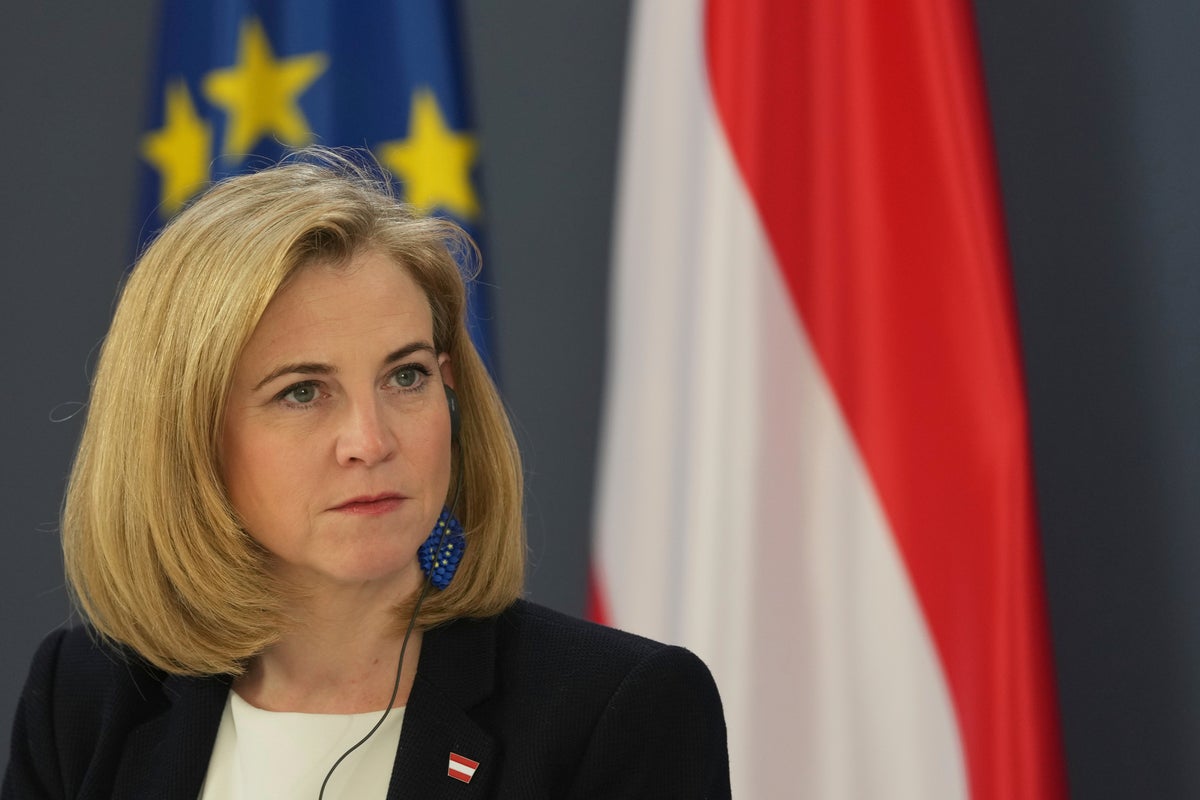
“Espionage is a real threat to our security, to security in our country, but above all to our reputation as Austria, as the capital of dialogue, as an official location of the U.N. and over 40 international organizations,” Foreign Minister Beate Meinl-Reisinger said as Cabinet ministers presented the draft legislation.
framing: assertive · carried by 1 article(s) · first seen 2026-11-12
The new legislation, which requires parliamentary approval, will increase the maximum sentence for espionage to the detriment of Austria to 10 years, Meinl-Reisinger said.

Claims (16 extracted, 0 hedged)

Austria's government on Wednesday launched plans to tighten the country's laws against spying, which at present explicitly ban espionage directed against Austria itself but not if it targets other countries or international organizations. asserted
it → launch → countries
Austria is a European Union member that has a policy of military neutrality dating back to the 1950s. asserted
that → have → 1950s
Its capital, Vienna, is host to several U.N. agencies including the International Atomic Energy Agency. asserted
capital → include → Agency
“Espionage is a real threat to our security, to security in our country, but above all to our reputation as Austria, as the capital of dialogue, as an official location of the U.N. and over 40 international organizations,” Foreign Minister Beate Meinl-Reisinger said as Cabinet ministers presented the draft legislation. asserted
ministers → say → legislation
“We have a responsibility ... and we are fulfilling this responsibility.” asserted
we → have → responsibility
Meinl-Reisinger acknowledged that Vienna has often been described as a “capital of espionage,” a reputation dating back to the Cold War, but said she wants to dispense with any “romantic idea” of spying. asserted
she → acknowledge → spying
She said that “we are responding to the current hybrid threat situation.” asserted
we → say → situation
Austria’s criminal code currently states that anyone who “sets up or operates a secret intelligence service to the detriment of the Republic of Austria or supports such an intelligence service in whatever way” faces a prison sentence of up to five years. asserted
who → state → years
It also bans setting up, operating or supporting a “military intelligence service” for a foreign power. asserted
It → ban → power
The new legislation, which requires parliamentary approval, will increase the maximum sentence for espionage to the detriment of Austria to 10 years, Meinl-Reisinger said. asserted
Reisinger → require → years
It will explicitly criminalize spying against international organizations or the EU, with a maximum sentence of five years. asserted
It → criminalize → years
Officials said that the legislation also will explicitly ban recruiting agents and being recruited as an agent, among other things. asserted
legislation → say → things
That's a measure targeted in particular at the recruitment of so-called “throwaway agents,” people recruited for low-level espionage actions without necessarily knowing what they are getting into. asserted
they → target → what
The justice minister in Austria's last government announced a similar plan in 2024 but that administration didn't agree on legislation before that year's election. asserted
administration → announce → election
Meinl-Reisinger said that “we are no longer looking away.” asserted
we → say → ?
She said that entry visas for diplomats have been denied in 63 cases since she took office in March 2025, and noted that eight Russian diplomats have been expelled from Austria in that time. asserted
diplomats → say → time
Give feedback · no sign-in needed

No sign-in needed for now. Your note is sent without a name, so it cannot be answered.

History Support