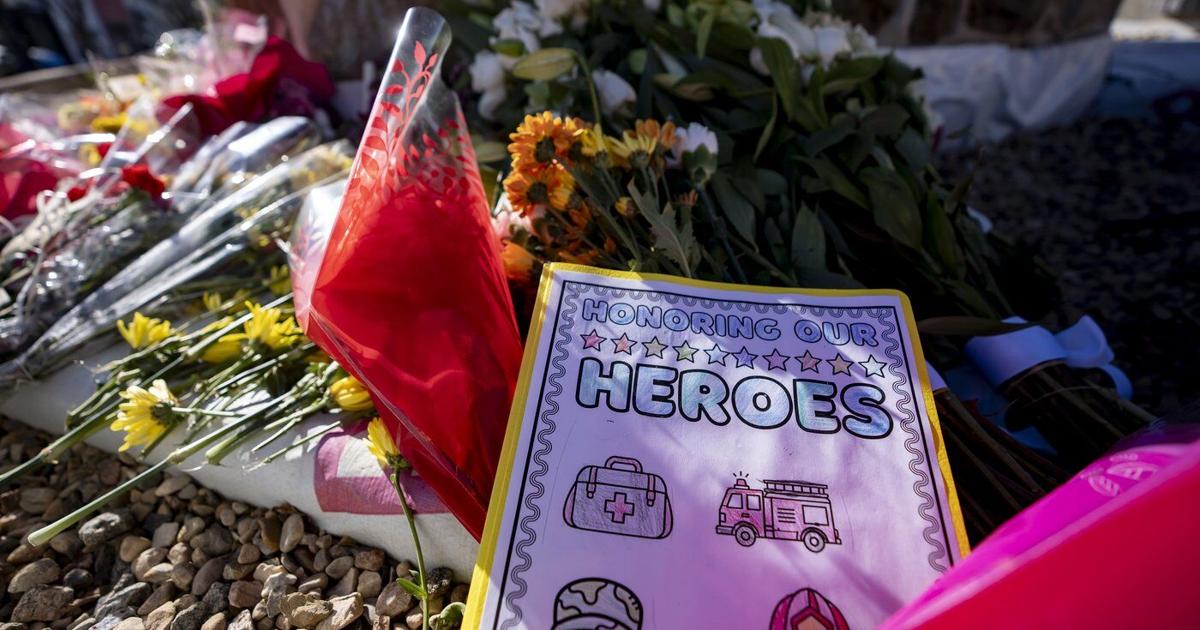
Photo via The Hub

Lest we forget: Why remembrance is still Canada’s most important collective ritual

Read the original at The Hub ↗
Cite

Staley, S. (2026, November 11). Lest we forget: Why remembrance is still Canada’s most important collective ritual. The Hub. https://thehub.ca/2026/11/11/the-longest-silence-why-remembrance-is-still-canadas-most-important-collective-ritual/

Dated from the outlet's own feed. Check the original for its byline.

The Hub · collected 2026-11-11 · by Stephen Staley commentary

Quick Summary

Stephen Staley writes about the significance of Remembrance Day in Canada, focusing on how the country is losing its instinct to remember those who died in past wars as these events move out of living memory. The article highlights that only 69 percent of Canadians intended to mark Remembrance Day last year, down from 76 percent the previous year, and notes that barely half planned to wear a poppy. Staley contrasts this with Europe, where war memorials are ubiquitous, serving as constant reminders of past conflicts. He argues for the continued importance of deliberate remembrance as a civic virtue that honours the sacrifices made by earlier generations.
Written by AI on 2026-11-11, from this article's own text only (the story summary below draws on all the coverage).

AI analysis

Why this leaning score
This article does not take a side on a contested political question, so it has no leaning score. That is an answer rather than a gap: a match report or a rescue can be warmly or critically written without being left or right, and scoring it anyway is how approval of a subject gets recorded as a political position.
No political leaning scored for article 144235 · logged 2026-11-11

Story

Remembrance Day Rituals In Canada
Other · 1 article(s) covering the same event.

Compared with similar articles

This article reads unscored and hedges 0% of its claims. Each row says how that neighbour differs.
Toronto Star
Hedges 1 of 7 claims Outlet record 64/100
“The articles describe different events: one is about a training exercise accident at CFB Wainwright, while the other is about an annual Remembrance Day ceremony in Montreal.”
Toronto Sun
Hedges 1 of 34 claims Outlet record 95/100
“The articles discuss different events related to veterans but do not describe the same specific incident.”
Global News
Hedges 1 of 32 claims Outlet record 63/100
“While both articles mention the CFB Wainwright tragedy involving Private Hayden Lykkemark and others, they describe different aspects of it (one focuses on a mother's reaction while the other discusses remembrance rituals following the incident).”
The Globe and Mail
Hedges 0 of 25 claims Outlet record 52/100
“While both articles mention the tragic fire at CFB Wainwright, Article A focuses on the memorial and funeral for one of the soldiers killed (Pte. Aidan Goulding), while Article B is a broader reflection on remembrance day in Canada including the event but not focusing on the same specific incident or individual.”
Toronto Star
Hedges 0 of 18 claims Outlet record 64/100
“The articles describe different events: one describes a training exercise fire incident where soldiers died, while the other reports on Remembrance Day ceremonies honoring those victims.”
Toronto Star
Hedges 1 of 36 claims Outlet record 64/100
“Article A discusses Wainwright's preparations for Remembrance Day following a fire incident, while Article B talks about the historical significance of Remembrance Day and mentions the recent fire but focuses more on its impact and context within the community.”
Toronto Star
Hedges 4 of 50 claims Outlet record 64/100
“Article A discusses Virginia Hicks' reaction to a recent training accident at CFB Wainwright, while Article B focuses on remembrance activities and the aftermath of the same accident but does not describe the identical incident or its immediate impact.”
How this article was measured signals, leaning charts, publisher record, byline, topics and claims

Signals How these are calculated →

Claims extracted
19
sentences that state something as happening or true
Uncertain
0%
0 of 19 hedged ("reportedly", "may", "according to")
Leaning
not political
takes no side on a contested political question
Publisher signals
not measured
these signals count newsroom corrections; Commentary has none to count
Outlets on this story
1
Other
Same framing elsewhere
1
articles that frame the event the way this one does
Analyzed 2026-11-11 · how these are computed

How this is being covered How these are calculated →

Article leaning vs. publisher reliability
Source leaning vs. consistency

Publisher

The Hub · 25 article(s) · 0 correction(s) detected
No corrections detected for this publisher. That may mean careful reporting, or simply that nothing has been checked.

Who wrote this

Stephen Staley
1 article(s) here · 0 carrying a prediction
The only article under this byline in the corpus.

Topics

Canada Canadian Canadians Ypres the First World War

Subjects

Canada GPE · 2× Canadian NORP · 2× Canadians NORP · 2× Ypres GPE · 2× Alberta GPE · 1× British Columbia GPE · 1× Hayden Lykkemark PERSON · 1× Langley GPE · 1× Morgan Wong PERSON · 1× Shaun Farrell PERSON · 1×

Narrative

At Perth Cemetery, outside Ypres, which I had the privilege of visiting with an Australian friend a few years ago, the grave of a British soldier killed in 1917 carries three bullet strikes, left when the German army came back through in 1940.
framing: assertive · carried by 1 article(s) · first seen 2026-11-11

Claims (19 extracted, 0 hedged)

Private Hayden Lykkemark of Langley, British Columbia, was 19 years old when a grass fire overran a training exercise at CFB Wainwright, in Alberta, on Oct. 17. asserted
fire → overrun → Oct.
He died alongside Sergeant Morgan Wong, Private Shaun Farrell, and Private Aidan Goulding, all of them preparing to deploy to Latvia. asserted
all → die → Latvia
In the days that followed, the people of Wainwright carried their flowers and flags to the clock tower on Main Street, a cenotaph built to honour the town’s dead of the First World War. asserted
people → follow → War
They knew where to go, because the stone had been standing there for generations; a monument asserted
stone → know → monument
Much of Canada is losing that instinct. asserted
Much → lose → instinct
John Babcock, the last Canadian veteran of the Great War, died in 2010. asserted
Babcock → die → 2010
Of the 1.1 million who served in the Second, Veterans Affairs estimated last year that 3,691 were still alive, most of them near or past their 100th year. asserted
most → serve → year
A Leger survey last November found that 69 percent of Canadians intended to mark Remembrance Day in any way at all, down from 76 percent a year earlier, and that barely half planned to wear a poppy. asserted
half → find → poppy
The wars that made this country are passing out of living memory and into the textbooks, where heroism and horror alike are smoothed and simplified. asserted
heroism → make → textbooks
Geography spares Europeans this forgetting. asserted
Geography → spar → forgetting
Drive an hour in any direction in Western Europe, from Arras or Ypres, and the white headstones of the Commonwealth war graves rise out of beet fields, village churchyards, and the edges of ordinary towns. asserted
headstones → drive → towns
In places the two wars are written on the same stone. asserted
wars → write → stone
At Perth Cemetery, outside Ypres, which I had the privilege of visiting with an Australian friend a few years ago, the grave of a British soldier killed in 1917 carries three bullet strikes, left when the German army came back through in 1940. asserted
army → have → 1940
At Shorncliffe in Kent, where more than 300 Canadians of the First World War lie buried, the headstones still bear the shrapnel of air raids from the Second. asserted
headstones → lie → Second
A Belgian schoolchild walks past such things on the way to class. asserted
schoolchild → walk → class
A Canadian child has to be taken to them, or told. asserted
child → have → them
Stephen Staley discusses the significance of remembrance in Canada, particularly on Remembrance Day, as a collective ritual that honours those who sacrificed their lives in wars. asserted
who → discuss → wars
He highlights the declining participation in remembrance activities and the fading memory of veterans as the wars move out of living memory. asserted
wars → highlight → memory
The piece reflects on the need for deliberate remembrance and the civic virtue it embodies, urging citizens to honour the sacrifices made by previous generations. asserted
it → reflect → generations

Give feedback · no sign-in needed

No sign-in needed for now. Your note is sent without a name, so it cannot be answered.

History Support