A Melbourne University-led study has found that children who attend both three- and four-year-old kindergarten are five months ahead in language comprehension, up to three months ahead in numeracy skills, and have better working memory compared to those who only attended one year of pre-school education. The study, funded by Victoria’s $1.4 billion free kindergarten policy, highlights the significant impact of two years of early childhood education on a child's foundational learning abilities before starting formal schooling. Professor Tricia Eadie emphasizes that this developmental advantage is seen in play-based programs rather than explicit skill teaching, underscoring the importance of quality educational environments for young children.
Written by the local model on 2026-09-17,
using this article's own text rather than the other coverage of the
same event (that is the story summary below).
Story summary
A new Melbourne University-led study has revealed that children who attend two years of kindergarten in Victoria start school with significant advantages over their peers. The research, conducted over five years and published recently, found that these children exhibit language comprehension skills that are approximately five months ahead compared to those who only attended one year of pre-school education. Additionally, the study showed that students who had two years of kindergarten were up to three months ahead in early numeracy and working memory skills.
Lead researcher Professor Tricia Eadie emphasized the importance of these foundational skills for children's academic success when they enter a formal classroom setting for the first time. She noted that while these programs are play-based and developmentally appropriate, they still provide essential skills necessary for learning and engagement in an educational environment.
The study highlights the critical role kindergarten plays in preparing students for their future education and underscores the benefits of extended early childhood education programs.
Written for “Early Childhood Education Gaps” on 2026-09-17,
grounded in this article and the 0 other(s) covering the same event.
Why this leaning score
This article does not take a side on a contested political
question, so it has no leaning score. That is an
answer rather than a gap: a match report or a rescue can be warmly
or critically written without being left or right, and scoring it
anyway is how approval of a subject gets recorded as a political
position.
No political leaning scored for article 14362 · logged 2026-09-17
The benefits of two years of kindergarten have been measured for the first time in Victoria, with children who arrive at school after attending three- and four-year-old kindergarten months ahead of their peers who only went to kindergarten as four-year-olds.
asserted
who → measure → olds
The Melbourne University-led study found that children who started school with two years of kindergarten had language comprehension skills five months ahead of those with one year of pre-school education.
asserted
who → lead → education
The results, to be released on Thursday, also show that two years of kindergarten placed students up to three months ahead on early numeracy and working memory skills.
asserted
years → release → numeracy
“These things make a huge difference when children are in a formal classroom for the first time,” lead researcher Professor Tricia Eadie said.
asserted
Eadie → make → time
“It gives them the foundational skills to be able to sit still, to listen and to understand what the teacher is asking them and engage in learning.”
asserted
teacher → give → learning
She said the findings of the five-year study were a reminder that kindergarten played a fundamental role in students’ education.
asserted
kindergarten → say → education
“This isn’t about children being explicitly taught these skills,” she said.
asserted
she → teach → skills
“These children are in play-based, developmentally appropriate programs where they’re learning.
asserted
they → base → programs
By being in that language-rich environment, we see this learning and these advantages emerge.”
asserted
advantages → see → environment
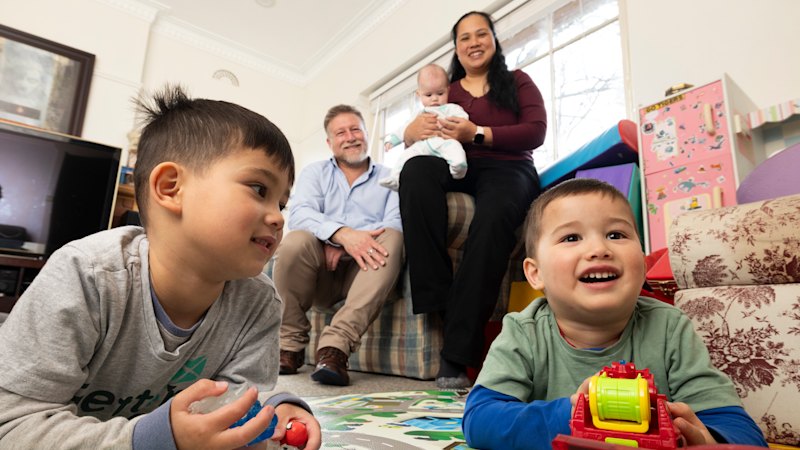
Jennie Ho’s eldest child, Kobe Malin, 5, will start school next year after three years of kindergarten, with Ho delaying his start at school because she wanted to be confident he was ready.
asserted
he → start → school
“Kindergarten has given him a safe and supportive environment where he can build confidence, friendships and foundations for the years ahead,” she said.
asserted
she → give → years
Both Kobe and his brother, Kai, 3, go to kindergarten five days a week.
asserted
Kobe → go → kindergarten
Ho said she could see the benefits at home and feels confident her children will be well-prepared when they start at Auburn Primary School.
uncertain
they → say → School
The EDGE (Educational and Developmental Gains in Early Childhood) Study is the first to measure the impact of the state government’s $1.4 billion free kindergarten policy since it was introduced in 2022 and is significant nationally because Victoria is the only state to fund three- and four-year-old kindergarten.
asserted
Victoria → measure → kindergarten
Under the state government plan, free kindergarten for three- and four-year-olds will double from the current 15 hours a week to 30 hours by 2036.
asserted
kindergarten → double → 2036
But Eadie said the benefits identified in the study applied to children who attend 15 hours or more a week.
asserted
who → say → hours
The experience and availability of educators was also a key factor of whether students received the full benefits, she said.
asserted
she → receive → benefits
“This shows that experienced teachers make a significant difference.
asserted
teachers → show → difference
So there’s a real piece here that speaks to supporting experienced teachers and retaining them in kindergarten programs.
asserted
that → ’ → programs
”
“You can’t just bring in universal access to three-year-old kindergarten and expect every kindergarten to be able to have the staff and get experienced teachers to deliver high-quality programs without the actual reform support to do that,” she said.
asserted
she → bring → that
Rollout of the universal free kindergarten program has resulted in some councils such as Bayside and Boroondara forecasting a shortage of kindergarten places, especially in areas where the government is pushing to increase housing density through activity centre zones.
asserted
government → result → zones
Minister for Children Lizzie Blandthorn said the study results showed that high-quality early childhood education could be achieved in all settings and all communities across Victoria.
uncertain
education → say → Victoria
“The findings support the delivery of universal three-year-old kinder, so children get the best start as lifelong learners,” she said.
asserted
she → support → learners
Read more of our education coverage:
- Literacy: How one school turned the page on its poor reading results
- Schools Guide: See performance data for schools in your area
- Sought-after schools: Is there more to Scotch College’s stereotype of privilege?
- Schools that Excel 2026: Find your school’s VCE results
Start the day with a summary of the day’s most important and interesting stories, analysis and insights.
asserted
school → read → stories
 The Aporia