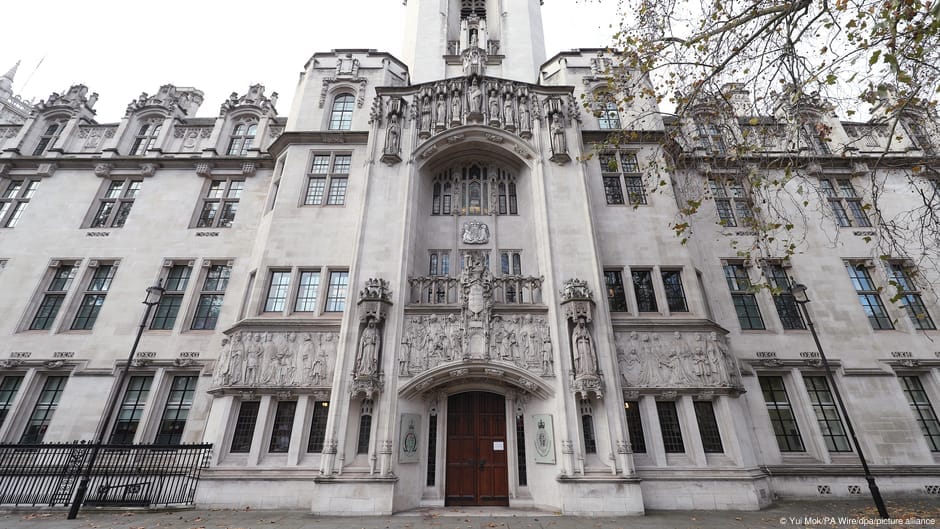
Photo via The Guardian

Activist wins 10-year fight against homophobic Trinidad and Tobago laws

Read the original at The Guardian ↗
Cite

Duncan, N., Surtees, J., & Haynes, K. (2026, November 10). Activist wins 10-year fight against homophobic Trinidad and Tobago laws. The Guardian. https://www.theguardian.com/world/2026/nov/10/activist-jason-jones-wins-10-year-fight-against-homophobic-trinidad-tobago-laws

Dated from the outlet's own feed. Check the original for its byline.

The Guardian · collected 2026-11-10 · by Natricia Duncan, Joshua Surtees, Kejan Haynes

Quick Summary

Jason Jones, a gay activist from Trinidad and Tobago, has won a decade-long legal battle against the country’s anti-gay laws with a ruling by the UK-based Privy Council in 2025. The council overturned a previous court decision that had recriminalized consensual anal sex between men, declaring sections of the Sexual Offences Act unconstitutional. This victory is seen as having significant implications for similar laws across other Caribbean nations. Jones’s lawyers celebrated it as a “phenomenal victory” that recognizes LGBTQ+ rights and the constitutional protection of family life.
Written by AI on 2026-11-10, from this article's own text only (the story summary below draws on all the coverage).

AI analysis

Story summary

Jason Jones, a gay man from Trinidad and Tobago, won his 10-year legal battle when the UK's Privy Council overturned laws criminalizing same-sex intimacy in London on November 10, 2026. The court ruled that Trinidad and Tobago’s Sexual Offences Act was unconstitutional because it violated individuals' rights to respect for private life. Jones first challenged these colonial-era "buggery" laws in Trinidad's High Court in 2018 but faced setbacks when the ruling was overturned on appeal by the Trinidadian government in 2025. The Privy Council’s unanimous decision affirms that criminalizing consensual same-sex relations cannot be justified and sets a precedent for other Commonwealth countries still upholding similar laws from British colonial times.

Written for “UK Overrules Trinidad And Tobago Gay Sex Law” on 2026-11-11, grounded in this article and the 4 other(s) covering the same event.
Why this leaning score
The model judged this article politically coded and scored it -0.65, but 2 quote(s) could not be found in the article and the other 2 are attributed speech rather than the article's own narration, so the score is not published.
Written under an earlier scoring contract, which gave a paragraph rather than checkable quotes. Re-analysing this article replaces it.
Leaning score withheld for article 142499: no verified evidence · logged 2026-11-10

Story

UK Overrules Trinidad And Tobago Gay Sex Law
Politics · 5 article(s) covering the same event. Compare every outlet's account →

Compared with similar articles

This article reads unscored and hedges 5% of its claims. Each row says how that neighbour differs.
Deutsche Welle
Hedges 2 of 31 claims Outlet record 95/100
South China Morning Post
Leans strongly left Hedges 0 of 3 claims Outlet record 62/100
The Straits Times
Leans strongly left Hedges 0 of 6 claims Outlet record 66/100
BBC News
Hedges 0 of 14 claims Outlet record 66/100
How this article was measured signals, leaning charts, publisher record, byline, topics and claims

Signals How these are calculated →

Claims extracted
21
sentences that state something as happening or true
Uncertain
5%
1 of 21 hedged ("reportedly", "may", "according to")
Leaning
withheld
no quote in the article backed the model's score
Publisher signals
65/100
The Guardian's corrections and hedging, across everything collected from it. Not a measure of accuracy.
Outlets on this story
5
Politics
Same framing elsewhere
1
articles that frame the event the way this one does
Analyzed 2026-11-10 · how these are computed

How this is being covered How these are calculated →

Article leaning vs. publisher reliability
Source leaning vs. consistency

Publisher

The Guardian · 3214 article(s) · 7 correction(s) detected
Running correction rate · 7 correction(s)

Who wrote this

Natricia Duncan
7 article(s) here · 1 carrying a prediction
A gay man has won a historic 10-year battle against Trinidad and Tobago’s homophobic laws with a landmark UK appeals court ruling that could help overturn similar anti-gay laws in other Caribbean countries.
As leaders of the 56-member Commonwealth bloc meet in a private retreat at their summit in Antigua, Ralph Gonsalves, a former prime minister of St Vincent and the Grenadines and a senior figure in the reparatory justice movement’s Repair Campaign, said that while countries in the region were likely to welcome Burnham’s offer, the Caribbean would resist any attempt to treat debt restructuring or development assistance as a form of reparation.
King Charles’s upcoming Caribbean tour could accelerate moves to remove him as head of state in several countries unless he does more to confront the monarchy’s historic links to slavery, campaigners have warned.
Beckles’s appeal comes amid growing calls from Caribbean leaders and groups for Charles to formally apologise for slavery when he visits Guyana and the Bahamas next week ahead of Chogm, which he will attend in Antigua.
“Why would somebody do something like that when people are simply honouring their ancestors …
King Charles III will acknowledge the “darkest days” of colonial rule and slavery while touring Caribbean countries on a visit beginning this month, a Buckingham Palace spokesperson said on Friday.
In June, Grenada’s director of public prosecution, Howard Pinnock, said at a press conference that Frederick’s and another pending case would be sent to the coroner to determine the cause of death “because there is no basis in terms of both investigations that any homicide has occurred”.
Also by Natricia Duncan
Nothing else under this byline is closely related to this article, so these are simply their most recent.
All 7 articles by Natricia Duncan →
Joshua Surtees
1 article(s) here · 1 carrying a prediction
A gay man has won a historic 10-year battle against Trinidad and Tobago’s homophobic laws with a landmark UK appeals court ruling that could help overturn similar anti-gay laws in other Caribbean countries.
The only article under this byline in the corpus.
Kejan Haynes
1 article(s) here · 1 carrying a prediction
A gay man has won a historic 10-year battle against Trinidad and Tobago’s homophobic laws with a landmark UK appeals court ruling that could help overturn similar anti-gay laws in other Caribbean countries.
The only article under this byline in the corpus.

Topics

London The privy council Tobago Trinidad Trinidad and Tobago’s

Subjects

Jones PERSON · 4× Trinidad GPE · 4× The privy council ORG · 3× London GPE · 2× Commonwealth GPE · 1× Freedom Law Chambers ORG · 1× Jason Jones PERSON · 1× Tobago GPE · 1× Trinidad and Tobago’s GPE · 1× Trinidadian NORP · 1×

Narrative

The privy council, based in London, overturned a 2025 decision by Trinidad and Tobago’s court of appeal that recriminalised consensual anal sex, seven years after the Trinidadian activist Jason Jones secured a high court judgment declaring the country’s colonial-era “buggery” laws unconstitutional.
framing: assertive · carried by 1 article(s) · first seen 2026-11-10
A gay man has won a historic 10-year battle against Trinidad and Tobago’s homophobic laws with a landmark UK appeals court ruling that could help overturn similar anti-gay laws in other Caribbean countries.
2026-11-10 · The Guardian
Activist wins 10-year fight against homophobic Trinidad and Tobago laws · assertive framing

Claims (21 extracted, 1 hedged)

A gay man has won a historic 10-year battle against Trinidad and Tobago’s homophobic laws with a landmark UK appeals court ruling that could help overturn similar anti-gay laws in other Caribbean countries. uncertain
that → win → countries
The privy council, based in London, overturned a 2025 decision by Trinidad and Tobago’s court of appeal that recriminalised consensual anal sex, seven years after the Trinidadian activist Jason Jones secured a high court judgment declaring the country’s colonial-era “buggery” laws unconstitutional. asserted
activist → base → laws
In explaining its ruling on Tuesday, the court said: “The ability to form a deep connection with another person through an intimate and loving relationship is a vital interest for all human beings.” asserted
ability → explain → beings
“This judgment will have a domino effect across every country that has the privy council as its supreme court. asserted
that → have → court
It will change many millions of people’s lives,” Jones said in a statement. asserted
Jones → change → statement
“I’m looking forward to going home, switching off everything and living with this moment for a while.” asserted
I → look → while
His lawyers hailed Tuesday’s unanimous judgment as a “phenomenal victory”. asserted
lawyers → hail → victory
“The judgment recognises the human reality at the heart of the case,” the statement from Freedom Law Chambers said. asserted
statement → recognise → Chambers
“It expressly recognised that a loving relationship between two men engages the constitutional protection of family life. asserted
relationship → recognise → life
For LGBTQ+ people who have lived with stigma, fear and the threat of criminal punishment, that recognition has profound personal significance.” asserted
recognition → live → significance
The privy council is the final court of appeal for Trinidad and Tobago and several other Commonwealth countries, giving the ruling potentially far-reaching significance for other Caribbean jurisdictions where similar laws remain in force. asserted
laws → give → force
Jones has been fighting the “buggery law”, whose origins date to British colonial rule, for a decade. asserted
origins → fight → decade
In a historic 2018 victory, high court judge Devindra Rampersad ruled that the provisions criminalising consensual anal sex were unconstitutional. asserted
provisions → rule → sex
But the government appealed, and in 2025 the court of appeal overturned that decision. asserted
court → appeal → decision
Tuesday’s privy council decision restores Jones’s victory, with all five judges finding that sections 13 and 16 of the Sexual Offences Act 1986 must be interpreted consistently with the constitution so that they do not criminalise private, consensual sexual relations between adults of the same sex. asserted
they → restore → sex
It marks the latest significant advance for LGBTQ+ rights in the Caribbean, after a landmark ruling in St Lucia last year, when the Eastern Caribbean supreme court struck down colonial-era laws criminalising consensual gay sex. asserted
court → mark → sex
Asked whether this would make Jones, who has lived in London for several decades, feel comfortable living in Trinidad again, he said no. asserted
he → ask → Trinidad
“The thing about liberation movements is every time you move the needle forward, you get the pushback. asserted
you → move → pushback
I got a lot of pushback from the queer community [in Trinidad] saying: ‘Don’t stir the pot.’ asserted
I → get → pot
But you have to. asserted
you → have → ?
I’m not afraid of pushback.” asserted
I → ’m → pushback

Give feedback · no sign-in needed

No sign-in needed for now. Your note is sent without a name, so it cannot be answered.

History Support