Claims extracted
16
sentences that state something as happening or true
Uncertain
0%
0 of 16 hedged
("reportedly", "may", "according to")
Leaning
Leans right
of the writing, not the subject · beta estimate
Publisher signals
95/100
Toronto Sun's corrections and
hedging, across everything collected from it. Not a measure of accuracy.
Outlets on this story
1
World
Same framing elsewhere
1
articles that frame the event the way this one does
A new Angus Reid poll says Canadians are warming to improved relations with China and India as the country looks to reduce U.S. dependency in the wake of President Donald Trump’s tariffs.
asserted
country → say → tariffs
The new data says developing stronger relationships with China (69%), India (61%), Japan (87%), and South Korea (76%) is important.
asserted
developing → say → China
Meanwhile, three-in-five Canadians (58%) say they’ve become more supportive of trade with the Northeast Asian economies of Japan, South Korea and Taiwan in response to U.S.-Canada trade tensions, while half (49%) say the same of Southeast Asia.
asserted
half → say → Asia
The support for increasing trade with China (41% are more supportive) and India (36% are more supportive) is less pronounced, but it is increasing.
asserted
it → increase → China
In November 2024, 15% of Canadians said they had a favourable view of China but after two years of Trump, that figure has more than doubled to 38%.
asserted
figure → say → %
Canadians are warming to China, but still more than half (53%) say they view the country unfavourably.
asserted
they → warm → country
Views of India have also become more positive in the past two years, with 36% saying they have a favourable view of the world’s most populous country, an increase of 10 points from 2024.
asserted
they → become → 2024
In terms of other Indo-Pacific economies, there is much more positivity, with almost nine-in-ten Canadians (88%) saying they view Japan favourably and three-quarters (76%) and seven-in-ten (71%) have positive views of South Korea and Southeast Asia, respectively.
asserted
have → be → Korea
Still, only 10% believe Southeast Asia is an area where Canada should be developing closer trade ties compared to other global regions, while only 14% say the same of China and only 5% of India.
asserted
% → believe → India
They are still far behind the European Union (58%) as the preferred region for a closer trading relationship, and trail Mexico (24%), the United Kingdom (22%), and the U.S. (20%).
asserted
They → prefer → Mexico
In 2021, in the wake of a diplomatic break between Canada and China over the Meng Wanzhou-Michael Kovrig-Michael Spavor saga, Canadians by a three-to-one margin said “human rights and the rule of law” should be Canada’s focus when dealing with China (77%) rather than trade (23%).
asserted
rights → say → trade
Now, a majority (57%) believe economics should be prioritized over those former concerns.
asserted
economics → believe → concerns
More support for improved relations with India
There has been similar movement when it comes to India, after allegations levelled by Justin Trudeau of India’s involvement in the killing of a Canadian Sikh leader.
In 2024, 38% believe trade and investment should be more important in Canada’s relationship with India, while three-in-five (62%) believed it should be “human rights and the rule of law”.
Now a majority (56%) of Canadians believe trade and investment with India should be prioritized over the latter.
asserted
trade → come → latter
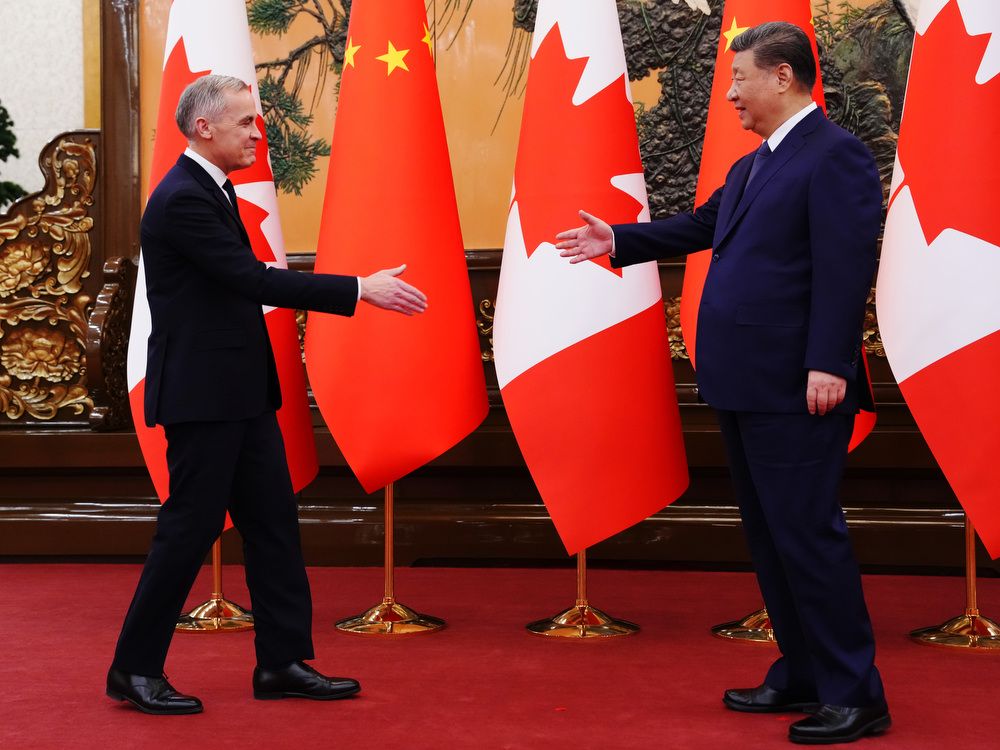
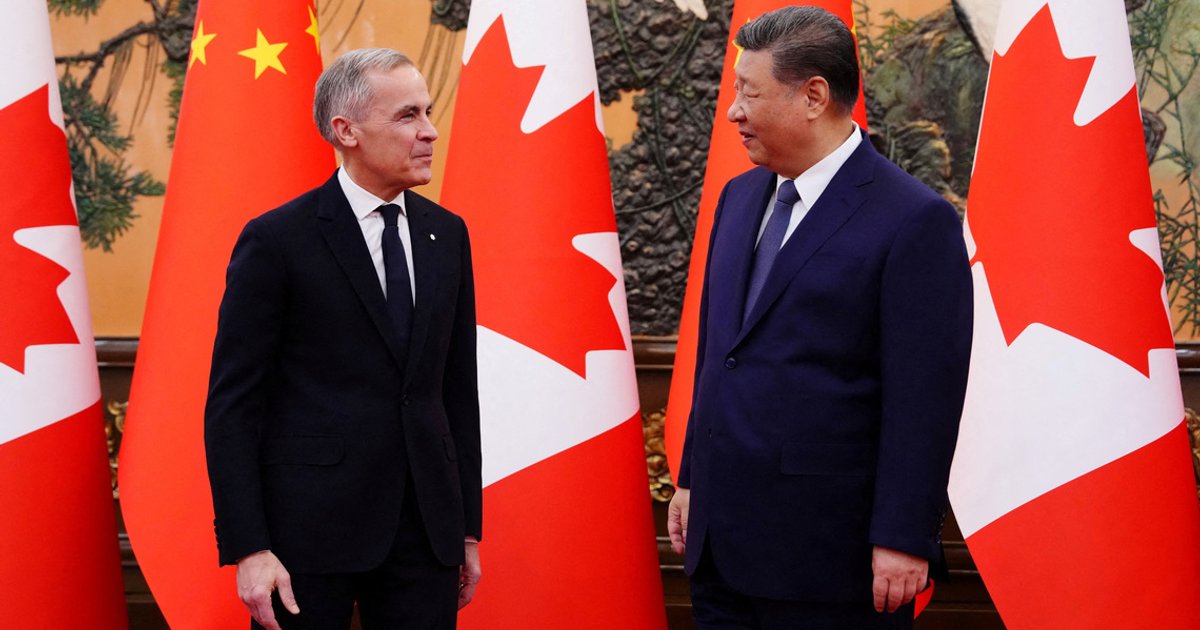
Canadian Prime Minister Mark Carney begins a global trip this week to continue efforts to diversify Canada’s trade beyond the United States and will conclude with his second visit to China in 2026 as he attends the Asia-Pacific Economic Cooperation (APEC) Economic Leaders’ Meeting in Shenzhen.
asserted
he → begin → Shenzhen
Prior to Carney’s January visit earlier this year, it had been more than eight years since a Canadian prime minister visited China.
asserted
minister → visit → China
The data from Angus Reid, done in conjunction with the Asia Pacific Foundation of Canada, was provided by an online survey from Oct. 29- Nov. 4, 2026, among 1,609 Canadian adults and, for comparison purposes only, a probability sample of this size would carry a margin of error of +/- 2 percentage points, 19 times out of 20.
asserted
sample → do → 20
 The Aporia