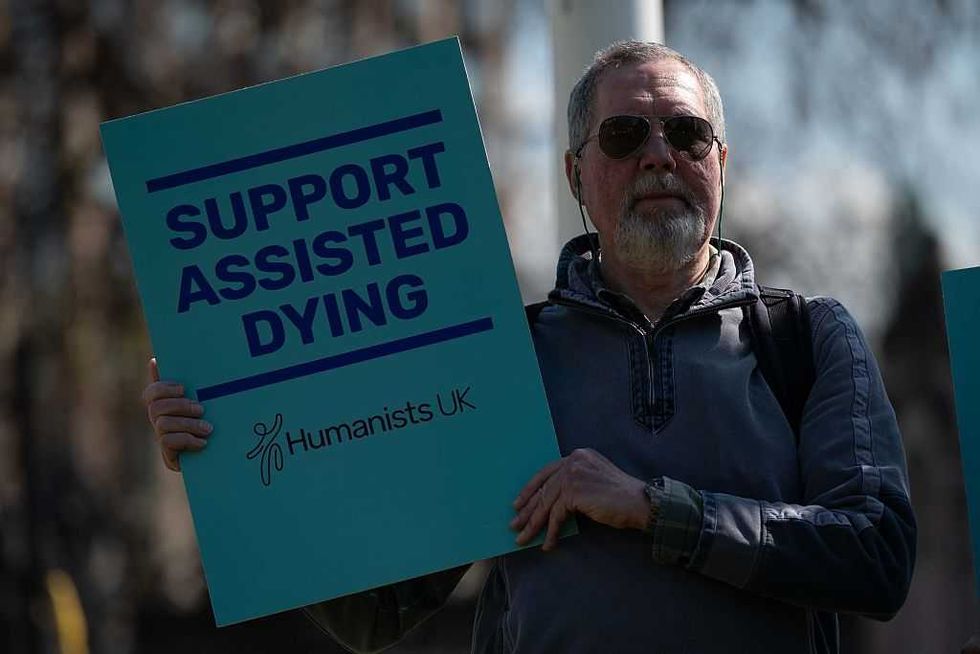
Photo via Blaze Media

When ‘medical aid in dying’ stops looking like a choice

Read the original at Blaze Media ↗
Cite

Mostert, M. P. (2026, November 10). When ‘medical aid in dying’ stops looking like a choice. Blaze Media. https://www.theblaze.com/columns/opinion/when-medical-aid-in-dying-stops-looking-like-a-choice

Dated from the outlet's own feed. Check the original for its byline.

Blaze Media · collected 2026-11-10 · by Mark P. Mostert

Quick Summary

An Ontario family is questioning the circumstances surrounding their 83-year-old grandmother's medical aid in dying (MAID) procedure, which occurred on July 10 after a two-day process. Brigitte Stegemann, diagnosed with stage 4 stomach cancer and living in a long-term care home, reportedly wept when informed of her impending death, suggesting she did not fully understand or consent to the lethal injection administered under Canada’s MAID program. The family disputes the adequacy of communication and understanding during the process, highlighting concerns over Stegemann's diminished mental capacity due to age, language barriers, and previous religious objections to assisted dying.
Written by AI on 2026-11-10, from this article's own text only (the story summary below draws on all the coverage).

AI analysis

Story summary

An Ontario grandmother, Brigitte Stegemann, wept after being told she would die on Friday under Canada’s medical aid in dying (MAID) program. Her granddaughter, Brigitte Kranendonk, reported that Stegemann cried and said she had made a mistake. Stegemann, an 83-year-old devout Christian with stage 4 stomach cancer, died two days later after receiving a lethal injection. Her family disputes her consent to the procedure and is calling for a thorough investigation into whether she fully understood what was happening to her. The incident raises questions about the adequacy of safeguards in Canada's MAID program when patients may not be able to communicate their true wishes clearly due to illness or medication effects.

Written for “Medical Aid In Dying Debate” on 2026-11-10, grounded in this article and the 0 other(s) covering the same event.
Why this leaning score
The article's own words the score was based on. Each is quoted verbatim and was checked against the article text before being stored, so you can find it in the original.
Reading Leans left (beta estimate) Confidence high 1 quote(s) discarded as not found in the article
Leaning: leans left for article 142096 (high confidence, 1 verified quote) · logged 2026-11-10

Story

Medical Aid In Dying Debate
Health · 1 article(s) covering the same event.

Compared with similar articles

Nothing to compare against. No article is close enough to this one for the pipeline to have linked or judged the pair.
How this article was measured signals, leaning charts, publisher record, byline, topics and claims

Signals How these are calculated →

Claims extracted
64
sentences that state something as happening or true
Uncertain
9%
6 of 64 hedged ("reportedly", "may", "according to")
Leaning
Leans left
of the writing, not the subject · beta estimate
Publisher signals
96/100
Blaze Media's corrections and hedging, across everything collected from it. Not a measure of accuracy.
Outlets on this story
1
Health
Same framing elsewhere
1
articles that frame the event the way this one does
Analyzed 2026-11-10 · how these are computed

How this is being covered How these are calculated →

Article leaning vs. publisher reliability
Source leaning vs. consistency

Publisher

Blaze Media · 66 article(s) · 0 correction(s) detected
No corrections detected for this publisher. That may mean careful reporting, or simply that nothing has been checked.

Who wrote this

Mark P. Mostert
1 article(s) here · 1 carrying a prediction
An Ontario grandmother wept after learning when she would die.
The only article under this byline in the corpus.

Topics

Anadolu Canada Cannifton Christian Ontario

Subjects

Kranendonk PERSON · 13× Stegemann PERSON · 10× Ontario GPE · 3× Anadolu ORG · 1× Brigitte Kranendonk PERSON · 1× Brigitte Stegemann PERSON · 1× Canada GPE · 1× Christian NORP · 1× Mark P. Mostert PERSON · 1× Rasid Necati Aslim PERSON · 1×

Narrative

At a subsequent eligibility assessment, Kranendonk says, the physician spoke of “medicine” and feeling “at peace,” without plainly explaining that the procedure would end Stegemann’s life. “She doesn’t understand what you’re saying,” Kranendonk protested.
framing: assertive · carried by 1 article(s) · first seen 2026-11-10
An Ontario grandmother wept after learning when she would die.
2026-11-10 · Blaze Media
When ‘medical aid in dying’ stops looking like a choice · assertive framing

Claims (64 extracted, 6 hedged)

An Ontario grandmother wept after learning when she would die. asserted
she → weep → ?
Her family disputes her consent, and police are investigating. asserted
police → dispute → consent
A terrible test of the safeguards, says Mark P. Mostert. asserted
Mostert → say → safeguards
“Do you know that you’re going to die on Friday?” Brigitte Kranendonk asked her grandmother. asserted
Kranendonk → know → grandmother
The 83-year-old woman began to cry. asserted
woman → begin → ?
“I’ve made a mistake,” Brigitte Stegemann told her granddaughter, according to Kranendonk. uncertain
Stegemann → make → Kranendonk
She wept for nearly an hour. asserted
She → weep → hour
This is not compassion if the person about to die cannot make herself understood. asserted
herself → die → ?
It is the machinery of death moving past the one vulnerable human being whose wishes should govern it. asserted
wishes → move → it
A physician had administered a lethal injection under Canada’s medical assistance in dying program. asserted
physician → administer → program
The question her family wants answered is as elementary as it is horrifying: Did she understand what was being done to her, and did she freely consent? asserted
she → want → her
The details come from Kranendonk’s account of her grandmother’s final days. asserted
details → come → days
They demand serious scrutiny, not a soothing recital of the word “choice.” asserted
They → demand → word
She had lived for about 18 months at a long-term care home in Cannifton, Ontario. asserted
She → live → Cannifton
She was hard of hearing, German was her first language, and her family says her understanding and memory were impaired. asserted
understanding → hear → hearing
Kranendonk had helped care for her for 12 years and held her power of attorney for six. asserted
Kranendonk → help → six
According to her family, Stegemann had previously rejected an assisted death because it violated her faith. uncertain
it → accord → faith
Yet while Kranendonk was away on a 10-day trip, staff arranged a MAID assessment. asserted
staff → arrange → assessment
The granddaughter says she was told about the process only after it was under way. asserted
it → say → way
She had received routine updates about a fall and her grandmother’s need for a wheelchair, but nothing suggesting that death was now imminent. asserted
death → receive → wheelchair
When Kranendonk returned, she said, her grandmother was still eating, talking, and joking. asserted
grandmother → return → ?
At a subsequent eligibility assessment, Kranendonk says, the physician spoke of “medicine” and feeling “at peace,” without plainly explaining that the procedure would end Stegemann’s life. “She doesn’t understand what you’re saying,” Kranendonk protested. asserted
Kranendonk → say → what
During questioning about her family, Stegemann gave answers her granddaughter knew were wrong. asserted
granddaughter → give → answers
She said she had no living siblings, though two survived. asserted
two → say → siblings
Kranendonk was then asked to leave. asserted
Kranendonk → ask → ?
Shortly afterward, she says, the physician announced that Stegemann had been deemed eligible for MAID. asserted
Stegemann → say → MAID
On Wednesday, July 8, Kranendonk asked to see the paperwork authorizing her grandmother’s death. asserted
Kranendonk → ask → death
She was told Stegemann had signed it the previous day. asserted
Stegemann → tell → it
Kranendonk says she has never seen the documents and does not know who witnessed the signature or how the request was explained. asserted
request → say → signature
That was when she asked her grandmother whether she knew she would die Friday. asserted
she → ask → grandmother
“I’ve made a mistake.” asserted
I → make → mistake
ROMAIN PERROCHEAU / AFP via Getty Images Kranendonk told her she could refuse. uncertain
she → tell → her
The following day, they ate ice cream, shared memories, and danced to a traditional German polka. asserted
they → follow → polka
“We had the best day,” the granddaughter recalled. asserted
granddaughter → have → day
Such ordinary tenderness makes what followed almost unbearable to read. asserted
followed → make → ?
On Friday morning, according to Kranendonk, a nurse struggled repeatedly to insert an intravenous line, leaving her grandmother bleeding. uncertain
nurse → accord → grandmother
When the doctor arrived, she asked whether it was all right to give Stegemann “medicine.” asserted
it → arrive → medicine
“My Oma is not moving. asserted
Oma → move → ?
She doesn’t open her eyes. asserted
She → open → eyes
She doesn’t nod. asserted
She → nod → ?
…and 24 more, not listed.

Give feedback · no sign-in needed

No sign-in needed for now. Your note is sent without a name, so it cannot be answered.

History Support