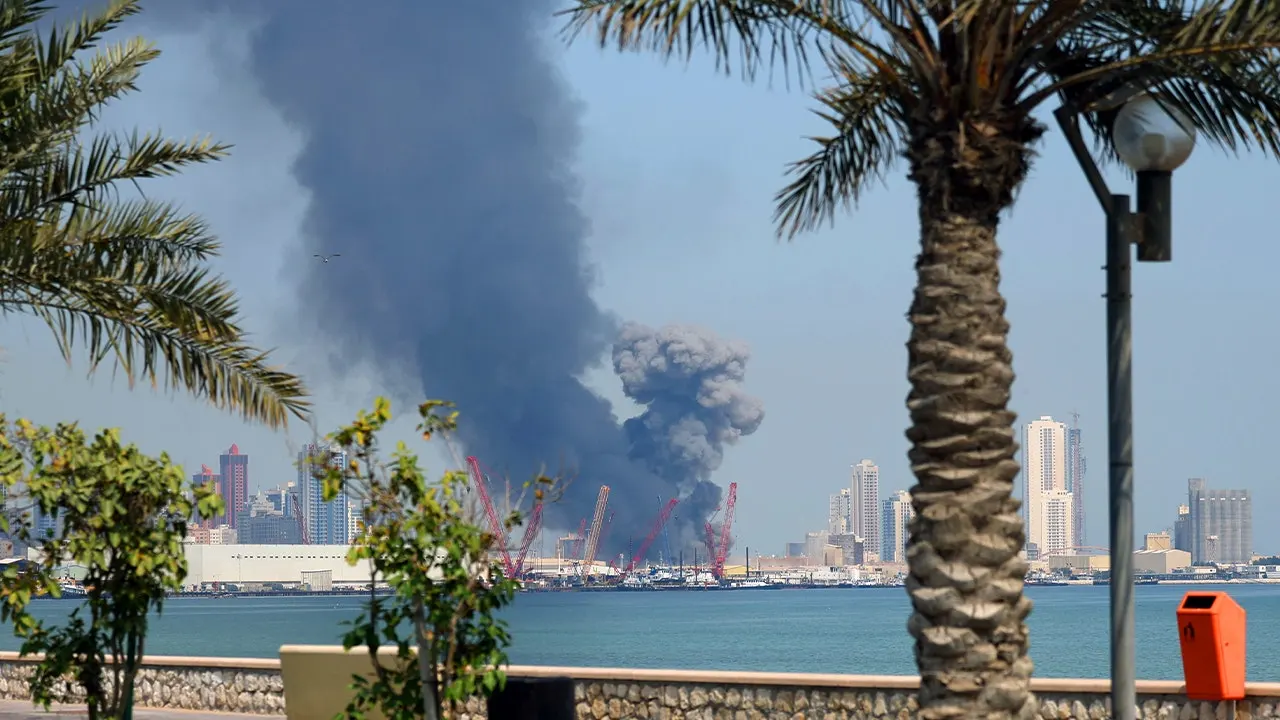
Photo via The Daily Wire

What A Medal Of Honor Recipient And A Dying Veteran Taught Me About Service

Read the original at The Daily Wire ↗
Cite

Monroe, K. (2026, November 10). What A Medal Of Honor Recipient And A Dying Veteran Taught Me About Service. The Daily Wire. https://www.dailywire.com/news/what-a-medal-of-honor-recipient-and-a-dying-veteran-taught-me-about-service

Dated from the outlet's own feed. Check the original for its byline.

The Daily Wire · collected 2026-11-10 · by Kate Monroe

Quick Summary

The article discusses the experiences of a veteran advocate who helps other veterans navigate complex VA disability claim processes, highlighting cases involving Medal of Honor recipient Captain Royce Williams and a dying veteran in Corona, California. It details how the advocate personally assisted Captain Williams with his claim for improved disability benefits shortly before he received the Medal of Honor recognition from President Trump in 2026. Similarly, the advocate helped another veteran file a final VA claim while at his bedside just hours before he passed away. The piece emphasizes that meaningful support for veterans often requires practical assistance rather than merely symbolic gestures like parades or speeches.
Written by AI on 2026-11-11, from this article's own text only (the story summary below draws on all the coverage).

AI analysis

Story summary

Captain Royce Williams, a Navy fighter pilot who flew into history on November 18, 1952, by engaging seven Soviet MiG-15s and shooting down four while sustaining damage to his F9F Panther, received the Medal of Honor in February 2026 during a ceremony recognized by President Trump. Despite his remarkable service, Williams faced difficulties obtaining proper VA disability benefits; at age 98, he was stuck at a 90% rating due to incomplete PTSD documentation from the 1950s. An advocate personally helped file a claim that raised his disability rating to 100%, highlighting ongoing challenges veterans face in securing the full recognition and support they deserve.

Written for “Medal Of Honor Ceremony” on 2026-11-11, grounded in this article and the 0 other(s) covering the same event.
Why this leaning score
The article's own words the score was based on. Each is quoted verbatim and was checked against the article text before being stored, so you can find it in the original.
Reading Leans left (beta estimate) Confidence high
Leaning: leans left for article 141937 (high confidence, 3 verified quotes) · logged 2026-11-11

Story

Medal Of Honor Ceremony
Politics · 1 article(s) covering the same event.

Compared with similar articles

Nothing to compare against. No article is close enough to this one for the pipeline to have linked or judged the pair.
How this article was measured signals, leaning charts, publisher record, byline, topics and claims

Signals How these are calculated →

Claims extracted
50
sentences that state something as happening or true
Uncertain
16%
8 of 50 hedged ("reportedly", "may", "according to")
Leaning
Leans left
of the writing, not the subject · beta estimate
Publisher signals
58/100
The Daily Wire's corrections and hedging, across everything collected from it. Not a measure of accuracy.
Outlets on this story
1
Politics
Same framing elsewhere
1
articles that frame the event the way this one does
Analyzed 2026-11-11 · how these are computed

How this is being covered How these are calculated →

Article leaning vs. publisher reliability
Source leaning vs. consistency

Publisher

The Daily Wire · 152 article(s) · 1 correction(s) detected
Running correction rate · 1 correction(s)

Who wrote this

Kate Monroe
2 article(s) here · 1 carrying a prediction
Captain Royce Williams flew into history on November 18, 1952.
They are data centers, cloud-computing systems, telecommunications networks and other digital infrastructure that may be privately owned and located thousands of miles from the United States.
Also by Kate Monroe
Nothing else under this byline is closely related to this article, so these are simply their most recent.

Topics

America F9F Panther Navy Soviet the USS Oriskany

Subjects

Corona GPE · 2× America GPE · 1× Americans NORP · 1× California GPE · 1× Congress ORG · 1× Navy ORG · 1× Royce Williams PERSON · 1× Soviet NORP · 1× Trump PERSON · 1× Williams PERSON · 1×

Narrative

Almost none of them knew that, not long before, one of our most decorated veterans had needed someone to come to his living room and help him secure the benefits he had earned.
framing: assertive · carried by 1 article(s) · first seen 2026-11-11
Captain Royce Williams flew into history on November 18, 1952.
2026-11-11 · The Daily Wire
What A Medal Of Honor Recipient And A Dying Veteran Taught Me About Service · assertive framing

Claims (50 extracted, 8 hedged)

America knows how to honor its veterans. asserted
America → know → veterans
We put them on parade floats, play the national anthem at major events, and give them standing ovations at football games. asserted
We → put → games
Earlier this year, we even watched a 100-year-old Navy fighter pilot receive the Medal of Honor during the State of the Union. asserted
pilot → watch → Union
We are still learning how to help them when the cameras are off. asserted
cameras → learn → them
Captain Royce Williams flew into history on November 18, 1952. asserted
Williams → fly → November
Alone in his F9F Panther, he engaged seven Soviet MiG-15s for 35 minutes. asserted
he → engage → minutes
He shot down four, took a 37-millimeter round through his fuselage, and still landed his damaged jet on the USS Oriskany. asserted
He → shoot → Oriskany
The mission remained classified for decades. asserted
mission → remain → decades
Finally, in February 2026, President Trump recognized him before Congress, and the First Lady presented the medal. asserted
Lady → recognize → medal
Two years earlier, at age 98, Williams was still stuck at a 90% VA disability rating. asserted
Williams → stick → rating
His PTSD had never been properly documented in military records from the 1950s, and his claim simply kept stalling. uncertain
claim → document → 1950s
I drove to his house, sat with him, accessed his VA account, and personally filed the claim that ultimately brought his disability rating from 90% to 100%. uncertain
that → drive → %
Millions of Americans later watched him receive the nation’s highest honor. asserted
him → watch → honor
Almost none of them knew that, not long before, one of our most decorated veterans had needed someone to come to his living room and help him secure the benefits he had earned. asserted
he → know → benefits
A different call came from Corona, California. asserted
call → come → Corona
A veteran’s family said he had about six hours left. asserted
he → say → hours
I drove there and saw his family gathered around him, crying. asserted
family → drive → him
He was gravely ill, and his leg had badly deteriorated. asserted
leg → deteriorate → ?
Even then, he still needed help filing a VA claim. uncertain
he → need → claim
I sat beside him and filed it. asserted
I → sit → it
His wife told me that what I had done gave their family hope and helped honor her husband in his final hours. asserted
done → tell → hours
He died the next morning. asserted
He → die → ?
His family later invited me to his funeral, and I went. asserted
I → invite → funeral
I could not save his life, but I could still serve him in his final hours. uncertain
I → save → hours
These two men had nothing in common except their service and the fact that both needed someone willing to do more than say thank you. asserted
both → have → you
One lived long enough to stand before the country. asserted
One → live → country
The other had only hours left. asserted
other → have → hours
The system that processes disability claims is complicated for almost everyone. uncertain
that → process → everyone
Older records are incomplete, and mental health conditions from earlier generations were rarely written down. asserted
conditions → write → generations
The VA is processing more claims than ever, yet hundreds of thousands remain pending. uncertain
thousands → process → claims
Behind every number is a person or a family waiting for an answer they often cannot get alone. asserted
they → wait → answer
Most veterans do not need another speech, or just another thank you. asserted
veterans → need → you
They need a ride to an appointment. asserted
They → need → appointment
They need help opening the right form. asserted
They → need → form
Sometimes they just need someone who will sit with them while they try to explain what happened decades ago. asserted
what → need → them
It is the work that actually changes outcomes. asserted
that → change → outcomes
I started helping veterans navigate these claims because I had gone through the same frustration myself after I left the Marine Corps. uncertain
I → start → Corps
The system is not built for people who are tired, sick, or simply done fighting another bureaucracy. asserted
who → build → bureaucracy
It requires persistence and, often, a second set of eyes. asserted
It → require → eyes
Today, through VetComm US, my team and I have helped more than 40,000 veterans pursue the benefits they earned through their service. asserted
they → help → service
…and 10 more, not listed.

Give feedback · no sign-in needed

No sign-in needed for now. Your note is sent without a name, so it cannot be answered.

History Support