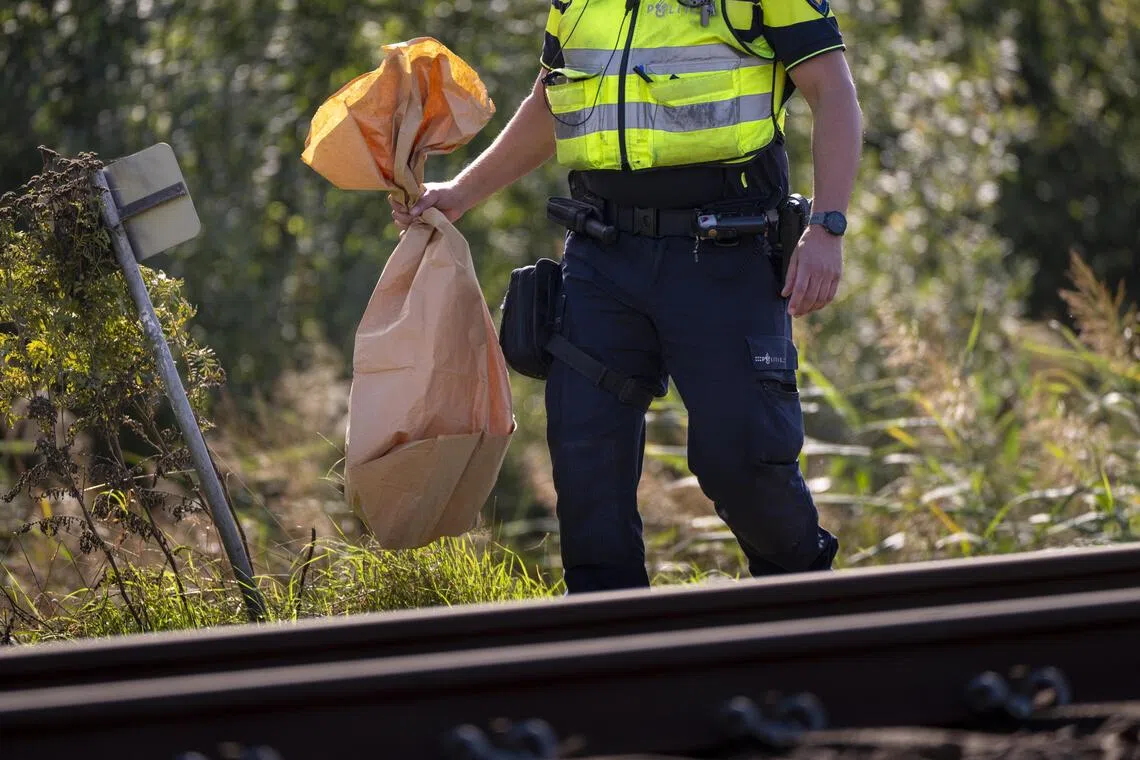
Angry Dutch farmers blamed for railway sabotage: What happened?

Al Jazeera · collected 2026-09-16 · by Al Jazeera Staff
Read the original at Al Jazeera ↗

Summary

On Tuesday, September 15, Dutch railways experienced significant disruption when unauthorized materials like pipes and cables were placed on tracks in multiple locations, causing at least 35 signal failures across the country. This incident coincided with ongoing protests by farmers who are frustrated with government environmental policies. Although no one has been identified as responsible for the sabotage, media reports suggest that disgruntled farmers might be involved due to discussions about direct action against railways. ProRail, the rail infrastructure operator, emphasized the danger and unacceptable nature of such actions while calling for better contingency planning to handle future disruptions.
Written by the local model on 2026-09-16, using this article's own text rather than the other coverage of the same event (that is the story summary below).

Signals How these are calculated →

Claims extracted
44
claim-shaped sentences
Uncertain
11%
5 of 44 hedged
Leaning
Leans right
of the writing, not the subject
Correction & hedging signals
95.8
corrections and hedging in what we collected; not a measure of accuracy
Outlets on this story
8
Politics
Narrative spread
1
articles carrying this framing
Analyzed 2026-09-16 · how these are computed

AI analysis (generated at analysis time, not now)

Story summary

On September 15, suspected sabotage severely disrupted train services across multiple regions of the Netherlands, including Amsterdam and cities like Zwolle, Deventer, and Amersfoort. The railway infrastructure operator ProRail reported finding materials such as pipes attached to tracks at over 20 locations, causing track-circuit failures that halted trains and blocked roads. No suspects or motives have been identified yet; however, the Farmers Defence Force (FDF), a group representing Dutch farmers protesting government policies, denied involvement but did not rule out individual actions by angry farmers. The disruptions occurred on the day of the Dutch parliament's annual budget presentation in The Hague, affecting thousands of daily commuters and travelers.

Written for “Dutch Rail Sabotage Controversy” on 2026-09-17, grounded in this article and the 7 other(s) covering the same event.
Why this leaning score
The article's own words the score was based on. Each is quoted verbatim and was checked against the article text before being stored, so you can find it in the original.
Score +0.35 Confidence high
Leaning score +0.35 for article 14004 (high confidence, 1 verified quote) · logged 2026-09-16

Story

📰 Dutch Rail Sabotage Controversy
Politics · 8 article(s) covering the same event. This is the one the site leads with.

How this is being covered How these are calculated →

Article leaning vs. publisher reliability
Source leaning vs. consistency

Compared with similar articles

This article reads leans right and hedges 11% of its claims. Each row says how that neighbour differs.
South China Morning Post
⚖️ leaning not scored 🔴 0% hedged 0 of 6 📰 publisher trust 94
“The articles describe two different sabotage incidents, one involving a train derailment in France that injured passengers and another disrupting railways in the Netherlands.”
ABC News (US)
⚖️ leaning not scored 🔴 18% hedged 2 of 11 📰 publisher trust 94
“The articles describe two different derailment incidents, one in France and one in the Netherlands.”
Deutsche Welle
⚖️ leaning not scored 🔴 7% hedged 1 of 14 📰 publisher trust 95
“Both articles describe sabotage on Dutch railways causing disruptions, with similar timing and locations.”
The Hindu
⚖️ leaning not scored 🔴 6% hedged 1 of 17 📰 publisher trust 95
“Both articles describe a major rail outage on September 15, 2026, suspected to be sabotage, affecting thousands of passengers in central and eastern Netherlands.”
BBC News
⚖️ leaning not scored 🔴 12% hedged 3 of 26 📰 publisher trust 96
“Both articles describe the same rail disruption incident caused by suspected sabotage on multiple tracks in the Netherlands, occurring on the same day.”
New York Post
⚖️ leaning not scored 🔴 6% hedged 1 of 17 📰 publisher trust 59
“Both articles describe a major rail outage in the Netherlands on the same day (Tuesday), suspected to be sabotage, affecting thousands of passengers.”
Times of India
⚖️ Leans left further left than this 🔴 31% hedged 4 of 13 📰 publisher trust 94
“Both articles describe the same disruption to Dutch railways on Tuesday morning caused by materials deliberately placed on tracks, which was treated as possible sabotage.”
The Straits Times
⚖️ Centre further left than this 🔴 0% hedged 0 of 11 📰 publisher trust 59
“Both articles describe the sabotage involving pipes and materials placed on railways across multiple locations in the Netherlands, disrupting train services ahead of the state opening of parliament.”
The Straits Times
⚖️ Leans left further left than this 🔴 11% hedged 2 of 18 📰 publisher trust 59
“Both articles describe the sabotage of Dutch railways and protests by farmers on September 15, indicating they are reporting on the same specific incident.”

Publisher

Al Jazeera · 571 article(s) · 0 correction(s) detected
No corrections detected for this publisher. That may mean careful reporting, or simply that nothing has been checked.

Who wrote this

Al Jazeera Staff
128 article(s) here · 1 carrying a prediction
🔮 Tedros said that transmission was declining in the worst-affected areas of Ituri province, the epicentre of the outbreak, while South Kivu has not reported any new cases since May.
🔮 So what happened, why are farmers under suspicion, and why would anyone target a railway?
🔮 US President Donald Trump has lashed out at the Supreme Court for rejecting his push to curb mail-in voting, raising fears that the US president might use federal powers to meddle in November’s midterm elections.
🔮 Which artists are pulling out and why? In statements on their social media platforms shortly after Sheeran’s announcement, American singer-songwriter Finneas, Irish singer Aaron Rowe, Irish band Beoga and Danish pop band Lukas Graham announced they would be dropping out of the tour, which is scheduled to begin on September 19 in Philadelphia.
🔮 German Foreign Minister Johann Wadephul laid the blame on Russia, saying that NATO members would not be intimidated.
🔮 US House Speaker Mike Johnson has rejected calls to pause artificial intelligence development, arguing that doing so could give China an advantage over the United States.
🔮 United States Attorney General Todd Blanche said the Trump administration would comply with the Supreme Court’s decision blocking new restrictions on mail-in voting, while defending US President Donald Trump’s criticism of the justices.
🔮 It could take seven years to clear the debris, the UN has estimated.
🔮 Despite Houthi assurances that maritime traffic in the Red Sea will not be affected, Saudi-linked ships have been targeted by the group in recent months.
🔮 “You could barely take your children and the fewest essentials with you,” he said.
Wire or desk byline, not an individual reporter.
Also by Al Jazeera Staff
Nothing else under this byline is closely related to this article, so these are simply their most recent.
All 128 articles by Al Jazeera Staff →

Topics

Dutch Gdansk Japan Netherlands ProRail

Subjects

Netherlands GPE · 6× ProRail ORG · 6× Dutch NORP · 3× FDF ORG · 2× Gdansk GPE · 1× Japan GPE · 1× Mirjam van Velthuizen PERSON · 1× NOS ORG · 1× Poland GPE · 1× Steenwijk GPE · 1×

Narrative

ProRail’s interim CEO Mirjam van Velthuizen said the incident demonstrated how dependent the Netherlands is on its railways and called for greater investment in contingency planning. “In a world where uncertainties are increasing, we must ensure that the railway can absorb disruptions, that the impact remains limited as much as possible, and that we can recover as quickly as possible,” she said.
framing: assertive · carried by 1 article(s) · first seen 2026-09-16
🔮 So what happened, why are farmers under suspicion, and why would anyone target a railway?
2026-09-16 · Al Jazeera
Angry Dutch farmers blamed for railway sabotage: What happened? · assertive framing

Claims (44 extracted, 5 hedged)

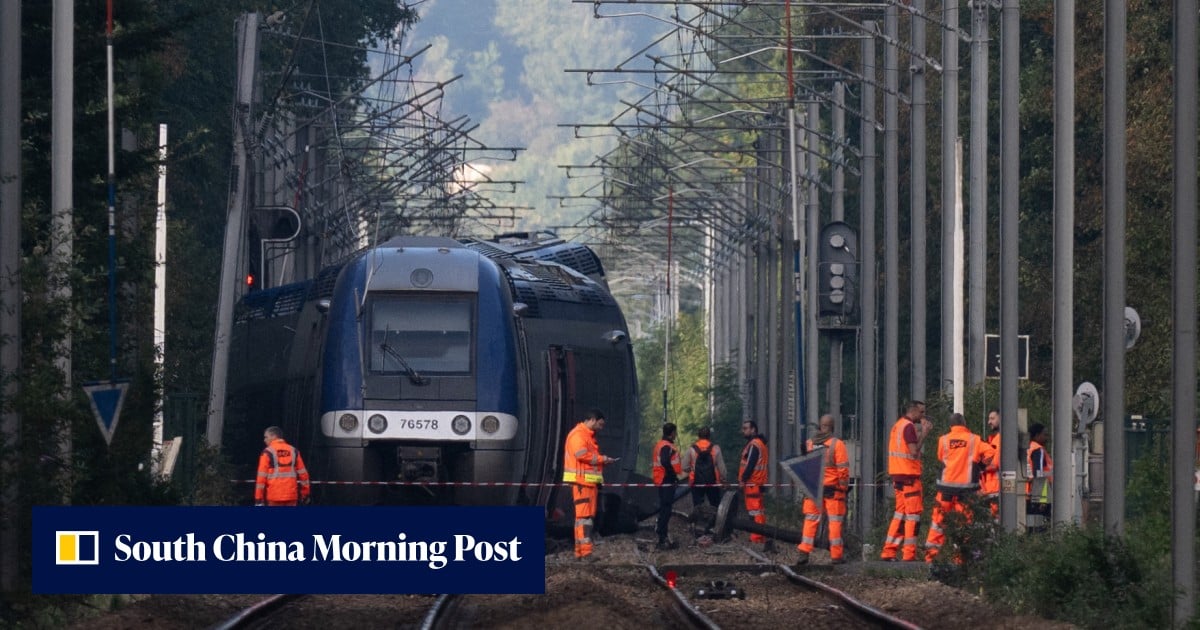
Railways in the Netherlands suffered massive disruption on Tuesday when pipes, cables and other materials were placed on dozens of tracks, halting trains and upending the commutes of hundreds of thousands of passengers. asserted
pipes → suffer → passengers
While no one has been blamed for the suspected sabotage, the incident coincides with mass protests by farmers angered by government environmental policies, and took place amid reports in local media that farmers had discussed taking direct action against the railways. asserted
farmers → blame → railways
Recommended Stories list of 3 items- list 1 of 3Four railway workers killed by express train at station in Japan - list 2 of 3Train crashes into truck at railway crossing in Gdansk, Poland - list 3 of 3Trains get hack warning The Tuesday, September 15 incident is being investigated by police. asserted
incident → kill → police
So what happened, why are farmers under suspicion, and why would anyone target a railway? asserted
anyone → happen → railway
What happened on the Dutch railways? asserted
What → happen → railways
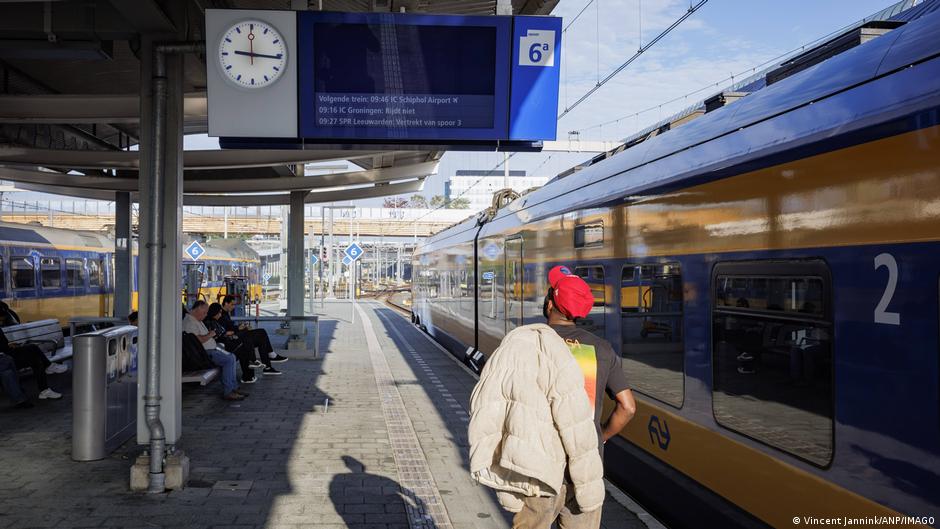
Trains in the Netherlands came to a standstill on Tuesday morning, causing delays and cancellations for passengers across central and northern parts of the country. asserted
Trains → come → country
It emerged that items on the tracks had caused trains to be halted. asserted
trains → emerge → tracks
“Materials were found in several places along tracks that were deliberately placed there. asserted
that → find → tracks
This is causing section failures. asserted
This → cause → failures
It seems to be sabotage,” ProRail, the country’s rail infrastructure operator, said in a statement. asserted
ProRail → seem → statement
ProRail’s interim CEO Mirjam van Velthuizen said the incident demonstrated how dependent the Netherlands is on its railways and called for greater investment in contingency planning. “In a world where uncertainties are increasing, we must ensure that the railway can absorb disruptions, that the impact remains limited as much as possible, and that we can recover as quickly as possible,” she said. asserted
she → say → disruptions
ProRail said there were no injuries reported. “Placing materials on the tracks is extremely dangerous and unacceptable, and fortunately, it did not lead to any accidents today,” it said. asserted
it → say → accidents
Sabotage is suspected by the Dutch police, which is investigating. asserted
which → suspect → police
What sort of sabotage is suspected? asserted
sort → suspect → sabotage
Pipes and cables had been fixed to railway tracks, causing at least 35 signal failures across the country’s network of trains, ProRail said. asserted
ProRail → fix → trains
“It appeared that pipes and cables had been laid on the tracks, causing our system to believe that a train was standing on the tracks,” the operator said. asserted
operator → appear → tracks
That caused the automatic system to change signals to red, preventing trains from passing. asserted
system → cause → trains
“Unauthorised” materials were found in at least 20 locations in the rail network, the operator said. asserted
operator → find → network
The sabotage had been going on since Monday, according to some reports. uncertain
sabotage → go → reports
In one case early on Monday, a train “struck metal” on the track near Steenwijk, in the country’s east, according to media reports. uncertain
train → strike → reports
ProRail said there was no damage because the train was not travelling at full speed. asserted
train → say → speed
While the perpetrators have not been found, Dutch media has reported speculation that angry farmers are behind the sabotage. asserted
farmers → find → sabotage
ProRail sources told broadcaster NOS that they had spotted farmer groups discussing taking direct action, including by fixing metal pipes to train lines, on social media groups. asserted
groups → tell → groups
Farmers in the Netherlands have taken similar action in the past, in protest against the government’s nitrogen policy. asserted
Farmers → take → policy
The Farmers Defence Force (FDF), a protest and advocacy group, said it was not behind the railway sabotage, but did not rule out individual farmers being responsible. asserted
farmers → say → sabotage
The activist group did, however, say members set hay bales and car tyres alight along various roads across the Netherlands on Tuesday afternoon, on the government’s budget day of Prinsjesdag, in protest. asserted
members → say → protest
What are farmers protesting about in the Netherlands? asserted
farmers → protest → Netherlands
FDF opposes planned government policies requiring farmers to reduce nitrogen emissions, arguing that they are being unfairly blamed for nitrogen pollution. asserted
they → oppose → pollution
According to the United States Environmental Protection Agency (EPA), agriculture accounts for 60-80 percent of human-driven nitrogen emissions. uncertain
agriculture → accord → emissions
“While nitrogen is a natural and necessary nutrient for growing food, modern industrial farming practices introduce far more nitrogen into the ecosystem than the earth and crops can naturally absorb,” the EPA states. asserted
EPA → grow → ecosystem
But farmers in the Netherlands say reducing these emissions will substantially increase the cost of livestock farming and force some agricultural businesses to reduce production or close down. “We feel like the country is on fire. asserted
country → say → fire
Farmers feel as though their businesses are on fire because of the government’s plans”, FDF spokesperson Sieta van Keimpema told Reuters. asserted
Keimpema → feel → Reuters
The government has promised financial compensation for farmers whose businesses are hit by the proposals. asserted
businesses → promise → proposals
Why would saboteurs target railways? asserted
saboteurs → target → railways
According to the Mineta Transportation Institute (MTI) in San Jose, California in the US, railways have been targeted by groups ranging from al-Qaeda to India’s Maoist guerrilla fighters to extreme environmental groups in Europe. “Derailments are intended to cause casualties, while attacks on tracks and other right-of-way infrastructure are primarily intended to cause disruption and attract attention,” a 2018 report by the institute explains. uncertain
report → accord → institute
Because of the expansive nature of a railway network, it is impossible to completely defend it from sabotage, making it an easy target for those seeking to cause disruption. asserted
it → defend → disruption
MTI’s database shows that between 1970 and the end of 2017, there were a total 282 attempts to deliberately derail trains and 817 additional attacks on railway infrastructure, including tracks, bridges, tunnels, signalling and other right-of-way equipment. asserted
database → show → way
Western Europe has suffered the second-highest number of derailment attempts globally, at 10.6 percent, after South Asia, where the majority of railway attacks take place. asserted
majority → suffer → place
“The European groups have sought to attract public attention to their issues that motivate them and cause disruption. asserted
that → seek → disruption
Their actions resulted in inconvenience, but no casualties,” said MTI in its report. asserted
MTI → result → report
…and 4 more, not listed.

💬 Give feedback
🕘 History 🎫 Support